How can you make gymnastics challenging, lively and inclusive?
How can you improve the health, fitness and well-being of all your children?
How can you ensure progression over time?
This practical and easy-to-use teacher's guide is the brand new edition of the popular workbook Gymnastics 7-11. It takes a session-by-session approach to teaching physical development and well-being through gymnastics for the seven to eleven age range.
Fully updated with the most current schemes of work to use at Key Stage 2, it sets out a series of forty-four sessions over the four year span, to give you planned and logical progression of both content and advice. The session plans are structured from year three to year six and can be followed as a complete course or dipped into for ideas and inspiration.
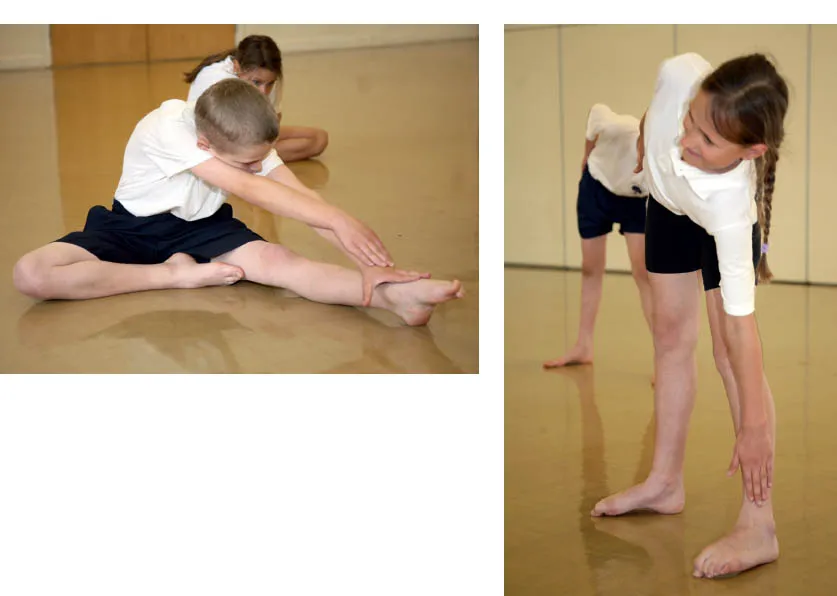
Illustrated thoughout with colour photographs of real children in a range of gymnastics lessons, this one-stop resource also includes a 'Specific Skills Guide' to help you support children in developing the correct techniques.
Each session plan includes:
learning objectives
assessment criteria
consolidation from the previous session
step-by-step session content
warm up and final activities
teaching approaches
floor and apparatus work.
The companion volume, Developing Health and Well-being through Gymnastic Activity (5-7) follows the same format, and together, these user-friendly books provide a continuous and progressive programme of work from years one to six. If you are a practising or student teacher, this guide will give you all the confidence you need to teach gymnastics in your school!

Frequently asked questions
Yes, you can cancel anytime from the Subscription tab in your account settings on the Perlego website. Your subscription will stay active until the end of your current billing period. Learn how to cancel your subscription.
No, books cannot be downloaded as external files, such as PDFs, for use outside of Perlego. However, you can download books within the Perlego app for offline reading on mobile or tablet. Learn more here.
Perlego offers two plans: Essential and Complete
Essential is ideal for learners and professionals who enjoy exploring a wide range of subjects. Access the Essential Library with 800,000+ trusted titles and best-sellers across business, personal growth, and the humanities. Includes unlimited reading time and Standard Read Aloud voice.
Complete: Perfect for advanced learners and researchers needing full, unrestricted access. Unlock 1.4M+ books across hundreds of subjects, including academic and specialized titles. The Complete Plan also includes advanced features like Premium Read Aloud and Research Assistant.
Both plans are available with monthly, semester, or annual billing cycles.
We are an online textbook subscription service, where you can get access to an entire online library for less than the price of a single book per month. With over 1 million books across 1000+ topics, weโve got you covered! Learn more here.
Look out for the read-aloud symbol on your next book to see if you can listen to it. The read-aloud tool reads text aloud for you, highlighting the text as it is being read. You can pause it, speed it up and slow it down. Learn more here.
Yes! You can use the Perlego app on both iOS or Android devices to read anytime, anywhere โ even offline. Perfect for commutes or when youโre on the go. Please note we cannot support devices running on iOS 13 and Android 7 or earlier. Learn more about using the app.
Yes, you can access Developing Physical Health and Well-being through Gymnastics (7-11) by Maggie Carroll,Jackie Hannay in PDF and/or ePUB format, as well as other popular books in Education & Education General. We have over one million books available in our catalogue for you to explore.
This first session is for an initial assessment of the childrenโs capabilities to ascertain what they know and what they can do. It has only floor work.
This session relates, in part, to the final assessment tasks in Key Stage 1.
LEARNING OBJECTIVES
(The objectives of the session need to be made explicit to the children. They also need to assess the extent to which they have achieved them.)
Physical
1 To perform three travelling actions in a sequence.
2 To add a starting shape and a rotation action to complete the sequence.
3 To remember and perform the sequence with consistency, coordination and control.
Well-being
4 To articulate the changes happening to the body during activity, and the benefits of being active to health and well-being.
Broader learning
5 To identify actions and movements that they can perform well, and know one or two ways in which to improve.
DISCUSSION
Share ideas about what contributes to staying healthy and well.
Talk about what constitutes good work and how improvements can be made.
ASSESSMENT CRITERIA โ QUESTIONS TO CONSIDER
1 Can the children perform three travelling actions in a sequence?
2 Can they add a starting shape and a rotation action to complete their sequence?
3 Can they remember and perform the sequence with consistency, coordination and control?
4 Can the children talk about the changes happening to their bodies when they are active and the benefits of being active to their health and well-being?
5 Can they identify actions and movements that they can perform well, and know one or two ways in which they can improve?
OUTCOME
Some children will achieve, some will excel and some will achieve less.
Warm-up
Content
Teaching points
1
Play the Bean Game โ children move around the hall according to the bean that is called out: runner bean โ running; jumping bean โ jumping; chilli bean โ rubbing all body parts to keep warm; jelly bean โ wobbling like jelly; frozen bean โ being still; baked bean โ lying down as if looking at the sky; butter bean โ sliding on your bottom.
Verbalise the childrenโs body actions and highlight where they are demonstrating with good control and tension.
Floor work
Content
Teaching points
1
Select a starting position and on the sound of the tambour add two travelling actions to make a sequence.
Encourage the children to perform several different travelling actions and verbalise these. Encourage them to perform each travelling action for the count of three. Highlight clear starting positions.
2
Practise and refine, and when you can remember your sequence add another travelling action to it.
Circulate and set differentiated challenges to accommodate individual abilities.
3
Add a rotation/turning action to finish the sequence.
Select some children to show and draw attention to the variety of turning actions shown. Ask children what they can do well and what they need to do to improve.
4
Consider how you are going to finish your sequence. There should be a clear ending after the final turning action.
Select some children to show and highlight previously performed actions.
5
In pairs name yourselves 1 and 2 โ 2s are to show 1s their sequence and then change over.
Encourage children to identify whether their partner included three actions, a turning action and a clear ending. The children should now discuss what they did well and what they need to do to improve.
ASSESSMENT โ By the teacher (in conjunction with a teaching assistant where applicable), and also peer-assessment by the children. Use ICT to record as many performances as possible so the children can self-assess during the lesson and in the classroom. This can also be kept as a record of their achievement.
Final activity
Walk around the room, stretch up high and curl up tightly. Wait to be tapped to line up (enrol some children to help).
Classroom
In discussion with their partner, children are to make a note of their sequences to use later, and identify what they thought they did well and what they need to do to improve for the next lesson.
Developing suppleness
SESSIONS 2 and 3
Balance โ what is balance?
Consolidation from previous session: to perform three travelling actions in a sequence and perform the sequence with consistency, coordination and control.
LEARNING OBJECTIVES
(The objectives of the session need to be made explicit to the children. They also need to assess the extent to which they have achieved them.)
Physical
1 To know how to balance on different parts of the body using tension and extension.
2 To combine balancing actions by transferring the weight smoothly from one body part to another.
Well-being
3 To know that strength and suppleness are important components of gymnastics.
Broader learning
4 To share ideas with a partner and select actions together to combine in a sequence.
ASSESSMENT CRITERIA โ QUESTIONS TO CONSIDER
1 Can the children balance on a variety of body parts with well-held body tension, and with toes and fingers extended?
2 Can children move smoothly in taking weight from one body part to another?
3 Can the children identify physical elements that...