The meaning of work
The Introduction to this book promises to navigate the reader through a self-discovery process of personal working and communication preferences. That process begins here. And, in that regard, no stone can remain unturned. Therefore, this chapter engages the reader to explore his/her personal understanding of the meaning of work itself.
Both of the above introductory quotes by different authors in different settings point to the complexity of defining and identifying what activities constitute “work”—no matter where we go. While work may be defined or understood the same way among two individuals from the same place and within the same industry, one can make no assumptions about “what constitutes work” in a particular locale based on personal, cultural, and/or previous local, national experiences. As an example, if one views “work” as only those activities that are job-paid for, he/she may miss a multitude of activities that are important to outputs such as the socialization that work often involves, the external organizational relationships that influence work, and much more. Defined herein, “work” refers to all those purposeful activities that contribute to achieving human, including organizational, community, and societal needs, and aimed to affect in whole or in part physical and/or virtual environments.3 Therefore, even household work, and “women’s work”4 is “work.” Yes, it may be “unseen,” “unpaid-for,” and arguably non-market oriented, but it is “work,” nonetheless. Additionally,
Therefore, that which constitutes and influences “work”—its depth and breadth—is a phenomenon that must be discovered in every setting. Providing a rudimentary framework of what it may entail is what this chapter is, in part about—hence, the Chapter title, “Breaking the Code.” The word “rudimentary” is emphasized here. This chapter’s sole purpose is to heighten consciousness of the complexity of work’s meaning, and to encourage trainers, managers, and other organizational stakeholders to explore work’s influences and action chains in varied locations as they affect decision-making and design. The amount of research regarding work’s meaning, e.g., its relationship to self, motivation, power and economic control, within industries, chronicled in industrialized, market-driven societies vs. subsistence societies, is voluminous.6 Breaking the code is important, as work likely entails a complicated labyrinth of social relationships that influences events. Overlooking one or more might have a deleterious effect to desired outcomes. The reverse is true as well: recognizing their complexity is likely to optimize informed decision-making. For supportive illustrations, one only has to review the extensive stress- and creativity-related research being done in organizational settings addressing, e.g., how relative autonomy (vs. dependency), and feedback influence job role stress, creativity, and other job outcomes.
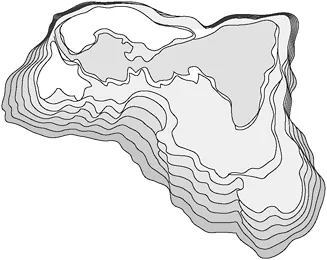
Cultural anthropologist Herbert Applebaum provided significant contributions to understanding the complexity of “work”, i.e., work’s activities, work’s social relationships/networks, work’s consequences, work and leisure, and more. In Royal Blue (1981), as one example of many by this author, he presents a case study of construction workers (and their work) in the United States. Inspired by this case, Figure 1.1 metaphorically compares the complexity of work’s meaning to a piece of mica.
Why mica? It is argued that work and a mica crystal have many similar properties. Mica, as a generic term, generally refers to a group of aluminosilicate minerals that are shaped by environmental forces. Continuing with the analogy, although mica has the appearance of a whole crystal, it is really quite complex, indeed, in terms of its physical and chemical characteristics. It is also quite versatile in terms of its end-use applications—as is the potential of a society’s human resources. While mica has a unique combination of strength, it can be separated easily into thin films that are quite resilient. Physically, the crystal appears transparent. Similarly, construction work for the laborer may seem readily observable. It involves particular knowledge (e.g., blueprint reading) and skills (e.g., mixing concrete, blasting). To delve deeper, however, involves peeling away of other related layers. Even though each layer is flexible and elastic to some degree, one layer, by itself, does not characterize the whole crystal. Its composite layers, if viewed as elements of work, include some of the following:
Work’s meaning and complexity:
1 The job itself. This includes knowledge, skills, responsibilities.7 This is, perhaps arguably, the layer that is most readily observable. Knowledge, skills, abilities and attitudes (KSAs) and job analysis are addressed further in Chapter 8.
2 Degree of autonomy vs. dependence. Does the worker control the process, and is he/she expected to act independently? This, in turn, is influenced by what the perceived roles of management are—often influenced by factors such as social class structure.
3 Internal/external risk factors—i.e., degree of certainty or uncertainty. Workplace autonomy vs. (inter)dependence is also related to the degree of danger job duties entail. Construction work involves a relatively high degree of danger; additionally, a skilled craftsperson relies upon himself/ herself to fabricate the product. At the same time, the laborer is not completely independent. He/she relies upon other craftspeople to perform functions such as erecting the scaffold, mixing the mortar, and more. This sequencing of events that involve social relationships are referred to as “action chains.” Action chains are very important to identify, as they cannot be assumed as universal in every setting.
4 Social identity, self-concept, and prestige. These elements are part and parcel of the complex silicate of work. Work is all wrapped up in one’s real self,—i.e., the actual knowledge skills, and abilities one possesses; the ideal self—hopes and dreams for himself/herself (and/or others); and looking-glass self—how he/she is perceived by others. These factors are not entirely self-determined. Work, as well as its boundaries, is socially constructed. External influences play a significant role as illustrated by the following questions: Are equal opportunity in recruitment and upward mobility a social and cultural phenomenon? Are rights of entry and rights of passage (upward mobility) determined by local, regional and/or national history, socio-economic status, or by qualifications, certifications, and democratic processes? Personal goals are, after all, contextually influenced by one or more of these factors to some extent. The same is true of action chains.
5 Rewards/Punishments. Rewards and punishments include pay, awards and other recognitions which, in turn, affect and are influenced by the previous items in this list.8
6 Language/jargon. Doing the work involves more than #1. Knowledge of the jargon is also key to socialization or feeling “in” vs. “out.” Jargon can be quite thick, depending upon the industry and organization involved.
7 Tools of the trade. What are they, and are they available to everyone who needs them? In the twenty-first century, “tools” potentially may involve a great many instruments, to include, of course, computer-based technologies and equipment. Ownership is another factor here as resource allocations influence power flows, performance, achievement, recognition, productivity, and those who have vs. those who do not have access to knowledge.
8 Labor relations. Unions’ role and power relationships with management are other work-related elements requiring analysis that probably have a direct or indirect effect on all of the items listed above. The differences can be quite remarkable, not only within countries, but also when comparing these relationships in one country against another.
9 Values. These refer to the “what matters here,” and are embedded in all of work’s elements; they are influenced by organizational, industry-related, cultural, historical, socio-economic and other factors. Orientation to time plays an important role as well: Religious grounding specific to the role of the individual in his/her universe may influence the degree of control the person may feel he/she has to effect change.
10 Risk-taking. One’s relative disposition to take risks is related to all of the above, and also to the extent to which a society places a high value on reducing ambiguity and instability.9
Items 1–10 are not an exhaustive list of work’s properties or meanings. Nor does the mica metaphor work in its entirety. In fact, (arguably) it fails, in part, since the elements of work often are not generally peeled away so easily. Indeed, they are generally dynamically intertwined. As an example, while item 1 may be easily identified in organizational life from review of a job description, the job description alone often does not encompass the many social relationships and responsibilities the position is likely to entail, for many reasons. Social protocols that are culturally influenced are other influencers. Further, designing the job effectively is a managerial challenge. As effective form should follow the role and function it is to perform, the effectiveness of the design involves careful consideration of items 1–10. These items are all elements of the task environment of work—factors related to the job itself. Reiterating, each layer is influenced by and influences others. None exists independently of the other’s influence. However, those alone are not enough to break the code of the complexity of work. Let’s return to those external forces, the external environment, that shape and influence the mica structure. Those include, but are not limited to resource availability (labor pool, financial capital), digital access (e.g., Internet technology and other technologies and processes that are not always compatible or standardized across borders), international communities, government entities (city, state, provincial, national), political processes, code of law, economic conditions, and socio-cultural characteristics such as age, values, education, social castes, religion, and history. Those forces are repres...