This book offers an analysis of the policing of terrorism in a variety of national and international contexts. Centered on developments since the events of September 11, 2001, the study devotes its empirical attention to important police aspects of counter-terrorism in the United States and additionally extends its range comparatively to other nations, including Israel and Iraq, and to the global level of international police organizations such as Interpol and Europol. Situated in the criminology of terrorism and counter-terrorism, this book offers a fascinating look into the contemporary organization of law enforcement against terrorism, which will significantly influence the conditions of global security in the foreseeable future.
- 230 pages
- English
- ePUB (mobile friendly)
- Available on iOS & Android
eBook - ePub
About this book
Information
Part I
PERSPECTIVE OF THE BOOK
1
THE CRIMINOLOGY OF TERRORISM AND COUNTERTERRORISM
To usefully situate the policing of terrorism, this chapter reviews the themes of terrorism and counterterrorism and their study from a criminological perspective. The field of terrorism studies broadly encompasses both terrorism, as a particular activity involving the infliction of harm for specified purposes, and counterterrorism, involving practices and institutions concerned with defining and responding to terrorism. It is the special province of a criminological viewpoint to focus on terrorism as a form of crime or deviance and on counterterrorism as social control.
Terrorism: Concept and Development
Terrorism refers to the use of illegitimate means for political-ideological purposes.1 With respect to its means, terrorism typically involves violent tactics aimed at civilians on a relatively massive scale, much like in the case of war. Yet, terrorism is different from warfare in that it exists outside, and purposely operates against, the principles of war as they are regulated in the international community of nations. Acts of terrorism are politically oriented and ideologically motivated, ranging from specific goals formulated in terms of the might of political nation-states to more general aims related to the plight of certain peoples and groups. Because of the political-ideological objectives of terrorism, the underlying ideas of terrorism are important to consider as the motivating forces that fuel terrorist groups and individuals. Strategically, the instilling of fear is an important immediate objective of terrorism.
Forms of terrorism can be distinguished on the basis of its means and aims. From a historical viewpoint, for example, the distinction between revolutionary, nationalist, and religious terrorism can usefully bring out important shifts in terrorist activity over the ages. Revolutionary terrorism is associated with attempts to violently seize political power in the context of nation states. Nationalist terrorism involves the violent quest by certain groups, who define themselves mostly on the basis of ethnicity as a nation, to gain autonomy and establish a new state. Religious terrorism is ideologically rooted in strands of various religious traditions that typically oppose secularization processes in society.
Historically, terrorism has been mostly associated with revolutionary movements involved with seeking to overthrow political regimes. The term terrorism originated during the aftermath of the French Revolution, when the French National Assembly in 1793 decreed a mass mobilization (“levée en masse”) of all able-bodied men to secure the republic and thwart off both internal and external enemies of the revolution. During the resulting “Reign of Terror,” several tens of thousands of people, most of them ordinary workers and peasants, were massacred as purported enemies of the people. Since then, as the establishment of national states took on a more permanent hold, nationalist terrorism increased to secure the rights of specific ethnically defined minority groups, such as the Irish in the United Kingdom, the Basques in Spain, and Zionists in the former British Mandate of Palestine. In most recent times, religious terrorism has gained prominence, especially on an international level. The most conspicuous example is the al-Qaeda movement, which is held responsible for the attacks of September 11, 2001.
Whereas the invention of dynamite, the favorite tool of the nineteenth-century bomb-throwing anarchist, has been argued to signal the beginning of terrorism from a technical point of view, today the means employed by terrorist organizations and individuals are more varied than ever. Contemporary terrorism is also highly sophisticated in technological respects and organized across national borders. The methods of personnel recruitment, training, and intelligence gathering have likewise modernized. Modern-day terrorism is also feared to involve the use, or at least the deliberate pursuit, of lethal means of unprecedented proportion (such as weapons of mass destruction) and has occasionally taken on a more widely organized character, involving
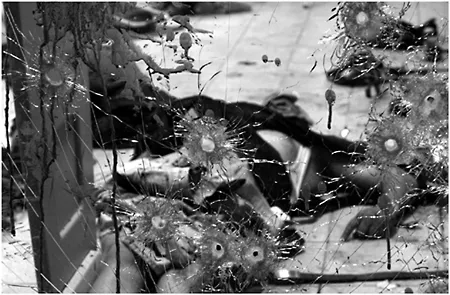
Figure 1.1 The Mercaz HaRav religious school in Jerusalem, Israel, March 6, 2008. In some societies, terrorism is a relatively rare phenomenon, but in others, such as in Israel, it is a part of daily life. In March 2008, the Mercaz HaRav school in Jerusalem was attacked by a lone Palestinian gunman who killed 8 students and wounded 11 more. (Photo by Avi Ohayon, courtesy of the Israel Project, www.theisraelproject.org.)
globally organized terrorist networks. The contemporary world of terrorism is also more complex, involving multiple domestic and international forms and a growing number of causes, as varied as the environment, white supremacy, and abortion. Terrorism today, also, can be perpetrated or sponsored by states in addition to a host of non-state actors.
Dimensions of Counterterrorism
A wide range of counterterrorism strategies have been developed to deal with the causes and consequences of terrorist activities.2 Politically, counterterrorism involves measures taken by the governments of national states and by international governing bodies. Such (inter) governmental responses to terrorism are historically most developed, dating back to at least the second half of the nineteenth century, when governments in Europe sought to disrupt political activities aimed at overthrowing established regimes (Deflem 2002). In 1937, a first intergovernmental treaty specifically dealing with terrorism was drafted by the League of Nations (the precursor of the United Nations) in the form of an international convention on the Prevention and Punishment of Terrorism. Yet, although the convention was signed by 24 nations, it was ratified only by India.
During the twentieth century, intergovernmental counterterrorism measures would develop in a piecemeal fashion to focus not on terrorism as such but on selected issues commonly associated with terrorist activity, such as hijackings and bombings (Guiora 2007). For example, the United Nations drafted the International Convention against the Taking of Hostages in 1979 and the International Convention for the Suppression of Terrorist Bombings in 1997.3 Other international governing bodies, such as the Organization of American States and the Council of Europe, have likewise developed international protocols to prevent and punish terrorist activity.
International agreements against terrorism have been complemented by legislative efforts at the national level. Various nations in Europe, for instance, drafted counterterrorist legislation throughout the 1970s, when extremist political organizations threatened to destabilize the political order. In the United States, the Act to Combat International Terrorism and the Omnibus Anti-Terrorism Act were passed during the administration of President Ronald Reagan in the 1980s. Subsequently, the terrorist incidents that hit the United States in the 1990s, specifically the World Trade Center bombing on February 26, 1993, and the bombing of the Alfred P. Murrah Federal Building in Oklahoma City on April 19, 1995, led to passage of the Antiterrorism and Effective Death Penalty Act during the Bill Clinton presidency.
No historical event has had as much of an impact on the course of counterterrorism policies as the terrorist attacks of September 11, 2001. In the United States, a comprehensive USA PATRIOT Act (the Uniting and Strengthening America by Providing Appropriate Tools Required to Intercept and Obstruct Terrorism Act) was passed to intensify surveillance against terrorist activity (see Chapter 3). A new Department of Homeland Security was created, and exceptional measures to detain and try terrorist suspects in military tribunals were instituted.
Policies against terrorism extended on a global level to military operations when the governments of the United States and other NATO
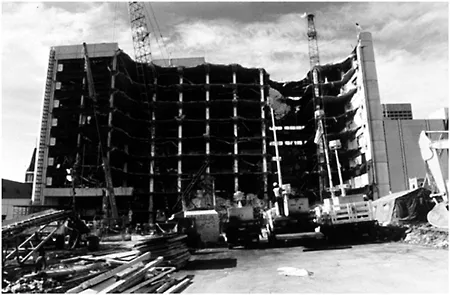
Figure 1.2 The Alfred P. Murrah Federal Building in Oklahoma City, April 26, 1995. The Oklahoma City Bombing on April 19, 1995, not only brought terrorism to the heartland of the United States, it led the way to a comprehensive legal response against terrorism by the U.S. government. (FEMA News Photo, courtesy of the Federal Emergency Management Agency.)
countries decided to undertake armed operations against the Taliban government in Afghanistan. The global impact of the events of 9/11 took hold on the legal front as well, for many nations across the world have since 2001 strengthened their legislative efforts against terrorism (see Chapter 6). A host of intergovernmental treaties have additionally been developed to foster cooperation among states in the fight against (international) terrorism. At the global level, the United Nations has adopted a Global Counterterrorism Strategy to appeal to the nations of the world to unify their counterterrorism efforts. Similar initiatives have also been developed by other international organizations, such as the Organization of American States, the Commonwealth of Independent States, and the League of Arab States.
Terrorism and Counterterrorism: A Criminological Perspective
From a criminological viewpoint, terrorism and counterterrorism can be conceptually approached as crime or deviance and social control, respectively. This approach is rooted in the sociology of crime or deviance, as forms of norm-violating behavior, and the practices and institutions of social control, broadly defined as the definition of and response to crime or deviance.
First, terrorism can be conceived as a form of violence, the causes of which can be analyzed at the micro- and macro-level (Black 2004; Rosenfeld 2004). From the micro-viewpoint that focuses on the characteristics of terrorist perpetrators, research can concentrate on the people who are more likely to become terrorists or to join, or to be recruited by, a terrorist organization. At the macro-level, criminological analyses of terrorism concentrate on the fluctuations of terrorism in function of other societal developments, such as periods of political strife, economic conditions, and cultural-ideological conflicts.
To understand terrorist actions, criminological research can focus on terrorism as a form of deviance (Arena and Arrigo 2006). Deviance theorists will be particularly interested in the motives of terrorist conduct and the development of a terrorist identity. Additionally, the societal context in which such acts of deviance are formally labeled or criminalized as terrorism can be studied (Altheide 2006). This criminalization involves the definition of certain acts as terrorism, typically by means of legislation, and its subsequent enforcement.
Second, counterterrorism can be criminologically analyzed as a matter of social control, including various mechanisms and institutions that define and respond to terrorism (Deflem 2004a, b; Costanza, Kilburn, and Helms 2009). The most formal component of social control is represented by the criminal justice system, including its agents and organizations, such as the police.
In the realm of social control and criminal justice, the counterterrorism activities of police have been of growing importance. Most available studies on the policing of terrorism, however, are policy-oriented and highly normative, arguing for or against aspects of counterterrorism policing, instead of analyzing them, or they are of a technical nature, written from the viewpoint of the police professional (e.g., Brandl 2003; Das and Kratcoski 2003; Henry 2005; Müller-Wille 2008; Oliver 2007). The available scholarly work on the policing of terrorism has typically treated counterterrorist policing as one element in a broader study or focused on specific police institutions (e.g., Jiao and Rhea 2007; Kappeler and Miller-Potter 2004; Marenin 2005; Pickering, McCulloch, and Wright-Neville 2008). As explained
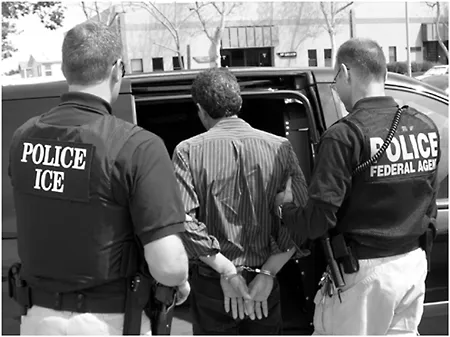
Figure 1.2 A fugitive illegal alien apprehended by U.S. federal officers as part of the so-called Return to Sender program, San Diego, April 3, 2007. Besides analyzing terrorism as an act of crime or deviance, criminologists also study counter terrorism as a matter of social control or criminal justice. They thereby observe the wide range of operations that are conducted, including both terrorism-related activities and criminal enforcement tasks such as the rendition of fugitives. (Photo courtesy of U.S. Immigration and Custom Enforcement.)
in Chapter 2, the bureaucratization theory of policing in this book is applied to offer a broad and scholarly grounded perspective of the policing of terrorism.
Conclusion
Terrorism and counterterrorism have historically evolved in various ways. Terrorism has increasingly diversified in terms of the objectives that are pursued and the means that are used. Counterterrorism efforts have likewise proliferated across a range of institutions. Criminologists contribute to the study of terrorism and terrorism-related phenomena by focusing on terrorism as crime or deviance and counterterrorism as social control. Studying counterterrorism as a form of social control, criminological research can reveal important ele...
Table of contents
- Criminology and Justice Studies Series
- Contents
- Figures
- Series Foreword
- Acknowledgments
- Abbreviations
- PREVIEW
- Part I PERSPECTIVE OF THE BOOK
- Part II THE UNITED STATES
- Part III INTERNATIONAL DIMENSIONS
- Part IV COMPARATIVE CASES
- Notes
- Bibliography
- Index
Trusted by 375,005 students
Access to over 1.5 million titles for a fair monthly price.
Study more efficiently using our study tools.
Frequently asked questions
Yes, you can cancel anytime from the Subscription tab in your account settings on the Perlego website. Your subscription will stay active until the end of your current billing period. Learn how to cancel your subscription
No, books cannot be downloaded as external files, such as PDFs, for use outside of Perlego. However, you can download books within the Perlego app for offline reading on mobile or tablet. Learn how to download books offline
Perlego offers two plans: Essential and Complete
- Essential is ideal for learners and professionals who enjoy exploring a wide range of subjects. Access the Essential Library with 800,000+ trusted titles and best-sellers across business, personal growth, and the humanities. Includes unlimited reading time and Standard Read Aloud voice.
- Complete: Perfect for advanced learners and researchers needing full, unrestricted access. Unlock 1.5M+ books across hundreds of subjects, including academic and specialized titles. The Complete Plan also includes advanced features like Premium Read Aloud and Research Assistant.
We are an online textbook subscription service, where you can get access to an entire online library for less than the price of a single book per month. With over 1.5 million books across 990+ topics, we’ve got you covered! Learn about our mission
Look out for the read-aloud symbol on your next book to see if you can listen to it. The read-aloud tool reads text aloud for you, highlighting the text as it is being read. You can pause it, speed it up and slow it down. Learn more about Read Aloud
Yes! You can use the Perlego app on both iOS and Android devices to read anytime, anywhere — even offline. Perfect for commutes or when you’re on the go.
Please note we cannot support devices running on iOS 13 and Android 7 or earlier. Learn more about using the app
Please note we cannot support devices running on iOS 13 and Android 7 or earlier. Learn more about using the app
Yes, you can access The Policing of Terrorism by Mathieu Deflem in PDF and/or ePUB format, as well as other popular books in Social Sciences & Terrorism. We have over 1.5 million books available in our catalogue for you to explore.