Natural sound
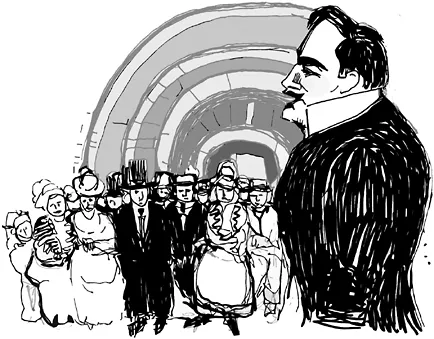
Natural sound is my term for all the sounds that are non-mediated–that is, they occurred before sound media were invented, or they occur without any form of transmission or recording at the present time. Natural sound is crucial to public life in all civilizations of the world, especially in the form of oratory and song. Imagine Enrico Caruso (1873–1921) performing in San Francisco in April 1906, on the night before the great earthquake. The concert hall is packed with well-to-do citizens in starched shirts and gowns, their senses trained on the operatic singer and the orchestra. With eager expectation they hear sound waves emanating from Caruso’s mouth at 340 metres per second. The sounds inform us about certain features of the actions of Caruso and the orchestra that the other senses do not, but at the same time the other senses give access to visible, touchable and odorous aspects of the same events.
My approach takes the sensory richness of communication into account. It is concerned not just with the sounds in isolation, but also with the things that vibrate–the singers and speakers and their equipment and the wider surroundings. Think of Caruso’s body, which is the entire basis of his expressive voice, and imagine his beautiful clothes, his jewellery and the other accessories. These other things also have a communicative influence. Indeed, all five senses must be thought of as one exploratory entity, and in pursuing this thought I am inspired by Merleau-Ponty ([1945] 1992), Gibson (1966) and Ihde ([1976] 2007). On the basis of these influential works, I identify four existential characteristics of sound that guide the individual’s communication effort, and these characteristics are also integral to the visible and touchable materials of communication:
- time (duration, chronology, causes and effects)
- space (directions, shapes, volumes, distances)
- personal expressiveness (emotions, moods)
- coded message (for example, news and love song).
Firstly, sounds always tell us something about time. A performance always happens right now, in front of those present, and for Caruso this means he is under social pressure to perform well. It is the same thing in the theatre, the opera and vaudeville. The real-time progression of sound events causes such phenomena as the nervousness of live performance, whether in the concert hall or at the political rally, where the performers have only one chance of making an impression, and nobody will forget it if they make a fool of themselves because they were ill-prepared. Sound events are ephemeral; they last for only a second, and at most around fifteen seconds in the extreme reverberation of a mountain pass. When the energy is expended a particular sound is gone forever. Some sound events appear to last for a long time, for example the constant roar of a waterfall or a tedious political speech that goes on for hours, but these consist of a continuous generation of sounds that all wear off immediately and are never heard again.
Before the invention of recording all the sound events were by definition continuous with the progression of the world at large. Caruso represented a new era with his famous recordings, which he released from the early 1900s (Day 2000). Many San Franciscans had listened to his records the night before the opera; over and over again they had listened to his tenor voice rising and falling, and the experience must have heightened their expectations. Tonight I will hear and see him in the flesh! And this is partly why Caruso is nervous. Unlike the recording session, a concert has no second take. Reviewers from San Francisco newspapers would be listening carefully and publish their reviews the next morning.
Secondly, sounds always tell us something about space. Caruso is singing in a modern concert hall, which is sound-proofed, with a rich and precise resonance created by expert acousticians. A concert hall is a sound technology, but it is not a mediation technology. It can be compared with the ancient amphitheatre and arenas in Greek and Roman times, except that the biggest arenas did not have a roof and had less well-controlled acoustics. Over 50,000 people could be in attendance at a Roman arena, and the sounds from the stage could reach even the cheapest seats with a measure of clarity, at least when the audience was silent. In a telling phrase Theo van Leeuwen (1999: 14) calls sound a ‘wrap-around medium’. Referring to the same experience, Rick Altman calls sound a ‘three-dimensional materiality’. He beautifully describes a woman speaking in an auditorium: ‘Radiating out like a cone from the actress’s mouth, the sound pressure soon fills up the entire auditorium, bouncing off the walls, the floor, and the ceiling, and bending around audience members, chairs, and posts until it is finally completely absorbed’ (Altman 1992a: 21). Sound is never located at a singular geometrical point; it is always in the process of spreading further into the surroundings, and therefore the environment resounds with events from above or below, far away and too near, all the time. The bang of a closing door goes through the walls and resonates up the stairs, for an instant filling the corridor or even the street with its impatient movement. Great waterfalls can be heard miles away. In more technical terms the resonance in a given surrounding is related to the volume of the sounds (the louder, the greater the area of coverage), their frequency characteristics (low frequencies spread out in all directions, high frequencies go in a precise direction), and the texture of the things involved in the movement (waves are absorbed by soft materials and bounce off hard materials).
The environmental function of sound is important because humans live with it all their lives, perhaps coping well but perhaps also being stressed by it. Schafer ([1977] 1994) vividly describes the low fidelity sound of the modern West, where mechanical and electrical noises of all kinds make sure that there is never a moment of real silence. He perceptively points out that in such an environment sound does not come towards the listener but is present everywhere. Tony Schwartz (1974: 48) argues that ‘acoustic space is more like something we wear or sit in than a physical area in which we move. A listener is wrapped in auditory space and reverberates with the sound.’ To clarify the concept of environment I will set up a contrast between the general environment and the ambient environment. The general environment really consists of an average, and takes into account all the auditory experiences that a person could have while moving around in a given city or country, while the ambient environment refers to the actual sounds and other sense impressions that individuals have in their everyday locations, where they go about their lives as usual. This book focuses on the individual experiences of the sound environment, but it must be said that it is quite impossible to make empirical descriptions of them (I do not have access to their perception), and therefore it is nevertheless a general description of individual experiences.
Directional hearing developed as an early-warning system for physical danger–for animals just as much as for humans. Hearing surveys the soundscape and helps us to direct our eyes to a particular source of sound. This is simply human awareness, the ability to react quickly to new information (see Plomp 2002; Handel 1989). Wandering around in the soundscape of their city or village, people can easily discern the difference between locations based on sound. Sounds are the raw material for the orientations and explorations in which human beings constantly engage. In San Francisco in 1906 it started with a low rumbling that was different from all the familiar sounds of the city; it was soon accompanied by all kinds of things falling down, and the creaking and whining of wood, concrete and metal being dislocated, things crashing down on them. Finding yourself in an earthquake in the middle of a big modern city awakens your survival instincts. This is perception at its most acute.
Thirdly, sounds always tell us something about the personality of the performers. Simon Frith (1998: 191) claims that the singing voice ‘stands for the person more directly than any other musical device’. Song and speech sounds spread out from the mouth, with the hands and body often helping the words to achieve their intended meaning. When Caruso sang ‘The Siciliana’, a complex ensemble of tongue, jaw, teeth, lips, nasal cavity, larynx and breath were involved, all trained to perfection by the great tenor. Beyond the talented timbres of ‘The Siciliana’ is the person Enrico Caruso. How did he interpret the intended passions of the song? Did he sound vulnerable or aggressive; and were any of his emotions particularly authentic because of a desperate love affair in his own life? The personal and private resonance of communication became very important with the emergence of sound media, and its historical development is at the heart of this book.
Finally, sounds often tell us something about the world by carrying a coded message. After all, the main reason why humans carry on vocalizing and melodizing is that these sounds can communicate messages to other humans very efficiently. There is no end to the uses to whcih language and melody can be put, and the resulting communication varies with, for example, the mother tongue used (Italian versus Norwegian), the social setting (formal or informal) and the speaker’s skills (eloquent or clumsy). Let me stick to my case, and inform you that during the fateful night in San Francisco Caruso sang an aria from the opera Cavalleria rusticana (1890) by Pietro Mascagni. As the opera begins a young villager sings ‘The Siciliana (O Lola, lovely as the spring’s bright blooms)’, a tormented love song to a young maiden. The villager has returned from military service and found that while he was gone Lola abandoned him and married the prosperous village teamster. This act of treason is sweetened by the fact that she is still in love with the young man. From this starting point the love story evolves. Please imagine the rich cultural analysis that could be made of Caruso’s performance by combining operatic history with Italian cultural history and the great immigration surge to the USA during the early 1900s. Although the larger cultural context of these messages is not pursued actively in my book, it is all the time a background feature.
Mediated sound
Since the 1870s the messages in sound have been not only a natural but also a mediated phenomenon. Strange things are accomplished through recording, telephony and broadcasting. These media separate sounds from their occurrence in one place only and allow them to be projected in many unassociated places at the same time, or be repeated indefinitely later on (this has been pointed out by a host of authors, for example Jones 1992; Chanan 1995; Millard 2005; Katz 2004; Lax 2008). In millions of homes people have listened to the music of Caruso on the gramophone, have struggled with the weak transatlantic telephone connection, or have worried at the stern sound of Margaret Thatcher’s voice on the radio. The fact that sounds were repeated outside the time and place of the original performance caused confusion in private and public life. In a typically modern way both producers and listeners have explored all conceivable opportunities to communicate with each other, slowly creating new provinces of meaning in sound communication (Bull and Black 2003).
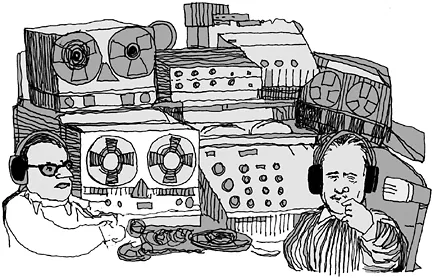
I will analyse in this book a series of mediated sounds quite closely all of which are contained on the accompanying soundtrack CD. The first track is symbolic of the theoretical tradition from which I write. The LP is called The Medium is the Massage and was released by Columbia Records in 1967 as an accompaniment to the book of the same title (McLuhan and Fiore 1967). These sounds could only be made with modern, professional stereo tape equipment (8 or 12 track). The production is typical of the media environment in New York City in 1968, in the midst of psychedelia, the Vietnam War and the 1960s cultural revolutions. The book version of The Medium is the Massage is, by the way, a beautiful example of creative typography, and the pages are filled with unusually large and small type faces, drawings, photographs and facsimiles that support the argument of the volume.
My intention in analysing the McLuhan LP is to clarify the difference between the properties of mediated such as and the properties of natural sound such as Caruso singing in the concert hall in 1906. In order to be systematic, I will present the McLuhan track according to the same four characteristics as before: time, space, personality and message. McLuhan’s aphorisms are transcribed for legibility, but most of the sounds are completely untranscribable.
Track 1: Marshall McLuhan: The Medium is the Massage, 1967 .
– Until writing was invented, man lived in acoustic space, boundless, directionless, horizonless, in the dark of the mind, in the world of emotion, by primordial intuition, by terror. Speech is a social chart of this bond.
– The medium of our time, electric circuitry, profoundly involves men with each other. Information [ver...