![]()
1
INTRODUCTION
Death and the Palaeolithic
A death in a storm
It was obvious that the baby was very ill indeed. All his four limbs hung limply down and he screamed almost every time his mother took a step. When Olly sat down, very carefully arranging his legs so as not to crush them, Gilka went and sat close to her mother and stared at the infant. But she did not attempt even to touch him.
Olly ate a couple of bananas and then set off along the valley, with Gilka and me following. Olly only moved for a few yards at a time and then, as though worried by the screams of her infant, sat down to cradle him close. When he quietened she moved on again, but, of course, he instantly began to call out so that, once more, she sat to comfort him. After travelling about a hundred yards, which took her just over half an hour, Olly climbed into a tree. Again, she carefully arranged her baby’s limp arms and legs on her lap as she sat down. Gilka, who had followed her mother, stared again at her small sibling, and then mother and daughter began to groom each other. The baby stopped screaming and, apart from occasionally grooming his head briefly, Olly paid him no further attention.
When we had been there some fifteen minutes it began to pour, a blinding deluge which almost obscured the chimps from my sight. During that storm, which went on for thirty minutes, the baby must either have died or lost consciousness; when Olly left the tree afterwards he made no sound and his head lolled back as limply as his arms and legs.
(Goodall 1971)
You’ll have guessed that this observation is about chimpanzees. It was witnessed by Jane Goodall, among the chimpanzees of Gombe, Tanzania. But omit the one reference to chimpanzees in the last paragraph (and perhaps the tree climbing) and this could easily be describing humans. In this touching observation, we recognise many of the ingredients of suffering and loss; we empathise and sympathise both with Olly and her dying infant, and we find touching the mother’s attempts to avoid causing additional suffering to her child by carefully arranging its limbs so she does not sit on them. We share the curiosity of the dying baby’s sister, Gilka, and perhaps see in mother and daughter’s mutual grooming some attempt to console each other.
This book is about what links us with them in terms of our responses to death. Among humans, organised and cultural responses to death are universal, and over a century and a half of archaeology and anthropology has given us a burgeoning archaeological record attesting to the remarkable inventivity that humans have applied to dealing with the dead. The authors of an anthropological survey of mortuary habits captured this inventivity:
What could be more universal than death? Yet what an incredible variety of responses it evokes. Corpses are burned or buried, with or without animal or human sacrifice; they are preserved by smoking, embalming, or pickling; they are eaten – raw, cooked, or rotten; they are ritually exposed as carrion or simply abandoned; or they are dismembered and treated in a variety of these ways. Funerals are the occasion for avoiding people or holding parties, for fighting or having sexual orgies, for weeping or laughing, in a thousand different combinations. The diversity of cultural reaction is a measure of the universal impact of death. But it is not a random reaction; always it is meaningful and expressive.
(Huntington and Metcalf 1979)
There are two concepts contained in the last sentence of this quote, which in a way encapsulate the issues addressed by this book: behaviour that is meaningful and expressive. As we shall see, the responses of chimpanzees to death are certainly expressive, although from a Palaeolithic perspective the question is at what point in human behavioural evolution did responses to death become culturally meaningful?
Here, I seek to provide a long-term picture of the development of human mortuary ritual, spanning the entirety of the Palaeolithic. This is, of course, a somewhat arbitrary archaeological category. It is defined at its earliest end by the appearance of stone tools that, beyond facilitating the dismemberment of corpses, has no meaning for a study of mortuary activity, and there is no reason why proposed responses to death of the first Oldowan communities should differ from those of contemporary or earlier Plio-Pleistocene hominins who did not knap stone. I therefore begin my review of hominin mortuary activity before the currently recognised appearance of the archaeological record. At the other end, the Palaeolithic ‘ends’ with the beginning of the Holocene, although as archaeologists have long realised this has little to do with the development of late hunter–gatherer and early agricultural groups who, in many areas of the Old World, show considerable continuity from Late Pleistocene ‘Palaeolithic’ peoples to Early Holocene ‘Mesolithic’ or ‘Neolithic’ ones. I am, however, guilty of perpetuating this long-held semantic distinction, as I draw a hard (albeit arbitrary) line at the end of the Pleistocene, simply for reasons of space and lack of expertise. This book should, I hope, be taken as a celebration of the contribution of our pre-Palaeolithic and Palaeolithic forebears to the development of human mortuary ritual.
Why another book on Palaeolithic burials?
Several useful surveys of Palaeolithic mortuary activity exist, although they don’t crop up that frequently. Binford’s oft-cited 1971 paper ‘Mortuary practises: their study and potential’ did much to establish the interconnectedness between mortuary activity and social status, and stimulated a number of developments in earlier and later prehistory. Few investigations of mortuary activity neglect to refer to it, and although most works reflect its tenet that the social persona of the deceased, filtered through the medium of the cultural ‘system’, will determine what specific mortuary rites will be brought to bear, few address its specific tenets. I am guilty of this neglect; the Palaeolithic mortuary record is simply not robust enough to test hypothetico-deductively generated predictions derived from systems theory, although sufficient data exist as to facilitate intuitive observations and generalisations. Such intuitive approaches could be said to characterise much of the literature on Palaeolithic mortuary activity, and this is not a weakness. Excavators of Middle Pleistocene sites that may represent the shadowy beginnings of archaeologically visible funerary activity have speculated in recent years on the implications of their sites. Several specialists have provided surveys (and critiques) of the evidence for Neanderthal burial, and popular articles on death in the Palaeolithic occur from time to time. Three excellent French language surveys of burials exist: Binant’s (1991) survey of European Middle and Upper Palaeolithic burials; Defleur’s (1993) survey of European and Levantine Middle Palaeolithic burials, and May’s (1986) survey of European Upper Palaeolithic burials. Riel-Salvatore and Clark (2001) produced a critical comparison of Middle and Early Upper Palaeolithic burials (in English), and Wüller (1999) a useful survey on Magdalenian burials (in German). An excellent popular survey of funerary activity from the Middle Palaeolithic to the Mesolithic was published (in French) as an entire volume of Dossiers d’Histoire et Archéologie 66 in 1982. The surveys, which attempt gross analyses of burial patterns are of great use, although as Zilhão and Trinkaus (2002b) note, these surveys are discrepant in detail, completeness and agreement. The surveys do not explicitly interpret the burials for which they provide so much compelling data and, furthermore, several burials have been discovered in the time subsequent to their publication, notably the Lagar Velho child and the Dederiyeh Neanderthals. Existing studies have tended to concentrate on the act of burial, whereas new analyses of human remains in recent years have done much to improve our understanding of the complex variety of human funerary rituals in their widest sense.
There has been a lack of an English language survey of Palaeolithic mortuary activity, and that forms the first justification for this volume. It is intended to provide an up-to-date survey for the Anglophone world, but, I hope, somewhat more. As Parker Pearson (1999, 148) has noted, debate as to the origins of the ‘awareness’ of death, and especially of funerary activity, has largely been restricted to the archaelogical record of the last 100,000 years. To some extent this is probably because burial has come to be seen as an item on the ‘trait list’ of ‘modern’ human behaviour (e.g. Mellars 1989). This view, I believe, is no longer sustainable. Available observations for chimpanzees alone indicate awareness of death and provide a number of examples of the reaction of individuals and groups to death, opening up the possibility for a long-term view of the development or hominin and hominoid mortuary activity. I thus seek to integrate the known mortuary record into a long-term model of development of mortuary behaviour among the Hominidae, beginning by elucidating how one might expect early hominins (and even hominoids) to have behaved in response to death. To my knowledge this has not been attempted before. In order to do this I review the existing literature on our closest relatives, chimpanzees. These are, of course, not behaviourally fossilised Miocene hominoids but evolved social creatures in their own right, although exploring the diversity of responses to death among these fascinating hominoids, I argue, can provide clues to what our ‘core’ responses to death may have been in the dim evolutionary past. This serves as a starting point from which more complex (and ultimately archaeologically visible) mortuary behaviour arose. I then proceed through the Pliocene and Pleistocene, organising the chapters in terms of themes of carcass processing and aspects of visible mortuary ritual.
Some caveats
This is a book about the long-term development of human mortuary activity, not a general book on Palaeolithic archaeology or human evolution. Where necessary I contextualise the mortuary evidence I am dealing with in wider behavioural issues, at least on a site-by-site basis, but where I do not feel that such contextualisation is necessary or informative I make no apologies for excluding it. In fact I exclude a lot. I am not interested here in ancient DNA sequences, controversies in taxonomic identification, Pleistocene hominin dispersals and issues as to how, when and where ‘modern’ behaviour arose. The taxonomic categories I use are just that – taxa – and while there may be some validity in comparing hominin taxa I make no judgement that biological differences need equate with hard-and-fast behavioural differences in the mortuary realm. In the biological sense I interpret as I find, and it should be remembered that when different biological taxa are treated in separate chapters or sections they could indeed be part of the same behavioural processes, for example the earliest inhumations of Homo sapiens and those of Homo neanderthalensis.
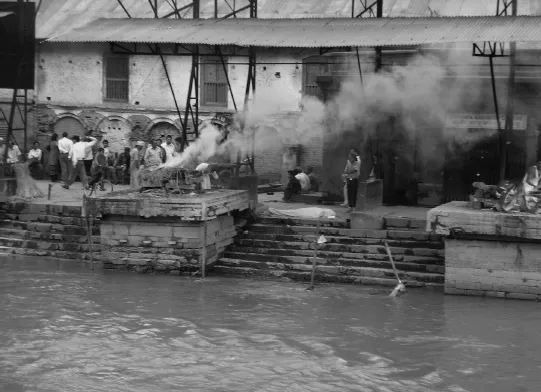
This is not a book on human mortuary activity in general. Mortuary ‘generalists’ – if such a person exists, and given the variability one has to deal with simply in certain periods of the Palaeolithic I suggest they should not – will find the following pages largely mute about overarching themes. I do, however, define some general terms below, which I use as an heuristic to approach the record and to try to rein in the data in a definable way. These terms span what I argue are the extremes of mortuary activity: the fragmentation and dissolution of the individual body at one extreme, and the collective sequestration of the bodies of many individuals in cemeteries at the other. Burials, as the book’s title suggests, feature strongly. I do consider other aspects of mortuary activity as well as other behaviours that I consider to be linked to burial, although I am, of course, dependent upon the preserva tional vagaries of the archaeological record. I will make the point several times in the book that whatever ‘normal’ or ‘routine’ mortuary practices were employed in the Palaeolithic, they are invisible; abandonment, exposure or for that matter floating bodies off down rivers will leave no traces, and I acknowledge that I am dealing with a small and biased fraction of behaviour (Figure 1.1). However small and biased it is, it is nevertheless informative, at least about those odd circumstances that required odd mortuary solutions. I shall argue, for example, that for most of the Palaeolithic what we define as ‘burials’ were probably very different to what we in the modern world think of as burials.
But that is jumping the gun, and these ideas will be developed in the core of the book and are summarised in the concluding chapter. The book is fairly unbalanced, yet I am unapologetic about this. Some chapters are rather brief, and others are fuller; in the latter, where I am on more familiar ground, the data are more abundant and, I believe, simply more can be said. If one were to judge the book by the length of chapters it could be said that it is about chimpanzees, Neanderthals and Gravettians, although (forgive the pun) this would be a grave insult to the dead of Skhūl and Qafzeh caves, of the shores of Lake Mungo, or of the Late Upper Palaeolithic and would, in addition, understandably horrify my primatologist colleagues. This is not a book in the main about chimpanzees, Neanderthals and Gravettians but it is a testimony to the wealth of data available for these subjects. I have drawn the book to an end arbitrarily: it ends with the end of the Pleistocene and the onset of interglacial conditions – a somewhat arbitrary point in itself. While the mortuary developments that I discuss towards the end of the Pleistocene certainly herald in a new form of funerary organisation (the ‘cemetery’ as I define it sensu stricto) that continues on into the Holocene as part of the behavioural repertoire of the Mesolithic, I do not pursue it. The Mesolithic literature is vast; I am not a Mesolithic specialist, and I therefore shy away from this in order not to add my Mesolithic colleagues to the primatologists as those on whose tarsals and phalanges I have so rudely trodden. Similarly, I am not an Epipalaeolithic specialist and the literature is again vast for several regions of the African continent, the Near East and Australasia, and here I end simply with a ‘taster’ of developments in mortuary variability. I therefore draw the book to an end using a mixture of general survey papers, some s pecific papers, and information provided by a number of kind and helpful colleagues. I apologise unreservedly to them, and to the Iberomaurusians, Capsians, Natufians and many, many more complex societies who I have so unfairly summarised in few words. In order to grasp – however cursorily – funerary developments at the dawn of the Holocene I have decided, however, that in this case a little is better in than out.
Figure 1.1 Open air cremation of the dead, Pashupatinath, Katmandu, Nepal. After the body is largely destroyed the remains are floated off down the river. Note another body ready for the pyre. Although cremation seems to have been practised very rarely in the Palaeolithic, rivers and other natural features used for their deposition would ensure that they do not come down to us (photo: author).
Death: the final frontier
As modest as I like to think I am, it would be unfair and incorrect to say that I know nothing. To paraphrase a great thinker, I know at least one thing; that I am going to die. It may be some comfort, though, that I am constantly told that when my physical body dies, my soul, mind or essence will continue to exist. I cannot prove or disprove this belief, but the possibility that things will not be finished for me when my body gives out should offer me comfort, and many of the specific ideas about exactly what should happen to my soul after death certainly do offer me occasional amusement. Herein lies the metaphysical nub of the problem: we cannot prove anything positive or negative, and while logic determines that life-after-death is improbable, our emotional responses retain the notion for our own comfort. I hold no beliefs about what will happen to me after death; I regard myself as an intellectual agnostic (sensibly I cannot demonstrate that gods, spiritual realms and spirits do not exist) but an emotional atheist (my gut feeling on logical grounds is that they don’t). This does not prevent me from entertaining notions of what my life was or will be like both before and after the proverbial three score and ten. Here I rapidly encounter contradiction. I find the notion of reincarnation illogical and biologically impossible, but at the same time I am attracted to the idea that I may once have been Nelson or Ghengis Khan (or Cleopatra – why do we assume that our gender remains the same over this spiritual cladogenesis?). Likewise, I do not believe that the dead really continue to exist, yet whenever I do anything naughty the image of my grandmother looking down at me from the clouds springs rather disconcertingly to mind, chastising me in her kind, calm way. When I was young this thought stopped me from stealing a Paddington Bear pencil top from a well-known stationers, and were it not for the improving spiritual agency of this ancestor I might have developed into a master criminal. There are, admittedly, better examples of the social agency of the dead, but at least this one is personal.
Paddington Bear does not concern himself with life-after-death (or did not: has he died, or will he ever?). I envy him his single-minded pursuit of marmalade sandwiches. But herein lies a serious question: at what evolutionary point did hominoids or hominins begin to develop a ‘sense’ of death, and a sense that something may lie beyond it? I remember when I was very young trying to imagine what it would be like not existing. For some reason I imagined this as floating slowly and silently along in the universe, alongside other diverse and sundry non-existing items such as, unsettlingly, double-decker Routemaster London buses. Why I should associate death with Routemaster buses I do not know, but it is, perhaps, an association no more eccentric than many beliefs about death and the dead that anthropologists have observed the world over. What a peculiarly inventive species we humans are! When we are not killing each other, putting our evil cunning to great effect in spreading vast swathes of misery ...