In our society, bullying is commonly seen as a normal, inescapable part of growing up that children and adolescents must simply endure. In Bullying, Suicide, and Homicide, Butch Losey challenges this viewpoint, arguing that bullying is not a part of childhood development, but rather an aberrant behavior that, for the victim, can lead to adverse decisions, such as suicide and homicide. He provides a detailed understanding of the relationship between bullying, suicide, and homicide and an assessment and response strategy that can be utilized by mental health professionals who work with children and adolescents. This strategy involves a three stage ecological approach: screening to identify warning signs for bullying, depression, suicide, and violence by means of the Bullying Lethality Identification System (BLIS), developed by Losey and a colleague; assessing the risks of suicide and threats of violence using specially tailored forms and tools; and mediating to identify appropriate interventions. All of the associated tools and forms that the author has created are included as appendices and on the accompanying downloadable resources. Losey's sensitive and compassionate treatment of this important subject will inform and motivate mental health professionals in their work with victims of bullying.
eBook - ePub
Bullying, Suicide, and Homicide
Understanding, Assessing, and Preventing Threats to Self and Others for Victims of Bullying
- 172 pages
- English
- ePUB (mobile friendly)
- Available on iOS & Android
eBook - ePub
Bullying, Suicide, and Homicide
Understanding, Assessing, and Preventing Threats to Self and Others for Victims of Bullying
About this book
Information
1 Persistent Bullying and Suicide as a Viable Option
DOI: 10.4324/9780203864623-1
Desiré’s car sits in the garage as if it is waiting for her to drive down Bach Buxton with the windows down and her hair blowing in the wind. Her room sits the way she left it, as if waiting for her return. I too sometimes lose track of reality and think she will be coming through the front door any minute.Donna Dreyer, mother of Desiré Dreyer
Moving to a New School
When Desiré1 first transferred to Eastside High School2 outside Cincinnati, Ohio, the eighth grader was full of promise. The attractive blond had trained as a cheerleader since she was seven and was eager to pick up with the sport at her new school. Like any teenager, she had trepidation about moving, yet this was a girl with many talents, a strong academic record, and a disarming smile. She was sure to adapt.
The transition to her new school would have appeared relatively smooth to anyone willing to notice in the hustle of the middle school milieu, yet a seemingly insignificant event would open the door to a perception of persecution that Desiré believed was orchestrated by Eastside High. She also would soon be in a downward emotional spiral and experience escalating abuse by her peers that continued over the course of the next several years.
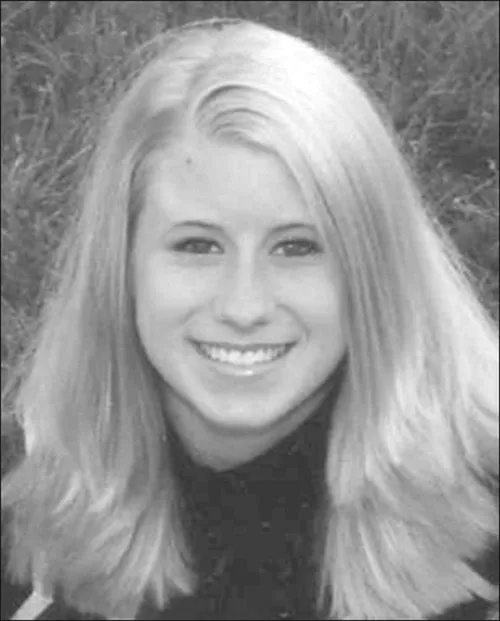
Desiré adjusted quickly to Eastside High and signed up for tryouts for the cheerleading squad. Desiré was caught off guard when told by the school counselor that she “held all zeros” on her report card from Kentucky and was ineligible to try out for cheerleading. Desiré was devastated, knowing that the zeros reflected a glitch in transferring her grades from her school in Newport, Kentucky, just across the river from Cincinnati. However, she interpreted the situation as a sign that the school administration did not want her.
Within just a few weeks of starting school, Desiré made several friends and developed a close relationship with Ashley, a girl her age. She also began a romantic relationship with a boy she met at the Eastside versus Westside basketball game. Her relationship with Cameron would become a source of support and affection and the catalyst for victimizing Desiré. Finally, her grades from Newport were forwarded, and she would qualify and compete with the junior varsity cheerleading squad through the end of eighth grade.
At the end of her ninth-grade year, Desiré decided to transfer to the communications and technology program at Westside High School; driving her decision certainly was the knowledge that Cameron was at Westside. The decision would require her to meet class prerequisites, and she decided to complete these during the summer. Along with the typical activities of a teen with a summer free, Desiré completed the necessary paperwork to transfer to Westside and attended summer classes.
Several days before the start of school, Desiré received a call from the school counselor at Westside informing her that her application was denied, and she would not be placed in the communications and technology program because the student enrollment maximum had been reached. Desiré was devastated once again, concluding that this was the second time the school district had intentionally hurt her. She talked to her parents, and her father brought the issue to the superintendent. Following a meeting with the superintendent, the school counselor informed Desiré that she would be admitted to the program. It was too late, however, because Desiré had settled on an impression of the school; she was not welcome at Westside.
Tenth grade offered great possibilities for Desiré. She entered Westside’s communication and technology program with enthusiasm. She was thrilled being with her boyfriend and had made the junior varsity football cheerleading squad. The coming tempest gained strength in the form of jealousy and teen competition.
The Genesis of Cruelty
Amber Gavin, another girl on the junior varsity squad, initially presented herself as a friend to Desiré and gained her trust. Her latent motive was to keep track of Desiré as she pursued Cameron, Desiré’s boyfriend. Amber was jealous of Desiré and Cameron’s relationship and was intent on breaking them up. When this did not work, she resorted to frequent emotional and physical threats. There were times when Desiré actually believed some of the horrid comments and threats that Amber said to and about her.
“I will kill you!” was written on the note posted on Desiré’s locker. “You are not worthy of Cameron; you are worthless.” The written threat was followed up with a confrontation in the hallway when Amber told Desiré that several girls were planning to attack her after cheerleading practice. Desiré called her mother by cell phone, who in turn contacted the school coach. He assured Mrs. Dreyer that no harm would come to Desiré. Her mother also contacted the police department, which in effect would be the first of many reports to the police department. Desiré’s parents had a casual meeting with Amber’s parents at the Gavin home, and it was decided to keep the children apart. All these strategies did stop the aggression temporarily.
In the fall, Desiré was fortunate to qualify for the varsity cheerleading squad, squeezing out Melanie Richards, a girl who had been in cheerleading as long as Desiré and who most thought was a guaranteed member of the team. Melanie was placed on the junior varsity squad, and this led to a resurgence of aggression toward Desiré.
Desiré began to struggle with her grades in the fall of that year, and Mrs. Dreyer became concerned yet did not make the connection that the grades were related to the bullying. Desiré began hanging out with several different girls who seemed to perpetuate a “bad girl” persona. Maybe this was Desiré’s method of protecting herself.
Mrs. Dreyer asked the school counselor to talk with Desiré and Cameron in hopes of understanding Desiré’s drastic drop in grades and her increasingly depressed and angry mood. The school counselor responded a few days later that everything was fine because Desiré was positive about school and was making plans for college. She told Mrs. Dreyer that she could not understand what would be causing such a drop in school performance.
Early October brought homecoming, and Desiré and Cameron enjoyed the evening together. They returned to Desiré’s parent’s home and sat down for a little while with Mr. and Mrs. Dreyer. The evening was interrupted when Amber and two of her friends began shouting obscenities in the front yard. Desiré and Cameron went outside, as did the Dreyers, and the girls continued to threaten and call Desiré names. They refused to leave the property when Mr. Dreyer asked them, and they continued to threaten Desiré. Ultimately, the confrontation ended when Cameron pushed Amber toward her car, and Amber left threatening to sue the Dreyer family.
The following weekend, the same group of girls waited to ambush Desiré as she returned from cheerleading an “away” game. As was typical, the cheerleaders and their families were en route to Applebee’s, where they would have dinner following the game. Desiré drove in her car, followed some distance behind by Mr. and Mrs. Dreyer.
Mr. Dreyer answered his cell phone just moments prior to arriving at Applebee’s. Desiré was screaming hysterically on the phone “Where are you?” she asked, stating that she desperately needed him. Desiré had parked at Applebee’s, and Amber and a group of girls had surrounded her car and were threatening her. She was locked in her car and had called the police. Moments later, Mr. and Mrs. Dreyer arrived, and the girls ran to their cars and left the parking lot; however, this was not before Amber screamed, “We will get you, you bitch.” When the police arrived, the police officer refused to take a report, stating that they would like the family to talk to the school resource officer at Westside High School.
The Final Blow
Bullying Desiré was in full swing by the New Year’s Eve party. Twenty minutes after arriving, Desiré was invited into one of the smaller bedrooms of the host home by Amber and two other girls, Susan and Brooke, girls who chose their friends based on the degree of benefit to them. Amber pulled out a small cigarette case and a piece of plastic tubing; from the case, Amber drew out a small, rolled-up white bag containing fine-powdered cocaine. She used the tube to draw a strong sniff of a line of the white powder from the cover of the case and then offered the case and tube to Desiré. Desiré walked away without comment, and as she walked away, Amber began calling her names and teasing her.
Desiré had brought both Susan and Brooke to the party and now planned to leave them. She went into the kitchen to get her belongings to leave and was confronted by Brooke, who asked her not to leave because she would not have a ride home. Desiré said that she was leaving, and if she or Susan wanted a ride, they would have to leave now. Brooke said that she would not leave, and Desiré left through the front door. As she drove away, Desiré could see the three girls from the rearview mirror; they were laughing and then turned back into the house.
The abuse gained in intensity following the New Year’s Eve party. Regularly, the girls would call and text message Desiré with threats to kill her. For several weeks, Desiré was threatened by phone and text messages every 10 minutes after school hours. Sometimes, it would go on for many hours.
Amber, Susan, and Brooke now began to harass her even in class. They threw empty water bottles at her, shot spitballs at her, and pulled her hair. This happened in the presence of the teacher when the teacher was not facing the class or when she left the classroom.
Suicide as a Viable Option
Amber, Susan, and Brooke chased Desiré down the hallway through the hustle of children during change of classes. Desiré ran into the restroom and locked herself in the stall farthest from the doorway.
“We will kill you, you whore,” Brooke threatened as she stood in the doorway holding the door open to the restroom. “If it doesn’t happen here, we will get you at home or at cheerleading. You can’t hide.”
Desiré called her mother as she sat crying on the floor of the girl’s restroom. She cried hysterically for about 30 minutes until she went to the principal’s office as her mother suggested. The principal called Desiré and the girls in to his office and told them all to stop the drama, and that if they did not, they would all be suspended from school for 3 days. Desiré wrote a small note to her friend during the next class on a piece of paper torn from the back of one of her textbooks:
They blamed it all on me. Mr. Jones told them that if anyone said one word as they walked out of the office it would be a three-day suspension. What do you know, the second they left, Ashley, it was like, I swear, I want to hit something or someone, they didn’t do shit. No I don’t know if I will be able to switch classes or not, so I think I will be changing schools or something and you know that they’re not going to stop anyway.
Life seemed to slowly close in around Desiré in an isolating cloud of torment, fear, and self-blame from the actions of those who would later mourn her loss. She sat in her room on the third day absent from school because she was sick, what her mother would later describe as “silent pain.” She read the text message sent from Amber. “You are worthless and no one, including Cameron, wants you, so you might as well kill yourself.” She likely saw little originality in Amber’s suggestion since Desiré had probably thought about suicide on many occasions and may have practiced the scenario about as many times.
She sent a text message to her friend Michelle: “I love Cameron.”
She sent a text message to her friend Gabby: “I love Cameron.”
She sent a text message to her friend Ashley: “Just tell me, who is saying it, and what are they saying?”
She walked to her bedroom and gathered the small box of items that she had collected methodically over the past several months and placed it on the dining room table. Desiré then tied the rope securely and placed her neck through the noose, lowering herself as she struggled. Life ended for Desiré that afternoon by her choice of one undesirable option—an option considered, practiced, and set aside until that day—one ending with death but surely more about escape.
From Tragedy to Prevention
Our society too often views bullying as an irritable but inescapable part of growing up, as if it is a stage that we all go through in childhood. Bullying has somehow earned its standing as a behavior that falls somehow in its own legal and social category. Bullying is fairly similar to another behavior with another name, yet that behavior is punishable by considerable jail time and carries a much greater social stigma. That behavior is called child abuse. Rarely are bullies punished using legal statutes, and punishment is most often determined by schools that claim there is little punishment that they can actually dole out. In the case of Desiré, none of the girls was held accountable for her actions. Her mother chose not to file a civil lawsuit because she did not want to suffer the anguish of going through a trial. She was also not that confident the lawsuit would be successful.
One of the many lessons learned from Desiré’s tragic story is that there was a missing piece in the prevention and intervention system for this school district. The school personnel were not prepared to assess the bullying Desiré was experiencing or adequately able to offer her mental health intervention in the context of bullying. I am glad to say that following the tragedy of Desiré’s death, the school district implemented policy changes, established a districtwide bullying prevention program, and trained all of the school staff (and some nonschool staff) on bullying prevention and intervention.
It is the goal of this book to describe in detail my process for addressing metal health referrals for children who are experiencing bullying and are experiencing suicidal ideation or threatening violence. My process is composed of three comprehensive stages; screen, assess, and mediate (SAM). The first stage, screen, utilizes the Bullying Lethality Screening Tool that I cocreated with my colleague Susan Graham. This screen helps identify the “red flags” for bullying, depression, isolation, suicide, and school violence. The second stage is assess, and this sta...
Table of contents
- Cover Page
- Half-Title Page
- Supplementary Resources Disclaimer
- Title Page
- Copyright Page
- Table of Contents
- Preface
- Acknowledgments
- Author’s Note
- Chapter 1 Persistent Bullying and Suicide as a Viable Option
- Chapter 2 Effective School Prevention
- Chapter 3 Inconspicuous Partners: Bullying as a Precursor to Suicide and Homicide
- Chapter 4 Factors That Increase Risk for Victims of Bullying
- Chapter 5 Screen
- Chapter 6 Assess
- Chapter 7 Mediate
- Chapter 8 Practical Application of the Bullying Lethality Identification System
- Epilogue
- References
- Appendix A: Bullying Lethality Screening Tool
- Appendix B: Suicide Assessment
- Appendix C: Threat Assessment
- Appendix D: Documentation of Bullying Intervention
- Index
- CD Contents
Trusted by 375,005 students
Access to over 1.5 million titles for a fair monthly price.
Study more efficiently using our study tools.
Frequently asked questions
Yes, you can cancel anytime from the Subscription tab in your account settings on the Perlego website. Your subscription will stay active until the end of your current billing period. Learn how to cancel your subscription
No, books cannot be downloaded as external files, such as PDFs, for use outside of Perlego. However, you can download books within the Perlego app for offline reading on mobile or tablet. Learn how to download books offline
Perlego offers two plans: Essential and Complete
- Essential is ideal for learners and professionals who enjoy exploring a wide range of subjects. Access the Essential Library with 800,000+ trusted titles and best-sellers across business, personal growth, and the humanities. Includes unlimited reading time and Standard Read Aloud voice.
- Complete: Perfect for advanced learners and researchers needing full, unrestricted access. Unlock 1.5M+ books across hundreds of subjects, including academic and specialized titles. The Complete Plan also includes advanced features like Premium Read Aloud and Research Assistant.
We are an online textbook subscription service, where you can get access to an entire online library for less than the price of a single book per month. With over 1.5 million books across 990+ topics, we’ve got you covered! Learn about our mission
Look out for the read-aloud symbol on your next book to see if you can listen to it. The read-aloud tool reads text aloud for you, highlighting the text as it is being read. You can pause it, speed it up and slow it down. Learn more about Read Aloud
Yes! You can use the Perlego app on both iOS and Android devices to read anytime, anywhere — even offline. Perfect for commutes or when you’re on the go.
Please note we cannot support devices running on iOS 13 and Android 7 or earlier. Learn more about using the app
Please note we cannot support devices running on iOS 13 and Android 7 or earlier. Learn more about using the app
Yes, you can access Bullying, Suicide, and Homicide by Butch Losey in PDF and/or ePUB format, as well as other popular books in Psychology & Business General. We have over 1.5 million books available in our catalogue for you to explore.