Philosophy in the Classroom
Improving your Pupils' Thinking Skills and Motivating Them to Learn
- 72 pages
- English
- ePUB (mobile friendly)
- Available on iOS & Android
Philosophy in the Classroom
Improving your Pupils' Thinking Skills and Motivating Them to Learn
About this book
Ever had difficulty inspiring your children to consider and discuss philosophical concepts?
Philosophy in the Classroom helps teachers tap in to children's natural wonder and curiosity. The practical lesson plans, built around Aesop's fables, encourage children to formulate and express their own points of view, enabling you to lead rich and rewarding philosophical discussions in the primary classroom.
This highly practical and engaging classroom companion:
-
- prompts students to consider serious moral issues in an imaginative and stimulating way
- uses Aesop's fables as a springboard to pose challenging questions about the issues raised
- providesfifteen key themes including happiness, wisdom, self-reliance and judging others as the basis for classroom discussion.
- uses powerful and creative drawings to illustrate activities and photocopiable resources.
-
Philosophy in the Classroom is an invaluable resource for any primary school teacher wanting to engage their students in meaningful philosophical reflection and discussion.
Ron Shaw has many years of classroom experience and is the author of more thanforty books helping primary and secondary school students to improve their thinking skills.

Frequently asked questions
- Essential is ideal for learners and professionals who enjoy exploring a wide range of subjects. Access the Essential Library with 800,000+ trusted titles and best-sellers across business, personal growth, and the humanities. Includes unlimited reading time and Standard Read Aloud voice.
- Complete: Perfect for advanced learners and researchers needing full, unrestricted access. Unlock 1.4M+ books across hundreds of subjects, including academic and specialized titles. The Complete Plan also includes advanced features like Premium Read Aloud and Research Assistant.
Please note we cannot support devices running on iOS 13 and Android 7 or earlier. Learn more about using the app.
Information
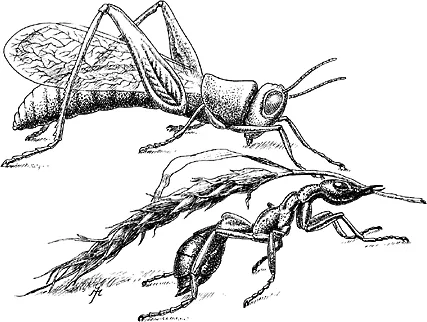
WISDOM


| Moral of the story: It is best to prepare for the days of necessity. ![]() |
| Thinking, Reasoning and Discussing Question 1. Some people say it is better to live for now (the present) and not to worry about the future. What are your thoughts on this? ........................................................................................................ ........................................................................................................ Question 2. Do you think it is possible to think about and plan for the future too much? ........................................................................................................ Question 3. Would you say that a person who focuses too much on the future might cause their life in the present to suffer? Can you think of examples? ........................................................................................................ ........................................................................................................ Question 4. Do you think that planning for the future requires sacrifices to be made? Justify your answer by giving an example or two. ........................................................................................................ Question 5. What situations or circumstances can you think of that are good examples of ‘it is best to prepare for the days of necessity’? ........................................................................................................ Question 6. Most would agree that by planning for the future the Ant shows more wisdom than the Grasshopper. Can a person who doesn’t plan for the future be considered wise? ........................................................................................................ Question 7. Does being wise mean that you have always to do what is best? ........................................................................................................ Question 8. Is a person who follows the best course of action most of the time wise? ........................................................................................................ Question 9. If there are two wise people, can one be wiser than the other? If you think ‘yes’ can you give an example or two to say how this is possible? ........................................................................................................ ................................................ |
Table of contents
- Contents
- Introduction
- Teachers’ Notes
- HAPPINESS
- KINDNESS
- JUDGEMENT
- POWER
- CO-OPERATION
- VANITY
- PLEASURE AND PAIN
- WISDOM
- FRIENDSHIP
- FAVOURS
- WEALTH
- SELF-ACCEPTANCE
- PURSUING DREAMS
- SELF-RELIANCE
- BEAUTY