- 364 pages
- English
- ePUB (mobile friendly)
- Available on iOS & Android
eBook - ePub
Evolutionary Perspectives on Environmental Problems
About this book
The twenty-first century presents an increasing number of environmental problems, including toxic pollution, global warming, destruction of tropical forests, extinction of biological diversity, and depletion of natural resources. These environmental problems are generally due to human behavior, namely over-consumption of resources and overpopulation. Designing effective policies to address these problems requires a deep understanding of human behavior as well as ecology. This in turn requires considerations of human nature, and the evolutionary "design" of the human mind.Evolutionary research on human behavior has profound implications for the environmental sciences. The aim of this collection is to bring together a variety of chapters that show how and why. Part 1, "Human Nature and Resource Conservation," addresses environmental problems from different evolutionary perspectives. Part 2, "The Ecological Noble Savage Hypothesis," examines the notion that our environmental problems are due to Western culture, and that our ancestors and people in indigenous societies lived in harmony with nature until the corrupting influences of Western culture. Part 3, "The Tragedy of the Commons," explores the conservation of common-pool or open-access natural resources, such as fisheries, forests, grazing lands, freshwater, and clean air. Part 4, "The Evolution of Discounting and Conspicuous Consumption," looks at the problem of explaining why people are so ecologically short-sighted and why people in developed countries consume so many resources. Part 5, "Overpopulation and Fertility Declines," addresses the evolution of human reproductive decisions. Part 6, "Biophilia," aims to explain why people cherish nature as well as destroy it.The goal of this volume is to introduce environmental thinkers to evolutionary perspectives on human behavior, and the new interdisciplinary sciences of evolutionary psychology and behavioral ecology. This reader aims to help bridge
Information
Part 1
Human Nature and Resource Conservation
1
Human Behavioural Ecology and Environmental Conservation
Introduction
Today we face global environmental problems of unprecedented—and often unforeseen—proportions. Much apparent human “progress” may be an illusion (Brown, 1990, 1991) because such high prices accompany it: examples include deforestation (e.g., Hecht & Cockburn, 1990), desertification (Chiras, 1988; Revelle & Revelle, 1988), pollution and other problems of intensified agriculture (Revelle & Revelle, 1988), massive extinctions (N. Myers, 1984; Wilson, 1988), and growing economic disparities (e.g., Smith, 1982).
Elsewhere (Low & Heinen, 1993), we are arguing that the “conventional wisdoms” on which we base our strategies for conservation may be wrong, and that if they are indeed wrong, our strategies will not work. These “conventional” wisdoms include our perception that people in pre-industrial (“traditional”) societies, being more directly and immediately dependent on the ecology of the natural systems around them, were deliberately more conserving and respectful of those resources (e.g., Bodley, 1990). “Conventional wisdoms” suggest that, as we have developed technological insulation against ecological fluctuations, we have, in important ways, “lost touch” with ecological realities and constraints, and have, at least to some degree, lost our respect for them. Another “conventional wisdom” is that all of us, as ethical individuals, pay deference to the common good; thus, because none of us wishes to cause destruction of resources, each of us will accept some level of personal cost to ensure the common good.
Heinen, Joel T. and Low, Roberta (“Bobbi”) S.: Human Behavioural Ecology and Environmental Conservation: Environmental Conservation, Vol. 19, No. 2, Summer 1992. Reprinted with the permission of Cambridge University Press.
As we have noted elsewhere (Low & Heinen, 1993), if these conventional wisdoms were true, ecological information would be sufficient to solve ecological problems. Yet, by the 1970s, we had more than enough information to attack problems that nevertheless remain, and even grow worse, today. What is wrong? We can see that our current efforts are discouragingly minimal at least in their effects. If we are correct, we need a new paradigm or pattern of behaviour for analysing these problems. The examples given above, for all their variety, have in common an underlying theme: conflicts of interests over resources. This theme is central in the field of behavioural ecology, which examines how environmental conditions shape organisms’ behaviour and life-history (e.g., Cronk, 1991; Krebs & Davies, 1991). Behavioural ecological theory generates testable predictions about resource-use patterns. We argue that it can also suggest specific strategies to promote wise resource-use.
The behavioural ecological approach argues that humans, in the manner of other living organisms, evolved to get resources in order to survive and reproduce, and that the well-being of the individual, of his/her family, and of his/her social group (comprising those people with whom the individual most regularly interacts) takes precedence, while the good of the larger group (the population or species) has never been relevant. We argue that natural selection has shaped all living organisms to exploit resources effectively, in competition with each other, and that our human problem is that, through our cleverness, we have created a novel evolutionary circumstance—we now have such technology that the very behaviours which we evolved to do well, outpacing others, are those most likely to ruin us (Low & Heinen, 1993). Using this new paradigm, we can integrate information from other fields (economics, psychology, etc.), and suggest new strategies, showing which strategies are most likely to be effective under particular conditions.
A Behavioural Ecological Approach
The evolution and ecology of resource-use in other species are well-studied (e.g., Daly & Wilson, 1983; Alcock, 1984; Trivers, 1985; Dawkins, 1986, 1989; Krebs & Davies, 1991 and specific studies cited therein). Resource acquisition has reproductive costs and benefits; is influenced by environmental extremeness, predictability, and patchiness, and can show sexual dimorphism. This proposition, stemming from Charles Darwin’s (1859, 1871) explicit statement to that last effect, seems simple—but can give rise to complex and profound results. The important point to variation is its heritability; however, in social animals, there can be significant cultural heritability (Cavalli-Sforza & Feldman, 1981; Lumsden & Wilson, 1981; Boyd & Richerson, 1985; Dawkins, 1986).
All living things have evolved to acquire and use resources to survive and reproduce, though in ways often constrained by ecological conditions. The most effective resource strategies in any particular environment should become the most common—involving, for example, those individuals using efficient strategies leaving more offspring in the next generation than their competitors. In this paradigm, there are two central concepts: (1) genetically selfish behaviours, i.e. those which enhance an individuals’ reproduction, tend to be favoured by natural selection; and (2) successful reproductive strategies vary ecologically with the richness, controllability, and predictability, of important resources.
Successful reproduction, however, does not necessarily mean producing the most offspring; it’s never that simple. Producing the maximum number of offspring in any reproductive bout seldom, in fact, leads to maximum lifetime reproduction. There are many examples of seemingly destructive behaviours which actually increase lifetime reproductive success: for example, infanticide, lethal conflict, delayed reproduction, and sterility (e.g., non-reproductive helpers at the nest, cf. Woolfenden & Fitzpatrick, 1984; sterile honeybee workers, cf. Seeley, 1985; and infanticide, cf. Hausfater and Hrdy, 1984), are all phenomena that one would think would decrease, rather than increase, reproductive success. Detailed analyses have shown that these behaviours are found in specific ecological and social circumstances and that their impact is an increased net reproductive success in those environments.
Each individual has reproductive interests, but these interests are shared by other individuals which share common genes—genes identical by descent—and thus several avenues are open to enhance net reproductive success (inclusive fitness maximization, or kin selection, cf. Hamilton, 1964). We expect organisms, including humans, to engage in activities that benefit relatives if they can recognize and interact with them; the extent to which this is true will tend to depend on the degree of relatedness. Thus helping relatives, even at some cost to oneself, can be genetically profitable.
Human intelligence probably evolved in the context of resource- and mate-competition (Alexander, 1971, 1979, 1987; Humphrey, 1983). Cooperation (Trivers, 1971) can be a highly effective competitive (i.e. reproductive) strategy. Reciprocity occurs only in long-lived, social species-species in which individuals recognize each other and are likely to interact repeatedly. Some examples of animals, other than humans, which actively reciprocate and form coalitions, are Chimpanzees (Pan troglodytes) (Goodall, 1986), Lions (Panthera leo) (Packer & Pusey, 1982), and African Elephants (Loxodonta africana) (Moss, 1988). If individuals interact only rarely or occasionally, indirect reciprocity is unlikely: individuals will mirror the behaviour of others in a “tit-for-tat” manner (reciprocating until the other actor defaults; see Axelrod and Hamilton, 1981). When risks are high, helping behaviours are likely to occur only or primarily among kin. However, we expect organisms in long-lived, social species (including humans), to do things which benefit potential reciprocators without immediate profit, depending on the probability that there will be future interactions between/among the individuals concerned.
The relevance of these patterns to resource problems should be immediately obvious. There are clear patterns to what we do (Table 1.1). Many behaviours that we call “altruistic” in fact have evolved because they were likely to benefit the inclusive fitness of those who followed them; such behaviours are genotypically “selfish”. Examples include parental and nepostic behaviours as well as friendship. “Genotypically altruistic” behaviours, i.e., those which benefit reproductive competitors at a cost to the doer (examples are rare, see Table 1.1), cannot evolve through natural selection, and while they may occur, are always vulnerable to invasion from genotypically selfish (lineage-enhancing) behaviours (Alexander, 1974). Accordingly, over time, genetic altruists will comprise an ever-decreasing proportion of the population (e.g., the last Shaker died a few years ago). Only if selection worked to favour the group, rather than genetic lineages, would genetic altruism be common.
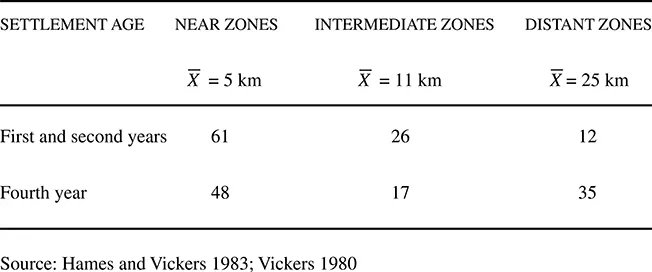
Table 1.1 Categories of Behaviours, and their Phenotypic and Genotypic Effects. Many behaviours that we call “altruistic” are in fact genetically profitable, as we can see when we separate behaviours according to their phenotypic (apparent) effect, versus their genotypic effect (effect on genetic lineage). Behaviours above the box can evolve by natural selection (genotypically selfish), and those below the box cannot (genotypically altruistic). We thus expect the latter types of behaviours to be rare (adapted from Alexander, 1974). See text for explanation.
In behavioural ecology, this is called the “levels of selection” problem. Considering this evolutionary background, it is not surprising that certain ecological conditions change the costs and benefits of helping. Minnis (1985 p. 38), for example, noted that as food stress increases, sharing of food in human groups increases to a point, and then decreases, at least in pre-industrial societies. In really extreme cases, dependent kin (children) can be abandoned (e.g., Turnbull, 1972; Boswell, 1988). Even when resources are not scarce, sharing tends to be directed towards kin, and towards individuals from whom the giver might receive benefits (Chagnon, 1982; Turke & Betzig, 1986; Hill & Kaplan, 1988).
Levels of Selection and Conservation Issues
Typically, when many, unrelated, individuals simultaneously have common access to resources, whether the resources are grazing lands or whale populations, they tend to exploit the resource more than is wise from a long-term sustainability perspective, in order to gain individually. As we have noted (Low & Heinen, 1993) this “commons” problem (Hardin, 1968) is probably the most frequent “levels of selection” problem seen by conservationists.
Why are these problems common? If selection maximized the interests of the group, they should not be. Yet many find it tempting to think of selection as acting “for” groups, without specifying relationships among individuals, or the impact of behaviours on individual inclusive fitness. Perhaps this is because kin selection involves individuals other than direct lineal descendants, and reciprocity may involve completely unrelated individuals—thus, individual selection results in groups that look “fit”. This approach is flawed: natural selection does not favour individuals which give up inclusive fitness for group good.
Yet this does not mean that we are simply harsh and fierce competitors, with no redeeming moral features. First, helping our family and friends, favoured by individual-level selection, is common and favoured by natural selection (phenotypically altruistic but genotypically selfish behaviour, see Table 1.1). Sometimes, too, the group may appear to benefit, incidentally, as a result of the cumulative selection of individuals (e.g., Williams, 1966). Interestingly, Wynne-Edwards (1962) argued that all species except humans were groupselected, because human populations seemed not to be “regulated”. Even then, the conflicts between individual profit and group good were already clear. In fact, humans alone may show any evidence of group selection at all. Laws, for example, are inflictions of constraint on individual behaviour by coalitions of others in the group (Alexander, 1987). There is little evidence, however, that we can convince individuals to change their behaviour solely because potential group benefits will follow.
This phenomenon is central to understanding human resource-use. If we suggest, as in the environmental movement of the 1970s, that everyone should pay an immediate, relatively small cost (taking shorter and fewer showers, recycling extensively, etc.), in the interests of gaining long-term global benefits which will be shared with non-relatives and competitors, we are asking for behaviours that have no evolutionary precedent. When we ask people to do things that cost them individually, with no benefit in the short term, and no matter how sensible they may be, we see defection; it hasn’t worked as a widespread strategy in the past, and we see no convincing evidence that it will in the future; we review several examples elsewhere (Low & Heinen, 1993).
Novel Evolutionary Environments
Individuals which have more resources than others, typically have greater reproductive success (Low, 1989b, 1989c, 1990a, 1990b). In modern societies, however, humans may have broken the link between resource accumulation and inclusive fitness (Low & Heinen, 1993). In the manner of other organisms, we humans apparently evolved to strive for resources, using them for ourselves and our families. We also typically derive proximate rewards of satisfaction and pleasure from success in that struggle.
When environmental conditions change, previously advantageous behaviour can continue to be driven by proximate cues (that, in the past, correlated with reproductive advantage), even when the proximate cues are unhinged from the (past) functional advantage. This is most common with environmental changes that represent evolutionarily novel events; we have reviewed several examples (Low & Heinen, 1993). In fact, the subjective assessment of “generalist” life-history traits as being somehow superior is, in fact, related to the fact that humans can alter other species’ habitats rapidly; most animals which have become rare or endangered are ecological specialists of which the habitat was altered by human action more quickly than the species could adapt to the alteration by natural selection (e.g., Schaller et al., 1985; see also Ehrlich & Ehrlich, 1981).
Because no organism, including humans, has evolved to be aware of ultimate costs and benefits, but only of proximate rewards or punishments, we have evolved to find pleasurable those things which enhance our survivorship or reproduction. Novelty complicates this process (e.g., sugar, cf. Low & Heinen, 1993). There is evidence that the human eye grows to compensate for blurred vision in children and adolescents, and this evolved mechanism, which tends to correct visual defects as a child grows, can overcompensate in children who read a great deal (an evolutionarily novel event); the result is a high incidence of near-sightedness ...
Table of contents
- Cover
- Halftitle Page
- Title Page
- Copyright Page
- Dedication
- Contents
- Acknowledgements
- Foreword
- Introduction: The Evolutionary Roots of Our Ecological Crisis
- Part 1 Human Nature and Resource Conservation
- Part 2 The Ecological Noble Savage Hypothesis
- Part 3 The Tragedy of the Unmanaged Commons
- Part 4 The Evolution of Discounting and Conspicuous Consumption
- Part 5 Overpopulation and Fertility Declines
- Part 6 Biophilia
- Conclusion: Integrating the Biological and Social Sciences to Address Environmental Problems
- References
- Contributors
- Author Index
- Subject Index
Trusted by 375,005 students
Access to over 1.5 million titles for a fair monthly price.
Study more efficiently using our study tools.
Frequently asked questions
Yes, you can cancel anytime from the Subscription tab in your account settings on the Perlego website. Your subscription will stay active until the end of your current billing period. Learn how to cancel your subscription
No, books cannot be downloaded as external files, such as PDFs, for use outside of Perlego. However, you can download books within the Perlego app for offline reading on mobile or tablet. Learn how to download books offline
We are an online textbook subscription service, where you can get access to an entire online library for less than the price of a single book per month. With over 1.5 million books across 990+ topics, we’ve got you covered! Learn about our mission
Look out for the read-aloud symbol on your next book to see if you can listen to it. The read-aloud tool reads text aloud for you, highlighting the text as it is being read. You can pause it, speed it up and slow it down. Learn more about Read Aloud
Yes! You can use the Perlego app on both iOS and Android devices to read anytime, anywhere — even offline. Perfect for commutes or when you’re on the go.
Please note we cannot support devices running on iOS 13 and Android 7 or earlier. Learn more about using the app
Please note we cannot support devices running on iOS 13 and Android 7 or earlier. Learn more about using the app
Yes, you can access Evolutionary Perspectives on Environmental Problems by Iver Mysterud in PDF and/or ePUB format, as well as other popular books in Biological Sciences & Evolutionary Psychology. We have over 1.5 million books available in our catalogue for you to explore.