![]()
1
Introduction
James Cameron: Blockbuster Auteur, Spectacularizer of Apocalypse
Every time I make a movie, everybody says it’s the most expensive film in the film industry.
James Cameron1
You Can’t Scare Me … I Work for James Cameron
Crew T-shirt worn on The Terminator set
In 1998 Canadian Atom Egoyan was nominated for an Academy Award for best director for his work on The Sweet Hereafter (1997). He lost out to another Canadian who made a film that, as Egoyan ironically observed, was similar to his own in this: “both The Sweet Hereafter and Titanic have big crashes with ice and water that take place halfway through the film” (in Lacey, “Tale” A2). Titanic’s winning director was, of course, James Cameron. And whereas Egoyan’s nomination for best director confirmed Hollywood’s inclination at least to acknowledge art films, Cameron’s win confirmed Hollywood’s inclination to honor, when possible, spectacular epics that do very well at the box office, and no film has ever done as well as Titanic. But in so awarding Cameron, it also gave him an artistic credibility that he had theretofore lacked, though to be sure he had long been acknowledged as a master, even genius, technician. The Oscar allowed for the possibility that Cameron’s work in cinema was qualitatively on a par with other auteurs, directors whose oeuvre was consistently both recognizable (the authorial “signature” of an auteur) and excellent (the ability of the person in charge of an industrially created product to raise it to the level of art, and himself to the level of artist).
To talk about James Cameron as an auteur is to acknowledge how very far film culture has come from the original usage of that term. To talk about Titanic as a blockbuster is to speak about how the film has profoundly changed what that category means. To talk simultaneously about auteurism and the blockbuster is to implicate them with each other, which is to suggest that as the notion of the auteur has become broader, the idea of the blockbuster has become discernible as something like a genre, and certainly as a format with familiar protocols. To talk about auteurism and the blockbuster together is to speak of a hybridization of categories only conceivable under postmodern conditions. For it is under postmodernism that the concepts of auteur and genre have indeed mutated far from their original intentions and understandings (originality itself being highly suspect under many postmodern rubrics).
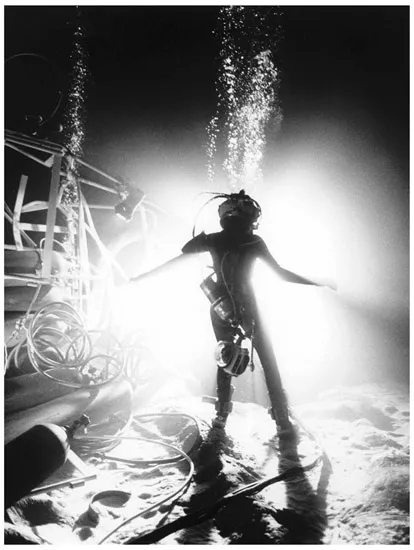
Cameron himself certainly subscribes to a variant of auteurism: “The director is always God,”2 he said in 1994, the year his True Lies became the first film with a $100 million budget. But the designation auteur is best used in a looser way with Cameron, at least on the face of it. In the traditional sense, as initiated in the 1950s by André Bazin et al. at Cahiers du Cinéma, subsequently debated in the 1960s in the United States by Andrew Sarris and Pauline Kael, and revised in the 1970s by Peter Wollen and others, Cameron is only provisionally an artist with a unique vision, and one whose entrance into either Sarris’s famed ‘Pantheon’ (Howard Hawks, John Ford) or even his close but no cigar ‘Far Side of Paradise’ (Douglas Sirk) would be questionable.3 This is not at all to say that Cameron is a hack director without a vision or a signature. Rather, it is to suggest that whereas John Ford had a more work-manlike approach in which the word artist never appeared (“My name’s John Ford. I make westerns,” he once famously said), and where Sirk deliberately subverted the conventions of melodrama to critique them, Cameron is neither generally subversive and working against the system in which he works, nor is he without pretenses to the idea of art in his films. If the original idea of an auteur was bound up in a strangely retrograde and romantic notion of genius, Cameron nevertheless fits that retrograde bill in his innovative nature. He has a true genius for special effects, technological ingenuity, and an extraordinary knack for giving the spectator a remarkably physical, visceral viewing experience. On one hand, Cameron is responsible for some of the most groundbreaking techniques and indelible images in contemporary cinema. When Titanic (1997) called for underwater camera movement impossible with existing equipment, he simply invented what he needed (as he had done before with The Abyss, resulting in five patents), and there is no doubt that the sight of the Terminator (Arnold Schwarzenegger) removing his own eye has become iconic in the contemporary film canon, signifying far beyond the narrative of the film itself and describing in a single image the reflexivity of vision and subjectivity in the late twentieth century.
On the other hand, Cameron is often legitimately seen as an ego-maniac with far too much money at his disposal, and his films can be not just expensive but offensive. True Lies (1994), in which Schwarzenegger plays an American secret agent single-handedly battling hordes of generic, hysterical Arab terrorists, affronted many critics and audiences like few films since Birth of a Nation (1915), but with little of the sustaining film historical interest that D.W. Griffith’s film offers. (In some ways it may be worse – in 1994 film culture might have been expected to have a significantly shorter fuse concerning racism than in 1915, and, re-viewed under post-9/11 conditions, the racial politics Cameron takes for granted seem symptomatic of how the U.S. became the object of such violent anger in the first place.) His technological achievements and visual and thematic consistency notwithstanding, James Cameron remains one of Hollywood’s most important directors for two interrelated reasons. First, he is responsible for many of the most expensive films ever made, as well as the highest grossing film in history, Titanic, a film that also tied the record for most Academy Awards won.4 Second, though Canadian by birth, he may be the most symptomatic director of American mainstream cinema of the last 20 years. As Marc Shapiro, author of an unauthorized Cameron biography put it: “James Cameron, once he steps behind the camera, has proven himself the voice of the man on the street.”5 That is, Cameron’s films, with all of their technological virtues and ideological limitations, tell us much not only about what U.S. culture has to say, but also about what it does not know it has to say.
Prior to Titanic, it was possible to say that Cameron’s genres were science fiction and action (or some combination of the two), but his most recent fiction feature, currently holding the world box office record6 of nearly $1.85 billion in gross receipts, appears to be a radical departure, though it has always been unfair to box any of his films into one genre – they are usually hybrids of at least two, and usually a few. Still, Titanic’s generic difference from its predecessors makes auteur criticism a useful framework for discussing Cameron as a director. As a set of organizing principles, it helps address how Titanic, a film that seems generically anomalous in the largely sci-fi and action-oriented works of the Cameron oeuvre, is actually very much in the Cameron groove. If we can speak of Cameron’s directorial signature, it comprises two major ideas. First, Cameron is obsessed with vision itself, and in ways that far exceed the preoccupation with vision any film director has. Every film he has ever made has spent a significant amount of its time, aesthetic, and narrative energy conveying to the viewer not only the requisite thrills and emotional and visceral intensity of Hollywood blockbuster entertainment, but also complex and quite serious meditations on what it means to see, both from his side as a filmmaker and from the spectator’s side as a filmgoer – as well as what it means to see under broader postmodern conditions. (See Chapter 3 for a full account of this visual paradigm.)
Additionally, and increasingly, Cameron’s groove has been money itself. Just as John Ford made his mark in the Western, and Alfred Hitchcock spoke through the thriller, so Cameron, once called the Cecil B. DeMille of his generation, 7 seems to have gravitated toward the block-buster as his format, and in so doing he has helped re-define radically what that means. Significantly, he has continually pushed the limits on budgets: Titanic, dubbed Cameron’s $200 million art film by Fox CEO Bill Mechanic, 8 required the funding of two studios, Fox and Paramount, and clinched the proposition that the more money spent on a film, the more it was likely to make – a precedent set by Cameron three times before with The Abyss (1989), Terminator 2: Judgment Day (1991), and True Lies.9 Atypical of most blockbuster films in that it was neither science fiction nor, strictly speaking, action, Titanic, both the most expensive (until Peter Jackson’s King Kong, 2005) and the most profitable film of all time, has nevertheless become something of a Golden Mean for blockbuster cinema. In this sense, one may legitimately argue that whatever other themes Cameron concerns himself with from film to film, one of his favorite subjects is the transparent cinematic representation of capital, and, by implication, his access to and control over it. That his films so often take a populist tone suggests that Cameron’s access is not purely a solipsistic one – he seems to see himself as standing as a proxy for the millions who don’t have this access, and their position as spectators is a way of participating in that access. What differentiates this circuit of exchange from a more typical director making large films for a large audience is something that becomes clearest in Titanic, as I shall discuss below.
In this, among other things, Cameron is a decidedly post-studio director. In other ways he more typifies the patterns of the Classical Hollywood studio system. His favorite film is The Wizard of Oz (1939), an exemplar of the latter, but the film that sparked his desire to make movies was Stanley Kubrick’s 2001: A Space Odyssey (1969), an exemplar of the former, which he saw 10 times on its release. This is a noteworthy event in part because 2001 was so different from the science fiction that came before it, and significantly altered the way subsequent science fictions films would be designed and made.10
Cameron was born in Canada and raised in an Ontario suburb of Niagara Falls. Frequent trips to the Royal Ontario Museum in Toronto,
FIGURE 1.1 Cameron’s science fiction film The Abyss clearly shows the influence of Kubrick’s 2001: A Space Odyssey
20th Century Fox / The Kobal collection
where he sketched antiquities, helped him become a skilled illustrator.11 At 17, his family relocated to Orange County, California, where Cameron, after false starts in college majoring in both physics and English literature, became a truck driver. In 1979 he went to work for B-movie king Roger Corman, who also fostered the early careers of Martin Scorsese, Francis Ford Coppola, Ron Howard and Jonathan Demme, among others, and here Cameron first began to hone his special effects techniques. Officially, his first directorial effort was Piranha II – The Spawning (1982), but Cameron was fired from the project after 12 days, though his name was kept on the film. Cameron himself considers The Terminator (1984) his directorial debut.
Called “the most important and influential film of the 80s,”12 The Terminator set crucial precedents in Cameron’s career. It was the beginning of the director–star collaboration between Cameron and bodybuilder turned actor turned Republican Governor of California Arnold Schwarzenegger, which has so far yielded four films (The Terminator, T2, Terminator 2 3-D: Battle Across Time (1996), and True Lies).13 (Cameron has producer credit on T3: Rise of the Machines (2003), but he neither wrote nor directed it.) It was also the first time Cameron had complete control over a film from story idea to script to production deal to locations to storyboarding to special effects to editing, and this was a control he seldom if ever has relinquished. The Terminator also marks the start of Cameron’s fascination with vision, violence, technology, strong women, money, and the nexus of representation and history. He is hardly the first director to address these ideas, but the particular nature of his engagement is altogether symptomatic of his – and this – historical moment: postmodernism.
There are two dominant traditions vis-à-vis the term postmodernism, one critical of it and one cautiously optimistic of its potentials. Postmodernism can be looked at as a problematic development in the history of politics, society and culture or as a potentially positive set of shifts, challenges and evolutions to the status quo. Where its critics (e.g. Fredric Jameson, Terry Eagleton, Jürgen Habermas, Hal Foster) see an epistemology marked by a breakdown of tastes and standards, its proponents (e.g. Craig Owens, Linda Hutcheon, Charles Russell, Robert Venturi) see an expansion or de-emphasis of, and a challenge to, those very same things.14 Looked at with a dark eye, postmodernism has led to the breakdown and fragmentation of the subject beyond repair. It (and its adjunct poststructuralism) marks a devalorization of genius and of the author – of the very fact or possibility of authorship. And perhaps most seriously, postmodern conditions are often cited as reasons society fails to invest in progress and history. Looked at progressively, postmodernism’s ostensibly fragmented subject (whose unification was likely always illusory anyway) is capable of far greater social and political radicality than ever before, and certain characteristic practices of postmodernism subvert the control of any dominant ideology which might lead to the formation of oppressive cultural c...