![]()
1
Harlem in Houston
Charles Orson Cook
The decade and a half following the outbreak of World War I witnessed the most dynamic growth rate in Houston’s history. The city’s total population in 1915 was barely 100,000, but by the early 1930s it had increased more than threefold, making it the largest city in Texas, second largest in the South, and among the twenty largest in the nation. African Americans had traditionally been an important component of Houston’s population. In 1870, for instance, census records indicate that almost 40 per cent of the Bayou City’s residents were black, a proportion that declined over the next half-century, but in total numbers the Afro-Houstonian community grew exponentially. In 1930, there were over 60,000 blacks living in Houston, mostly in the city’s Third, Fourth, and Fifth Wards near downtown. The clear bulk of this population increase was the product of a significant demographic shift among southern African Americans in the first few decades of the twentieth century that brought tens of thousands of black people into the nation’s cities. The best-known example of that shift occurred when blacks, mostly from the southern Atlantic states, began an important migration to the Harlem district of New York City, which made it what James Weldon Johnson called “Black Manhattan,” and “The Culture Capital” of Negro culture. This so-called Harlem Renaissance and the accompanying New Negro Movement of the interwar era was the most vivid representation of the kind of cultural explosion that came with the transition to an urban milieu that changed much of black life in early twentieth-century America. Almost as significant were similar demographic patterns that brought impressive numbers of southern Negroes, mostly from the mid-South, to other northern cities such as Chicago, Cleveland, and Detroit, all of which had smaller, though no less vibrant, versions of Harlem. Less well known, however, were the growing black populations of places such as Houston in the trans-Mississippi South and West. One study of Afro-Houstonians for the period 1914–1941, for example, has concluded that probably as many as 25,000 blacks moved to Houston, primarily from rural East Texas and neighboring Louisiana.
Like most of her sister cities in the North and East, Houston’s main attraction for black migrants was economic. The hope of employment in the Southern Pacific rail yards in the Fifth Ward, and the burgeoning petroleum and shipping industries along Houston’s new ship channel, were among the largest potential employers in Texas, particularly in the aftermath of World War I. By the late 1920s, Houston was the home of one professional black baseball team (and several amateur and semi-professional clubs), one African American owned insurance company, three black high schools (one in each of the Third, Fourth, and Fifth Wards), one junior college, three newspapers (one of which, the Informer, was the oldest in the trans-Mississippi West), an active chapter of the NAACP, a Colored Branch of the Houston Public Library, black chapters of the YMCA and YWCA, a black hospital, and countless restaurants, bars and speakeasies, grocery stores, churches, and funeral parlors. African American fraternal, civic, and professional clubs and organizations abounded. Superior Productions Company, which produced Texas’s first African American film in 1921, was also based in the Bayou City. In short, there was an active, even flourishing black community in Houston, and there was clearly an emerging black middle class composed of lawyers, physicians, clergymen, and teachers. One local black booster bragged in 1928 that Houston was the home to twenty-two African American physicians, fourteen dentists, seven pharmacists, and four lawyers. Moreover, he boasted, Houston had more black teachers with degrees than any city in the South and more 1928 high school graduates than any metropolitan area in the country. Moreover, he pointed to many black designed and owned commercial buildings as tangible proof that Afro-Houstonians were sharing in the city’s growing prosperity. Another insightful black observer in 1931 described Houston in remarkably modern terms when he characterized it as “a big sprawling city” that had many of the characteristics of a boomtown: ramshackle housing and inadequate municipal services but an exciting, go-for-the-main-chance atmosphere. Despite the fact that the Great Depression had made work much harder to find and that job competition among immigrant and native-born workers was keen, our observer concluded that race relations were comparatively good and that Negroes had more opportunities in Houston than most other cities.
It is, of course, unclear just how realistic such optimistic economic assessments of Houston’s growing black community actually were. Like many cities, Houston had its share of blatant racism, both officially in the form of rigid segregation laws and informally in a thousand ways, some of them dangerously violent. The specter of the 1917 Camp Logan race riot, which left nineteen dead and many more wounded, hung over the city for years as a reminder of the dreaded potential of racial violence. Moreover, the brutal and blatant nature of the 1928 lynching of Robert Powell on the eve of the Democratic National Convention was another grim reminder of the darker side of Houston’s racial climate. The power and influence of the renewed Ku Klux Klan in the Bayou city, particularly in the early 1920s was undeniable, too. But it is obvious, and to some degree remarkable, that in spite of such an oppressive atmosphere, Houston did offer a rich and complex cultural life for both established African American elites and newcomers on the make.
For most of the early twentieth century, the Fourth Ward, located just south-west of downtown, was the undisputed center of Houston’s black commercial and cultural life. It incorporated much of the post Civil War “Freedmen’s Town,” which in the aftermath of the Civil War was home to many emancipated slaves. In the first decade of the twentieth century, Houston’s first black high school was located there and so was the original Colored Branch of the public library. The largest and most influential black churches were in the Fourth Ward, and there too were most of the important black businesses, including the Pilgrim Life Insurance Company whose Houston headquarters were located in an imposing four-story structure that included an auditorium for public speakers and entertainers. By the late 1920s there were also six black movie theaters in the district, and several nearby white venues offered late night segregated shows for black audiences. Fourth Ward movie houses were so popular with blacks that in 1921 the Houston Censor Board was moved to ban any films starring the former boxer turned actor Jack Johnson for fear they might generate racial unrest. There was the Lincoln Theatre, too, owned and operated by blacks and widely regarded as the most modern and best equipped of all the black theaters in the city. The Lincoln, the site of many of the most ambitious theatrical and film events of the time, was for more than a decade a Fourth Ward cultural landmark. To be sure, by the late 1920s, the Third Ward had surpassed the Fourth in population and was beginning to attract a growing number of middle class blacks. Symbolized by the opening of the new Jack Yates High School, the dedication of the Houston Negro Hospital, and the creation of the Houston Junior College for Negroes, the Third Ward in the 1920s was increasingly attractive to Afro-Houstonians. As early as 1920, in fact, the Third Ward was showing clear signs of cultural life when an advertisement appeared in the city’s foremost black newspaper, the Houston Informer, for a “Grand Moonlight Picnic” at Emancipation Park with a dancing contest to music supplied by Calvin’s Lucky Five, “Those Jazzing Boys from Dixie.” The Fifth Ward, located to the immediate north of downtown Houston, continued to be the home of many working class African Americans and would eventually become the residence to more blacks than any other neighborhood. But until the Great Depression at least, the Fourth Ward retained its status as the symbolic heart of Houston’s black community.
A clear personification of Houston’s black renaissance was the life and career of Milton Larkin. At age four, in 1914, young Milton and his three siblings moved with their widowed mother from Navasota, Texas to Houston’s Fifth Ward to join family members in search of economic security. Mother Larkin worked for a time as a domestic, but died prematurely in 1921, leaving her children, including Milton, in the care of her sister. Milton eventually graduated from Houston’s newest black high school, Phillis Wheatley High, in 1927. He was largely a self-taught musician who was inspired to play the jazz trumpet after hearing the legendary New Orleans trumpeter Bunk Johnson play a Houston gig. Even before high school graduation, Larkin had become part of Houston’s black cultural community as a versatile and talented member of several local bands. By the mid-1930s he was best known locally as the leader of his own jazz ensemble, which played in several Houston nightspots, including the popular Harlem Grill and the Ethiopian Cafe in the Fourth Ward. In these early years, Larkin was joined in his band by two other musicians, Arnett Cobb on tenor saxophone, an alumnus of Wheatley High School, and the guitarist “Sonny Boy” Franklin, a Yates High School product. The saxophonist Illinois Jacquet, who also grew up in Houston, was another standout in Larkin’s ensemble who later established a national reputation. One indication of Larkin’s growing popularity was the fact that he and his band were chosen by the local NAACP chapter to provide the entertainment for its 1937 fundraiser. But by decade’s end, Larkin had migrated north to Chicago’s South Side where he launched a successful career as a nationally recognized band leader whose reputation for blues and big-band swing music extended over several decades.
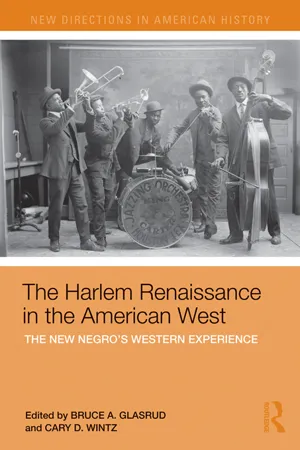
Figure 1.1 The King and Carter Jazz Orchestra was one of the musical groups that emerged in Houston in the early 1920s. The Robert Runyon Photograph Collection [RUN05020], courtesy of The Briscoe Center for American History, The University of Texas at Austin
Victoria Spivey was another accomplished musician who emerged from Houston’s black working class. Victoria’s parents, Grant and Adie Spivey, were former slaves who had acquired land in both Louisiana and Texas before hard times in the 1890s stripped them of most of their assets. In 1896, the Spiveys migrated to Houston in search of work, which Grant found as a part-time railroad flagman. Father Spivey presided over a family of musicians who performed frequently in local churches and community picnics. Victoria was born in Houston in 1906 and joined the family band as a pianist and organist at a very young age. Grant died suddenly in a work-related accident, leaving his family in desperate financial straits. At twelve, Victoria sought and found work as a pianist at Houston’s Lincoln Theatre, but she was soon appearing in speakeasies, bordellos, and clubs in Houston and nearby Galveston. She quickly developed a reputation as a blues vocalist who was inspired by the earthy recordings of Ida Cox and the live performances in Houston of Texas guitarist “Blind Lemon” Jefferson and the New Orleans jazz trumpeter Louis Armstrong, with whom she had performed onstage. Before she was twenty, “Vickie” Spivey had developed a “road blues” style all her own, which often included allusions to the migratory nature of the black experience and featured controversial lyrics that were often blatantly sexual. In 1926 Spivey left Houston for St. Louis where she recorded several of her own songs for Okeh records, including her classic “Black Snake Blues” and the one surviving nod to her Houston origins, “Big Houston Blues.” By World War II, she had graduated to more mainstream record companies such as RCA Victor and Decca. In 1930, she had a cameo role in the first Hollywood film with an all-black cast, Hallelujah, produced by the white director King Vidor, and shortly thereafter she was in the live jazz revue Hellzapoppin. During the blues revival of the 1960s, Spivey launched her own recording label, Spivey Records, and reprised many of her own songs, sometimes in collaboration with such white celebrities as Bob Dylan.
In many ways, the career of Beulah “Sippie” Wallace was remarkably similar. Born Beulah Thomas in 1898 in Houston, Sippie was part of a large, musically talented family, which included her brothers George and Hersal, both of whom were pianists/composers. Wallace got her professional start playing the piano for the Shiloh Baptist Church in the Fifth Ward. In her early teens she was already a follower of musical tent shows and soon was building a reputation as a blues singer in many of those same itinerant productions. At age fifteen, she moved to New Orleans with her brothers, and two years later married Matt Wallace, her second husband, who became her manager and who successfully guided her into blues stardom. Shortly thereafter, Sippie was in Chicago’s bustling jazz scene and in 1923 made her first recording for Okeh records. Her early career included recordings and live appearances with such jazz legends as Louis Armstrong and Clarence Williams. After a twenty-year retirement in Detroit, she was coaxed back into music in the 1960s by Victoria Spivey on whose record label the ageing Wallace made a comeback in this country and abroad. She died suddenly on tour in Germany in 1986.
Not surprisingly, among the most celebrated cultural expressions of Houston’s renaissance were those of visiting celebrity artists who added a sense of legitimacy and sophistication to the black community. To cite one example, the arrival in the spring of 1932 of Langston Hughes, the poet laureate of the Harlem Renaissance, was greeted with much fanfare in the Houston area. Hughes’s visit was actually just one stop on a speaking tour of the South that he made in late 1931 and early 1932, in part to acquaint himself with southern black culture but also to sell his own books to admiring audiences. Hughes stopped at Prairie View State College near Houston at the invitation of the Gilpin Dramatic Club, where he gave a poetry reading that was followed by a social mixer with faculty and students. Hughes’s program at Prairie View—which he repeated in many of his other stops—came in essentially two parts. The first was the author’s reminiscences about his own journey of discovery as a writer, and the highlight of the second part of his presentation was the reading of some of his best-known protest verse, including “Elevator Boy,” and “Suicide.” The college newspaper described the event as the best of the year and was effusive in its praise for the poet and his work. Several days later he was in Houston itself where he gave a similar program and sold several volumes of his work at the Pilgrim Auditorium in the Fourth Ward. The Houston Informer noted that the young poet attracted an enthusiastic crowd and demonstrated his brilliant ability to manipulate language. The Informer’s reporter observed that “perhaps Langston Hughes cannot be called great now,” but he was certainly destined for a brilliant future. She also observed that among the most interesting parts of the poet’s presentation was a collection of African and Caribbean artifacts, which caught the audience’s attention and which had helped inspire some of Hughes’s race poetry. Hughes made other stops ninety miles away in Beaumont and in the East Texas town of Tyler before continuing his journey to its ultimate termination in California. In 1938, the multi-talented James Weldon Johnson was in Prairie View to dedicate a new building and to speak on “The Negro: The Test of Democracy in America.” Marian Anderson, the much acclaimed black contralto, made five appearances in Houston in the decade before the outbreak of World War II, some to integrated audiences. She was in Houston first in 1929, but she returned in 1931 to help raise money for the Bethlehem Settlement House for black children with a program that was mostly classical but did include popular love ballads and Negro spirituals. For one performance scheduled in 1937 at the City Auditorium, The Pittsburgh Courier predicted, “she will receive all the homage due a renowned singer …; the Philadelphia singer will receive such a welcome [in Houston] that has seldom been accorded a celebrity.” Each of three black Houston high schools formed Marian Anderson Clubs in honor of her concerts in the Bayou City. The Georgia born tenor Roland Hayes, perhaps the first black classical singer to achieve an international reputation, also performed several times in Houston. His first appearance in the Bayou City was a concert in 1931 to a racially integrated audience in excess of 5,000. A second Houston performance four years later, however, attracted less than half that number. Black Houstonians were especially enthusiastic about a 1930 classical performance by Florence Cole-Talbert, whom the Informer called “the greatest operatic soprano the race has ever produced” and “among the greatest singers the world has ever known.” Perhaps the Informer’s enthusiasm for Madam Talbert was in part traceable to the fact that her piano accompanist was Miss Ernestine Covington, “celebrated local pianist and music instructor at Bishop College in Marshall, Texas.” The Informer apparently did not have to mention that Miss Covington was also the daughter of one of Houston’s most prestigious black families.
The famous Smart Set Company of Whitney and Tutt (actually an African American production company owned by half-brothers Salem Tutt Whitney and J. Homer Tutt) was in Houston on February 24, 1926 to put on its hit black song and dance review, “Bamboula,” in the City Auditorium. The composer J. Berni Barbour was in Houston in April of that same year promoting his operettas, and, according to The Pittsburgh Courier, “creating quite a stir with one of his new songs, ‘Heavenly Houston.’” Cab Calloway and his swing orchestra from Harlem’s famed Cotton Club made a triumphant tour of Texas in the spring of 1933, which included a full week of performances in the white Metropolitan Theater in Houston, but which also included a separate two-night dance engagement at the black Pilgrim Auditorium in the Fourth Ward. Calloway’s show, in fact, was so popular that it forced the...