When the American Bar Association recreated the trial of Ethel and Julius Rosenberg on the fortieth anniversary of their execution, the jury acquitted the "mock Rosenbergs," finding that in today's courts they would not have been convicted of espionage.
The 1950s trial of the Rosenbergs on charges of "Atomic Spying" and "stealing the secrets of the Atomic bomb" was a major event of Cold War America, galvanizing public opinion on all sides of the question. Secret Agents presents essays by lawyers, cultural critics, social historians and historians of science, as well as a reconsideration of the Rosenbergs by their younger son, Robert Meeropol. Secret Agents gives new resonance to a history we have for too long been willing to forget.
eBook - ePub
Secret Agents
The Rosenberg Case, McCarthyism and Fifties America
- 320 pages
- English
- ePUB (mobile friendly)
- Available on iOS & Android
eBook - ePub
Secret Agents
The Rosenberg Case, McCarthyism and Fifties America
About this book
PART ONE
Secrets
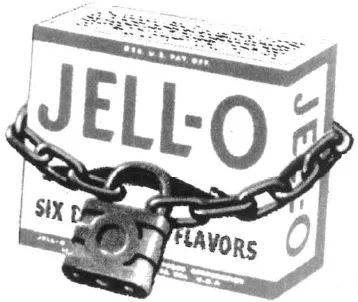
(Courtesy of Kraft General Foods, Inc.)
1
Jell-O
And this may help to thicken other proofs
That do demonstrate thinly.
That do demonstrate thinly.
—Othello
The infamous “Jell-O box.” In the trial of Julius and Ethel Rosenberg it would come to be regarded as the key piece of prosecution evidence, the “necessary link” tying the Rosenbergs to a purported conspiracy to steal the secret of the atomic bomb. As Judge Irving Kaufman put it in his charge to the jury, “the Government contends that you have a right to infer that there existed a link between Julius Rosenberg and Yakovlev [the Soviet agent] in that Julius Rosenberg in some way transmitted...the Jell-O box-side to Yakovlev.”1 And Irving Saypol, the prosecutor, claimed that Harry Gold's testimony about the Jell-O box “forged the necessary link in the chain that points indisputably to the guilt of the Rosenbergs.”2
The Jell-O box, the government contended, was a sign, a password from one conspirator to another. Ruth Greenglass testified that in January 1945 her brother-in-law Julius took her into the kitchen of his apartment and cut the side of a Jell-O box into two odd-shaped pieces, giving one to Ruth and keeping the other for himself. “This half,” she said he told her, “will be brought to you by another party and he will bear the greetings from me and you will know that I have sent him.”3
With the Jell-O box the government produced the damning code phrase— “the greetings”—uttered by self-proclaimed courier Harry Gold. As the conspirators met and matched their Jell-O box halves, Gold (it was said) intoned the surprisingly uncryptic words, “I come from Julius.” Without this primal scenario, the government had no evidence to present, nothing to link the Rosenbergs to David Greenglass and the atomic secrets.
Of course, the actual Jell-O box used in this transaction, as Roy Cohn and Myles Lane matter-of-factly admitted to the jury, had not been preserved. But since all Jell-O boxes look more or less alike (differing only as to which of the six delicious flavors then available—strawberry, raspberry, cherry, orange, lemon, and lime—had been favored on the crucial occasion), the prosecution helpfully produced, as an aide-mémoire in the courtroom, a facsimile of the Jell-O box panel in question, a simulacrum of the Jell-O box side that Harry Gold had, he said, presented to David Greenglass on that fateful morning in June 1945 in Albuquerque, New Mexico.
“The history of this Jello box side,” said chief prosecutor Saypol in his summation to the jury, presumably holding up the object in question, “the history of this Jello box side, the greetings from Julius, and Greenglass's whereabouts in Albuquerque come to us not only from Ruth and David, but from Harry Gold,...a man concerning whom there cannot be a suggestion of motive... [since] he has been sentenced to thirty years.”4 Much has been written about Harry Gold's active fantasy life, his spectacular history of untruthfulness: the wife and twin children he invented and described to his coworkers, his reasons for suddenly claiming to be Klaus Fuchs's courier, his opportunity, in the course of their adjacent incarceration in the Tombs, to concoct a story that concurred with that of David Greenglass. “Re-creating” in testimony an event that may never have occurred in life, Gold recalled an ambiguous, opaque transaction for which the Jell-O box was the chief clue, the clarifying agent. In a masterpiece of defamiliarization he described for the court the item he had received from Yakovlev as “a piece of cardboard, which appeared to have been cut from a packaged food of some sort. It was cut in an odd shape, and Yakovlev told me that the man Greenglass, whom I would meet in Albuquerque, would have the matching piece of cardboard.”5 On the witness stand he peered forward earnestly to examine the two cut halves of a Jell-O box and indicate for prosecutor Myles Lane which half more closely resembled the one he supposedly had received from Yakovlev and later matched with the half possessed by David Greenglass.
Yet in pretrial testimony, as is frequently noted, Gold had been much less specific about the occurrence, and the signifying details, of this meeting. It was David Greenglass who first mentioned, in a statement to the FBI the day after his arrest on June 16, 1950, that his visitor carried “a torn or cut piece of card,” not at that time identified as a Jell-O box. Greenglass supplemented this oral testimony with a memo to his attorney dated the following day.6 Only belatedly did Gold “remember” Greenglass's name, and address, and the fact that he himself had been in Albuquerque at all.7
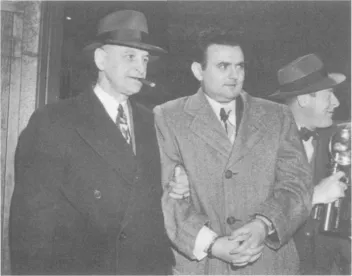
David Greenglass (right), with a U.S. Marshal (left), on his way into court for sentencing as a convicted atom spy in 1951.
(AP/Wide World Photos)
(AP/Wide World Photos)
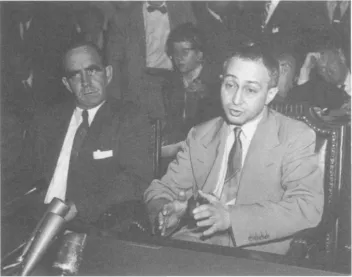
Harry Gold (right), testifying before the U.S. Senate.
(AP/Wide World Photos)
(AP/Wide World Photos)
As for Gold's coded message, the disarmingly direct “I come from Julius,” it had emerged, over the course of Gold's depositions, from a welter of other possibilities. In a recorded interview on June 14, asked explicitly by his attorney, John D. M. Hamilton, whether the conspirators had some agreed-upon recognition sign, Gold replied, “Yes, we did, and while this is not the exact recognition sign I believe that it involved the name of a man and was something on the order of Bob sent me or Benny sent me or John sent me or something like that.”8 The phrase was “Benny sent me,” say Miriam and Walter Schneir in their book Invitation to an Inquest;9 Virginia Carmichael cites the phrase “Benny from New York sent me”10 as one of Gold's versions of the message. In the documentary film The Unquiet Death of Julius and Ethel Rosenberg former FBI agent Richard Brennan testified that when he first interrogated Harry Gold, “he used the expression Benny sent me, which was the best that he could recall at the time. Subsequently, when the trial of Greenglass led to Rosenberg, we asked him...could it have been Julie sent me or Julius sent me. And immediately he brightened with a great light— yes, that is it. It wasn't Benny, it was Julius sent me.”11
“Benny sent me.” And then, “It wasn't Benny, it was Julius sent me.” Like the elusive Macintosh in Joyce's Ulysses, “Benny” here appears—and then disappears—out of nowhere, an apparent artifact. If we resist the suggestion that there was a real spymaster in New York and that it was he, the sinister Benny, and not the innocent (and framed) Julius Rosenberg who cut in pieces the mysterious Jell-O box, we are left with this supplement: “Benny sent me.” What, if anything, does Benny—rather, than, say, Bob, or John, or Julius—have to do with the story Harry Gold told on the witness stand, the story, which evolved over the period of his incarceration, of the Jell-O box, the coded password, and espionage?
Joyce's joke about “Macintosh,” you may recall, is based on a comic mechanism of association and slippage. Leopold Bloom has seen a man in a macintosh—a British term for raincoat, after Scottish inventor Charles Macintosh—and, through a series of aural misunderstandings, the man is hypostasized into someone named Macintosh, who then makes cameo appearances throughout the novel. Bloom is talking to a newspaper reporter:
—And tell us, Hynes said, do you know that fellow in the, fellow was over there in the...
He looked around.
—Macintosh. Yes, I saw him, Mr Bloom said. Where is he now?
—M'Intosh, Hynes said, scribbling. I don't know who he is. Is that his name?”12
“I don't know who he is—is that his name?” Consider now the case of Benny Kubelsky, better known as Jack Benny, a Jewish comic, entertainer, and radio personality, the most popular radio host of his time. Jack Benny ruled the air waves in the early days of radio. And for seven years, from 1934 to 1941, each Sunday night, Jack Benny's immensely successful radio program was brought to you by General Foods, and was called “The Jell-O Program.”13
“Jell-O again!” Benny would salute his audience each evening. During the program, Benny's patter included a constant joking with announcer Don Wilson about the product, so that soon “even pre-school-age children could rattle off Jell-O's ‘six delicious flavors.’”14 Benny and his wife, Mary Livingstone (born Sadie Marks), appeared (suitably refitted with WASP noses and profiles) in print Jell-O ads for magazines like Country Gentleman. So closely did American audiences link Benny and Jell-O that in a poll taken in 1973 of middle-aged listeners asked to name his radio sponsor, most answered “Jell-O,” although in fact Benny was subsequently sponsored by Lucky Strike cigarettes for almost twice as long as he had been by Jell-O.15
“Benny sent me.” When Harry Gold, fantasist and storyteller supreme, named to the FBI the supposititious man who gave him the Jell-O box half to deliver, he may well have been right the first time. It was in a way Benny who sent him, insofar as anyone did. “Benny” and “Jell-O” were themselves two halves of a single code phrase for American popular culture of the thirties and forties, and, for many listeners, for at least three decades after that. “Jell-O again!”
Moreover, it is not, I think, insignificant that Jack Benny, born Benny Kubelsky, was a Jewish comedian, and one whose most famous comic turns came from an emphasis on his stereotypically “Jewish” signature qualities (stinginess; the violin), despite the fact that he never used a Jewish accent in his act. For, as it happens, gelatin as a product, and Jell-O as a brand, was much in debate among Jewish leaders in the period from 1933 to 1952.
Here is the opening sentence of a book entitled Gelatin in Jewish Law, by Rabbi David I. Sheinkopf: “Can a substance of non-kosher origin undergo physical transformations that render it permissible according to Jewish Law?”16 At issue was the question of gelatin's origin, from the collageneous tissues of nonkosher animals. Some types of gelatin derive from bones and cowhides, others from pigskins. An extended tradition of rabbinic commentary from Maimonides down to the present day has debated the kosher status of animal by-products that at one time in the course of their treatment are rendered inedible for canine consumption and then are completely reconfigured, through chemical changes, so that they become, in effect, new substances.
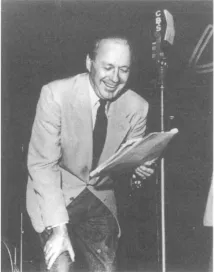
Jack Benny, rehearsing his radio show in 1954.
(AP/Wide World Photos)
(AP/Wide World Photos)
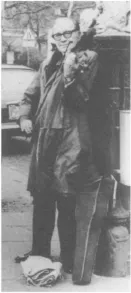
Benny, with his signature violin.
(AP/Wide World Photos)
(AP/Wide World Photos)
“Forbidden substances,” as Rabbi Sheinkopf points out, can “lose their prohibition once they become unsuitable for normal eating purposes.” Or, as a flyer sent out by Kraft General Foods in the spring of 1993 under the heading “Jell-O Brand Gelatin Dessert” insists, “During manufacture of gelatin, chemical changes take place so that, in the final gelatin product, the composition and identity of the original material is completely eliminated.” “Because of this,” the flyer continues,
gelatin is not considered a meat food product by the United States government. The plant is under supervision of the Federal Food and Drug Administration. If the government considered gelatin a meat food product, the plant would operate under the Meat Inspection Branch of the Department of Agriculture.
Jell-O Brand Gelatin is certified as Kosher by a recognized orthodox Rabbi as per enclosed RESPONSUM.
And the Responsum, six pages in Hebrew, is indeed enclosed in the same mailing.
I have to admit that as a young Jewish girl growing up on Long Island in the fifties in a secularized family and eating Jell-O brand gelatin dessert on the average of three times a week, in all of its six delicious flavors, it never occurred to me to worry about whether what I was eating was kosher, much less whether it was a highly disguised kind of meat. But for the observant Orthodox community this was and is a real question, made more crucial by the emergence in the thirties and forties of commercial products like Junket (a dessert mix containing rennet from the dried stomach lining of a calf) and, especially, Jell-O. Two Orthodox rabbis, Samuel Baskin and Simeon Winograd, originally gave a hekhsher, or kosher certification, to Jell-O brand gelatin but were persuaded to withdraw it in November 1951, because Jell-O's manufacturers used pigskins as well as cowhides and cattle bones as a gelatin source.17 Since that time the disputes appear to have been resolved, although a footnote in Sheinkopf's book al...
Table of contents
- Cover
- Half Title
- Title Page
- Copyright Page
- Table of Contents
- Acknowledgments
- Introduction: Secret Agents
- Part One Secrets
- Part Two Agents
- Part Three Testimonies
- Index
- Contributors
Trusted by 375,005 students
Access to over 1.5 million titles for a fair monthly price.
Study more efficiently using our study tools.
Frequently asked questions
Yes, you can cancel anytime from the Subscription tab in your account settings on the Perlego website. Your subscription will stay active until the end of your current billing period. Learn how to cancel your subscription
No, books cannot be downloaded as external files, such as PDFs, for use outside of Perlego. However, you can download books within the Perlego app for offline reading on mobile or tablet. Learn how to download books offline
Perlego offers two plans: Essential and Complete
- Essential is ideal for learners and professionals who enjoy exploring a wide range of subjects. Access the Essential Library with 800,000+ trusted titles and best-sellers across business, personal growth, and the humanities. Includes unlimited reading time and Standard Read Aloud voice.
- Complete: Perfect for advanced learners and researchers needing full, unrestricted access. Unlock 1.5M+ books across hundreds of subjects, including academic and specialized titles. The Complete Plan also includes advanced features like Premium Read Aloud and Research Assistant.
We are an online textbook subscription service, where you can get access to an entire online library for less than the price of a single book per month. With over 1.5 million books across 990+ topics, we’ve got you covered! Learn about our mission
Look out for the read-aloud symbol on your next book to see if you can listen to it. The read-aloud tool reads text aloud for you, highlighting the text as it is being read. You can pause it, speed it up and slow it down. Learn more about Read Aloud
Yes! You can use the Perlego app on both iOS and Android devices to read anytime, anywhere — even offline. Perfect for commutes or when you’re on the go.
Please note we cannot support devices running on iOS 13 and Android 7 or earlier. Learn more about using the app
Please note we cannot support devices running on iOS 13 and Android 7 or earlier. Learn more about using the app
Yes, you can access Secret Agents by Marjorie Garber, Rebecca Walkowitz, Marjorie Garber,Rebecca Walkowitz in PDF and/or ePUB format, as well as other popular books in History & North American History. We have over 1.5 million books available in our catalogue for you to explore.