- 192 pages
- English
- ePUB (mobile friendly)
- Available on iOS & Android
eBook - ePub
Using C&IT to Support Teaching
About this book
Information and Communication Technology is part of everyday life, including education. For teachers, however, keeping up to date with the various technologies that help support the learning process can be challenging.
This book meets those challenges by highlighting the benefits of ICT in teaching and learning, and providing practical advice and real examples from a wide range of subject disciplines. Writing in a refreshingly accessible style, the author dispels common myths surrounding technology and offers pragmatic solutions that can be easily used or adapted, covering the use of:
* overhead projectors and PowerPoint
* handouts
* videos and slides
* interactive whiteboards
* electronic information resources and e-learning.
This book demonstrates that with a little thought and preparation, technology can provide tangible benefits in the support of traditional teaching and will be essential reading for teachers, lecturers, staff developers and students in further and higher education.
Information
Chapter 1
Why not just use chalk?
Why not just use chalk? This may seem an obvious question; after all, most teaching has been done this way for several hundred years. Teachers are familiar with using chalk to convey information on the blackboard, which the students can then copy. There are a number of benefits of teaching this way as teachers are able to stand in front of a class and chat informally to their students. The flow of information can be dynamic as teachers are able to chalk ideas onto the blackboard and discuss the content as they proceed. Equally, students can also ask questions to which the teachers can respond, giving immediate feedback.
While this is the normal delivery method for teaching, and will continue to be so, there are inherent problems with this method of teaching. Lectures came about partly because teachers were the only people with access to ‘textbooks’, but these days all students can have access to the same information as their teachers. In addition, large student numbers reduce the ability to interact, putting pressure on teachers to deliver content in the brief time available, which leaves little time for questions.
These factors often combine to reduce lectures to monologues where teachers talk at their students for fifty minutes or so. Some teachers are naturally self-confident, good orators and comfortable with this approach, but not all teachers are capable of giving dynamic public performances–which is no reflection on their ability to teach. However, what is the point of lectures if teachers simply talk at the class or read their notes for the entire period?
If we consider lectures from the students’ point of view, no matter how interesting the subject or topic may be, attention spans always wane after about fifteen to twenty minutes. Students do not all learn the same way either and teachers will inevitably teach in their own preferred style. Therefore, lectures can greatly benefit from a change of format and the introduction of C&IT can add great value to the teaching and learning experience. If we could re-invent teaching again, would we start with the lecture?
THE LEARNING PROCESS
In order to appreciate how C&IT can enhance teaching and learning it is important to discuss the process of learning and how technology can support that process. By considering how we, the teachers learn, as well as how students learn, it is possible to design and embed C&IT into the curriculum with maximum effect. A lot of research has been undertaken over the decades on the subject of learning and several authors have become well recognised, such as Piaget, Vygotsky and Bloom (who developed Bloom’s taxonomy of learning). Although these researchers have become well known for their work on learning, much of their research is too complex for discussion within the context of this book. However, two strands of research do provide a pragmatic approach to the learning process: those of David Kolb (1984) and Peter Honey and Alan Mumford (1986). Kolb discussed how people learn through experience and devised an experiential learning cycle, as shown in Figure 1.1. This model was revised by Honey and Mumford in 1986, who proposed four basic learning styles. They also devised a questionnaire which helps people identify their own preferred learning style. By being aware of our preferred style of learning and those of our students, we are in a better position to help students learn in a way that best suits them. The four learning styles Honey and Mumford defined are:
- activist–people who take a hands-on approach to problems and tasks;
- theorist–people who postulate ideas based on analysis and objectivity;
- pragmatist–practical people who apply new ideas immediately;
- reflector–thoughtful people who consider all possibilities before taking action.
So, what does all this mean in terms of teaching and learning? If we consider Kolb’s learning cycle, it shows that people learn from concrete experience, which they then reflect on. This information or knowledge must then be conceptualised or ‘internalised’ and then backed up by active experimentation. Therefore, students learn by: taking in information; reflecting on it; digesting the information; and then experimenting in various ways to back up what they have learnt.
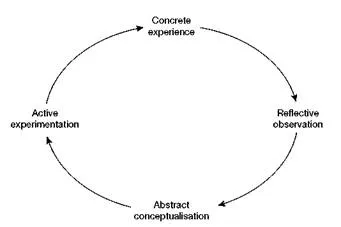
FIGURE 1.1 Kolb’s experiential learning cycle
However, since people learn in different ways, they will follow this cycle according to their own preferences. For example, activists will approach a problem head-on and test various ideas to see what works or what does not. Based on the outcomes and their observations, they will then reflect before internalising the information as knowledge, i.e. they will have learnt from their experience. For more information about student learning, refer to the web-based guide that accompanies this series, cited at the end of this chapter.
USING C&IT TO SUPPORT THE LEARNING PROCESS
Stephen Alessi and Stanley Trollip (2001) discuss the application of technology to the process of learning and highlight four general learning activities that have been shown to be successful through research, namely:
- presenting information;
- guiding the learner;
- practising;
- assessing learning.
These four activities reflect Kolb’s learning cycle, whereby assessment is an external process to help reinforce a student’s conceptualisation of a topic. There are a number of ways that teachers can engage in these four activities:
- lectures;
- tutorials;
- drill and practice exercises;
- group exercises (role play, games, simulations etc.);
- open-ended tasks (project work, case studies etc.).
C&IT can supplement these activities using a number of different methods:
- online tutorials etc.;
- simulations;
- knowledge reinforcement exercises;
- open-ended learning environments;
- computer-assisted assessment.
Technology can be employed to support each or all of these activities. It can deliver content that students can use in much the same way as content is delivered through a formal lecture. It can provide guidance on topics, through carefully crafted exercises which can be reinforced by practice activities. Finally, technology can be used to assess student learning through formative and summative testing. However, C&IT alone does not cover all activities and the technology itself is not a substitute for face-to-face teaching but acts as an enhancement to it. Therefore, the appropriate use of C&IT, tied in with face-to-face teaching and support, can improve the learning process for students and bring a number of benefits for teachers.
At a fundamental level of teaching support, C&IT can help you as a teacher to enhance lectures in a classroom setting:
- confidence with your students can be improved;
- improved eye contact can be developed when students switch between the technology and yourself;
- a better rapport can be established with the students paying more attention when you are speaking;
- points can be better illustrated with visually appealing examples;
- absentees can benefit greatly as the resources are accessible after the class.
THE DEVELOPMENT OF C&IT
Technology has been used to support teaching and learning since the 1960s when overhead projectors allowed teachers to project their work to larger audiences in a more visually stimulating format. The use of video in the classroom also provided extra stimulation and photocopiers (or Xerox machines as they used to be known) allowed content to be quickly reproduced and distributed.
However, over the last twenty years or so C&IT has developed at such a fantastic rate that now there are a huge number of electronic tools available to support students. Many of the commonly available types of technology are discussed in this book, but the continuing development of technology will mean that these tools will soon be more compact, portable, increasingly wireless and cheaper.
WHY SHOULD I USE TECHNOLOGY?
It is true that the use of technology requires initial investments of time and effort, but these are short-term endeavours for long-term gains. Technology offers a number of advantages:
- it saves time;
- it enhances learning;
- it accommodates more students;
- it’s cheaper;
- it’s innovative;
- it’s easy to use;
- students find it interesting.
A major reason for using C&IT, however, is because the students expect it.
A cautionary note about adopting C&IT
Although this book takes a pragmatic approach to the use of C&IT in teaching and learning, the advantages listed above have potential pitfalls. Initially, adopting C&IT will take longer than more traditional methods of teaching as it will take time to plan and prepare electronic resources. However, the potential long-term benefits will eventually lead to savings in time.
There is an ongoing argument about whether technology can enhance the learning process but, if used appropriately, it can be at least as valid as some face-to-face teaching methods, for example, when considering information delivery and communication. Cost savings may be longer term after initial investments in hardware, software and possible training costs have been assessed.
When considering how innovative C&IT can be, it is not necessarily a case of how advanced the technology is. What may be new technology to one teacher may be standard to another. Therefore, innovation with technology comes from the way it is used–and this is what leads to ease of use and how interesting it can make learning for the students. Using C&IT to support teaching and learning is only advantageous if it is planned and delivered with an appropriate use in mind.
ACCESSIBILITY AND SENDA
In 1995 the Disability Discrimination Act (DDA) was introduced in the UK to prevent discrimination against disabled people. In September 2002 this was extended to post-sixteen education with the Special Educational Needs and Disability Act (SENDA). Although SENDA is separate legislation, it is actually just part four of the DDA. What this means is that tertiary education must now ensure that it actively takes steps to avoid discriminating against disabled students.
For example, the provision of resources for blind students is directly relevant to the SENDA leglislation. Institutions do not have to have, for example, sets of resources available in Braille just in case a prospective blind student applies to do a course. However, the institution must ensure that it has the means to produce a set of Braille resources if required. This is an important point. The issue is not so much that institutions have to physically provide a full range of measures and provision for potential disabled applicants, but that they must have in place the capability to cater for disabled students should they apply. In the legislation this is referred to as making ‘reasonable adjustments’.
One of the potential benefits of using C&IT to support teaching and learning is that it offers technological ways of supporting disabled students in their studies. This would mean that existing teaching methods might not require much adaptation to cater for the support of disabled students. Staying with the example of blind students, there are now software programs that can reproduce text on a computer screen as audio output. One example is a program called Jaws that ‘reads’ the text to the listener.
There is a wide range of computer technologies for supporting disabled students, too many to discuss in detail for the context of this book. However, at relevant points in different chapters reference is made to the technology and how it can be of specific help to disabled students. It does not mean that technology is only applicable for certain aspects of support. We should always bear in mind provision for disabled students and remember that SENDA is legislation, not a suggestion. Using C&IT, however, can overcome many of the potential barriers to support for disabled students. There are several national bodies that can offer support and advice on this topic.
Using C&IT in tertiary education
Computer technology is now commonly used at all levels of education, so by the time that students reach further and higher education, they have already experienced C&IT in the classroom. For example, teachers at primary and secondary level now commonly use interactive whiteboards in class and students are familiar with using the Web to search for information. Even mature students, for example, are familiar with technology through the media. They know about the Web and many use email. They may even use C&IT in their everyday lives for such services as online banking or shopping.
Students who enter further and higher education will automatically assume that teachers and lecturers will also be using this technology. Therefore, students will be surprised if their teachers do not use technology and will wonder why they are shown outdated modes of doing things when they know that more advanced technological alternatives exist.
I do not intend to embarrass people into using technology, especially for the wrong reasons, but it is a valid point to make that some students will be perplexed by teachers who avoid technology altogether. Teachers are supposed to teach new materials and be more knowledgeable than the students, but their integrity will be questioned by some if they understand little about the various technologies that pervade society today.
C&IT has a lot to offer teaching and learning, and the benefits for both teachers and students are clear. Although this book is aimed at demonstrating some of the common uses of technology and provides numerous examples across the disciplines, it also attempts to take a pragmatic approach. In this sense, the most important point I would make is to be clear about your reason for using technology in the first place. Trying to use, and failing with, technology in front of students can be just as damaging as not using it at all.
Just as important as knowing how to use technology (after all we may know how to turn a video player on) is how to use it appropriately for teaching purposes. Students will quickly become disillusioned by the technology and the teachers if there is no clear purpose for using technology. Playing a video clip may provide variety to a class, but if the teacher doesn’t explain how the students should use the content, it adds nothing to the learning...
Table of contents
- Cover Page
- Key Guides for Effective Teaching in Higher Education Series
- Title Page
- Copyright Page
- Series Preface
- Acknowledgements
- Introduction
- Chapter 1: Why Not Just Use Chalk?
- Chapter 2: Preparing the Students
- Chapter 3: Overhead Projectors and PowerPoint
- Chapter 4: Handouts
- Chapter 5: Videos and Slides
- Chapter 6: Interactive Whiteboards
- Chapter 7: Electronic Information Resources
- Chapter 8: Virtual Learning Environments
- Chapter 9: E-learning
- Chapter 10: Field Trips
- Chapter 11: Laboratory Classes
- Chapter 12: Evaluating Teaching Resources
- Bibliography
- Appendix
Trusted by 375,005 students
Access to over 1.5 million titles for a fair monthly price.
Study more efficiently using our study tools.
Frequently asked questions
Yes, you can cancel anytime from the Subscription tab in your account settings on the Perlego website. Your subscription will stay active until the end of your current billing period. Learn how to cancel your subscription
No, books cannot be downloaded as external files, such as PDFs, for use outside of Perlego. However, you can download books within the Perlego app for offline reading on mobile or tablet. Learn how to download books offline
Perlego offers two plans: Essential and Complete
- Essential is ideal for learners and professionals who enjoy exploring a wide range of subjects. Access the Essential Library with 800,000+ trusted titles and best-sellers across business, personal growth, and the humanities. Includes unlimited reading time and Standard Read Aloud voice.
- Complete: Perfect for advanced learners and researchers needing full, unrestricted access. Unlock 1.5M+ books across hundreds of subjects, including academic and specialized titles. The Complete Plan also includes advanced features like Premium Read Aloud and Research Assistant.
We are an online textbook subscription service, where you can get access to an entire online library for less than the price of a single book per month. With over 1.5 million books across 990+ topics, we’ve got you covered! Learn about our mission
Look out for the read-aloud symbol on your next book to see if you can listen to it. The read-aloud tool reads text aloud for you, highlighting the text as it is being read. You can pause it, speed it up and slow it down. Learn more about Read Aloud
Yes! You can use the Perlego app on both iOS and Android devices to read anytime, anywhere — even offline. Perfect for commutes or when you’re on the go.
Please note we cannot support devices running on iOS 13 and Android 7 or earlier. Learn more about using the app
Please note we cannot support devices running on iOS 13 and Android 7 or earlier. Learn more about using the app
Yes, you can access Using C&IT to Support Teaching by Paul Chin in PDF and/or ePUB format, as well as other popular books in Education & Education General. We have over 1.5 million books available in our catalogue for you to explore.