Handbook of Oil and Gas Piping
eBook - ePub

Handbook of Oil and Gas Piping

a Practical and Comprehensive Guide

  1. 148 pages
  2. English
  3. ePUB (mobile friendly)
  4. Available on iOS & Android
eBook - ePub

Handbook of Oil and Gas Piping

a Practical and Comprehensive Guide

About this book

The objective of this practical oil and gas piping handbook is to facilitate project management teams of oil and gas piping related construction projects to understand the key requirements of the discipline and to equip them with the necessary knowledge and protocol. It provides a comprehensive coverage on all the practical aspects of piping related material sourcing, fabrication essentials, welding related items, NDT activities, erection of pipes, pre-commissioning, commissioning, post-commissioning, project management and importance of ISO Management systems in oil and gas piping projects. This handbook assists contractors in ensuring the right understanding and application of protocols in the project.

One of the key assets of this handbook is that the technical information and the format provided are practically from real time oil and gas piping projects; hence, the application of this information is expected to enhance the credibility of the contractors in the eyes of the clients and to some extent, simplify the existing operations. Another important highlight is that it holistically covers the stages from the raw material to project completion to handover and beyond. This will help the oil and gas piping contractors to train their project management staff to follow the best practices in the oil and gas industry. Furthermore, this piping handbook provides an important indication of the important project-related factors (hard factors) and organizational-related factors (soft factors) to achieve the desired project performance dimensions, such as timely completion, cost control, acceptable quality, safe execution and financial performance. Lastly, the role of ISO management systems, such as ISO 9001, ISO 14001 and OHSAS 18001 in construction projects is widely known across the industry; however, oil and gas specific ISO quality management systems, such as ISO 29001, and project specific management systems, such as ISO 21500, are not widely known in the industry, which are explained in detail in this handbook for the benefit of the oil and gas construction organizations.

Features:
  • Covering the stages from the raw material to project completion, to handover and beyond
  • Providing practical guidelines to oil and gas piping contractors for training purposes and best practices in the oil and gas industry
  • Emphasizing project-related factors (hard factors) and organizational-related factors (soft factors) with a view to achieve the desired project performance
  • Highlighting the roles of ISO management systems in oil and gas projects.

Frequently asked questions

Yes, you can cancel anytime from the Subscription tab in your account settings on the Perlego website. Your subscription will stay active until the end of your current billing period. Learn how to cancel your subscription.
No, books cannot be downloaded as external files, such as PDFs, for use outside of Perlego. However, you can download books within the Perlego app for offline reading on mobile or tablet. Learn more here.
Perlego offers two plans: Essential and Complete
  • Essential is ideal for learners and professionals who enjoy exploring a wide range of subjects. Access the Essential Library with 800,000+ trusted titles and best-sellers across business, personal growth, and the humanities. Includes unlimited reading time and Standard Read Aloud voice.
  • Complete: Perfect for advanced learners and researchers needing full, unrestricted access. Unlock 1.4M+ books across hundreds of subjects, including academic and specialized titles. The Complete Plan also includes advanced features like Premium Read Aloud and Research Assistant.
Both plans are available with monthly, semester, or annual billing cycles.
We are an online textbook subscription service, where you can get access to an entire online library for less than the price of a single book per month. With over 1 million books across 1000+ topics, we’ve got you covered! Learn more here.
Look out for the read-aloud symbol on your next book to see if you can listen to it. The read-aloud tool reads text aloud for you, highlighting the text as it is being read. You can pause it, speed it up and slow it down. Learn more here.
Yes! You can use the Perlego app on both iOS or Android devices to read anytime, anywhere — even offline. Perfect for commutes or when you’re on the go.
Please note we cannot support devices running on iOS 13 and Android 7 or earlier. Learn more about using the app.
Yes, you can access Handbook of Oil and Gas Piping by Murali Sambasivan,Sekar Gopal in PDF and/or ePUB format, as well as other popular books in Physical Sciences & Energy. We have over one million books available in our catalogue for you to explore.

Information

Publisher
CRC Press
Year
2018
Print ISBN
9781138625617
eBook ISBN
9780429861659
Edition
1
Subtopic
Energy

Section 1
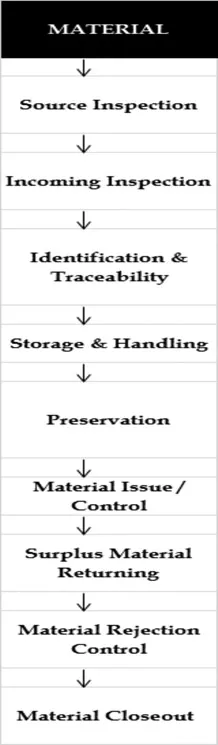
Material

fig0002
fig0003
fig0008
fig0004
After reading this section, you should be able to understand …
  1. The importance of oil and gas piping materials and its inspection at source.
  2. The process of incoming materials inspection at site.
  3. The dos and don’ts of storage, handling and preservation.
  4. The process of material issues and control at site.
  5. The importance of surplus material management and material rejection control.
  6. The procedure for material closeout.

1.0 Introduction

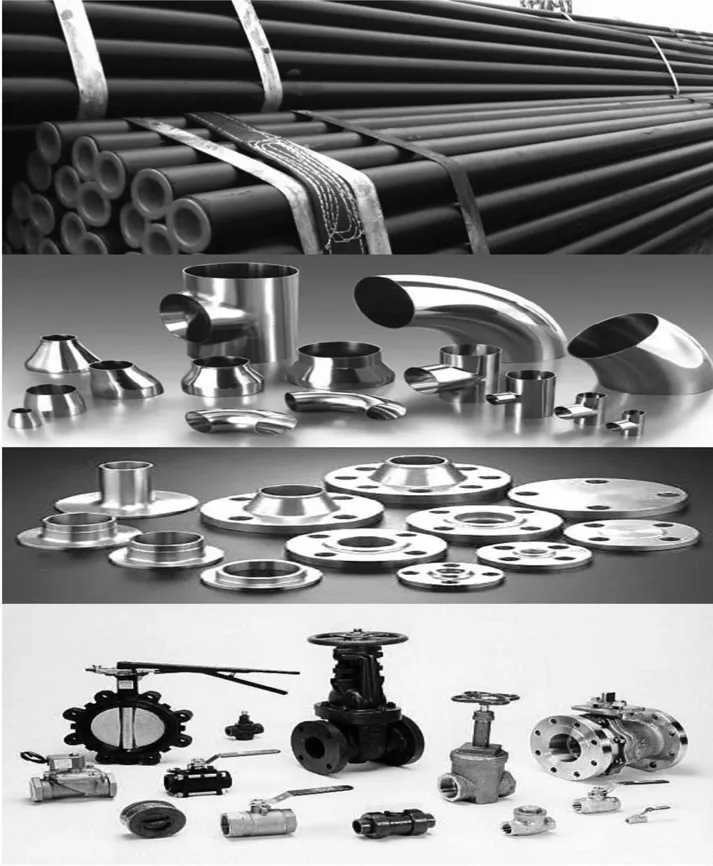
One of the important items in oil and gas projects is material. It contributes to approximately 50% of the total project cost. Specifically, for oil and gas projects, next to equipment, the important item is piping materials. In this section, oil and gas piping materials and their related management are discussed in detail. Often, material-related issues, such as delay in getting the materials, poor quality of materials, availability of materials, material prices, issues related to material suppliers and poor planning of material procurement, lead to delays, rejects, reworks, additional costs and complaints from clients. Due to the nature of such projects, the piping materials used in oil and gas projects are of high quality for safety and process-related reasons, which need to be properly taken care of through the entire life cycle of the project. Mistakes in materials management in oil and gas projects are very costly and can lead to substantial delays due to limited availability. In this section, all the piping material-related issues are discussed with DOs and DON’Ts to ensure trouble-free project management.

1.1 Source Inspection at Vendor Premises

Source inspection shall be coordinated and scheduled by the source inspection coordinator (SIC), and the inspection shall be performed in two categories:
  • a) Local purchase orders – the SIC will expedite this inspection through the QA/QC department.
  • b) Overseas purchase orders – the SIC will expedite this inspection, either with the QA/QC department personnel or by using a third-party inspection agency.
Prior to proceeding with the source inspection, the SIC, as a minimum, shall issue the following key documents to the inspector:
  • a) Purchase order/work order.
  • b) Applicable client specification.
  • c) Client-approved ITPs, procedures, method statements, etc.
  • d) Client-approved welding procedures, NDT and testing procedures.
  • e) Client-approved FAT procedures.
  • f) AFC drawings.
  • g) Client-approved product data sheets.
The following shall be ensured during the source inspection activity:
DOs DON’Ts

• Pre–inspection meeting (for long lead delivery items).
• Availability of client–approved documents.
• Availability of competent resources with vendor.
• Availability of materials/status (all MTCs shall be either ā€œORIGINALā€ or ā€œCERTIFIED TRUE COPYā€ signed and stamped by TPI).
• Establish the method of resolving technical queries and application of deviation request.
• Establish the method of communication.
• Establish the method of reporting progress/ schedule/recovery plan/non–conformances.
• Establish the inspection and test schedule.
• Establish the date of FAT.
• Establish the date of final inspection.
• Establish the contractual delivery date.
• Establish the final documentation requirements.
• Establish the logistics methods.
• Don’t start the work without approved PO/WO.
• Don’t start the work without client–approved documentation.
• Don’t deploy incompetent inspectors (PCR and TPI) to perform inspection.
• Don’t deploy inspectors (PCR and TPI) without cli...

Table of contents

  1. Cover
  2. Half Title
  3. Title
  4. Copyright
  5. Contents
  6. Preface
  7. About the authors
  8. List of appendices
  9. List of abbreviations
  10. Overall process flow chart
  11. Praise for this work
  12. 1 Material
  13. 2 Fabrication
  14. 3 Welding
  15. 4 NDT
  16. 5 Erection
  17. 6 Pre-commissioning
  18. 7 Commissioning
  19. 8 Post-commissioning
  20. 9 Project management
  21. 10 ISO standards
  22. Appendices