Making Space studies the built environment by examining the private-sector forces responsible for its development and the urban planning systems put in place to influence, guide and manipulate its outcomes.
The first part provides a theoretical context for understanding the functions of the property development sector and the state's interventions through the medium of urban planning. It analyses the relationship between planning and development, and focuses on the increasingly widespread adoption of more pro-active entrepreneurial planning agendas as a response to a growing disenchantment with traditional regulatory approaches.
The second part comprises case studies (drawn from Australia, New Zealand, the USA, the United Kingdom and Ireland) which investigate the ways in which urban planning in different socio-political contexts has influenced the outcomes of the property development process as well as the manner in which such planning systems have changed in order to enhance their influence.
- 256 pages
- English
- ePUB (mobile friendly)
- Available on iOS & Android
eBook - ePub
About this book
Information
1
Creating urban space
This book is about building cities. It focuses on the private-sector forces responsible for their development and the arrangements put in place to guide, manipulate and control them. Perhaps, in an era of increasing ‘globalization’, characterized by the instant transfer of finance and information across the globe, it is no longer necessary and perhaps even unwise to differentiate between urban and rural realms, at least in the developed world. Here, capitalist market-based systems, relations of production and urban-based media have penetrated the furthest recesses of the countryside, reshaping traditional ways of life, economies, politics and culture, to the extent that it becomes virtually impossible to delimit the urban arena. Nevertheless, the designation ‘urban’ does still convey meaning.
Cities are fascinating because, in our increasingly urban world, they are intimately tied into almost the complete totality of human life. This is what makes them such vibrant and exciting places in which to live and also such interesting places to study. Cities mirror the character of the society that creates and sustains them. They are therefore as multifaceted as the range of social complexity which engenders them. They express the ways in which people spend their lives, make their living and use their leisure time. They reflect the specialized forms of human economic activity which take place in urban areas, the relationships and interactions which underpin them and the legal forms which support and enforce them. They express the manner in which people are organized politically and shaped ideologically. They concern cultural, religious and artistic expression, reflecting varying forms of family life and gender roles, as well as the ways in which children are raised, educated and socialized into the adult world.
Our personal images of cities may well emphasize their social aspects, simultaneously encapsulating both positive and negative elements: the alienation of meaningless working lives, yet the almost tangible energy and stimulation of life at the economic and cultural heart of things: the congregation of people and the superficial depth of personal interactions, yet the ‘buzz’ or ‘craic’ of living to the pulse of modernism; the anonymity of the crowd, yet the behavioural freedoms this brings, unfettered by informal restraint of cleric, neighbour or even family ties; the promise of economic opportunity and social fulfilment, tarnished by realities of housing affordability crises, traffic congestion, fear of crime and for personal safety.
Obviously, then, cities are more than just buildings. Yet, a powerful and highly durable component of our image of urban areas is constituted by the built environment itself. Cities such as New York, San Francisco, Sydney, London and Paris are instantly identifiable by their unique skylines created by the massing of buildings, especially in their central business areas, or by the presence of particular landmark buildings. Even on a more intimate scale, it is hard to think of our home neighbourhoods without conjuring up an image of streets and buildings as well as the ties of family and friendships that make those places significant. Buildings themselves become endowed with personal meaning.
Cities comprise a plethora of functions, broadly relating to the productive, distributive, reproductive and exchange operations of our social system. These each have different requirements and preferences with regard to building type and urban situation. Locational competition between those functions, with their different degrees of economic power, together with the operation of planning systems which have often favoured mono-functional zoning, create an urban landscape in which different functions become inscribed in geographical space. These specialized functional areas, industrial, commercial and residential, are linked to one another through transport and communication infrastructure, facilitating the movement of goods, information and people, permitting the daily assembly of the labour force at its place of employment and its return home to recuperate after work. It is ‘built space’ which provides for the accommodation of all these activities and, if anything truly typifies the ‘urban’ and dominates our image of cities, it is probably their built environment. The chapters that follow are concerned with the making of that urban space, the product of a distinct process.
The urban fabric embodies considerable investment of materials and labour power in its construction and this can usually be written off only slowly, typically over many decades. Change is therefore normally also slow. Occasionally, whole new towns may be created but, generally, the vast majority of buildings are inherited from previous decades, sometimes from previous centuries. Nevertheless, cities do change. Buildings are adapted to accommodate different functions and land is upgraded to provide for more profitable uses. Areas whose functions have been overtaken by economic or technological change become redeveloped, while peripheral expansion accommodates growth.
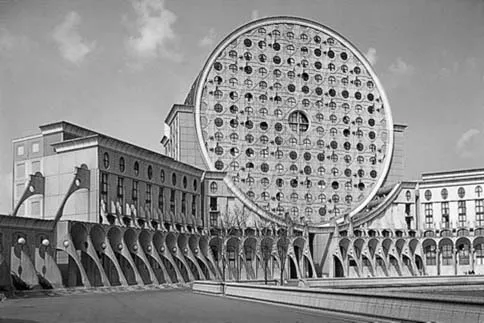
Figure 1.1 Les Arènes de Picasso, Marne-la-Vallée, France. As a non-market-related sector, social housing may exploit the freedom to be architecturally adventurous
The public sector often plays a direct role in the development of urban space, particularly of those elements which may be too risky for the private sector to undertake or which lie beyond the logic of individual capitalists to provide, such as transport infrastructure or housing for the poorer classes. However, it is normally the private sector that is responsible for the greater part of real-estate development. Therefore, it is the role of the private-sector property development ‘industry’ which forms the predominant focus of this book. The operations of this industry help to shape the built environment, influenced by powerful property interests, commercial companies and investment institutions. Indeed, as Feagin (1983, 3) has emphasized, urban space is not simply a neutral container of societal functions:
Cities under capitalism are structured and built to maximize the profits of real estate capitalists and industrial corporations, not necessarily to provide decent and livable environments for all urban residents.
However, the industry’s activities are not unfettered. The state has almost invariably sought to intervene in the process of creating the built environment through urban planning systems which seek to control, shape and influence the outcomes.
Chapters 2 and 3 provide the context for understanding the creation of the built environment. Chapter 2 describes the major agents and actors involved in the property development ‘industry’. It investigates their motivations and modes of operation, examining the relationships between them and their struggle to share in the profits which can accrue from development. It discusses the importance of location on the potential profitability of commercial property development and the impact which this can have on the urban landscape. It also reviews the existence of development cycles and their impacts on the property sector.
Chapter 3 addresses the topic of urban planning, examining its operations and briefly outlining its philosophical and ideological bases. Urban planning involves the intervention by the state, usually at local level, in the process of property development. Thus, it becomes an important influence on development by establishing the context within which the creation and redevelopment of the urban environment takes place. It may guide, support, promote or hinder development. It may regulate the way in which development takes place and seek to control its potentially adverse consequences by protecting environmental resources and conserving valued natural or built heritage. In so doing, it seeks to achieve certain desired spatial or social arrangements which otherwise may not be attained. Traditionally, intervention has involved regulating the uses to which urban land and buildings are put and controlling the character of development by determining maximum development densities (plot ratios) and building height. It may also exercise control over construction quality and vet the architectural design of schemes.
However, as urban planning comprises an activity of the state, in order to understand why the state intervenes at all in the creation and redevelopment of urban space requires some consideration of the role of the state in capitalism. Because there are several conceptions of state functions, there are necessarily several distinct interpretations of the role of urban planning and these require brief review.
The chapter draws particular attention to the manner in which strategic urban planning goals and the practice of urban planning have tended to change in recent years. As the operations of the state itself have tended internationally to become more ‘entrepreneurial’ and facilitative of the interests of capital, so changes in urban governance have frequently led to the transformation of urban planning towards more directly proactive modes of operation supportive of private-sector development interests. Consequently, urban planning has encompassed property-led urban regeneration policies promoted and often generously supported financially by the state, as it has attempted to harness the forces of property development in strategies of urban growth and renewal, thereby enhancing and transforming the city’s image and boosting urban competitiveness for inward investment. Thus, the conception of urban planning as an obstructive hurdle to development has become largely displaced in the western world over the past 20 years as it adopted increasingly entrepreneurial approaches that provided selective inducements to tempt developers towards certain courses of action rather than others. Increasingly, the carrot has tended to replace the stick.
The broad introductory discussions of Chapters 2 and 3 create a framework for understanding the nature of property development and the functions of urban planning. However, unique national and geographical situations arise which influence the precise outcomes. It is these twin elements of planning and development which are taken up in the six case-study chapters that follow (Chapters 4–9), adding flesh to the skeleton of generalization provided by the earlier chapters. Six cities have been selected for inclusion. Two are North American, two Australasian and two North European. They are Minneapolis (Minnesota), Sioux Fall (South Dakota), Sydney (New South Wales), Auckland (Aotearoa/New Zealand), Birmingham (England) and Dublin (Ireland). They share a certain heritage with respect to planning practice and a similar ethos concerning private property rights.
The selected cities are not of first rank on the global stage. There are two main reasons for this choice. First, world cities such as London and New York are unusual in many respects, being more closely tied into global events and processes compared to those of secondary or tertiary status which have more intimate regional ties. Their stock of buildings tends to reflect this. For example, London’s huge stock of office property comprises around 60 per cent of the UK total. The interest of property developers and investors also tends to be drawn from a global scale. Second, both New York and London have already been the focus of some excellent and readily available reviews, notably that of Fainstein (1994).
The aim of these case-study chapters is to investigate the ways in which urban planning in different national contexts has sought to influence the results of the property development process and the way in which the modes of operation of planning have developed in order better to effect such influence. This strategy argued strongly in favour of cities which were more typical of their societies, where the roles of the regional economy and local planning systems were more evident, yet which were still of a sufficient scale to experience significant property development pressures.
The first of the case studies is based on Minneapolis, Minnesota. Its focus is somewhat different from the remaining five cities as the chapter sets out to demonstrate, in the context of a market-dominated economy, that urban planning historically was a creature of private-sector needs. It aims to contradict the notion that planning represents some radical challenge to private property rights or a conspiracy to thwart the interests of the development sector. It shows instead that urban planning was in fact conceived in response to the requirements of downtown property and business interests and that it engaged from its earliest days in a highly entrepreneurial role which facilitated those interests. This conferred immense benefits on those with property, while imposing enormous real costs on those without.
The second of the case-study chapters focuses on Sydney, New South Wales, as it endeavoured to establish itself as a business centre of global significance. In examining the transformation of its central business area, the chapter addresses the problems which result from the fragmentation of urban planning authority between regional and local levels of control. With a predominantly state-level planning authority which was highly supportive of the property development sector, it reveals the difficulties that locally-based planning experienced in balancing the demands of developers with the conflicting views and objectives of community groups about the manner in which the central area was to develop.
Dublin, Ireland, is the subject of the third case study. It reviews how traditional urban planning, based on land-use zoning and development control, proved largely ineffective in dealing with the intensity of inner-city decline and dereliction prevailing during the 1980s. It examines the national government’s response to such shortcomings, notably the creation of financial incentives for designated urban renewal areas and the establishment of special-purpose agencies to promote private-sector property-based renewal. This engendered a marginalization of traditional urban planning and led to a rethinking of the operations of urban planning in the city.
The changing dynamics between the various agents involved in urban development are investigated in the study of Auckland, New Zealand. It examines the transformation of the city’s central business area during the course of a major office development boom, the subsequent boom in the construction of high-rise apartments and, finally, the impact of partnerships between the public and private sectors in the creation of ‘spaces of consumption and spectacle’.
The chapter on Birmingham, England’s second city, examines the way in which national planning policy has been interpreted locally. It reviews the manner in which the city has sought, by taking cognisance of the needs of property developers and investors, to employ the transformational power of the private-sector property development industry to recreate itself as a city of the twenty-first century.
The final case study reviews the transformation of Sioux Falls, South Dakota. It takes up the theme of urban ‘boosterism’ and examines the way in which the forces of property development have been harnessed locally in a strategic project to transform the city from a provincial north-plains meat-packer to a financial business centre of national significance. It shows how planning and property development have been used by the business élite in a scheme to re-create the urban landscape as one which embodies the culture of economic expansion, in which the urban landscape itself has become transformed into an icon of growth. However, as the authors are at pains to show, in this process of reshaping the city, clear winners and losers have inevitably emerged.
It should become apparent that, despite their geographical distance from one another, there is considerable similarity between the case studies in terms of the problems experienced, the planning processes adopted and the resultant outcomes.
2
Masters of space: the property development sector
This chapter reviews the operations of the property development sector, the industry largely responsible for making and re-shaping the built form of our cities. It focuses on private-sector operations, investigating the roles of the major actors and agents involved in the process of development, their motivations and the relationships between them. It examines the industry’s propensity to undergo cycles of boom and slump in the scale of development activity and reviews some of...
Table of contents
- Cover
- Half Title
- Title Page
- Copyright Page
- Table of Contents
- Acknowledgements
- List of contributors
- Preface
- 1 Creating urban space
- 2 Masters of space: the property development sector
- 3 Planning the city
- 4 The rejuvenation of downtown Minneapolis: urban planning as a creature of private-sector interests
- 5 Planning central Sydney
- 6 Dublin: property development and planning in an entrepreneurial city
- 7 Remaking the city: property processes, planning and the local entrepreneurial state in Auckland
- 8 Reshaping and reinventing the city of Birmingham, UK: planning for enterprise and the information society
- 9 Growth machines and growth pains: the contradictions of property development and landscape in Sioux Falls, South Dakota
- Bibliography
- Index
Trusted by 375,005 students
Access to over 1.5 million titles for a fair monthly price.
Study more efficiently using our study tools.
Frequently asked questions
Yes, you can cancel anytime from the Subscription tab in your account settings on the Perlego website. Your subscription will stay active until the end of your current billing period. Learn how to cancel your subscription
No, books cannot be downloaded as external files, such as PDFs, for use outside of Perlego. However, you can download books within the Perlego app for offline reading on mobile or tablet. Learn how to download books offline
Perlego offers two plans: Essential and Complete
- Essential is ideal for learners and professionals who enjoy exploring a wide range of subjects. Access the Essential Library with 800,000+ trusted titles and best-sellers across business, personal growth, and the humanities. Includes unlimited reading time and Standard Read Aloud voice.
- Complete: Perfect for advanced learners and researchers needing full, unrestricted access. Unlock 1.5M+ books across hundreds of subjects, including academic and specialized titles. The Complete Plan also includes advanced features like Premium Read Aloud and Research Assistant.
We are an online textbook subscription service, where you can get access to an entire online library for less than the price of a single book per month. With over 1.5 million books across 990+ topics, we’ve got you covered! Learn about our mission
Look out for the read-aloud symbol on your next book to see if you can listen to it. The read-aloud tool reads text aloud for you, highlighting the text as it is being read. You can pause it, speed it up and slow it down. Learn more about Read Aloud
Yes! You can use the Perlego app on both iOS and Android devices to read anytime, anywhere — even offline. Perfect for commutes or when you’re on the go.
Please note we cannot support devices running on iOS 13 and Android 7 or earlier. Learn more about using the app
Please note we cannot support devices running on iOS 13 and Android 7 or earlier. Learn more about using the app
Yes, you can access Making Space by Andrew MacLaran in PDF and/or ePUB format, as well as other popular books in Architecture & Urban Planning & Landscaping. We have over 1.5 million books available in our catalogue for you to explore.