- 722 pages
- English
- ePUB (mobile friendly)
- Available on iOS & Android
eBook - ePub
About this book
Hydrology covers the fundamentals of hydrology and hydrogeology, taking an environmental slant dictated by the emphasis in recent times for the remediation of contaminated aquifers and surface-water bodies as well as a demand for new designs that impose the least negative impact on the natural environment. Major topics covered include hydrological principles, groundwater flow, groundwater contamination and clean-up, groundwater applications to civil engineering, well hydraulics, and surface water. Additional topics addressed include flood analysis, flood control, and both ground-water and surface-water applications to civil engineering design.
Information
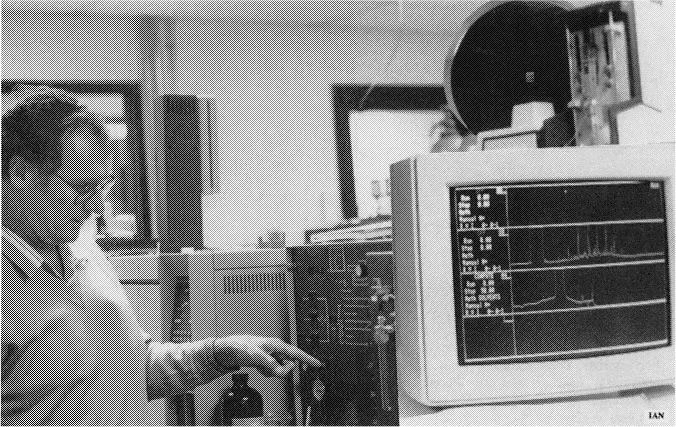
Appendix 1 Frontispiece. Chemical Analysis. In recent years the shift in emphasis in chemical analysis has been from wet laboratory procedures to computer-linked automated methods such as those provided by gas chromatography/mass spectrometry (GC/MS). The latter techniques provide accurate results on a wide array of complicated (largely organic) contaminants that are hazardous to health when present in drinking water in only very small quantities (i.e., parts per billion; ppb).
APPENDIX 1 WATER CHEMISTRY
APPENDIX SUMMARY
In recent times, the strong focus on contamination issues and water-quality testing has provided an incentive for the practicing hydrologist to gain a working knowledge of water chemistry. While it is not the objective of the hydrologist to take over the job of the laboratory chemist, an understanding of basic water chemistry is essential. This is because the accuracy and usefulness of chemical data are very much a result of:
• the care with which samples are collected in the field and delivered to the laboratory;
• the effectiveness of communication between the hydrologist and the chemist; and
• the skill with which laboratory results are analyzed and integrated into the overall picture of hydrologic observations.
With the above in mind, the contents of this appendix address three main areas:
1) Basic Concepts of Water Chemistry. A review is presented of the common units used to express chemical concentration; also addressed is the atomic structure of the water molecule and its ability to dissolve chemical constituents; some readily-obtainable properties of water are reviewed, such as conductivity and pH; some important hydrochemical processes are examined, including ion exchange and redox reactions.
2) Guidelines for Collecting Samples. Discussion relates to water-quality monitoring, sampling, and chemical acceptance tests performed in the field; and
3) The Analysis of Chemical Test Results. Some common methods are presented for plotting chemical data.
ORIENTATION
It is now generally recognized that the quality of groundwater is just as important as its quantity.
Todd, 1980
Over the past decade growing attention to ground-water contamination issues has contributed to increasingly stringent regulations and standards pertaining to water quality. This has generated the need for: (a) implementing a broad geochemical perspective to the hydrogeologic characterization of subsurface site conditions; and
b) collecting large suites of water (and soil) samples for chemical analyses that must be performed to ever-increasing levels of accuracy.
All of this, of course, has sharply increased the cost of field investigations and created the incentive for the practicing hydrologist to become better versed in practical aspects of water chemistry. Not that it is the intention of the geologist or civil engineer to assume control of the analytical laboratory. On the contrary, even the geochemist specializing in water quality is hard pressed to stay abreast of technical advancements in the field and still keep up with the workload involved in day-to-day testing (Figure A1-1).
For the hydrologist, a working knowledge of chemistry ensures a superior technical product by virtue of the fact that he or she is able to:
1) obtain a better general understanding of the natural chemical reactions that influence the quality of water;
2) use the services of the analytical laboratory more effectively (better quality samples delivered to the laboratory and improved communication with the laboratory geochemist contribute, in turn, to superior results); and
3) analyze and use chemical test results better (the hydrologist is the one with the broad-based overview of site conditions and should, therefore, play a lead role in integrating geochemical data into the big picture of hydrogeologic trends).
Within the context of the above it is important to remember that a good product emerges from good team work between the hydrologist who supports such field operations as sampling, and the chemist who tests these samples in the laboratory (Figure A1-1). Team work is enhanced by effective communication and it is important for the hydrologist to know something about the vocabulary and protocols followed by the chemist. The student will find that he or she has already set the stage for gaining a good working knowledge of these merely by exposure to high-school chemistry. The objective of this appendix is to review some of the fundamentals of water chemistry and then expand on some of the practical aspects of this knowledge. As explained in the preface, the format selected for this book allows no space for more detailed treatment of this subject matter.
The field of general chemistry is far too big to be fully mastered by the average hydrologist. Even water chemistry, a specialization of geochemistry (and a small part of general chemistry), remains a vast subject meriting a lifetime of study. Some universities specializing in hydrology offer courses in low-temperature geochemistry which address the geochemistry of natural water and typically focus on environmental issues. These are offered under a variety of titles (e.g., “Environmental Geochemistry"). Where a class of this type is not taught, the contents of the present appendix may be included in the undergraduate curriculum for hydrology (and with this in mind, the format of this appendix follows that of chapters within the text to the point of including a laboratory exercise).
Some recommended references for the undergraduate student include the most recent update of a classical publication by Hem (Hem, 1985 “USGS Water-Supply Paper 2254"); a small but very useful booklet on sampling by Garrett, 1988; a more...
Table of contents
- Cover
- Title Page
- Copyright Page
- Table of Contents
- SECTION A INTRODUCTION TO HYDROLOGY
- SECTION B GROUND-WATER FLOW
- SECTION C GROUND-WATER CONTAMINATION & CLEANUP
- SECTION D GROUND-WATER APPLICATIONS TO CIVIL ENGINEERING DESIGN
- SECTION E WELL HYDRAULICS
- SECTION F SURFACE WATER
- SECTION G SOME GENERAL ASPECTS OF HYDROLOGY
- APPENDIX 1 WATER CHEMISTRY
- APPENDIX 2 WATER LAW (in the United States)
- APPENDIX 3 CONVERSION FACTORS & INDEX PROPERTIES
- REFERENCES
- INDEX
- COMPUTER DISKETTE Back Cover Jacket
Trusted by 375,005 students
Access to over 1.5 million titles for a fair monthly price.
Study more efficiently using our study tools.
Frequently asked questions
Yes, you can cancel anytime from the Subscription tab in your account settings on the Perlego website. Your subscription will stay active until the end of your current billing period. Learn how to cancel your subscription
No, books cannot be downloaded as external files, such as PDFs, for use outside of Perlego. However, you can download books within the Perlego app for offline reading on mobile or tablet. Learn how to download books offline
Perlego offers two plans: Essential and Complete
- Essential is ideal for learners and professionals who enjoy exploring a wide range of subjects. Access the Essential Library with 800,000+ trusted titles and best-sellers across business, personal growth, and the humanities. Includes unlimited reading time and Standard Read Aloud voice.
- Complete: Perfect for advanced learners and researchers needing full, unrestricted access. Unlock 1.5M+ books across hundreds of subjects, including academic and specialized titles. The Complete Plan also includes advanced features like Premium Read Aloud and Research Assistant.
We are an online textbook subscription service, where you can get access to an entire online library for less than the price of a single book per month. With over 1.5 million books across 990+ topics, we’ve got you covered! Learn about our mission
Look out for the read-aloud symbol on your next book to see if you can listen to it. The read-aloud tool reads text aloud for you, highlighting the text as it is being read. You can pause it, speed it up and slow it down. Learn more about Read Aloud
Yes! You can use the Perlego app on both iOS and Android devices to read anytime, anywhere — even offline. Perfect for commutes or when you’re on the go.
Please note we cannot support devices running on iOS 13 and Android 7 or earlier. Learn more about using the app
Please note we cannot support devices running on iOS 13 and Android 7 or earlier. Learn more about using the app
Yes, you can access Hydrology by Ian Watson in PDF and/or ePUB format, as well as other popular books in Physical Sciences & Environmental Science. We have over 1.5 million books available in our catalogue for you to explore.