With this innovative text, the study-and teaching- of probability and random signals becomes simpler, more streamlined, and more effective. Its unique "textgraph" format makes it both student-friendly and instructor-friendly. Pages with a larger typeface form a concise text for basic topics and make ideal transparencies; pages with smaller type provide more detailed explanations and more advanced material.
- 472 pages
- English
- ePUB (mobile friendly)
- Available on iOS & Android
eBook - ePub
Probability, Random Signals, and Statistics
About this book
Trusted by 375,005 students
Access to over 1.5 million titles for a fair monthly price.
Study more efficiently using our study tools.
Information
1
INTRODUCTION
The most important questions of life are, for the most part, really only problems of probability.
Laplace
Life is a school of probability.
Walter Bagehot
Probability is the very guide of life.
Cicero
This chapter provides a general introduction to the topics covered in the book.
Main Topics
- What Is Randomness?
- What Are Probability and Random Processes?
- Why Study Probability and Random Processes?
- Key Features of the Book
- Rules for the Presentation
1.1 Randomness, Random Signals and Systems
The primary goal of this book is to study probabilistic tools and methods for solving various types of problems encountered in engineering that contain a degree of randomness, in particular, random signals and random systems. It is then natural to ask “What is randomness?” Loosely speaking, randomness simply means not predictable with certainty. For example, an event is random if and only if its outcome cannot be predicted with certainty. Otherwise, the event is deterministic. Here are some examples:
- Your final grade of this course is random at this moment.
- Your body weight at a certain time next year is random now.
- The age of a friend whose birth date you do not know is random.
A signal is a time function that carries useful information for the problem under consideration. A random signal is a signal whose values cannot be predicted for sure. Examples include:
- Dow Jones Industrial Average Index, which jumps up and down with uncertainty although with a growing trend over time.
- – Your grade point average at this university, whose future value cannot be predicted with certainty.
- The output voltage from a solar detector, which depends on weather conditions that are impossible to be exactly predicted.
- The bit stream through a digital communication channel, which fluctuates with time between 0 and 1 due to e.g., unpredictable interference.
- The exact position of a gas molecule in a box.
A random time function containing no useful information about the problem is known as noise. Examples include:
- Thermal noise in an electronic circuit.
- Background hiss from a radio receiver.
- Picture interference (“snow”) on a TV screen.
- Sea sounds in a sonar system.
A noise process may also be said to be a random signal (in its wide sense). The state of a random system as a time function is random.
1.2 Probability and Random Processes
There are primarily two reasons for studying randomness.
- Many practical problems “in fact” involve random effects.
- Many practical problems are too complex to be described accurately in a deterministic manner and thus may be (artificially but) more effectively modeled as problems with random effects.
There is always a gap between mathematical models and reality. Real-world problems are usually neither completely deterministic nor truly random. What is important is that the model used is tractable and leads to satisfactory results. With this in mind, if all the primary driving forces of a phenomenon are known accurately, a deterministic model is usually good. If they are not known accurately or no primary driving forces exist, then a random model may be more appropriate.
There are two sciences that study random problems: probability and statistics. They are essential for solving problems involving randomness, in particular, problems with random signals and systems.
Probability and statistics can be viewed as an analysis-synthesis pair:
- Probability deals with topics of analyzing a random problem.
- Statistics studies various aspects of how to establish probabilistic models from observations of a random phenomenon.
In a narrower sense, probability deals with either a time-invariant problem involving randomness or a snapshot of a time-varying problem with randomness. Time-varying random problems are the topics of random processes, which are more useful in engineering practice in a direct sense.
Probability is essential for the study of random processes because the theory of random processes is a generalization/extension of (and thus more complex than) probability. Thus, probability has to be studied prior to the more interesting topics of random processes. More relevant and realistic examples in engineering practice are given in a later part of the book although every effort is made to include good engineering examples and problems in the first part.
1.3 Typical Engineering Applications
- Communications
- Computer networks
- Decision theory and decision making
- Estimation and filtering
- Information processing
- Power engineering
- Quality control
- Reliability
- Signal detection
- Signal and data processing
- Stochastic systems
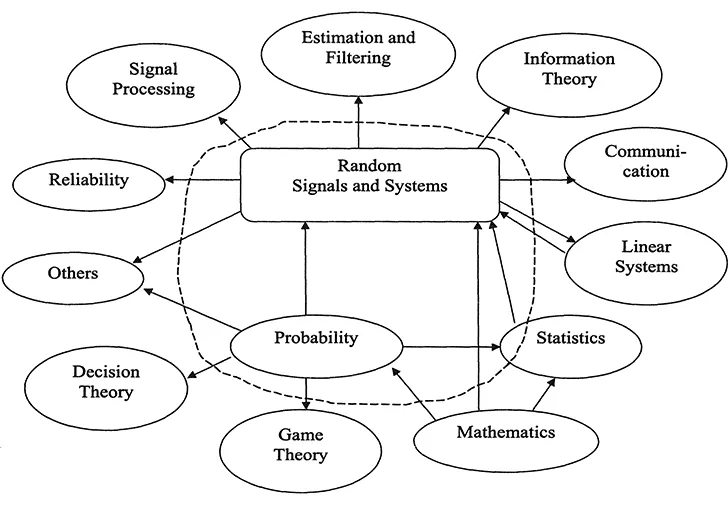
Figure 1.1: Coverage of this book and relation to some other subjects.
1.4 Why Study Probability and Random Processes?
Whereas a random phenomenon is not predictable with certainty, it usually contains some elements of predictability. In other words, it can usually be predicted to some degree, albeit not perfectly, as the examples in Section 1.1 suggested. The reason for this condition is that there are a variety of regularities, known as statistical regularities, associated with a random phenomenon which exhibit themselves only over a large number of occurrences of such phenomena. Were this not true, the study of probability and random processes would gain nothing. In fact, the aim of the entire probability and random process theory is to study these regularities so as to make appropriate predictions of various aspects of a random phenomenon.
The theory of probability and random processes is abstract. It is abstract so that it can be applied to a wide spectrum of problems, making it extremely useful. This abstractness does not prevent us from learning the theory by taking either a top-down approach through numerous examples, as provided in this book, or a bottom-up approach by deriving various laws from the most fundamental ones. Because the theory is abstract, it is also easier and more economical to le...
Table of contents
- Cover
- Title Page
- Copyright Page
- Dedication
- Table of Contents
- PREFACE
- 1 INTRODUCTION
- 2 BASIC CONCEPTS IN PROBABILITY
- 3 THE RANDOM VARIABLE
- 4 MULTIPLE RANDOM VARIABLES
- 5 INTRODUCTION TO STATISTICS
- 6 RANDOM PROCESSES
- 7 POWER SPECTRAL DENSITY
- 8 LINEAR SYSTEMS WITH RANDOM INPUTS
- 9 OPTIMAL LINEAR SYSTEMS
- A COMPANION SOFTWARE P&R
- B TIPS FOR USING MATLAB
- INDEX
Frequently asked questions
Yes, you can cancel anytime from the Subscription tab in your account settings on the Perlego website. Your subscription will stay active until the end of your current billing period. Learn how to cancel your subscription
No, books cannot be downloaded as external files, such as PDFs, for use outside of Perlego. However, you can download books within the Perlego app for offline reading on mobile or tablet. Learn how to download books offline
We are an online textbook subscription service, where you can get access to an entire online library for less than the price of a single book per month. With over 1.5 million books across 990+ topics, we’ve got you covered! Learn about our mission
Look out for the read-aloud symbol on your next book to see if you can listen to it. The read-aloud tool reads text aloud for you, highlighting the text as it is being read. You can pause it, speed it up and slow it down. Learn more about Read Aloud
Yes! You can use the Perlego app on both iOS and Android devices to read anytime, anywhere — even offline. Perfect for commutes or when you’re on the go.
Please note we cannot support devices running on iOS 13 and Android 7 or earlier. Learn more about using the app
Please note we cannot support devices running on iOS 13 and Android 7 or earlier. Learn more about using the app
Yes, you can access Probability, Random Signals, and Statistics by X. Rong Li in PDF and/or ePUB format, as well as other popular books in Technology & Engineering & Probability & Statistics. We have over 1.5 million books available in our catalogue for you to explore.