Chapter 1: Scene Setting: Theory and Practice
LEARNING OBJECTIVES
After reading this chapter you will be able to:
- Interpret definitions of integrated marketing communications
- Appreciate the nature of integrated marketing communications and its multi-level layers of meaning
- Understand the approach we are adopting in this text in terms of its level of meaning and interpretation
- Determine how best IMC can be applied in practice
- Understand the shape, layout, and design of the text and how to make best use of it
KEY TERMS
- Integrated marketing communications (IMC) - definition(s)
- Integrated marketing communications - nature
- IMC layers of meaning
Case study: FORD NO BOUNDARIES – MOUNT EVEREST EXPEDITION
The opportunity
Ford’s ‘No Boundaries’ slogan celebrates those who overcome life’s obstacles and turn ‘no’ into ‘yes’. With its innovative media relations support of Team No Boundaries: Everest Expedition 2002, Hill & Knowlton showed that there are ‘no boundaries’ in terms of ability to generate brand-building media coverage.
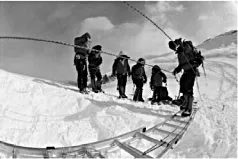
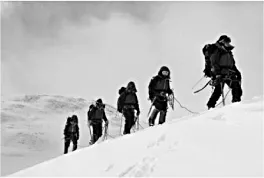
To personify its No Boundaries spirit, Ford Motor Company brought together a team of five American women, all amateur mountain climbers prepared to stare death in the face and make a life-long dream a reality – scaling the world’s tallest peak: Mt Everest. Ford provided the financial support and resources to make this expedition a reality, and Hill & Knowlton stepped forward to ensure that the eyes of the nation were following this incredible group of women, attempting to be the first-ever all-female climbing team to reach Everest’s summit.
The strategic approach
Realizing the expedition provided a very compelling story and running drama, including team members who were mothers and grandmothers, ranging in age from thirty-five to fifty-eight who collectively had conquered physical challenges posed by cancer, heart disease, and diabetes among others, H & K cast a wide net for coverage including general interest, sports, lifestyle, and medical media outlets.
The objectives of H & K were to:
- Generate national and regional media coverage of the entire expedition from launch to summit.
- Overcome geographic challenges posed by Mt Everest to bring the Team No Boundaries story to homes across America.
- Create a strong association between Ford’s No Boundaries philosophy, the Ford Expedition, and the incredible efforts of the team among the general public through in-depth national and regional media coverage.
The work
The programme was launched at the New York Auto Show, with all five members of the team free-falling from the rafters of the Javitz Convention Center around Ford’s new Expedition to thunderous applause from everyone gathered.
Following a successful launch event, a Today Show appearance, and a national satellite media tour, the H & K team faced the greatest logistical challenge of their collective careers. With overwhelming media interest, how were they going to keep feeding the media monster and interested public with updates on the Team No Boundaries climb?
In its common applications, satellite technology provides public relations professionals a means of conveniently spoon-feeding news to the media and bridging geographic gaps from city to city. But when the hostile front lines of a Middle Eastern military conflict or the unforgiving terrain of Mt Everest are brought into living rooms across America, the value of satellite technology is awe-inspiring.
In order to accomplish such vast impact and reach, H & K’s plan called for:
- Utilization of high-tech TH2 portable satellite equipment in order to provide live interviews from Mt Everest. TH2 portable satellite transmission units were secured in order to transmit live audio and visual signals from Everest for the purpose of live interviews with US broadcast outlets (these are the same units used by media in order to transmit live correspondence from remote and often hostile terrain such as the front lines of military zones in the Middle East).
- A streamlined process of capturing and transporting footage and sound bytes from the mountain to the USA.
- Use of satellite-fed VNRs as the primary means of generating consistent coverage of the expedition’s various stages.
A system was developed and implemented by which weekly digital video footage was shot by team members and guides while climbing the mountain, transported down the mountain on yaks (that’s correct . . . yaks) by Nepalese Sherpas (mountain men) to a DHL facility near base camp, and shipped to a satellite broadcast centre in New York City.
With equipment and personnel in place, H & K maintained aggressive media pitching throughout the expedition to national and regional media outlets, offering live interviews via satellite with team members from base camp. Most notably, NBC’s Today Show and CNN were secured in advance of the expedition to provide exclusive weekly coverage throughout the duration of the climb.
H & K worked with broadcast centre staff editing weekly footage into four- to six-minute VNRs that were distributed to media around the country via satellite. Satellite media advisories were issued and aggressive follow-up efforts were made in advance of each satellite feed to encourage pick-up and coverage.
In addition to these efforts to generate coverage during the actual climb, H & K scheduled and managed Team No Boundaries media tours in New York City both prior to and immediately following the expedition.
The impact
- Weekly VNRs served as the leading vehicle for regular coverage, generating more than 400 media hits during the 6-week expedition. In addition, the VNRs were picked up on CNN’s international feed each week, extending the story’s impact to countries around the world. The VNRs averaged more than 80 broadcast hits from each satellite feed.
- Regular national coverage throughout the climb from The Today Show and CNN.
- National broadcast hits including NBC’s Today Show, CNN Live, CNN Headline News, CNN Sunday, ABC’s World News Tonight, The Tonight Show, Inside Edition, National Geographic, ABC’s World News Weekend and Good Morning America, and on CNBC and Oxygen Network.
- Secured national magazine exclusive feature with Oprah Magazine. In a year that saw a record number of climbers (both individual and group) reach the summit of Mt Everest, only Team No Boundaries garnered consistent national coverage and recognition, despite coming up 300 feet short.
- Overall campaign generated more than 330 million media impressions equal to nearly $6 million in advertising value.
- Wire story from Associated Press resulted in print coverage across the nation regarding the expedition’s launch.
- All resulting coverage included Ford’s No Boundaries slogan, Ford’s sponsorship, the Ford Expedition or testimonials from team members regarding the No Boundaries philosophy.
Source: Used with the kind permission of Ford, and Hill & Knowlton, USA.
OVERVIEW
Integrated marketing communications (or IMC for short) can be likened to the Ford No Boundaries case study. For example:
- IMC extends well beyond the promotional mix, though that is the major focus of this text.
- Media coverage can be, and is, generated and sustained by innovative and creative communication and media usage.
- Positive associations can be, and are, created by a relationship between – in this case – a sponsorship opportunity and the Ford philosophy.
The Ford/Everest case, and IMC present us with many interesting questions such as:
- What is IMC?
- Can IMC be interpreted (understood) differently – by academics and by practitioners?
- What approach do we take to IMC – where does this text ‘fit’ in terms of meaning and interpretation?
This chapter will address these questions. Toward the end we indicate how the text will tackle them in terms of the rest of the book.
What is Integrated Marketing Communications or ‘IMC’?
IMC is a product of the late twentieth century. Its birth can be traced to practitioner (advertising, direct marketing, and public relations) activities in the late 1980s – as witnessed by articles in the trade literature. Its growth can be traced directly to emergent academic interest, commencing in the early 1990s – spearheaded by the work at the Medill School of Journalism, Northwestern University, led by Professor Don Schultz. Since that time, its growth has been meteoric. But, like so many marketing developments, it has been driven by:
- Market dynamics (see Chapter 2).
- Continued academic inputs in the trade and academic literature (see for example the series of articles and papers in Marketing News, the main practitioner magazine for the AMA (American Marketing Association)).
- The fact that from its earliest beginnings, the development was embraced and supported by ‘gurus’ in the generic marketing discipline (for example, the top-selling textbook in marketing is by Professor Philip Kotler, also from Northwestern University).
- The widespread adoption of IMC by advertising agencies around the world, who were themselves driven by organizational exigency. Thus, ad-agencies are now integrated agencies.
- The apparent adoption of IMC by major companies around the world. Integrated approaches make sense to businesses, and to agencies who service their needs.
- The need to have ‘promotion’ appear to be consumer-orientated and consumer-driven, previously ‘promotion’ had been internally driven and by a philosophy of separatism where each promotion mix element had its own foci and dynamics.
- The need to overcome the ‘silo mentality’ associated with promotion mix singularity.
These dynamic forces are amply illustrated in the following chapters. But still we ask: just what is IMC? There are a multiplicity of definitions, and hence a multiplicity of understandings, and therefore potential and actual variability in terms of applications. Here we cite just a few.
Don Schultz (1993) stated:
IMC is the process of developing and implementing various forms of persuasive communication programs with customers and prospects over time. The goal of IMC is to influence or directly affect the behaviour of the selected audience. IMC considers all sources of brand or company contacts which a customer or prospect has with the product or service as potential delivery channels for future messages. Further, IMC makes use of all forms of communication which are relevant to the customer or prospect, and to which they might be receptive. In sum, the IMC process starts with the customer or prospect and then works back to determine and define the forms and methods through which persuasive communications methods should be developed (italics added).
The title of Don’s paper included ‘maybe the definition is in the point of view?’. He was right, the definition – and by implication – the application is in the point of view of the user or perceiver. The aims of IMC are:
- To persuade by means of communication (marketing and other forms, in fact all forms).
- To affect behaviour, not just attitudes.
- To start with customers or prospects and then to work backwards to develop effective communication.
Another prolific author Tom Duncan (2002) stated simply that IMC is: