![]()
1. Introduction
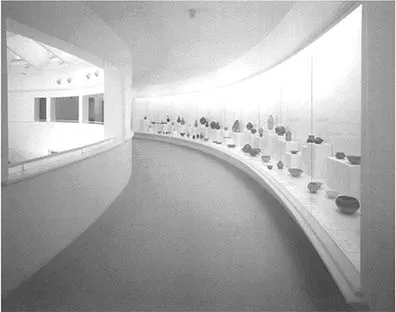
Interior, The Tate Gallery St Ives © Tate Gallery, London
The representations of the sculptures are unlikely to be held to be ‘incidental inclusions’ in the photograph and so permission to reproduce the sculptures would ordinarily need to be obtained from the sculptors or their estates (a representation in two dimensions of a three-dimensional work requiring a licence). The same may be true of the building, as a work of architecture. However, making a photograph of (i) buildings and (ii) any sculptures that are permanently situated in a public place or in premises open to the public does not infringe copyright. Nor does issuing copies of such a photograph to the public.
1.1 WHY IS COPYRIGHT IMPORTANT TO MUSEUMS AND GALLERIES?
Museums are in the business of purveying information. Of course, in the days when many of our great institutions were founded, this was seen primarily in terms of providing physical access to objects which ordinary people might otherwise never see – either because they did not have the privilege of going on the Grand Tour, or because they did not have access to the great private collections built up (in many cases) by those who had.
Today, the role of museums and galleries is seen as wider than simply allowing people to see objects. We still regard the direct physical experience of the great artefacts of human cultural and scientific endeavour as having some special quality. But museums and galleries see their mission as more than warehousing a collection of old objects. They are educational institutions in the widest sense. The new technologies, especially digital networking technologies, allow a more ambitious view of this mission. But the wider conception goes back a long way, before the Internet had been dreamt of. It is currently reflected in the statutory objectives of some of our great national institutions. The Acts of Parliament which established the Boards of Trustees of such institutions as the Science Museum, the Tate Gallery and the National Gallery specifically enjoined the Trustees ‘generally (to) promote the public’s enjoyment and understanding’, not simply of the objects in their collections, but of the fields of artistic or scientific endeavour which their collections illuminate (the National Heritage Act 1983 and the Museums and Galleries Act 1992).
Museums and galleries, then, are under a duty to communicate to the public something about their collections and the cultures that made them and the objects in them. They are, in short, in the business of publishing. Clearly there is a commercial dimension to this which we examine below, but the business of communicating to the public is at the heart of museums’ and galleries’ primary mission. This mission is clearly central to the existence of museums and galleries, both in defining their role, and also in justifying the special status which most museums and galleries enjoy, in the United Kingdom, as charities.
Communication to the public presupposes a number of activities:
1 the museum’s or gallery’s objects themselves need to be reproduced in some form so that images of them can be disseminated;
2 explanatory text needs to be created to assist in a greater enjoyment and understanding of the objects;
3 images of other objects may need to be reproduced to help put the first images in context.
All of these activities involve copyright. Reproduction is at the heart of copyright – which is a law designed to prevent unauthorised reproduction. At the same time, the creation of original works brings into being material that is protected by copyright. So museums and galleries cannot fulfil one of their primary functions without being fundamentally affected by the law of copyright.
Copyright evolved in England at about the time when the first of our great museums and galleries were being founded. The basic principles of our copyright law were established during the eighteenth century, first in relation to published texts, later in relation to artistic works (Hogarth was a prime mover in getting the courts to recognise the need for protection of artistic works from unauthorised copying).
Copyright is, in essence, a legal monopoly protecting certain kinds of works against unauthorised copying which, at its worst, amounts to piracy. Among the kinds of works protected by copyright are artistic works, such as paintings, drawings, engravings and the like, as well as photographs, and textual works such as books, essays, articles and so on.
So, returning briefly to the activities of museums and galleries which we identified before:
1 if the objects which need to be reproduced are still in copyright (for example, any modern paintings, or many hitherto unpublished works), then permission to copy needs to be obtained from the copyright owner;
2 the explanatory text will enjoy copyright protection, and the right to reproduce the text will need to be obtained;
3 reproduction of the images of other objects will need the licence of the copyright owners.
These examples only scratch the surface, but they should be enough to show how important it is for museums and galleries to be aware of copyright and how it affects their activities.
1.2 THE COMMERCIAL ISSUES
It may be assumed at the outset from these few examples that copyright is simply an administrative burden to museums and galleries. And, often enough, it is. The publication of a museum catalogue can involve an unexpectedly large amount of work on copyright matters such as obtaining licences or assignments of copyright.
Copyright law currently provides no exceptions (as it does for libraries) allowing museums and galleries to pursue their primary objectives without – where necessary – securing the requisite copyright permissions.
So on one level, copyright can involve a cost to museums and galleries, often in the form of copyright fees and royalties.
However, museums and galleries may be able to reduce that cost by judicious management of copyright. They may even be able to turn their efforts into a source of revenue, and thus find that copyright is a means of contributing funds to hard-pressed museum budgets. Copyright is (at least in some senses) an economic right, because it protects the income stream of the copyright owner from the effects of unauthorised copying of his work. Museums and galleries can sit on both sides of the fence: they may need to negotiate with copyright owners such as artists or artists’ estates. But, by dint of careful management, they may also be able to acquire copyrights themselves, for example in the photographs or digitisations of the objects in their collections. These copyrights can be a valuable source of income.
1.3 STEWARDSHIP OF OUR NATIONAL HERITAGE
This may well smack of an unwelcome intrusion of commercial values in the context of museums’ and galleries’ public educational role.
But museums and galleries are repositories of unrivalled content for the new media. They are only one group among many who wish to publish that content, and for most of the others, the considerations applying to such publishing are purely commercial. They see the contents of museums and galleries as material for exploitation. Museums and galleries may share some of the proceeds of that exploitation, but equally they may not.
This is not to say that commercial publishing ventures are always to be spurned. For many institutions, collaborative ventures with commercial partners may be the only way of funding publishing programmes. But museums and galleries should still take care that they negotiate the best terms in such arrangements. If not, they may find either that they have lost the leverage which possession of their collections may have given them in securing copyrights in reproductions of the objects, and that commercial publishers have obtained images which they can reproduce without any return to the museum or gallery or, in the worst case, that they may not even be able to reproduce the objects in their own collections without obtaining the permission of the commercial publishers.
Some might argue that this does not matter. After all, if images are being disseminated, albeit by commercial publishers, are not the objectives of museums and galleries being fulfilled?
There are several possible answers to this:
1 Museums and galleries may consider that they have resources, for example in the form of their curators, which enables them to fulfil their duty to advance the enjoyment and understanding of the public in a way that perhaps not all commercial publishers can. It follows that greater control of the copyrights involved in disseminating images and information about their collections would assist museums and galleries in fulfilling that duty.
2 Greater control of the copyrights involved would also allow museums and galleries to exert greater control in such matters as quality of reproduction and indeed in establishing a hierarchy of different qualities for different purposes.
3 The trustees of museums and galleries have overriding duties, arising out of the status of museums and galleries as charitable trusts, to safeguard and conserve the assets of the charity, and to exploit them in a manner consistent with the objectives of the charity. This means that, if the museum or gallery owns any copyrights, then it must exploit them for the purposes of the museum or gallery. Indeed, it is arguable that in some cases the duties of the trustees extend further to preventing rights such as publication right (see section 3.4 below) from falling into the hands of third parties in such a way that those third parties might be able to stop the museum or gallery from fulfilling its objectives.
4 Finally, if they can secure greater control over copyright, museums and galleries can establish for themselves whether and how far they wish to pursue non-commercial or educational policies whereby certain uses of their copyright materials are permitted at low rates or even for no payment.
1.4 COMMERCIAL EXPLOITATION CAN BE THE HANDMAID OF STEWARDSHIP
In this context, conserving and if possible improving the museum’s copyright position runs parallel to the tasks of conservation and display that lie at the traditional heart of the museum’s role.
But it is also the case that, to the extent that museums or galleries are able to acquire greater control over copyright (including copyright in their objects and images of their objects), so they should be in a better position to exploit those copyrights commercially. Merchandising and the like become possibilities. Provided that the museum or gallery’s trading arm or trading subsidiary controls such exploitation, some or all of the money that is earned from such activities is always channelled back to the museum or gallery. In this way it helps to fund the primary tasks of the museum. In a world where government grants are shrinking and there is greater than ever competition for sponsorship revenues and lottery money, the exploitation of museums’ and galleries’ content can be a source of funding which helps to pay curators’ salaries and the costs of conserving objects.
This guide is intended to help museums and galleries to learn about the impact which copyright can have on their activities. It should help to warn against the dangers that can befall the unwary traveller. But we hope that it will also help to show that copyright is more than simply an administrative burden or, at worst, an irrelevance. Properly handled, copyright can provide opportunities for museums and galleries and help them to achieve their core objectives.
1.5 HOW TO USE THIS GUIDE
This guide is divided into the following sections:
• Chapter 2 (What is copyright?) sets out the ground rules of the copyright system. It approaches the subject from first principles, and can be dipped into, or read in one go for an overview. You may find it helpful to refer back to this chapter after reading chapter 3.
• Chapter 3 (Current issues and practical solutions) is designed to apply the basic principles set out in chapter 2 to specific problems of concern to museums and galleries. It addresses particular issues from a practical perspective.
• Chapter 4 (Appendices) contains suggestions for further reading, and details of organisations that you may wish to contact for more information about
• copyright. It also contains a series of sample agreements tailored for use by museums. Finally, it contains an important section on possible prospective changes to copyright law.
![]()
2. What is copyright?
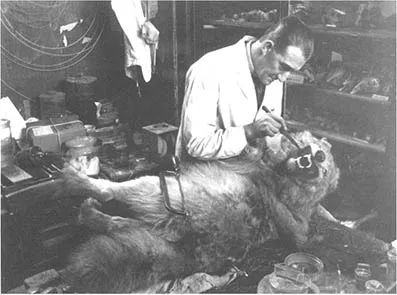
Taxidermist at Work at the Natural History Museum, London, c. 1930 © The Natural History Museum, London
Whether the photograph remains in copyright would have to be determined by reference to the principles governing the duration of copyright (section 2.3), and in particular the extension and revival of copyright in older works. The age of the photograph must mean that it remains in copyright, at least in the EU, at least until 2000 and probably for longer. There is no case law to suggest that the product of the taxidermist’s skill is a ‘work of artistic craftsmanship’ protected by copyright.
2.1 THE FUNDAMENTALS
The family of rights
Copyright is a member of the family of legal rights, which in recent times have come to be known generally as ‘intellectual property’ rights. This family of rights includes some well-known rights such as patents and trade marks, as well as some peculiar rights which will be less familiar to most, such as plant breeder’s rights and the rights protecting semiconductor chips.
It is perfectly possible, indeed it is quite common, for several different sorts of intellectual property rights to co-exist in the same work or product, or for several forms of the same type of rights to co-exist. A new type of branded folding chair may well contain patent rights, copyright and trade mark rights, while products such as films and multimedia CD-ROMs very often contain many separate copyrights, all owned by different entities. (This is not the same as ‘joint’ copyright – see section 2.4.)
Territorial restrictions and differences
One of the most important general features of intellectual property rights, including copyright, is the fact that they are ‘creatures’ of each different nation’s laws. Rights attaching to owners of copyright therefore differ, depending on the laws of the territory being used to interpret or enforce the copyright. While there are superficial levels of similarity between the laws of ...