![]()
Part One
Tracing the origins
Miscegenation, moral degeneracy and genetics
Introduction
IN A CHRONOLOGICAL FASHION, the extracts in Part One trace the origins of thinking about ‘mixed race’ back to their problematic beginnings in nineteenth-century ‘race’ science in general and evolutionary anthropology in particular. The readings in the first section on miscegenation and moral degeneracy pinpoint a ‘biological’ discourse on ‘mixed race’, which invokes metaphors of contagion and pollution to describe the dangers and consequences of ‘racial’ mixing. The writings by Knox, Gobineau, Nott and Gliddon, Darwin and Delany highlight the popularity of ‘hybrid degeneracy’ theory, which promoted ‘white’ mental, moral, genetic and ‘racial’ supremacy, and mobilized ‘science’ to support the claim that ‘pure’ ‘white’ ‘races’ should not mix with ‘non-white’ ‘races’, who were deemed socially, culturally and biologically inferior. Circulating at the same time were debates over whether so-called different ‘races’ were of the same species, monogenesis, or distinct and separate species, polygenesis. As these excerpts reveal, at the centre of this scientific, religious, political and moral disagreement were two interwoven questions: What happened when ‘races’ did mix? and Were ‘mixed race’ offspring capable of reproducing across generations?
By the early twentieth century, the discourse had shifted from the ‘biological’ to the ‘sociological’, ‘anthropological’ and ‘psychological’. This does not mean that pathological perspectives on ‘mixed race’ disappeared. Herskovits and Dover are both critical of Victorian ‘racial’ ideologies, while Reuter reinforces that pathological standpoint. At the same time, though, Reuter does acknowledge that ‘racial’ mixing is both a very old and an inevitable social process. The theory of ‘hybrid degeneracy’ was replaced but not stamped out by social maladjustment theory. Its most popular proponent was Stonequist, architect of the ‘marginal man’ thesis, published in 1937 as The Marginal Man. I have coupled an extract from his book with a more contemporary writing by Furedi, who not only provides an important critique of Stonequist’s argument, but also locates his views on ‘race’, ‘mixed race’ and marginality within the broader context of an emergent 1930s Anglo-American sociological tradition. The 1930s also gave birth to ‘eugenics’, coined by Francis Galton, Darwin’s cousin. As mentioned in the Introduction to the Reader, this was a ‘science’ which attempted to ‘maintain’ the genetic superiority of ‘fit’ populations by ‘controlling’ the inheritance of ‘unfit’ genes. In inter-war Britain and Nazi Germany respectively, the extracts by Rich and Lusane remind us of the dangerous consequences of (mis)applied science as a form of social engineering.
Finally, in the section on genetics, the American Anthropological Association Statement on ‘Race’ provides a succinct social scientific explanation of what ‘race’ is not. Provine’s article covers the time period from the 1930s to post Second World War and explores shifts in geneticists’ attitudes towards ‘racial’ mixing. On the other hand, the readings by Brodwin and TallBear each address the ways in which the advances of late twentieth/early twenty-first-century genetic technology have shed new light on old debates about ‘race’, differences and social hierarchies. At the same time, both authors illustrate how these scientific innovations have raised a different set of moral, ethical and political questions about differences and belongings.
![]() Miscegenation and moral degeneracy
Miscegenation and moral degeneracy![]()
Chapter 1
Robert Knox
Do Races Ever Amalgamate?
Extract from The Races of Men (1850), pp. 64–67.
Section I. – Do races ever amalgamate? What are the obstacles to a race changing its original locality?
I HAVE HEARD PERSONS ASSERT, a few years ago, men of education too, and of observation, that the amalgamation of races into a third or new product, partaking of the qualities of the two primitive ones from which they sprung, was not only possible, but that it was the best mode of improving the breed. The whole of this theory has turned out to be false: – 1st. As regards the lower animals; 2nd. As regards man. Of the first I shall say but little: man is the great object of human research; the philosophy of Zoology is not indeed wrapt up in him; he is not the end, neither was he the beginning: still, as he is, a knowledge of man is to him all-important.
The theories put forth from time to time, of the production of a new variety, permanent and self-supporting, independent of any draughts or supplies from the pure breeds, have been distinctly disproved. It holds neither in sheep nor cattle: and an author, whose name I cannot recollect, has refuted the whole theory as to the pheasant and to the domestic fowl. He has shown that the artificial breeds so produced are never self-supporting. Man can create nothing: no new species have appeared, apparently, for some thousand years; but this is another question I mean not to discuss here, although it is obvious that if a hybrid could be produced, self-supporting, the elaborate works of Cuvier would fall to the ground. The theory of Aristotle, who explained the variety and strangeness of the animal forms in Africa, on the grounds that a scarcity of water brought to the wells and springs animals of various kinds from whose intercourse sprung the singularly varied African Zoology, has been long known to be a mere fable.
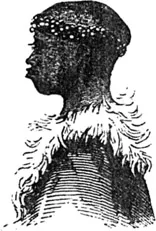
Figure 1.1 Bosjeman, or Yellow African Race
Nature produces no mules; no hybrids, neither in man nor animals. When they accidentally appear they soon cease to be, for they are either non-productive, or one or other of the pure breeds speedily predominates, and the weaker disappears. This weakness may either be numerical or innate.
That this law applies strictly to man himself, all history proves: I once said to a gentleman born in Mexico, – Who are the Mexicans? I put the same question to a gentleman from Peru, as I had done before, to persons calling themselves Germans – neither could give a distinct reply to the question. The fact turns out to be, that there really are no such persons; no such race.
When the best blood of Spain migrated to America, they killed as many of the natives, that is, the copper-coloured Indians, indigenous to the soil, as they could. But this could not go on, labourers to till the soil being required. The old Spaniard was found unequal to this; he could not colonize the conquered country; he required other aid, native or imported. Then came the admixture with the Indian blood and the Celt-Iberian blood; the produce being the mulatto. But now that the supplies of Spanish blood have ceased, the mulatto must cease, too, for as a hybrid he becomes non-productive after a time, if he intermarries only with the mulatto: he can no longer go back to the Spanish blood: that stock has ceased; of necessity then he is forced upon the Indian breed. Thus, year by year, the Spanish blood disappears, and with it the mulatto, and the population retrograding towards the indigenous inhabitants, returns to that Indian population, the hereditary descendants of those whom Cortes found there; whom nature seemingly placed there; not aliens, nor foreigners, but aboriginal. As it is with Mexico, so it is with Peru.
Study probes
- What does Knox mean when he says ‘racial’ hybrids (‘mulattos) are ‘non-productive’?
- Which geographical example does the author put forward to support his claim?
- What was the political and economic reason for diversifying ‘the old Spanish’ population?
![]()
Chapter 2
Joseph Arthur de Count Gobineau
Recapitulation: The respective Characteristics of the Three Great Races; the Superiority of the White Type, and, within this Type, of the Aryan Family
Extract from The Inequality of Human Races (Essai sur l’inégalité des races humaines) (1853), translated by Adrian Collins (1915), pp. 208–211.
IT WOULD BE UNJUST to assert that every mixture is bad and harmful. If the three great types had remained strictly separate, the supremacy would no doubt have always been in the hands of the finest of the white races, and the yellow and black varieties would have crawled for ever at the feet of the lowest of the whites. Such a state is so far ideal, since it has never been beheld in history; and we can imagine it only by recognizing the undisputed superiority of those groups of the white races which have remained the purest.
It would not have been all gain. The superiority of the white race would have been clearly shown, but it would have been bought at the price of certain advantages which have followed the mixture of blood. Although these are far from counterbalancing the defects they have brought in their train, yet they are sometimes to be commended. Artistic genius, which is equally foreign to each of the three great types, arose only after the intermarriage of white and black. Again, in the Malayan variety, a human family was produced from the yellow and black races that had more intelligence than either of its ancestors. Finally, from the union of white and yellow, certain intermediary peoples have sprung, who are superior to the purely Finnish tribes as well as to the negroes.
I do not deny that these are good results. The world of art and great literature that comes from the mixture of blood, the improvement and ennoblement of inferior races – all these are wonders for which we must needs be thankful. The small have been raised. Unfortunately, the great have been lowered by the same process; and this is an evil that nothing can balance or repair. Since I am putting together the advantages of racial mixtures, I will also add that to them is due the refinement of manners and beliefs, and especially the tempering of passion and desire. But these are merely transitory benefits, and if I recognize that the mulatto, who may become a lawyer, a doctor, or a business man, is worth more than his negro grandfather, who was absolutely savage, and fit for nothing, I must also confess that the Brahmans of primitive India, the heroes of the Iliad and the Shahnameh, the warriors of Scandinavia – the glorious shades of noble races that have disappeared – give us a higher and more brilliant idea of humanity, and were more active, intelligent, and trusty instruments of civilization and grandeur than the peoples, hybrid a hundred times over, of the present day. And the blood even of these was no longer pure.
However it has come about, the human races, as we find them in history, are complex; and one of the chief consequences has been to throw into disorder most of the primitive characteristics of each type. The good as well as the bad qualities are seen to diminish in intensity with repeated intermixture of blood; but they also scatter and separate off from each other, and are often mutually opposed. The white race originally possessed the monopoly of beauty, intelligence, and strength. By its union with other varieties, hybrids were created, which were beautiful without strength, strong without intelligence, or, if intelligent, both weak and ugly. Further, when the quantity of white blood was increased to an indefinite amount by successive infusions, and not by a single admixture, it no longer carried with it its natural advantages, and often merely increased the confusion already existing in the racial elements. Its strength, in fact, seemed to be its only remaining quality, and even its strength served only to promote disorder. The apparent anomaly is easily explained. Each stage of a perfect mixture produces a new type from diverse elements, and develops special faculties. As soon as further elements are added, the vast difficulty of harmonizing the whole creates a state of anarchy. The more this increases, the more do even the best and richest of the new contributions diminish in value, and by their mere presence add fuel to an evil which they cannot abate. If mixtures of blood are, to a certain extent, beneficial to the mass of mankind, if they raise and ennoble it, this is merely at the expense of mankind itself, which is stunted, abased, enervated, and humiliated in the persons of its noblest sons: Even if we admit that it is better to turn a myriad of degraded beings into mediocre men than to preserve the race of princes whose blood is adulterated and impoverished by being made to suffer this dishonourable change, yet there is still the unfortunate fact that the change does not stop here; for when the mediocre men are once created at the expense of the greater, they combine with other mediocrities, and from such unions, which grow ever more and more degraded, is born a confusion which, like that of Babel, ends in utter impotence, and leads societies down to the abyss of nothingness whence no power on earth can rescue them.
Such is the lesson of history. It shows us that all civilizations derive from the white race, that none can exist without its help, and that a society is great and brilliant only so far as it preserves the blood of the noble group that created it, provided that this group itself belongs to the most illustrious branch of our species.
Of the multitude of peoples which live or have lived on the earth, ten alone have risen to the position of complete societies. The remainder have gravitated round these more or less independently, like planets round their suns. If there is any element of life in these ten civilizations that is not due to the impulse of the white races, any seed of death that does not com...