- 264 pages
- English
- ePUB (mobile friendly)
- Available on iOS & Android
eBook - ePub
About this book
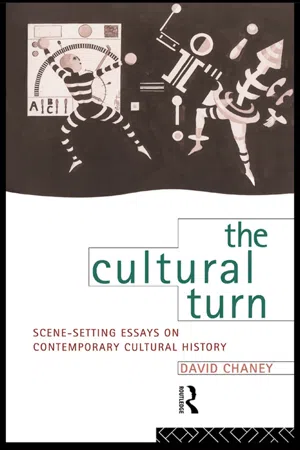
In the second half of the twentieth century the theme of culture has dominated the human sciences. The forms of contemporary culture demand a radical reappraisal of the terms of description of the modern world. We therefore need to consider our options when culture does not just provide the meaning of experience but is also the terms of that experience. This book reviews these ideas in ways that will be accessible to those new to the field and also stimulating to experts. The three parts of the book: * Review the character and lessons of this "turn to culture" in a number of academic fields. The author demonstrates the socio-intellectual context within which these themes have been generated and documents the main strengths of the paradigm shift. * Explore key themes in contemporary culture. By showing how questions of citizenship and the meaning of places have been colonized under the remit of the culturalist paradigm, a cluster of associated ideas and themes implicit in the paradigm are explicitly tackled. * Examine some of the ways in whcih cultural forms are increasingly seen to dominate social reality. The final chapter explores triumphant culturalism - the postmodern world as the apogee of the turn to culture.
Part I
The study of culture
Chapter 1
The field of cultural studies
THE FIELD
Since the European Renaissance the topic of culture, its forms, values, history and so on, has been specifically, but not exclusively, the province of intellectuals. There have of course been periodic crises when authors or critics have despaired of the sterility or decadence of a particular era or style, but in general the privileges of intellectuals in relation to culture have not been challenged. A theme to which we shall return several times is that the turn to culture in social thought has been occasioned by a crisis in intellectual confidence.
Culture used to refer predominantly to an idea of production or growing as in agriculture. While this sense survives, as when virologists talk about a culture, the predominant sense has shifted to a reference to making meaningful—it is through culture that everyday life is given meaning and significance. The corollary of this shift in reference is, however, that we can imagine circumstances in which there is a crisis in culture. This again could take a variety of forms but two obvious possibilities are: that culture could lose its authority so that people turn away to alternative beliefs and there is a chaos of meaning; and, secondly, that culture could lose its effectiveness so that the institutions and forms through which life is customarily given meaning cease to function.
I do not want to explore the proposal at any length but it is arguable that one of the defining features of the modern world has been a crisis in culture on both these grounds. In particular, following the two great world wars of this century, 1914–18 and 1939–45, there was in Europe a widespread and very profound loss of cultural values. This has been expressed in art movements such as the Dadaists protesting against the mechanisation of slaughter in the European trench war, and, most tellingly, in the horror and angst generated by the revelations of the Holocaust (Bauman 1989).
In these art movements we can often detect a profound sense of despair at the meaninglessness of human institutions. This sense of the depths of bestiality at the heart of the most complex civilisation led many European intellectuals into a radical scepticism about the possibility of universal cultural values. A loss of faith in traditional order and values intensified for many intellectuals as it became apparent that new industries of mass communication and entertainment would increasingly threaten traditional forms of stratification between elites and the masses. There have also of course been powerful radical currents of innovation from those who have passionately believed that the people’s culture should be taken seriously. Rather than dismissed as crude vulgarity it should be explored as sensitively as more exotic cultures of ‘primitive’ societies, because, after all, for many the people’s culture was expected to provide the basis for a socialist culture that would transcend the apparent failures of capitalism
It has been against this background of crisis that more recently the discussion of culture, especially popular culture, has been dominated by references to postmodernism and postmodern culture. This may suggest that we are engaging with culture in new ways, but I believe that the roots of new theories and styles can be found in the longer history of the social construction of the modern world. In one of his essays considering the role and viability of a concept of postmodernity, Bauman (1992) argues that the central value of the concept lies in the way it has been used to describe how the changing social function of the intelligentsia has been and is being negotiated. A pervasive feeling of crisis, of irrelevance, has led intellectuals to question ever more radically their relationship to the institutions for the production of knowledge.
One of the paradoxes of this crisis has been that an increasing freedom of intellectual debate, rather than strengthening intellectuals’ feelings of importance, has actually contributed to a widespread suspicion amongst them that they are superfluous. Worse, Bauman argues, is the realisation for intellectuals that as state power recedes from the management of their privileged territory—culture—it is being taken over by new industries of mass consumption: ‘What hurts…is not so much an expropriation, but the fact that the intellectuals are not invited to stand at the helm of this breath-taking expansion’ (Baumann 1992, p.100).
We are led by these considerations then to consider the idea that the significance of cultural themes in contemporary thought derives from a crisis in intellectuals’ confidence in their ability to sustain the status of established styles of knowledge. With the further intriguing thought that the celebrations of the popular amongst the postmodern deconstructionists are in reality a desperate bid to sustain some form of privileged status. I will not offer any further comment at this stage, except by describing in this chapter in very broad outlines the variety of ways in which culture has been formulated as a topic for intellectual concern. In the institutional contexts of intellectual practice the crisis of culture has had to find a distinctive niche from which it could develop.
Intellectual life is conventionally broken into a small number of very broad categories denoting specific types of topic as well as methodology, for example arts, science and social sciences. Similarly, the viability of further sub-divisions of disciplinary programmes such as that between anthropology and sociology is usually only of interest to those working in those fields, university administrators and intellectual historians. This way of mapping the intellectual terrain is, however, often confused by the existence of cross-cutting schools of thought such as Marxism and structuralism and gender studies. Drawing their adherents from a variety of disciplines, these schools are often very influential for a period and then, although unlikely to disappear, they come to seem less significant as a way of characterising contemporary intellectual activity. For this and a number of other important reasons schools are rarely enshrined in the academic bureaucracy with the ultimate accolade of dedicated degree programmes.
In the last four decades of the twentieth century it has become apparent that a new school has come to be a dynamic focus of intellectual excitement. It has become generally known by the vague label of cultural studies, and perhaps the absence of an ‘ism’ in the title is an adequate indication that there is a no motivating figure or programme providing a core of agreed beliefs or perspectives. I suggest that it might be more appropriate to refer to the newcomer as the field of cultural studies. Although a small number of academic departments and centres have been created to facilitate teaching and research, characteristically those working in the field are drawn from a number of disciplinary backgrounds and see their interests as covering a wide range of sub-fields.
A better way of charting intellectual activity, which is more responsive to members’ categories than the frequently rigid labels of academic enterprise, is to look at the way new publications are grouped in publishers’ catalogues (and, more slowly but for the same reason, booksellers’ shelving categories). Using these guides it is apparent that cultural studies is a very active and dynamic field. Professional and teaching associations are springing up under its label and of course an increasing number of journals dedicated to publishing new work. In part, particularly because of the nature of the interests of those working in this field, the history of this coalescence of interests has come to seem one of the topics of the field—critical commentaries on culture, its practice and criticism, are inherently part of the broader discourse of culture. This does not mean, however, that the terrain of the field, its central interests and motivating passions, are broadly agreed (amongst several introductions to the field see Billington et al., 1991).
It has become conventional to take as one of the crucial moments in the innovations of new discourses of culture the publication of two books in Britain in the late 1950s. (I think it is justifiable, for reasons that will become clear in the ensuing discussion, to argue that there were particular factors in British intellectual life that gave this style of culture study international significance. This does not mean that cultural studies has remained exclusively or predominantly British.) The books concerned are The Uses of Literacy by Richard Hoggart (1957), and Culture and Society by Raymond Williams (1958). Although the books contained very different intellectual projects they had a number of relevant features in common.
The authors were both young men from working-class backgrounds who received their university education in the triumphant years of immediate post-war Labourism. Although both were scholars of English literature, neither was content to be absorbed straightforwardly into the halls of conventional academic discourse. Their books were attempts to come to grips with different aspects of the lack of a common cultural history in British society. They began with the determining conviction that the intellectual culture of Britain masked a diversity of traditions and perspectives in culture as lived experience.
Hoggart’s book sprang from his experience of the different meanings of a literate culture. This was based on a contrast between his childhood years as a scholarship boy in a northern industrial city and the processes of cultural change that he saw stemming from developments in mass consumer society. The ‘uses’ of literacy (the idea of using is itself an importantly active sense of culture as engagement) were therefore ways of staging and enacting culture as the life of a community. Hoggart’s book was grounded in a nostalgia for a form of life that was seen to be disappearing; but more importantly it attempted to marry a quasi-ethnographic account of a cultural world with a ‘culturalist’ account of the social implications of changing forms of entertainment. I have marked the term culturalist because it signals a distinctive concern with meanings and values of culture. Although this is a style of approach that in British terms goes back at least to Leavis, Eliot and Arnold, it was crucially inflected here by the fact that Hoggart wrote from within the working class and showed that it was possible to explore the richly layered meanings of cultural change.
Williams, in contrast, did not write so explicitly from personal experience (to begin with—although his later novels are a crucial counterpoint to his critical theory), but tried instead to show how the concept of culture in the course of industrialisation had been shaped and articulated as an engagement with social change. His book is a form of intellectual history (his second book, published shortly after (1961) is a more directly engaged polemic concerned with the meanings of community), but a form of history that refuses the conventional abstractions of the field. Although Williams charts his history through accounts of significant figures, such as Blake, Morris, Carlyle and Mill, the burden of his concern was with their attempt to formulate the complexities of a social and intellectual culture as it was being made. Williams also makes culture central as a process of, more latterly we might say a site for, struggles over the terms of collective meaning (by which I mean the ways in which we might assess the dignity and value of different forms of life).
While it would be foolish to attach too much importance to two books, one way of summarising why their publication can be seen to have signalled a new set of concerns is to note how their use of culture opened the study of literature and other cultural forms to sociological perspectives (although both had at the time a very limited sense of a sociological perspective). More particularly, it can also be seen that their work made popular culture central to any account of culture in general. Rather than being just ignored and/or deplored and/or despised, popular culture implicitly became an unquestioned part of the syllabus of cultural change. This is not to say that their approach and attitudes to the popular (in these and/or succeeding books) were not subsequently questioned and criticised. It is rather that, although both authors remained deeply uneasy about mass culture in all its forms and were unsympathetic to later work that totally changed the character of their concern with working-class community, they provided a platform from which the arrogance and elitism of previous commentaries on the cultural incorporation of the working class was unmistakable (see also Martin 1981 for a clear account of cultural change from a sociological perspective).
The essence of the innovation of Hoggart and Williams is a sociological insight that any discussion of cultural values in the modern world cannot be left in the abstract realms of traditional liberal elitism. The crisis of culture has to be understood in relation to the structural changes and social turmoil of urbanisation and industrialisation. Although the cultural ‘problem’ of industrialisation was not discovered in the 1950s but had been there all along, ideological factors had meant that it had only been considered obliquely. The ‘problem’, put at its simplest, is that the creation of class society had fractured many of the bonds through which the disadvantaged perceived themselves to have some commitments to the sociocultural order. The creation of socially segregated audiences engendered a double (and sometimes painfully appreciated paradoxically incompatible) search for (a) a way of opening up to the working class the civilised consensus of elite culture; and (b) a means of ensuring that the values of that culture could be preserved against the threatening vulgarity of mass access. (A splendidly crisp account of many intellectuals’ horror at the threat of mass encroachment is provided by Carey 1992; see also for more general accounts of responses to the promises and threats of mass culture Le Mahieu 1988 on Britain and Ross 1989 on the USA.)
I am not trying to argue that the publication of books by Hoggart and Williams created an awareness of cultural differences within a society such as Britain. After all, Williams’ book was a history of the discourse of culture (even if restricted to a peculiarly British focus). Rather, the project of cultural studies was initially provocative and has remained exciting because it has seemed to offer an opportunity to engage more constructively with the values and meanings of popular experience. This was initially a salutary contrast to a broader European quest for cultural authenticity, crucially formulated in the agonising self-consciousness of Romanticism, which had been unquestioningly set in the terms of a series of debates for intellectuals over language, commitment, policy, and so on. Even within Marxism, despite beginning with a self-avowed philosophical attack on established beliefs, there had in practice been a successful evasion of discovering or articulating an indigenous aesthetic in popular culture. Instead of confronting real issues, cultural theorists had too often been hijacked by the intellectual hubris of formulating an ‘appropriate’ culture for the masses (although this generalisation should be qualified by noting the heroic engagement with themes of a people’s culture in the first fifteen years of the Russian Revolution).
When we come to consider in greater detail what we mean by constructive engagement (see in particular Chapter 2), it will be interesting to see how emphases have changed as ideas have spread through English-speaking intellectual communities. In the United States, Canada, Australia and New Zealand (in part carried by a diaspora of intellectuals as well as publications), the theme of culture has tended to be interpreted in terms of the variety of ways in which culture is used, adapted and remade in everyday experience rather than as a theme of ideological indoctrination by ruling groups.
The innovation of cultural studies has meant that the crisis of culture has been firmly placed within the social history of modernity, in particular the impact on traditions of elite and popular culture of the development of industries of mass communication and entertainment. In saying, though, that the turn to culture has transcended some of the limitations of previous intellectual attitudes to modern culture, I do not want to be understood as saying that cultural studies has escaped the incompatibilities of intellectuals legislating for popular culture. This is inappropriate not only because the most common criticism of published work in the field is that it has been characterised by excessive intellectualism and an antagonising use of jargon; but, as I shall also go on to argue in the rest of this chapter, because the issue of the legitimacy of any mode of cultural analysis has remained the central problematic of the field.
MASS ENTERTAINMENT
The development of new forms of mass entertainment in the twentieth century—first the international cinema, then radio, the recording industry and subsequently television, all building on the mass audiences of popular journalism and popular fiction—has cast the cultural problems of industrialisation in a more apocalyptic light. Traditional fears of the unknown urban mob (Pearson 1983) were intensified by the erosion of distinct cultural communities by industries of mass entertainment. In the most forceful version of these concerns it was feared that the new culture industries could be used to so stultify the tastes of mass audiences that not only would they be incapable of appreciating the emancipatory potential of cultural innovation, but that they could also be enslaved by new forms of charismatic leadership.
In the 1930s these ideas were theoretically developed in the canon of Marxist scholarship by a group of thinkers known as the Frankfurt School (Horkheimer and Adorno 1972; Adorno 1991). Their work was generally not translated into English until the 1960s and later (itself helping to stimulate theoretical debate in cultural studies; particularly by the publications of Walter Benjamin—see 1970—a sometime member of the School). There was, however, some input into American sociology, particularly the new field of communication studies, through the enforced emigration of German scholars fleeing Nazi persecution (Jay 1973).
Although this work was largely unknown in English-speaking societies in the 1930s, they had their own versions of fears of new forms of exploitation. In particular, there was a widespread feeling, especially amongst the intelligentsia, of ideological polarisation. In part a response to the crisis of capitalism engendered by the international slump, and the development of Fascist movements, there was also a pervasive fear, throughout the political spectrum, of the mass mind subject to new forms of ideological domination. It came to seem important to tackle the anonymity of mass society—to show society the multiplicity of its own forms of social life. (There were journeys of exploration, such as Orwell’s (1970), which were an important strand in the developing rhetoric of popular life (see also Schwarzbach 1982); and one should mention here the impulse behind and impact of studies of American rural poverty: see Stott 1973.)
The forms and motives of social discovery (what in Britain one group called ‘an anthropology of ourselves’) followed many paths; their importance in this context is their contribution to an enormous expansion in general appreciation of cultural diversity. This process of turning back and discovering one’s own society goes back to the folklorists who recorded the disappearing pre-industrial culture in the early nineteenth century (Boyes 1993). A significant version of the same sort of impulse can be found in the more professional community studies in the 1930s and 1950s, and in the 1960s. The sociological commitment in all these movements was to blow away prejudices and stereotypes by the strong breath of real social knowledge. In Britain the social rhetoric of realism was an essential foundation for the celebratory explosions of working-class culture in the 1950s and 1960s that were the necessary context for rethinking popular culture (Laing 1986).
There was, then, in all the ways people talked about the problems and perils of social change—what we can more briefly call the discourse of modernity—a tension between novelty and tradition: on the one hand the emerging forms of mass society, with the spectacles of entertainment, advertising and consumption, and on the other a common feeling of traditional social forms and communities being forcibly stretched and fractured by new sorts of freedom and prosperity. It has become conventional to see the 1960s as a watershed decade in which there were significant fractures in the traditions of national and regional cultures allowing excited prophets to discern new forms of global culture (McLuhan 1964; Bell 1976).
In Britain the basis of a modern renaissance was both the liberation of confident consumer prosperity (the Conservative slogan in the general election of 1959, ‘You’ve never had it so good’ was borrowed from the American election of 1952); and a pervasive perception of the need for change in the management of society. This sense of the necessity of change was fuelled in part by fears of nuclear annihilation, and in part by a generational contempt for the established order—confident of being the clever party, Labour mocked the Conservatives out of office in 1964. This was of course also the first decade of mass television ownership. With comparatively little struggle the BBC monopoly of broadcasting, and all that that meant for cultural paternalism, had been broken by the introduction of commercial television in 1954. There was a palp...
Table of contents
- Cover Page
- Title Page
- Copyright Page
- Acknowledgements
- Introduction
- Part I: The Study of Culture
- Part II: Forms of Culture
- Part III: Immersed in Culture
- References
Trusted by 375,005 students
Access to over 1.5 million titles for a fair monthly price.
Study more efficiently using our study tools.
Frequently asked questions
Yes, you can cancel anytime from the Subscription tab in your account settings on the Perlego website. Your subscription will stay active until the end of your current billing period. Learn how to cancel your subscription
No, books cannot be downloaded as external files, such as PDFs, for use outside of Perlego. However, you can download books within the Perlego app for offline reading on mobile or tablet. Learn how to download books offline
Perlego offers two plans: Essential and Complete
- Essential is ideal for learners and professionals who enjoy exploring a wide range of subjects. Access the Essential Library with 800,000+ trusted titles and best-sellers across business, personal growth, and the humanities. Includes unlimited reading time and Standard Read Aloud voice.
- Complete: Perfect for advanced learners and researchers needing full, unrestricted access. Unlock 1.5M+ books across hundreds of subjects, including academic and specialized titles. The Complete Plan also includes advanced features like Premium Read Aloud and Research Assistant.
We are an online textbook subscription service, where you can get access to an entire online library for less than the price of a single book per month. With over 1.5 million books across 990+ topics, we’ve got you covered! Learn about our mission
Look out for the read-aloud symbol on your next book to see if you can listen to it. The read-aloud tool reads text aloud for you, highlighting the text as it is being read. You can pause it, speed it up and slow it down. Learn more about Read Aloud
Yes! You can use the Perlego app on both iOS and Android devices to read anytime, anywhere — even offline. Perfect for commutes or when you’re on the go.
Please note we cannot support devices running on iOS 13 and Android 7 or earlier. Learn more about using the app
Please note we cannot support devices running on iOS 13 and Android 7 or earlier. Learn more about using the app
Yes, you can access The Cultural Turn by David Chaney in PDF and/or ePUB format, as well as other popular books in History & Historiography. We have over 1.5 million books available in our catalogue for you to explore.