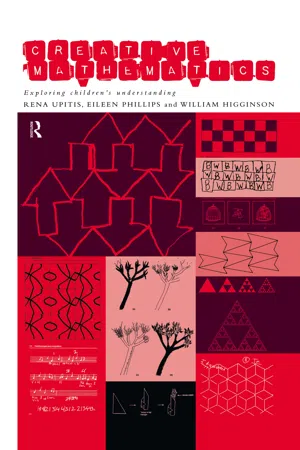
This book shows how creative maths can really work. Exploring the ways in which maths skills can be learned through cross-curricular activities based on visual arts and music, the book presents maths as a meaningful and exciting subject which holds no fears for children.
The authors recognise that while maths-phobia prevails in our increasingly mathematicised world, attitudes and approaches to teaching the subject need to be reviewed, and issues such as gender stereotyping, which encourage maths-apathy, need to be tackled at an early stage.
Within this collection of classroom-based stories are detailed examples of integrative mathematic projects; these will give teachers the confidence to try out cross-curricular activities in their classes. The book also provides support with difficult areas such as assessment, planning and development.
Fascinating to read in its own right this book will appeal to the specialist and non-specialist alike.
- 192 pages
- English
- ePUB (mobile friendly)
- Available on iOS & Android
eBook - ePub
Creative Mathematics
About this book
Information
Chapter 1: Introduction: ‘Oh good, it’s time for maths!’
RENA UPITIS: researcher
I was one of the lucky ones. Unlike most of my high school friends, I looked forward to mathematics classes. For me, mathematics was simple— useless, but simple. I sailed through high school algebra, trigonometry and geometry, rarely receiving less than 100 per cent on my assignments and exams. But maths remained at best a comparatively harmless way to spend a few hours in school—it was not boring, but it did not exactly fill my life with excitement. My passion was—and is—music. The only time mathematics held any fascination for me was when I saw some connections between music and mathematics, and these were connections I made only rarely.
When I entered university, I began to accumulate a hodge-podge of courses towards a liberal arts degree, majoring in psychology and dabbling in philosophy along the way. Music did not find its way into my university studies—in fact, for a couple of years, I abandoned it almost completely. But, oddly enough, I was only one course short of a minor in mathematics. Somehow I managed to accumulate enough credits in linear algebra, statistics, and engineering calculus to hang out in the basement of the maths building, punching long series of weird symbols into the computer, without raising anyone’s suspicions that I might be an impostor. But even though I was ‘doing maths’, and at the university level no less, I did not feel like a mathematician, at least, not in the way that I felt like a musician.
By the time I started a graduate degree in education, I had embraced music wholeheartedly, carrying out thesis research on how children might become composers using computer tools (well, maybe maths did not disappear completely). That was well over a decade ago. At that time, Bill Higginson, one of my mathematics professors (and a co-author of this book), suggested I take on some explorations in mathematics, linking my love of music with the beauty he saw in mathematics. I did not do so at the time (do students ever really listen to the advice of their professors?), but Bill and I nevertheless had many discussions over the years about the nature of mathematics.
Our discussions have deeply influenced my thinking about maths, and about music as well. How could I help but be affected by a man who sees the mathematics in a milk carton, in the tiles running down the hallway, in the trim on an antique wooden cabinet, and in a snowflake? And how could I not notice his strange and wonderful collection of maths books? The books he collects just do not look like the textbooks we used in high school and in university. Instead of the recognisable (and dull) titles like Linear Algebra I and Linear Algebra II, they have inviting titles like Islands of Truth: a Mathematical Mystery Cruise (Peterson, 1990), Number Words and Number Symbols: A Cultural History of Numbers (Menninger, 1969), and Connections: the Geometric Bridge Between Art and Science (Kappraff, 1991). It is not as if these books do not talk about algebra and geometry— they do. It is that these books do not use the learning of algebra and geometry as the endpoints in mathematics, but rather, as tools for creation— tools that are needed to make beautiful tessellating patterns or to understand the allure of a snowflake.
In our conversations, Bill often mentioned that symmetry is one of the ‘big ideas’ in mathematics—well, it is a big idea in music as well. So how are the two related? And what about transformations? Can a piece of music played backwards be related to a reflection of a geometric figure? Is repetition as important in creating pattern in mathematics as it is in the visual arts? These are questions I carried with me as we began to formulate the projects described in this book.
I also carried with me considerable experience working with children from my years as a music teacher, both in private music lessons and in troubled but thriving inner-city schools in Canada and the United States. Having taught children from privileged settings in the private music context as well as working with children who lived in transient situations and in cultures different from my own, I had grown to realise that there were common themes in learning environments that, at first blush, seem very different.
If I was able to respond to children’s views, create environments where they could find forms of personal expression, and stimulate situations where rich and deep thinking could occur, then, in my experience, it was just as likely that a ten-year-old who was living from hand to mouth would be able to compose a satisfying piece of music as the ten-year-old whose father drove her to weekly piano lessons in the family’s BMW. As a result of these prior experiences, I had some strongly supported notions of how children learn and make meaning, particularly when some of the traditional trappings of classroom life are abandoned.
In my work with children as musicians and composers (Upitis, 1990a, 1992), it became clear to me that children become most deeply invested in their own creations and learning when they feel that they are making something real. Like the hero of The Velveteen Rabbit (Williams, 1989), they want to know what is real, how to be real, how to make something real. Children know from an early age that there is ‘kids’ stuff’ and ‘real stuff’, and they want to be a part of the latter much more than of the former. Before looking at what makes something real in mathematics, I take the liberty of eavesdropping on the conversation between the Velveteen Rabbit and the Skin Horse, a toy that knows the meaning of real.
What is REAL?’, asked the Rabbit one day, when they were lying side by side by the nursery fender, before Nana came to tidy the room. ‘Does it mean having things that buzz inside you and a stick-out handle?’
‘Real isn’t how you are made’, said the Skin Horse. ‘It’s a thing that happens to you.’…
‘Does it hurt?’, asked the Rabbit.
‘Sometimes’, said the Skin Horse, for he was always truthful. ‘When you are Real you don’t mind being hurt.’
‘Does it happen all at once, like being wound-up’, he asked, ‘or bit by bit?’
‘It doesn’t happen all at once’, said the Skin Horse. ‘You become. It takes a long time.… Generally, by the time you are Real, most of your hair has been loved off, and your eyes drop out, and you get loose in the joints and very shabby. But these things don’t matter at all, because once you are Real you can’t be ugly, except to people who don’t understand… once you are Real you can’t become unreal again. It lasts for always.’
The Rabbit sighed. He thought it would be a long time before this magic called Real happened to him. He longed to become Real, to know what it felt like; and yet, the idea of growing shabby and losing his eyes and whiskers was rather sad. He wished that he could become it without these uncomfortable things happening to him.
What is it that makes what we do or create ‘real’? I think there are several features of creations that children—and adults—consider real. They need not be present in every case, but often real things have at least two or three of the features I am about to describe.
Real things are often beautiful; they have an aesthetic appeal. The beauty frequently lies in the materials used—creating a watercolour on top quality rag paper with a grainy texture is more appealing, more real, than the same painting crafted on a piece of white newsprint (like the paper often used by children in Kindergarten classes). Similarly, children gravitate towards manipulable maths materials that have some appeal, either in colour or feel.
In the first project described in this book, I used a number of different kinds of ceramic tiles to explore tessellations. I also had some brightlycoloured construction paper shapes and pattern blocks that the children could use to create their own tessellating patterns. Invariably, they chose the more aesthetically appealing materials—large and smooth ceramic tiles were chosen over small plastic tiles; pattern block triangles were chosen over the same shapes cut from construction paper.
Beautiful things that are real are so regardless of who has made them. One of my music pupils, at the age of ten, composed a trio for clarinet, flute, and piano. The composition was remarkable, not because it was composed by a ten-year-old, but because it was delicately crafted—it was Real. A couple of people, on hearing this composition, exclaimed: ‘That is amazing for a ten-year-old’. Their amazement came not from the fact that a ten-year-old composed a piece of music, but rather, from the feeling that the music was worth performing for its own sake, regardless of the age of the composer.
Sometimes children will add something to an artifact to make it look more real. In an engineering structures problem, where pupils were challenged to create a bridge from spaghetti, one pupil added graffiti to the bridge, in order to make it more than just a science exercise. He commented: ‘Real bridges have graffiti’. But the bridge was already real in another way— it was able to support a considerable weight. This brings me to another feature of real things; they can be very large or capable of holding something heavy, or conversely, very tiny—like a computer chip. I doubt that the pupil would have added the graffiti to his bridge if the bridge could not sustain a large weight. Because it held a considerable load, it was real already—he was merely drawing attention to its ‘realness’.
Real things can also be functional. The paper jewellery creations described later in this book are both functional and aesthetically pleasing, and these features together make them real. Something that is unique—a discovery— can also be real, even in its rough form. There is a fine example of this in the tessellations project, where a child was so excited about a tessellating pattern that he produced that he claimed it as his own. He wrote: ‘I discoverded it’ across the top of the page where he had sketched the pattern.
Real things, as the Velveteen Rabbit found, often take an effort to produce —a physical, mental, and emotional effort (or as one child put it, ‘It’s hard fun’). It therefore takes a good deal of time to produce real things, to make real discoveries. And of course, real things are often produced when working with others. Some of the most beautiful music I have heard children compose has been the result of a collaborative effort amongst the children and an adult composer—an apprenticeship model of learning. This learning through doing and apprenticing is eloquently described by the Inuit scholar, Louis- Jacques Dorais, who translated the words of Taamusi Qumaq talking about the schools that white people from the ‘south’ have instituted in Canada’s north in the following way.
A house is a school, it is run by Qallunaat [white people]. This one has people who are taught, many of them, who learn only through words. Also one person can be a school too, when one who is really working, who is trying to do something real, is looking at this person when (s)he is working.
(Cited in Stairs, 1994, p. 67)
The work that we describe in the chapters that follow was real both to us and to the children. Much of what the children produced was truly beautiful—silk cards with tessellating patterns, music compositions, paper jewels. It took many hours for them to create their works. Because the children were engaged in real explorations and creations, a great deal of learning took place as well.
When Bill Higginson and I first talked about an exploratory venture that would involve a classroom teacher and pupils over an extended period of time—a full school year—he and I agreed that it was crucial to work with someone who would find such an undertaking enriching rather than a hindrance. Late one August afternoon, sitting in Bill’s office talking about my upcoming sabbatical leave, he and I realised that the time had come to embark on this long-talked-about enterprise, as I prepared to leave Ontario to spend my sabbatical year in Vancouver, British Columbia.
We began to focus our discussion on what qualities I might look for in a teacher, and on how I might find such a person. I was planning to spend many hours in the classroom, and it was important to me that I become a ‘regular’ instead of a ‘visitor’. But I knew that in order to become a member of the classroom community, I had to work with a teacher who would in some ways see me as a teaching partner (although at that time I was thinking in terms of working separately with a group of children), and who would regard our time together as something worthwhile not only for the children, but for herself as well. This meant finding a teacher who would regard the ‘research’ project as an integral part of the classroom experience, rather than an extra thing to add to an already busy schedule.
Bill and I are keenly aware, from our own experiences and from years of observation, that teachers work extremely hard. Many primary teachers rightly complain about having to teach too many subjects, noting that as the years go by, more subjects and issues are added to an already full curriculum plate. Although I believe that we have to include such issues as environmental science, gender, violence, and anti-racist education in the curriculum, this inclusion need not, and indeed, should not be in ways that make each subject separate and distinct.
I want to be able to teach mathematics because I understand music and language; I also want the activities we choose to be culturally broad and environmentally respectful. Teachers who see subjects as connected will find that the work we describe is not extra teaching, but rather, deeper teaching of what they already do well.
When I described this research project to a colleague at the University of British Columbia, she suggested I speak with Eileen Phillips, a teacher in one of the local Vancouver schools, and so it began.1 We met after school one day, over a cup of tea in a nearly deserted staffroom. I was delighted to find that Eileen was just the teacher I was hoping to find.
Eileen is passionately interested in the teaching and learning of mathematics. She enjoys the challenge of trying to present mathematical concepts in ways that are meaningful to the children, and at the same time, works at gaining a rich sense of their individual ways of learning about mathematics. Her teaching of mathematics already made extensive use of manipulative materials; in fact, I have never seen maths textbooks used in her classroom. Rather, she asks that children record their findings, describe strategies they develop for solving problems, and keep a journal on their mathematical interests and work. But more on this later, when Eileen tells you about her classroom herself.
This is perhaps a good moment to speak more about the structure of this book. As David Pimm indicated in his preface, it is unusual to present a trio of voices; in this case, mine, Bill’s, and Eileen’s. Both Bill and I have considerable experience conducting research in classroom settings. But one of the failings of some of our earlier work is that the classroom teacher’s voice has been missing. While we have both been careful to represent classroom teachers’ views, it has always been in the form of ‘researcher as ventriloquist’.2 That is, while we have carefully recorded and quoted teachers’ words, the teachers have not written as contributing authors. With teachers’ voices only as background, important parts of the whole have been missing. Here our trio, although at times uneven and unrehearsed, will piece together a composition that we hope is rich in the telling.
Of course, there are background voices as well—the children’s chorus. While we have not devoted full chapter sections to children’s writing, there are journal excerpts and quotations, drawings and photographs, scattered throughout that add harmony to our score. The children in this project were twenty-seven youngsters, aged from 7 to 10 years, in a Grade 3 and 4 combined class. While I spent most of my time working with the Grade 3 children, all of the children were involved in the projects that Eileen and I concocted. The Grade 3 pupils I worked with comprised a mixed group in terms of gender, academic ability, maturity, and ethnicity.
The exploratory research work was described to the children and to their parents as ‘maths projects’. Our plan was to engage the children in projects that combined mathematics with visual arts and/or music, so that children would have opportunities to create artistic works through the manipulation of mathematical ideas. We called our work ‘projects’, to suggest that the products would take time to develop and complete—these were not oneperiod, one-class activities. We explained that there would be only four or five such projects undertaken over the school year.
The children were eager participants—I do not now doubt that their general liking of and receptiveness to mathematics was due in large part to Eileen’s ‘regular’ maths programme, which had been running for a couple of weeks when I first arrived, with Eileen exploring their knowledge through mathematical games and problems. So, the notion of doing ‘maths with Miss Upitis on Thursday afternoons’ was not received with trepidation, but with eagerness.
There is one final issue I would like to raise by way of my personal introduction to this book. Many people have an aversion to mathematics, and there is a plethora of research specifically indicating that many girls and women find mathematics dull, irrelevant, difficult, and even repulsive; and further, that they are socialised to feel this way.3 In the early 1990s, when we were just embarking on this researching-teaching venture, I was appalled to hear that the Teen-Talk Barbie doll, in keeping with her many questionable qualities, was now putting her permanently arched foot in her mouth by saying that: ‘Math[s] class is tough’. As the Mattel doll manufacturers were quick to point out, this was only one of 270 possible messages; all of the others were positive, portraying women in a more favourable light. This makes the ‘Math[s] class is tough’ message even more troublesome—it was not one of many potentially damaging comments—it was the only one.
Teachers of mathematics are constantly fighting stereotyping of this sort. And things are beginning to change. Coincident with the Barbie message in the early 1990s was a growth in projects and approaches that began to address both the stereotype and its effects. These included projects at the teacher education level (for example, Kleinfeld and Yerian, 1991), increased emphasis on ‘family mathematics’ curriculum approaches where ways of making maths in the home setting that include girls and their mothers, as well as male family members, are explored (Stenmark et al., 1986), and research and development projects aimed at developing electronic tools to support girls’ understanding and interest in mathematics.
An example of the latter is the Electronic Games for Education in Maths and Science (E-GEMS) project, based at the University of British Columbia (Klawe, 1994; Koch and Upitis, 1996). While we have yet to see the widespread effects of projects and approaches such as these, it is encouraging that many people have not only acknowledged that a problem exists, but are beginning to understand new ways of promoting interest in mathematics through authentic activities that include learning through social interaction.
As a concluding observation, I would suggest that one of the most important ways of confronting the stereotype that girls find mathematics difficult ...
Table of contents
- Cover Page
- Title Page
- Copyright Page
- Figures
- Preface: Encounters with the real
- Acknowledgements
- Chapter 1: Introduction: ‘Oh good, it’s time for maths!’
- Chapter 2: Tessellations: ‘No floor showing’
- Chapter 3: Animation: ‘We’re making a movie in maths’
- Chapter 4: Paper jewels: ‘If you use isosceles, you get a bump in the middle’
- Chapter 5: Kaleidoscopes and composition: ‘Are we doing cemetery again today?’
- Chapter 6: Children as mathematicians: ‘I discoverded it’
- Notes
- APPENDIX A: Time line of the school year
- References
Trusted by 375,005 students
Access to over 1.5 million titles for a fair monthly price.
Study more efficiently using our study tools.
Frequently asked questions
Yes, you can cancel anytime from the Subscription tab in your account settings on the Perlego website. Your subscription will stay active until the end of your current billing period. Learn how to cancel your subscription
No, books cannot be downloaded as external files, such as PDFs, for use outside of Perlego. However, you can download books within the Perlego app for offline reading on mobile or tablet. Learn how to download books offline
Perlego offers two plans: Essential and Complete
- Essential is ideal for learners and professionals who enjoy exploring a wide range of subjects. Access the Essential Library with 800,000+ trusted titles and best-sellers across business, personal growth, and the humanities. Includes unlimited reading time and Standard Read Aloud voice.
- Complete: Perfect for advanced learners and researchers needing full, unrestricted access. Unlock 1.5M+ books across hundreds of subjects, including academic and specialized titles. The Complete Plan also includes advanced features like Premium Read Aloud and Research Assistant.
We are an online textbook subscription service, where you can get access to an entire online library for less than the price of a single book per month. With over 1.5 million books across 990+ topics, we’ve got you covered! Learn about our mission
Look out for the read-aloud symbol on your next book to see if you can listen to it. The read-aloud tool reads text aloud for you, highlighting the text as it is being read. You can pause it, speed it up and slow it down. Learn more about Read Aloud
Yes! You can use the Perlego app on both iOS and Android devices to read anytime, anywhere — even offline. Perfect for commutes or when you’re on the go.
Please note we cannot support devices running on iOS 13 and Android 7 or earlier. Learn more about using the app
Please note we cannot support devices running on iOS 13 and Android 7 or earlier. Learn more about using the app
Yes, you can access Creative Mathematics by William Higginson,Eileen Phillips,Rena Upitis in PDF and/or ePUB format, as well as other popular books in Education & Education General. We have over 1.5 million books available in our catalogue for you to explore.