- 224 pages
- English
- ePUB (mobile friendly)
- Available on iOS & Android
eBook - ePub
About this book
Goods are imbued with meanings and uses by their producers. When they are exported, they can act as a means of communication or domination. However, there is no guarantee that the intentions of the producer will be recognized, much less respected, by the consumer from another culture. Cross-Cultural Consumption is a fascinating guide to the cultural implications of the globalization of a consumer society. The chapters address topics ranging from the clothing of colonial subjects in South Africa and the rise of the hypermarket in Argentina, to the presentation of culture in international tourist hotels. Through their examination of cultural imperialism and cultural appropriation of the representation of otherness and identity, Howes and his contributors show how the increasingly global flow of goods and images challenges the very idea of the cultural border and creates new spaces for cultural invention. Marian Bredin, Concordia University, Constance Classen, Jean Comaroff, University of Chicago, Mary Crain, University of Barcelona, Carol Handrickson, Marlboro Colleg
Information
Part I
THE MIRROR OF CONSUMPTION
1
THE EMPIRE’S OLD CLOTHES
Fashioning the colonial subject
Jean Comaroff
It might be argued that modern European empires were as much fashioned as forged—that as social fields, they arose as much from the circulation of stylized objects as from brute force or bureaucratic fiat. The banality of imperialism— of the mundanities that made it ineffably real—has seldom been given its due by colonial historians, although most would probably agree that cultural revolutions must root themselves in rather humble gound. Even the most formal of economic structures may be shown to arise from ordinary transactions. Marx understood this well; after all, he vested his mature account of capitalism in the unobtrusive career of the commodity, that ‘very queer thing’ (Marx 1967, 1:71) whose seemingly trivial production, exchange, and consumption built the contours of a whole social world.
This insight turns out to be highly relevant to an understanding of European colonization in nineteenth-century South Africa, especially the project of those ‘humane imperialists’ who hoped to found God’s Kingdom in the savage wilderness. The civilizing mission merged bourgeois Protestantism with imperialism—both fuelled by expanding industrial capital. But the record of such evangelism speaks less of a theological crusade than of an effort to reform the ordinary, a pursuit in which common objects were as central as the Holy Book. Particularly striking was the place of dress in this enterprise: clothes were at once commodities and accoutrements of a civilized self. They were to prove a privileged means for constructing new forms of value, personhood, and history on the colonial frontier.
In what follows, I relate these sartorial adventures to the more general British effort to incorporate African communities into a global economy of goods and signs. These stylized transactions were not mere representations of more ‘real’ historical forces; they themselves began to generate a new cultural economy. Indeed, both parties to the colonial encounter invested a great deal in the objects that passed between them; for these goods were ‘social hieroglyphics’ (Marx 1967, 1:74), encoding in compact form the structure of a novel world in the making.
My immediate case, in this paper, is that of the Nonconformist mission to the Tswana peoples of Southern Africa, a project that relied heavily on recasting local modes of consumption. Consumption, here, must be understood in its nineteenth-century European context, one that idealized the power of the market to convert difference into a single system of value—a ‘commonwealth’. With its characteristic Protestant ardour, the civilizing mission professed the faith that commodities could conjure new desires, bodily disciplines, and exertions; indeed, new forms of society tout court. And nowhere was this faith more visible than in the realm of self-presentation—especially in modes of dress.
My argument will trace one strand of a more encompassing colonial encounter.1 I shall explore the Nonconformist campaign to cover African ‘nakedness’—in particular, to make the Southern Tswana susceptible to the aesthetics of European fashion. This project was driven by a clear sense that civilization was promoted by encouraging discerning consumption. The aim was to draw would-be converts into the system of surplus production by evoking a competitive urge to create new identities with coded things. The case centres on a feature quite common in European colonialism: its early moments frequently focused not only on making non-Western peoples want Western goods, but on teaching them to use them in particular sorts of ways (cf. Sahlins 1988). Indeed, imperialists and their merchant associates often sought to prevail by transplanting highly specific regimes of consumption; their conscious concerns, in the first instance, dwelled less on the brute extraction of labour or raw materials than on trade that seemed capable of forging new self-sustaining orders of desire, transaction, and value. The sense that culture is constructed through consumption, then, is clearly no mere figment of the ‘post-modern’ or ‘post-industrial’ imagination, as some have assumed (Baudrillard 1975; cf. Appadurai 1993). It is as old as capitalism itself.
Attempts to explain the rise of colonialism—and the rest of modern industrial society—in terms of the logic of expanding European production alone tend to miss this point. Yet we have long realized that imperialism was a more complex cultural process, both in motivation and consequence. The effort to redress Africa, for instance, was driven as much by the urge to civilize as to garner profits—at least in crude material terms. Already by the early nineteenth century, commodity consumption was indissolubly linked to the production of civilization. Thus, when British mission propagandists advertised the commercial opportunities available in Africa, they did so to glean support for what they saw as a more profound moral enterprise. But while they drew alike from the gospels of Jesus and Adam Smith, the evangelists would learn that commerce and civility did not always go hand in glove. Though the Christians shared a faith in commodities characteristic of their culture, they were also aware of the contradictions of competitive consumption, especially for those of Puritan heritage. In time, they would try vainly to rein in the material forces they had mediated, especially as these fell prey to the more cynical designs of colonial capital.
In outline, I argue that attempts to reform Tswana consumption had unintended outcomes—that they played powerfully into the making and marking of new social classes, rupturing existing communities of signs and hastening the conversion of local systems of value to a global currency. But these efforts also set off playful processes of experimentation and synthesis. For novel goods spurred the African imagination, although from the first, many refused to ‘buy in’ to European cultural dictates, epitomized by the mission’s strict codes of dress. Old élites were especially resistant to such sartorial discipline, seeing it as a foreign assault on their subjects. But, as the century wore on, few Tswana would escape the constraints of the colonial economy, and their room for creative manoeuvre was severely reduced. Forced to be more dependent on the market, the majority would adopt a dress that—more than any other medium—made visible their marginal place in the new imperium. Experimental syntheses were replaced by a more enduring style; its female form (a ‘folk’ costume to the European eye) contrasting with the work garb that became the uniform of male migrants here and elsewhere in South Africa. Women’s dress seemed to ‘ethnicize’ what had become a peasantariat, a unit in the national reserve army of ‘tribal’ labour. Their dress would be made almost entirely from store-bought materials. Yet these commodities would be used to craft a novel conservatism, an existence beyond the exigencies of innovation and endless metropolitan mimicry that defined black petite bourgeois culture.
‘Ethnic’ dress, in fact, seemed part of a local effort to stabilize a radically compromised identity. Yet it was also a mark of displacement from the centres of social and cultural production. Fashion seems especially appropriate for this task in the modern world, for it epitomizes the power of the commodity to encompass the self: not only does fashion’s insistence on ‘pure contemporaneity’ render those who do not wear it ‘out of date’ and parochial (Faurschou 1990:235); it also confirms the fact that, in a commodity culture, identity is something owned apart from one’s self, something that must continuously be ‘put on’ and displayed (Bowlby 1985:27–8; cf. Williamson 1992:106). This turns out to be a crucial aspect of the remaking of African space and time, African selves and societies under colonialism.
THE HEATHEN BODY
From the start, in Southern Tswana communities, the most tangible signs of the European presence were worn on the backs of the people themselves. Clothing is a ‘social skin’ (Turner n.d.) that makes and marks social beings everywhere. But the early evangelists came from a world in which garments were central to the rising industrial economy, and distinctions of dress crucial to the work of ‘self-fashioning’ (Greenblatt 1980; Veblen 1912). Mission activities suggest that, at least in this Christian culture,2 clothedness was next to godliness: it was easier for a camel to pass through the eye of a needle than for the ill-clad to enter the Kingdom of Heaven.
At the core of the Protestant mission lay a tension between inner and outer verities, the life of the spirit and of the sensuous world. Dress epitomized this conflict. It was a fitting means for showing self-improvement, but it was also the stuff of the flesh. Unless it could be seen to effect reform that was more than skin deep, it remained an exterior overlay or vain deception. The concern with dress revealed what was often a vain effort to fuse the cultivation of the body with the conversion of the spirit. At the same time, the evidence suggests that many Southern Tswana acknowledged the ritual resonance of dress—albeit from a perspective of their own, one that gave voice to a distinct understanding of the colonial encounter. As they read them, the European gestures with clothes were unambiguosly embodied and pragmatic.
These gestures began with, and were at first frankly preoccupied by, the covering of African ‘nakedness’. Nakedness, of course, is in the eye of the beholder. In mission practice, it implied neither savage innocence, nor even mere degeneracy. It spoke also of darkness, disorder, and pollution. Pioneer evangelist Robert Moffat expresses a widely shared sense of the rampant heathen body—that it threatened the whole fragile cultural order built on the Christian frontier:
As many men and women as pleased might come into our hut, leaving us not room even to turn ourselves, and making every thing they touched the colour of their greasy red attire…. They would keep the housewife a perfect prisoner in a suffocating atmosphere, almost intolerable; and when they departed, they left ten times more than their number behind [i.e. lice]—company still more offensive.
(1842:287)
There is no effort, here, to disguise the distaste for African intruders who breached the bounds of domestic propriety. Moffat’s prose is not without precedent. The notion of the ‘greasy native’ had gained currency in the texts of late eighteenth-century travellers and anatomists (Comaroff and Comaroff 1991:104), probably reflecting the use of animal fat and butter as cosmetics in much of South and East Africa, where a gleaming skin radiated beauty and projected status (J.Comaroff 1985:110).3 But for the Europeans, the epithet also carried more prurient associations. It suggested a lascivious stickiness, a body that refused to separate itself from the world, leaving (as an unnamed writer put it) red, ‘greasy marks upon everything’ (Religious Tract Society n.d.: 85). Nothing could have been further from the cool, contained, inward-turning person of the mission ideal; a self both ‘discreet’ and ‘discrete’.
The bogey of such bestial bodies was well rooted in the English imperial imagination. First the Irish, then Native Americans had been seen as dirty primitives in animal hides (Muldoon 1975). In each case, the trope was tuned to the tenor of its times. Hence, in early nineteenth-century Africa, the ‘lubricated wild man of the desert’ contrasted with the ‘clean, comfortable and welldressed believer’ as did ‘filthy’ animal fat and skin with the ‘cotton and woollen manufactures of Manchester and Leeds’ (Hughes 1841:523). The early evangelists assumed that the benefits of ‘decent dress’ would be self-evident to the Africans: while Moffat (1842:348) found it understandable that Tswana might at first oppose Christian doctrine, he thought it ‘natural’ that they would adopt Western attire ‘for their own comfort and convenience’. But appeals to practical reason are always also moral injunctions: Rybczynski (1986) has shown that the concept of ‘comfort’, seemingly so transparently physical, is itself an historical construct denoting a set of material and moral assumptions born of bourgeois domestic order.
Of course, the Nonconformists were also heirs to a moralistic language that had long waxed eloquent on the issue of shame and modesty. The frequent eruption of corporeal images in staid mission prose confirms their preoccupation with the erotic. It also lends credence to the claim that, in order to extract power from the repressed body, modern Protestantism had constantly to evoke it (Foucault 1978:115 ff.). One early evangelist told the Tlhaping that the Word would melt their flinty savage hearts, bringing forth penitent tears and ‘wash[ing] away all the red paint from their bodies’ (Comaroff and Comaroff 1991:214). Redness and rudeness were made one, for the daubed body invoked a brace of nineteenth-century associations, from the ‘rouge’ of female depravity to ‘Red’ Indian warpaint. The Tswana had to be made aware of their brazen nakedness, their sinful passion. If they were to become vessels of the Spirit, their corporeality had to be reconstructed: confined, turned inward, and invested with self-consciousness and shame.
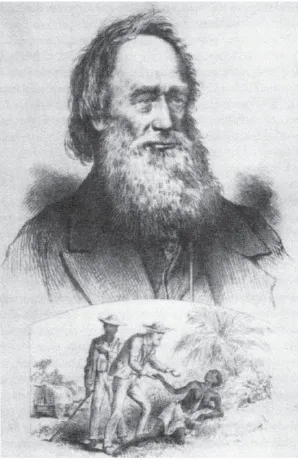
Figure 1 ‘The abandoned mother: a scene in the life of Robert Moffat’
Source: reproduced from Adam & Company, The Life and Explorations of Dr Livingstone (1874), frontispiece
Western dress was at once a sign and an instrument of this transformation. To European and African alike, it would become the most distinctive mark of association with the mission (Etherington 1978:116), a fact graphically conveyed to the British public in pictures sent from the field. In the oftillustrated incident of Moffat ministering to an ‘abandoned mother’ (Comaroff and Comaroff 1991:110–11), for example, the evangelist’s black assistant, a male convert, stands attentively behind his mentor, faithfully replicating his dress (Figure 1). The heathen, by contrast, lies in tatters in the bush, her breasts flagrantly bare. Absent altogether from the heroic scene is the mission wife, primary agent of the early campaign to clothe Africa.
AFRICAN ADORNMENT
The Western trope of ‘nakedness’—which implies a particular idea of bodily being, nature and culture—would have made little sense to Tswana prior to the arrival of the missions. In South Africa, what the nineteenth-century missionaries took to be indecent exposure was clearly neither a state of undress nor impropriety in indigenous eyes (although local notions of unclothedness existed; uncovered genitals and undressed hair were considered uncouth in Tswana adults). African dress and grooming were scanty by European standards, but they conveyed—as such things do everywhere—complex distinctions of gender, age, and social identity. In their seeming nakedness, the Africans were fully clothed.
What was most unsettling to the evangelists was the place of apparel in the whole Tswana social order. As I have said, in the European world, discerning consumption was the major index of social worth. In fact, consumption was increasingly set off from production as a gendered and markedly female sphere of practice. Women’s domestic demesne centred on the display of adornments that would signal the status of their male providers, men whose own attire, as befitted their endeavours, was relatively sober and unelaborated (Turner n.d.). Moreover, while men of the bourgeoisie controlled the manufacture and marketing of clothes, the labour which produced textiles and garments was largely that of poor women and (in the early years) children, members of the lower orders who were conspicuously excluded from the stylish self-production that engrossed their more privileged sisters.
OTHER KINDS OF CLOTHES
Above all else, it struck the evangelists as unnatural that, while Tswana women built houses, sowed, and reaped, ‘men ma[d]e the dresses for themselves and the females’ (LMS 1824). Refashioning this division of labour was integral to reforming ‘primitive’ production in all its dimensions; and this, in turn, required the creation of a distinct—feminine—domestic world centred on reproduction and consumption. In this regard, the churchmen were disturbed by the fact that, although it was marginally distinguished by rank, female attire was largely undifferentiated. In direct contrast to bourgeois fashion, it was mainly men’s clothes that signalled social standing here (cf. Kay 1834, 1:201). In fact, European observers pronounced male dress to be quite varied—even dandyish (LMS 1824, 1828).
Such distinctions apart, however, Tswana costume seemed to be unremittingly rude and rudimentary. For the most part, those of the same sex and age dressed alike (Schapera 1953:25). Nonetheless, it soon struck the Europeans that, albeit in a register of their own, indigenous clothes also spoke volubly of status. By contrast to infants (who wore little besides medicated ornaments), adults of both sexes wore long skin cloaks (dtkobó; singular kobó) that were significant ‘sign[s] of wealth’ (LMS 1824).4 Cloaks were first donned at the conclusion of male and female initiation, denoting the onset of sexual and jural maturity (J.Comaroff 1985:105 ff); interestingly, during lapses from full participation in social life—such as after bereavement—people put on their dikobó inside out. Royal males wore especially fine karosses, often incorporating the pelts of wild beasts, although that of the leopard was reserved for reigning chiefs (Philip 1828, 2:126). The skin cape was to prove extremely durable in this economy of signs, surviving amidst a riot of market innovations to give a distinctive stamp to Tswana ‘folk’ style, where it lived on, in the form of the store-bought blanket, as a crucial element of ‘tribal’ costume.
Early accounts suggest that Tswana were especially creative in fashioning new ornaments which seemed to radiate personal identity. They favoured shining surfaces (recall the glossy cosmetics) and a gleaming visibility that would contrast markedly with the dullness of mission modes, which countered ‘flashiness’ with a stress on personal restraint and inward reflection. There is plentiful evidence of novel adornments made with the sparkling buttons and glass beads that found their way into the interior, for by the early nineteenth century, the latter had become a widespread currency linking local and monetized economies.
But bright beads were not all equally desirable; Campbell (in LMS 1824) noted that, by the 1820s, Tswana ‘greatly prefer[ed] the dark blue colour’. This is intriguing for, as we shall see, dark blue was to be the shade favoured for the dress of converts by the mission. If Campbell was correct, the European’s chosen hue had a fortuitous precedent, having already been associated with prestige of foreign origin. Blue beads were globules of exchange value, imaginatively congealed into local designs. Clear blue appears to have had no other place in indigenous artistic schemes: patterns on housefronts, pottery, and ritual artefacts tended to play on the three-way contrast of black, red, and white (J. Comaroff 1985:114). It is tempting to suggest that blue—so clearly the colour of the mission and its materials (as well, in Tswana p...
Table of contents
- Cover Page
- Title Page
- Copyright Page
- Figures
- Contributors
- Acknowledgements
- Introduction
- Part I The Mirror of Consumption
- Part II Consuming the ‘Other’
- Part III Consumption and Identity
- Epilogue
- Bibliography
Trusted by 375,005 students
Access to over 1.5 million titles for a fair monthly price.
Study more efficiently using our study tools.
Frequently asked questions
Yes, you can cancel anytime from the Subscription tab in your account settings on the Perlego website. Your subscription will stay active until the end of your current billing period. Learn how to cancel your subscription
No, books cannot be downloaded as external files, such as PDFs, for use outside of Perlego. However, you can download books within the Perlego app for offline reading on mobile or tablet. Learn how to download books offline
We are an online textbook subscription service, where you can get access to an entire online library for less than the price of a single book per month. With over 1.5 million books across 990+ topics, we’ve got you covered! Learn about our mission
Look out for the read-aloud symbol on your next book to see if you can listen to it. The read-aloud tool reads text aloud for you, highlighting the text as it is being read. You can pause it, speed it up and slow it down. Learn more about Read Aloud
Yes! You can use the Perlego app on both iOS and Android devices to read anytime, anywhere — even offline. Perfect for commutes or when you’re on the go.
Please note we cannot support devices running on iOS 13 and Android 7 or earlier. Learn more about using the app
Please note we cannot support devices running on iOS 13 and Android 7 or earlier. Learn more about using the app
Yes, you can access Cross-Cultural Consumption by David Howes in PDF and/or ePUB format, as well as other popular books in Social Sciences & Cultural & Social Anthropology. We have over 1.5 million books available in our catalogue for you to explore.