Helping Children with Reading and Spelling contains a basic kit of suggestions to help children who struggle with learning to read and spell. The materials build on the content of an earlier manual, Learning Difficulties in Reading and Writing, which has been widely and successfully used by teachers. The detailed teaching sequences, combining the enjoyment of content with the more systematic practice of subskills, which were particularly appreciated in the earlier volume, have been further developed here.
The book is consistent with: * English National Curriculum Programmes of Study, and * the Code of Practice on the Identification and Assessment of Special Educational Needs.
Teachers using the manual will be following the school-based stages of intervention recommended by the Code and will be providing, when necessary, an invaluable basis for further action. Its practical A4 format, photocopiable materials and case examples make this an invaluable handbook for day to day use in the classroom.
eBook - ePub
Helping Children with Reading and Spelling
A Special Needs Manual
- 228 pages
- English
- ePUB (mobile friendly)
- Available on iOS & Android
eBook - ePub
Helping Children with Reading and Spelling
A Special Needs Manual
About this book
Information
Chapter 1
AN OVERVIEW OF THE MANUAL
This chapter describes the purposes, main themes and rationale of the manual. We regard it as essential reading before progressing to the other chapters which focus in more detail on particular teaching plans.
THE PURPOSE OF THE MANUAL
This manual consists of teaching plans to help children who struggle with learning to read, write and spell. It is intended as a basic kit for class teachers and collects in one place enough ideas to enable teachers and parents to give each child appropriate help. The teaching suggestions have been written with the primary school child in mind, but can be modified for older pupils.
At the same time, the manual does not set out to be an exhaustive account of teaching methods for pupils with special needs in reading and spelling; nor a substitute for more extensive help. When a child has followed the programmes outlined in this manual for a period of time and continues to have marked and persistent difficulties, your school’s special needs policy will guide you in what you do next. Your systematic records of the way in which you are helping the child will provide an invaluable basis for further action.
Evaluations of our previous manual showed that teachers and parents appreciated the framework which combined shared activities, focusing on the enjoyment of content, with the more systematic practice of subskills. The detailed teaching sequences were particularly valued. Follow-up studies demonstrated that pupils with difficulties had made good progress when their teaching was based on the methods presented in the manual (Reason, 1986).
The manual began as a collection of practical ideas drawn from our own experiences as teachers of pupils with special needs in literacy. To these were added suggestions made by colleagues and the many teachers who participated in the courses that we ran. The ideas were consistent with our knowledge of research and theory about the development of literacy.
This new manual includes the following improvements:
- Teaching suggestions have been extended and amplified to take account of current developments.
- Tables and figures make it easier to locate particular items in order to plan a comprehensive programme.
- Clearer links are made between assessment and teaching sequences.
- Up-to-date case examples illustrate specific methods and the overall approach.
- The manual is based on relevant educational legislation in the areas of special needs and the teaching of English.
Learning to read and write integrates many experiences and skills. The language curriculum must proceed on a broad front. But in a manual of this kind, information cannot be presented in other than a linear and sequential way. To overcome the limitations imposed by any book format, we present our rationale for teaching literacy in this chapter. This takes three forms:
- Figure 1.1 illustrates our model of how aspects of literacy learning interact and overlap. It is introduced in this chapter and subsequent chapters focus on different areas of the diagram.
- Figure 1.2 shows the educational context in which individual planning and instruction takes place.
- A question and answer section clarifies the themes and assumptions that recur throughout the manual.
A MODEL OF LITERACY LEARNING
Figure 1.1 illustrates the complementary and overlapping nature of reading and writing. The three central areas distinguish between meaning, phonics and fluency in the following way:
- Meaning covers the understanding and enjoyment of content.
- Phonics refers to phonological competencies and the teaching of word analysis skills.
- Fluency is effortless and automatic word recognition and reproduction.

Figure. 1.1 © Reason and Boote, 1994. This page may be reproduced without infringing copyright.
It is no accident that the circles relating to meaning are the largest in the diagram. There would be no point in pursuing the other two areas if the foundations of communication had not been developed and maintained. The importance of sharing books and other written information with children cannot easily be exaggerated.
But the various skills and competencies associated with phonics and fluency may not occur simply through a familiarity with the content of books. Some children need to have the connections between literary content and the way it is written down made very explicit. They need to practise skills out of context as necessary, and to observe the practical applications of the same skills in other literary contexts.
The English National Curriculum programmes of study in Speaking and Listening are essential for literacy learning and particularly important for the development of the meaning areas in the figure. Although these oral and auditory areas are not directly represented, we assume that you are familiar with relevant Speaking and Listening activities. Those emphasising discussion and shared learning are of particular importance.
Figure 1.1 illustrates three important points:
- The three areas of meaning, phonics and fluency are not merely added together: they have a multiplying effect on each other. Knowledge in one area interacts with and supports knowledge in the other areas, making subsequent learning easier. We assume that the reader learns to synthesize simultaneously information from several sources: previous experience, knowledge of meaning and grammar, and visual and phonic information. When there is difficulty with one source of information, another may compensate for it. It is possible, for example, to deduce the meaning of a word from its context and the context can also sometimes make up for problems with word recognition. In fluent reading, word recognition skills have become much more automatic, and use of context is likely to remain central to the comprehension of what is read.
- Reading and writing instruction is not confined to any single approach. To select ‘real reading’ or ‘phonics’ or ‘look and say’ as an exclusive teaching method would deny children a full opportunity to develop all the necessary concepts and skills. In the same way, to concentrate on spelling at the expense of creativity, or creative writing without instruction in spelling and handwriting leads to imbalance, and failure to acquire important skills. A similar imbalance would result from selecting any other aspect as an exclusive approach.
- Reading and writing complement and support each other, but need a different emphasis when taught to ensure that children can apply necessary skills.
Teaching children strategies for reading will not automatically mean that they can adapt the same strategies to writing, and vice versa. For example, in reading it is poˋˋ1ssible to guess unknown words from context whereas in accurate spelling there is little scope for approximations. On the other hand, early spelling development does usually lead to an appreciation of phonological regularities which develops reading.
Our model of literacy is not intended to be revolutionary or exceptional. It represents the views of the many teachers who have discussed their work with us. A quotation from an extensive review of the effects of different kinds of tutoring programmes illustrates our practical research basis:
…programmes with the most comprehensive models of reading, and therefore the most complete instructional interventions, appear to have larger impacts than programmes which address only a few components of the reading process.
(Wasik and Slavin 1993, p 196)
Implications for the manual:
- The three areas of meaning, phonics and fluency provide the basic framework for assessment and teaching.
- Reading and writing activities are planned in a way which enables them to complement each other.
- Different chapters focus on particular areas of the diagram and describe in detail the teaching methods involved.
THE BROADER EDUCATIONAL CONTEXT
We recognise that plans to assist children with literacy difficulties are an integral part of the plans made for all the children in the classroom. Overall school policies and practices determine how the needs of the individual are being met. Figure 1.2 illustrates the educational philosophy of the manual. Although the manual will focus on detailed assessment and teaching strategies, other crucial areas determine the success of that instruction.
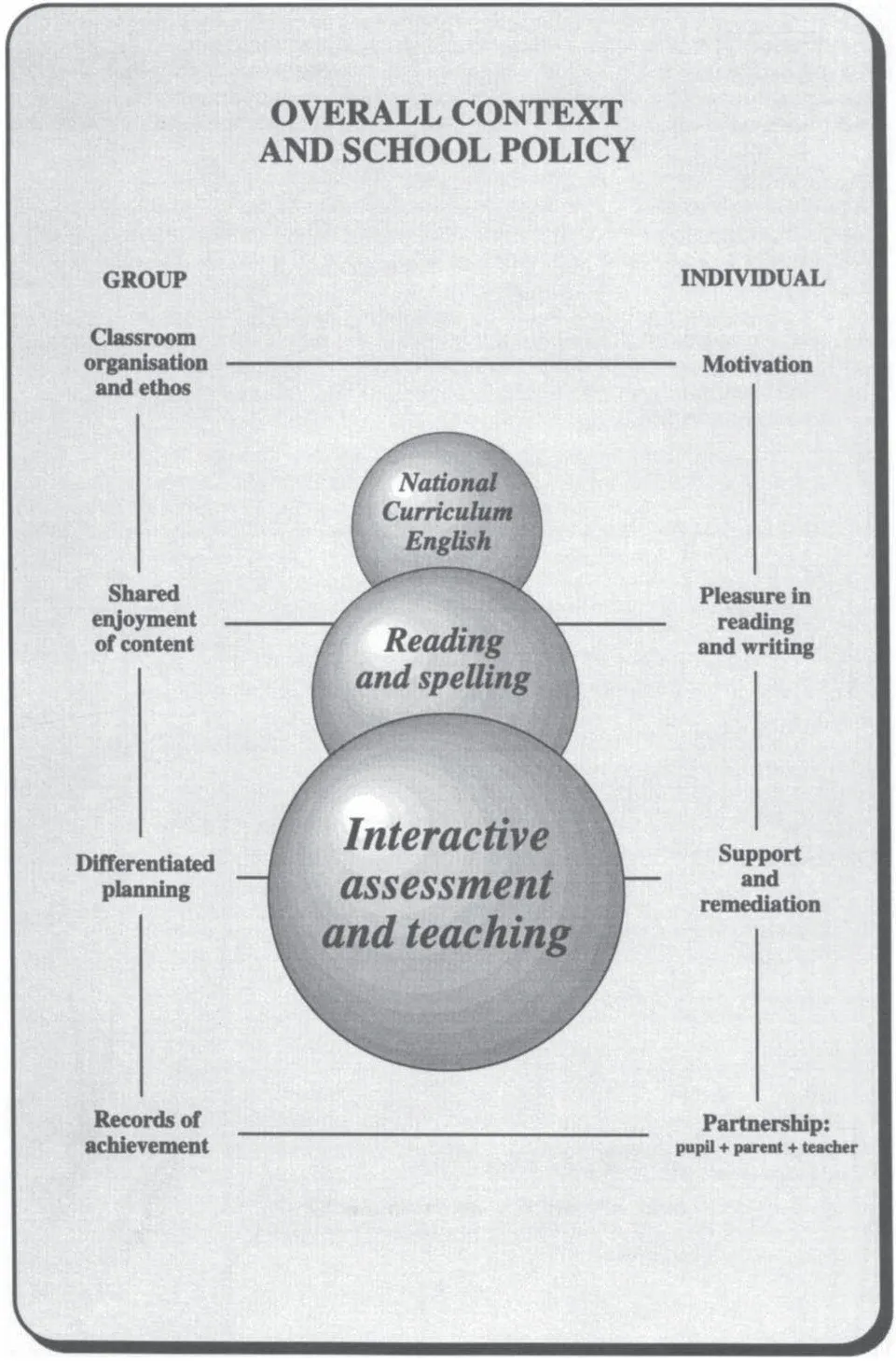
Figure. 1.2 © Reason and Boote, 1994. This page may be reproduced without infringing copyright.
The centre of the diagram emphasises that knowledge of children’s literacy learning and, in particular, those aspects relevant to difficulties with reading and spelling inform our approaches to interactive assessment and teaching. The third circle, National Curriculum English, provides the context for the decisions that need to be made.
These three areas cannot exist in isolation. They depend on the way teachers organise their classrooms and promote successful and enjoyable learning. The connecting lines between the headings for the group and for the individual illustrate their interdependence. For example, individual motivation is influenced by a general classroom ethos which enhances cooperation and supportive attitudes. Motivation is also dependent on a sense of success and pleasure in reading and writing which, in turn, is influenced by the way the whole class shares and enjoys the content of written information. And the way the whole class shares the enjoyment of content is again a function of classroom organisation and ethos.
Similarly, the two headings of ‘differentiated planning’ and ‘support and remediation’ are presented as complementary mirror images. Plans for the whole class take account of individual differences. Additional planning for the child with literacy difficulties then facilitates access to content, despite the difficulties, and provides specific help with learning to read and write.
At the bottom of the diagram, records of achievement for the whole class are juxtaposed with the partnership required from the pupil, parent and teacher when there are additional difficulties. Both sides have as their pre-requisites constructive self-assessments, the setting of attainable targets and the celebration of targets achieved.
Figure 1.2 is an overview of some of the most important issues in educational practice. Chapters 10 and 11 in the last part of this manual provide examples of its application within the overall classroom context.
Figure 1.2 underpins all the chapters in the manual.
It stresses the importance of:
- the overall educational context
- positive feelings
- constructive records
- children’s involvement in their own learning
- an ethos of partnership
SOME KEY QUESTIONS
Is the teaching of reading and spelling difficult?
A manual with many explanations, instructions and diagrams might imply that the teaching of reading and writing is an exceedingly complicated business. We wish to stress that this is not the case. For us, the ‘feel good’ factor is the most important ingredient of success. If we keep up the momentum of enjoyment and continue to provide opportunities for reading and writing in whatever form, then the teaching will combine with maturation to achieve sustained progress.
We believe that those planning a programme for children with literacy difficulties will find the information presented in this manual helpful, bearing in mind that our teaching methods are not offered as infallible prescriptions, but as suggestions which have proved successful with many children in the past. There is no guarantee that they will work with all children in all situations. Whilst theoretical knowledge of the learning processes involved in reading and writing remain incomplete, it is essential to keep an open mind rather than subscribe rigidly to any one method. It is important, however, to adopt a systematic approach in planning for the individual child with difficulties.
How can I find the time for the individual work?
We are well aware of the considerable pressures on teacher time. We have been encouraged, however, by comments such as: ‘Knowing what to do makes it easier to find the time for doing it’. Many teachers have also said that having a clearer idea of the child’s progress and literacy needs makes it possible to incorporate some of the activities into the daily class routine. Isolated help outside the classroom cannot achieve that kind of transfer into other aspects of the school work.
How, then, can the busy class teacher find time to follow the suggestions made in this manual? Teachers have attempted to solve the problem in a number of ways. In some schools, overall policy has favoured opportunities for individual work so that arrangements have been made to free each class teacher in turn to work individually with some children. With regard to overall classroom organisation, teachers have found the approaches outlined in Chapter 11 useful in helping children to work together, so giving the teacher more time to focus on particular aspects. Sometimes several children in the class may require similar additional help, and be taught together as a group. Chapter 10 provides an illustration of this way of working.
We recognise, however, that most class teachers have very limited time for individual instruction. The ‘five-minute-plan’ below requires more than five minutes at the initial assessment and planning stages. After that, however, the daily ‘five minutes’ of systematic help, together with other appropriate classroom activities, can result in very pleasing progress.
A FIVE-MINUTE-PLAN
- If you can give the child with difficulties a maximum of five minutes of individual attention per day, you need to decide about the child’s priorities.
- Consider first what you would do in an ideal situation with plenty of time. This manual helps you design an initial plan.
- Now decide what is possible and what compromises you have to make.
- As you focus on particular activities, keep in mind the areas that are not being covered so that you may correct the balance later.
- Examples of initial plans are provided at the end of Chapter 3, p.
How do I define Specific Learning Difficulties (Dyslexia)?
This is indeed a highly controversial question as different researchers and practitioners tend to define Specific Learning Difficulties in different ways. These issues have been considered in many publications (e.g. Pumfrey and Reason, 1991). In our experience, Specific Learning Difficulties range from mild to severe. The use of the label then depends on rather arbitrary cut-off points along a continuum of difficulties.
In this manual, we define Specific Learning Difficulties as marked and ...
Table of contents
- Cover Page
- Title Page
- Copyright Page
- Illustrations
- Preface
- Acknowledgements
- Part I Main Themes and Ideas
- Part II Reading
- Part III Spelling and Handwriting
- Part IV Applications in the Classroom
- Bibliography
- Addresses
Trusted by 375,005 students
Access to over 1.5 million titles for a fair monthly price.
Study more efficiently using our study tools.
Frequently asked questions
Yes, you can cancel anytime from the Subscription tab in your account settings on the Perlego website. Your subscription will stay active until the end of your current billing period. Learn how to cancel your subscription
No, books cannot be downloaded as external files, such as PDFs, for use outside of Perlego. However, you can download books within the Perlego app for offline reading on mobile or tablet. Learn how to download books offline
Perlego offers two plans: Essential and Complete
- Essential is ideal for learners and professionals who enjoy exploring a wide range of subjects. Access the Essential Library with 800,000+ trusted titles and best-sellers across business, personal growth, and the humanities. Includes unlimited reading time and Standard Read Aloud voice.
- Complete: Perfect for advanced learners and researchers needing full, unrestricted access. Unlock 1.5M+ books across hundreds of subjects, including academic and specialized titles. The Complete Plan also includes advanced features like Premium Read Aloud and Research Assistant.
We are an online textbook subscription service, where you can get access to an entire online library for less than the price of a single book per month. With over 1.5 million books across 990+ topics, we’ve got you covered! Learn about our mission
Look out for the read-aloud symbol on your next book to see if you can listen to it. The read-aloud tool reads text aloud for you, highlighting the text as it is being read. You can pause it, speed it up and slow it down. Learn more about Read Aloud
Yes! You can use the Perlego app on both iOS and Android devices to read anytime, anywhere — even offline. Perfect for commutes or when you’re on the go.
Please note we cannot support devices running on iOS 13 and Android 7 or earlier. Learn more about using the app
Please note we cannot support devices running on iOS 13 and Android 7 or earlier. Learn more about using the app
Yes, you can access Helping Children with Reading and Spelling by Mrs Rene Boote,Rene Boote,Rea Reason in PDF and/or ePUB format, as well as other popular books in Education & Education General. We have over 1.5 million books available in our catalogue for you to explore.