
- 132 pages
- English
- ePUB (mobile friendly)
- Available on iOS & Android
eBook - ePub
The Cubic Curriculum
About this book
Ted Wragg offers a novel and highly imaginative view of the school curriculum, using a unique three-dimensional model.
Information
CHAPTER ONE
Life in the Future
Some of the children in school today may see the dawn of the twenty-second century. With improved medical treatments being devised every day, there is a strong likelihood that children born in the late twentieth and early twenty-first centuries will, in many cases, live to be 90, 100, or more. In these circumstances the term ‘future’ can mean a very long time indeed. If education is society’s investment in its own posterity, then a long- rather than a short-term strategy is essential.
It is easy to argue that education must be based on a vision of the future, but not so simple to describe what that future might look like. There have been numerous predictions about life in the twenty-first century, some gloomy, others more hopeful. Indeed, the same data can be quoted to support either a pessimistic or optimistic vision of what is to come. Forecasts that job opportunities may diminish can be used to predict boredom and street riots, or to welcome the release of people from dangerous and demeaning employment.
Speculation about the future involves intelligent guesswork about present and past trends and where they might eventually lead, so that key messages about the twenty-first century can be elicited. Predictions can, of course, go disastrously astray, which is why they should be read with caution. It would be a mistake to base a whole education system entirely on a single conjecture, especially when it is hazardous enough predicting next year’s events on the basis of what is happening this year. Small wonder that the great oracles have often spoken in ambiguous terms. I propose to deal here, therefore, with a range of possibilities that seem to be worth considering, and see what the implications would be were they to materialise, though none of the following messages is offered with any certainty.
EMPLOYMENT OR UNEMPLOYMENT?
While the jobs that people hold do not consume the whole of their life, they are an important part of it. In the first half of the twentieth century many men, if they lived long enough, worked for some 50 or so years before entering retirement, while women tended to work in paid employment for fewer years, or did not return to their previous career after giving birth to children. Speculations about the future often concentrate entirely on the nature of employment or the lack of it. What is clear is that changes in work patterns have been dramatic in the last third of the twentieth century. What is less clear is where these changes are leading.
During the nineteenth century a succession of industrial revolutions saw masses of people move out of the rural areas and into the cities, as they left agriculture to seek work in factories. Whereas in early Victorian Britain about a third of the population worked on the land, the figure in modern times is of about 2 per cent of the workforce employed in agriculture, a remarkable transformation in the landscape of working life. Equally significant changes took place during the last three decades of the twentieth century, but the eventual outcome of these post-industrial revolutions remains clouded. The massive disappearance of jobs in manufacturing industry has not led to a single type of employer emerging to absorb those displaced during the labour-shedding process.
During the 1970s in the United Kingdom, over a million jobs were lost in manufacturing industry alone. Another one and a half million went in the first five years of the 1980s. The turmoil continued towards the end of the century, and in the first five years of the 1990s some 5 million people lost their job. What was notable about these huge losses of traditional forms of employment was first of all that the vast majority of posts that disappeared were unskilled, semi-skilled or barely skilled. It is true that graduate employment also suffered, but the biggest decline was in areas where machines were brought in to perform the numerous tasks that had previously been carried out by armies of worker ants. Firms that used to employ dozens of girl school-leavers to fill cardboard boxes with their products, and dozens of boy school-leavers to load them on to lorries, replaced the girls with automated packing machines and the boys with a couple of fork-lift truck operators. For those without skill the prospects became bleak.
Another aspect of higher unemployment was that it appeared to be endemic rather than cyclical. Recessions earlier in the century had been followed by boom times. The order books emptied, but then filled up again, as world or national trading prospects improved. Workers dropped to a three-day week, or lost their jobs, only to regain exactly the same posts later, often with bonus and overtime payments, as the economy moved into a higher gear. When the cycle stopped it was partly because, in the new automated economy, no employer was going to get rid of two fork-lift trucks and two drivers in order to employ 20 people with large biceps.
There also appeared to be a paradox, in that, even in areas of high unemployment, there were vacancies. Unfortunately the vacancies did not always match the talents and skills of the jobless. It was of little consolation to the dispossessed coal miner or steel worker to see a job advert asking for someone to repair video recorders or computers. This meant that retraining became an important matter. Those who either had no skills to sell, or whose skills had become outmoded, needed to acquire fresh knowledge and skills in order to become employable again. There were sad examples of people who did retrain and then managed to obtain another post, only to experience redundancy in their newly found career. For some people serial retraining was in itself to become a significant feature of their lives.
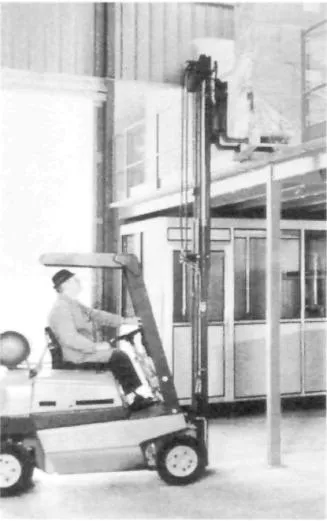
Figure 2 The fork-lift truck—obliterated many unskilled jobs
Nor was retraining confined to the unskilled or those who worked in traditional craft trades in manufacturing industry. Secretaries had to acquire the skills of word processing and other forms of information technology. Surgeons had to learn transplant surgery, the use of immuno-suppressive drugs, laser technology. Head teachers were pressed to turn into financial, marketing and resource-management experts. Trade-union officials, previously regarded as wage negotiators, found themselves increasingly involved in advising their workmates about compensation for accidents, or the workings of an industrial tribunal for those who had lost their jobs. As well as the oral competence that had always been necessary to fulfil their duties, they needed higher reading competence in order to cope with the literature on health and safety at work, or employment protection. Some forms of knowledge and skill seemed to have a very short life before becoming obsolete. Few employees escaped the remorseless march of novelty and innovation.
In addition to these kinds of change there were new working patterns for the many still in work. The development of new technology meant that certain kinds of activity could be done at least as well, and sometimes at lower cost, in the home, or in a remote satellite location at a distance from the main centre of production. Publishing, journalism, garment manufacture, design work, telephone sales, consultancy and advice, many of these could, given the right equipment, be carried out as easily in someone’s attic, as in a noisy and crowded office or factory. There was also a shift to much more part-time employment, and women in particular often took jobs that required part of the day, rather than the whole of it. Many people moved to part-time employment as an element of an early retirement package. Hutton (1995) estimated the number of British part-time workers in the late twentieth century to be in excess of 5 million, of whom 80 per cent were women.
At its best this meant that some degree of control over time was returned to the individual. Instead of having to leave home in the early morning to ensure arrival at the start of the working day, only to have to battle against traffic once more in the evening, those with flexible working arrangements could sometimes suit themselves. The shift to part-time working and phased retirement liberated parts of the day and week for recreation or leisure, or for more time with family and friends.
At its worst, however, part-timers and home workers were exploited, paid low wages, denied the same safety and employment protection rights as full-timers. Since some 70 per cent of all new part-time jobs were for 16 hours a week or less (Hutton, 1995), this meant that the holders of them had no right to appeal against unfair dismissal or to redundancy payments. Much time had to be expended, by those who would have preferred a full-time post, trying to stitch together several part-time jobs. There were numerous examples of families dropping to a lower standard of living, because the male adult had lost his full-time job and the female adult had only been able to obtain a part-time post.
As traditional jobs disappeared in the manufacturing sector, so new ones began to appear in service and support industries. Alongside smaller numbers of the big employers of labour, there sprang up numerous small and medium-sized businesses. Unfortunately a number of these did not succeed, and bankruptcies increased as several small concerns ceased training. This added to the problems of those seeking work, as small firms closed and some failed entrepreneurs returned to being employees of someone else.
The messages about employment prospects in the twenty-first century from this rapidly changing environment are mixed, but some possibilities emerge that need to be considered by those working in education. They include the following, all of which might continue into the future along similar trend lines.
- The numbers of unskilled and semi-skilled jobs appear to be in considerable decline, therefore a much higher level of knowledge and skill will be necessary from those wishing to enter, or remain in employment.
- More jobs in service and support, leisure and recreation, rather than in factories, means that social skills, the ability to get on with others, may become more valued.
- People may have to retrain significantly several times in their adult lives, perhaps every five to seven years, so flexibility and willingness to continue learning are important.
- As more people take part-time jobs, or work from their own home or in a place remote from their employer’s headquarters, qualities such as independence, resourcefulness and adaptability may be highly valued.
- People will need to know their rights and entitlements, as well as their obligations to others, if they are to play a full part in society and not be exploited by the unscrupulous.
HOME AND FAMILY LIFE
It is not yet entirely clear whether a reduction in the time spent at work will in practice lead to more time being available for home and family life. This is partly because of a paradox. Although the number of unemployed has increased since the 1950s and 1960s, those who have full-time jobs often worker longer hours than they did in earlier times. Some people have too little to do, while others have too much.
The increase in working hours is explained by a number of factors. It is partly because of what Handy (1994) called the ‘1/2×2×3’ formula—from a company’s point of view, productivity and profit could be increased if half the previous workforce were paid twice their salary to obtain three times as much output. Another explanation is the increased commuting time, as employees travel greater distances to seek work, without wanting to move house as well. A further reason is the tendency, during a recession, for people to take on additional evening or weekend jobs, or to pursue income-generating ‘hobbies’, like vegetable growing, collecting (buying and selling artefacts), decorating or car repair.
Uncertainties in the workplace can lead to insecurity in home and family life. Part-time workers, as well as those likely to lose or have to change their job, are less able to secure the sort of mortgage that will purchase a good-quality home. Those working long hours may have less time and energy left over for family and social life. Some factors appear to have combined to reduce the time spent on physical activity. The degree of strenuous exercise necessary to reduce the incidence of heart disease is thought to be three periods of 20 minutes per week in which the heart rate rises to more than 140 beats a minute. Relatively few adults reach this level, as do few children. The availability of considerable opportunities for spectator entertainment, such as watching multi-channel television or attending sports events, may prevent many adults from being more physically active.
Even in home and family life greater knowledge and skill appear to be necessary than in former times. Families may run into considerable debt if they are unable to manage their own finances. In desperation some may fall victim to ‘loan sharks’ and others who prey on the ill-educated, paying vast amounts of interest on small loans which leave them in thrall for years. The predators in society exploit those whose rudimentary levels of numeracy, literacy or oral competence mean they are unable to calculate percentages, read legalistic agreements, or argue with articulate and persuasive usurers. In our complex bureaucratic society those unable to compose a letter, attend and speak at a public meeting, or combine with others to lobby decision makers, may find their child is unable to obtain the school place of their choice, or that a six-lane highway is to be driven through their back garden.
Recreation and leisure require knowledge and skill. It is quite true that those with little knowledge and skill can still enjoy their leisure, but their choices may be fewer. Under the ‘minimal competency testing’ programme run in several parts of the United States, one paper on ‘life skills’ was partly based on the guide to Yosemite National Park. The minimal competency tests were an attempt to identify those who might quit their schooling with only rudimentary competence, ill-equipped to face life in the twenty-first century. Responses to this paper on ‘life skills’ showed that some pupils were unable to read the guide well enough to understand what there was to be enjoyed.
Inability to read proficiently, understand map signs and conventions, calculate the time and cost of taking a family on an outing, do not prevent people from visiting Yosemite, but the less competent do have more limited opportunities than the competent, in recreation as in work. When the working week is reduced, some people fill it up again with ‘leisure’ activities that are not unlike what would be ‘work’ for others, hence the popularity of ‘do-it-yourself’ stores, as well as pastimes such as gardening, decorating, cookery and car maintenance. Many of these hobbies and pastimes require the same or similar knowledge and skills as would be needed for someone in paid employment, like understanding how electricity works, the ability to use a power tool, read instructions, or work harmoniously alongside others.
This last point is also an important one more generally, and relates to a number of messages for education for the future which emerge from looking at home and family life.
- In the twenty-first century, especially if the working week were to be reduced, or more people worked in their own house or flat, extra time would be available away from the workplace to be spent in the home or community; some would use these additional hours for work-like activities, others for leisure.
- There may be a trend towards less personal physical activity and more spectating, with possible consequences for individual health.
- In home and family life, the ability to get on well with one’s fellows is an important quality, if breakdowns in relationships are to be avoided.
- Consideration of both working and social life in the future suggests that the needs for both domains may be similar, if not identical.
- Wide rather than rudimentary knowledge, a broad range of skills, the ability to relate well to others, personal qualities and traits, such as imagination, determination, flexibility, a willingness to learn throughout one’s life, are important prerequisites for all aspects of adult life.
THE FOUR AGES
One of the most notable trends during the twentieth century was the changes in what are sometimes called the Four Ages. The First Age is the age of full-time education and training, the Second Age the period of working life, the Third Age the years of healthy retirement, and the Fourth Age represents the time of infirmity. Since the nineteenth century, when large numbers of people never even reached the later ages, the transformation has been dramatic. Children in school today, for example, may find that it is their Third, rather than their Second Age, which occupies the greatest number of years.
Furthermore, the Four Ages may become increasingly fluid and ill defined, flowing and fusing into each other, as many people stay in education, while others enter work, o...
Table of contents
- COVER PAGE
- TITLE PAGE
- COPYRIGHT PAGE
- ILLUSTRATIONS
- PREFACE
- ACKNOWLEDGEMENTS
- INTRODUCING THE CUBE
- CHAPTER ONE: LIFE IN THE FUTURE
- CHAPTER TWO: THE CUBIC CURRICULUM
- CHAPTER THREE: SUBJECTS, THE FIRST DIMENSION
- CHAPTER FOUR: CROSS-CURRICULAR ISSUES, THE SECOND DIMENSION
- CHAPTER FIVE: TEACHING AND LEARNING STYLES, THE THIRD DIMENSION
- CHAPTER SIX: THE WHOLE MODEL IN ACTION
- BIBLIOGRAPHY
Trusted by 375,005 students
Access to over 1.5 million titles for a fair monthly price.
Study more efficiently using our study tools.
Frequently asked questions
Yes, you can cancel anytime from the Subscription tab in your account settings on the Perlego website. Your subscription will stay active until the end of your current billing period. Learn how to cancel your subscription
No, books cannot be downloaded as external files, such as PDFs, for use outside of Perlego. However, you can download books within the Perlego app for offline reading on mobile or tablet. Learn how to download books offline
Perlego offers two plans: Essential and Complete
- Essential is ideal for learners and professionals who enjoy exploring a wide range of subjects. Access the Essential Library with 800,000+ trusted titles and best-sellers across business, personal growth, and the humanities. Includes unlimited reading time and Standard Read Aloud voice.
- Complete: Perfect for advanced learners and researchers needing full, unrestricted access. Unlock 1.5M+ books across hundreds of subjects, including academic and specialized titles. The Complete Plan also includes advanced features like Premium Read Aloud and Research Assistant.
We are an online textbook subscription service, where you can get access to an entire online library for less than the price of a single book per month. With over 1.5 million books across 990+ topics, we’ve got you covered! Learn about our mission
Look out for the read-aloud symbol on your next book to see if you can listen to it. The read-aloud tool reads text aloud for you, highlighting the text as it is being read. You can pause it, speed it up and slow it down. Learn more about Read Aloud
Yes! You can use the Perlego app on both iOS and Android devices to read anytime, anywhere — even offline. Perfect for commutes or when you’re on the go.
Please note we cannot support devices running on iOS 13 and Android 7 or earlier. Learn more about using the app
Please note we cannot support devices running on iOS 13 and Android 7 or earlier. Learn more about using the app
Yes, you can access The Cubic Curriculum by Ted Wragg in PDF and/or ePUB format, as well as other popular books in Education & Education General. We have over 1.5 million books available in our catalogue for you to explore.