![]()
Teaching and learning
styles
Chapter overview
How often have you had to think quickly on your feet, adapting and explaining the lesson task so that the students you are supporting understand and engage with their work? Humans absorb information about their surroundings using a variety of senses. These are related to types of learning styles and the way we prefer to think. Successful students recognise which styles suit them and can adapt tasks accordingly. Educationalists describe these learning differences and preferences using a variety of terms, and these will be introduced in this chapter. However to support you in adapting tasks, the following three learning styles will be discussed in detail: auditory learners; visual learners; and kinaesthetic learners. By the end of this chapter you will be able to:
- recognise the three main learning styles;
- identify your own and students' preferred styles;
- have practical examples of how to adapt learning tasks to suit different students; and
- understand why students react and think differently.
Introduction
Working within a secondary school environment will have made yon aware that there is currently much interest in adapting and delivering lessons so that more students are able to take an active part and therefore be successful learners. If you are a teaching assistant who has supported Maths and English lessons you will be aware of the changes in the curriculum at Key Stage 3 and the way these lessons are delivered. You may have noticed ‘mini’ whiteboards being used by all students, or the use of an interactive whiteboard. However, many schools have always used a variety of ways to support students with their learning across the curriculum. Modern Languages departments often use role-play; Humanities departments use debates and mock elections to engage learners; Science departments use investigation and experiments; while Geography departments take students on field trips, to name a few. All of these are examples of different teaching styles. What you will have also noticed is the different ways students react to them. Some students are really excited by being allowed to role-play and will remember the content of that lesson well when asked to recall it. Some will have appeared to enjoy the lesson but gained little understanding from it and others will have shown their displeasure at having to role-play and will have asked to do work in their exercise book instead. This is because we all have different preferred learning styles. Some students can adapt their learning styles easily and learn in a variety of ways; others are less flexible and can only learn when material is presented to them in their preferred learning style. Matching the lesson to everyone in the class is a tall order for any teacher. However, if students know their own preferred learning style, they can adapt what they have been asked to do to maximise their learning. As a teaching assistant you are in a unique position. You can work with small groups and observe individuals. This will allow you to identify students' learning styles and help adapt the task. Ultimately your goal is to support them in understanding their own learning style and becoming independent learners, the emotional aspects of which will be returned to in Chapter 2.
Learning styles
What are learning styles? The three main styles that are discussed are: auditory learners; visual learners; and kinaesthetic learners (sometimes known as learning by doing or ‘motor’ learners). You will often see this referred to as VAK learning (Visual, Auditory and Kinaesthetic).
Auditory learners
As the term suggests auditory learners like to take in information by ‘listening’. (This can be information read out loud or their own ‘voice’ as they read, heard internally.) This is partly because they are good at dealing with language. They like words and have a high understanding of them and their meanings. Additionally, they find it easy to express themselves, by talking to you, their teacher or friends about their learning. Auditory learners:
- are comfortable in classrooms where there is a high level of teacher talk;
- will remember and follow instructions given by teachers verbally;
- are more likely to put their hand up to answer a question;
- are happy when dealing with large amounts of writing in textbooks;
- retain interesting facts and discussions they have heard on the radio or in conversation;
- recall new ideas and words that have been introduced verbally or written as words on the board during the lesson;
- express themselves well through written work;
- revise successfully by reading and re-reading their notes and textbooks;
- revise successfully using keyword cards;
- will not find mind mapping or concept mapping helpful;
- will read through the instructions of a game or assembly kit before assembling it.
Visual learners
Again, this learning style explains itself; visual learners prefer to ‘see’ things. This can be literally, i.e. they will look at the pictures or diagrams in a textbook to learn something before they turn to the text. Mentally, they prefer to make pictures in their head and visualise information as a whole. For example, visual learners are often extremely good at being able to rotate 3D pictures in their mind's eye and imagine the new perspective, something that a student with a strong auditory preference would find difficult and a definite asset in today's visual and computer-literate society. As a teaching assistant it is important that you start to recognise the visual learners in the classroom. Since they learn best by visualising the ‘end-product’, they will not be comfortable, or ready to grapple, with a task in small, sequenced steps unless they know where they are heading. You will recognise these students; they often ask, ‘Why are we doing this?’ Effective support means explaining the end before the start!
Visual learners:
- are comfortable in lessons that present information colourfully, using pictures, tables, charts, diagrams and videos;
- learn quickly from pictures and diagrams;
- can be mislead by poorly chosen textbooks or worksheets where the pictures do not illustrate the text well. For visual learners, it is vital that any pictures or diagrams are well chosen for their quality of content and not just because they look ‘pretty’ or break up the text;
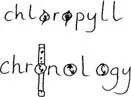
Figure 1.1 Learning key words using visual clues
- are uncomfortable with large amounts of unbroken text;
- will lose concentration when there is a high level of ‘talk’ in the learning task;
- like to know the end point of a task before starting;
- respond well to a variety of colours and change of shape when learning key words and new vocabulary in lessons, as in Figure 1.1;
- will find mind mapping and concept mapping helpful (see Chapter 5);
- will use diagrams to assemble kits and choose recipes etc. that have clear pictures.
Kinaesthetic learners
Kinaesthetic literally means ‘touch’ or ‘feel’. Therefore kinaesthetic learners are those whose preferred learning style is ‘hands on’. They learn best when they are allowed to move around and do things as part of the learning process. Once they have experienced the learning in a practical way it will be retained well (see Chapter 5). However, they may have difficulty explaining in words what they know. It is easy to see why students whose preferred learning style is strongly kinaesthetic may be disadvantaged in many lessons. Additionally, as a teaching assistant you can begin to see why arguments in some lessons may emerge. For example, if when students are divided into groups to conduct a science experiment the group contains all strongly kinaesthetic learners, there is going to be a battle, as they will all want to do (pouring, mixing, measuring, assembling) and no-one will want to record the results. They need an auditory learner in the group for this purpose....