- 230 pages
- English
- ePUB (mobile friendly)
- Available on iOS & Android
eBook - ePub
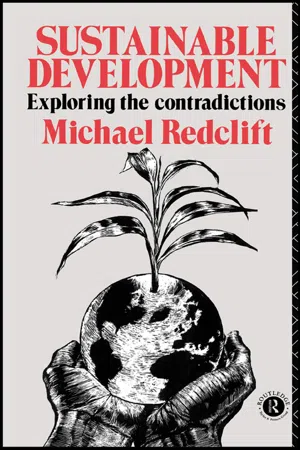
About this book
Argues that environmental problems need to be looked at internationally, in terms of the global economic system, and that the degradation of the environment is not natural', but an historical process which is intrinsically linked and shaped by economic and political systems.
Information
1
Introduction
For three months in early 1983 a massive forest fire destroyed over 3.5 million hectares on the island of Borneo (Indonesian Kalimantan). This charred area, nearly the size of Taiwan, included 800,000 hectares of primary, tropical forest and 1.4 million hectares of commercially logged woodland. An additional 750,000 hectares had been secondary-growth forest under shifting cultivation, and 550,000 hectares consisted of peat swamps. As E.C.Wolf (1985) argues, any area which gets five times as much rainfall as New York City or London should be difficult to ignite. However, human actions had paved the way for the biggest recorded ‘natural’ conflagration in history. The ranks of cultivators had risen in Kalimantan by many thousands, some of them settled as part of Indonesia’s massive transmigration programme. Loggers promoted the fire’s spread by leaving damaged trees standing after selective commercial logging. Researchers at the University of Hamburg suggested that changes in the turbidity of coastal waters, due to soil erosion in South-east Asia, may have altered regional atmospheric currents, contributing to the drought. As trees dropped their leaves in an effort to conserve moisture, the forest floor became a vast, tractless tinder-box. Like so many other ‘natural’ disasters the destruction on Kalimantan had human causes.
While the tropical forest on Kalimantan was being destroyed, work was commencing in Arizona on a sealed-off, glassed-in space capsule, nicknamed ‘Biosphere II’. Perched in the Catalina mountains, 35 miles north-east of Tucson, this cubic glasshouse was designed to ‘be as removed from the life-supporting systems of Earth as a space station’ (Johnson 1986). It consists today of 17,000 square feet of plant-tissue-culture laboratories, plant and aquaculture greenhouses and a support building complex, the property of Space Biosphere Ventures. In 1989 Biosphere II’s airlock will be finally sealed and the glasshouse capsule will rely, as does our planet, on its own life-support mechanisms. The aim of Biosphere Ventures, we are told, is ‘to give biological Earth a mate with which it can conduct a dialogue…it is a starting point for a dialogue of biospheres’ (Johnson 1986, 22). It should also give us pause to think. The life-support systems which have enriched our planet and given us such a diversity of species are fragile, not only in tropical forests like those of Borneo, but also in English wetlands and chalk downs. The environment is frequently placed in jeopardy by development. At the same time, we are heavily involved in recreating nature, reassembling the parts and cloning the genes, in an attempt to remove ourselves from environmental constraints. We are, literally, ‘producing’ nature for the first time, while we are busily engaged in destroying it for the last time. This book is about both processes, about the destruction of life-support systems and their creation. It is about the meaning we attach to ‘sustainable’ development and the contradictions which sustainable development implies. Between Borneo and Arizona lies a great deal of human history, as well as geography. My purpose is to analyse that history, and its underlying momentum, in order to discover why development has taken the course that it has and what we can do about it.
Sustainable development seems assured of a place in the litany of development truisms, but to what extent does it express convergent, rather than divergent, intellectual traditions? The constant reference to ‘sustainability’ as a desirable objective has served to obscure the contradictions that ‘development’ implies for the environment. Instead of bringing intellectual rigour to the discussion of environment and development, we frequently encounter moral convictions as substitutes for thought. However important these convictions, in partnership with rigorous analysis, they are no substitute for it.
In exploring the relationship between development and the environment we will need to construct a model of how it has changed over time: a historical account of the environment and development. Equally important, we will need to make clear the international linkages which provide the transformation momentum behind environmental change. These international linkages involve the transfer of capital, labour and natural resources. In exploring sustainable development, we are necessarily concerned with all three: with capital and labour, as well as the ‘natural’ resources that human beings have ‘naturalized’ through their own efforts (Smith 1984).
In the pages that follow it will also be clear that the environment, whatever its geographic location, is socially constructed. The environment used by ramblers in the English Peak District, or hunters and gatherers in the Brazilian Amazon, is not merely located in different places; it means different things to those who use it. The environment is transformed by economic growth in a material sense but it is also continually transformed existentially, although we—the environment users—often remain unconscious of the fact. This book aims to deepen our understanding of environmental change as a social process, inextricably linked with the expansion and contraction of the world economic system.
In a previous discussion (Redclift 1984) it was argued that political economy and environmentalism each stood to gain from sharing an analytical perspective. The environmental ‘crisis’ in the South was the outcome of an economic, structural crisis. At the same time it was argued that the political economy of development needed to incorporate environmental concerns in a more systematic way. This book begins where that discussion ended: with an approach which it is hoped is more integrated in both disciplinary and historical terms. The reader who was enjoined to take ‘cues from societies whose very existence “development” has always threatened’ (1984, 130) will note that the cross-cultural and historical approach that follows is a logical consequence of considering development and the environment as an integrated process. It hardly needs to be said that we still have a long way to go before this conceptual integration is complete.
Since the late 1960s there has been considerable discussion of development, both as a concept and in concrete historical settings. Important differences exist between neo-classical and Marxist interpretations, and within each of these competing paradigms. In this book ‘development’ is regarded as an historical process which links the exploitation of resources in the more industrialized countries with those of the South. The perspective adopted is that of political economy, in which the outcome of economic forces is clearly related to the behaviour of social classes and the role of the state in accumulation. At the same time, it is central to the argument of this book that ‘development’ be subjected to redefinition, since it is impossible for accumulation to take place within the global economic system we have inherited without unacceptable environmental costs. Sustainable development, if it is to be an alternative to unsustainable development, should imply a break with the linear model of growth and accumulation that ultimately serves to undermine the planet’s life support systems. Development is too closely associated in our minds with what has occurred in western capitalist societies in the past, and a handful of peripheral capitalist societies today. To appreciate the limitations of development as economic growth—the starting point for the discussion in chapter 2—we need to look beyond the confines of industrialized societies in the North. We need to look at other cultures’ concept of the environment and sustainability, in historical societies like that of Pre-Columbian America, and in the technologically ‘primitive’ societies which present-day development serves to undermine.
Environmental change and structural underdevelopment
We begin with a dubious legacy. The environment has suffered more neglect at the hands of social scientists than any comparable subject. If it has fallen to natural scientists to understand environmental change without recourse to the methods and analytical tools of social science, it is hardly our place, as social scientists, to criticize. In the absence of theoretically refined work on environmental issues most social scientists, when they have entered the field at all, have been content simply to collect data, provide criteria for land classification (land use) or for ways of ‘costing’ environmental impacts and losses (such as Environmental Impact Assessment). Social scientists have used ecological processes in a metaphorical or descriptive sense (‘cultural ecology’, ‘urban ecology’). The environment has fallen between too many disciplinary stools and, as we shall see, thinking about the environment has become divorced from social and economic theory.
Nevertheless a minority of scholars has given significant attention to the economic modelling of environmental variables (Pearce 1985, Norgaard 1984b). Few authors within the Marxist tradition have attempted to integrate the environment within their theoretical framework; those who have made this attempt reveal the neglect of decades (Smith 1984, Blaikie 1985, Vitale 1983, Galtung 1985). Sociologists, in particular, have deserted the historical project inherited from both Weberian and Marxist directions. What Humphrey and Buttel (1982) describe as ‘their collective celebration of Western social institutions’ has caused them to regard ‘energy-intensive industrial development (as) the natural end point of a universal process of social evolution and modernization’. Perhaps unsurprisingly, it is philosophers who appear to have found, most recently in ‘deep ecology’, a substantive research problem with which they feel comfortable (Sylvan 1985a & b, Devall and Sessions 1984, Naess 1973).
This book addresses itself to the neglect of the environment by most social scientists. As such it is partly the product of an increasingly challenging and provocative literature debate among those interested in both ‘development’ and ‘conservation’ (McNeely and Pitt 1985, Conway 1984, Goodland 1985, Blaikie 1985, Saint 1982, Norgaard 1984b). However, not for the first time theoretical discussion has failed to cross the North/South divide, and progress in regarding environmental problems as linked by the development process is slow. Reassessments of theory would benefit from a more systematic attempt to relate environmental change in the North to structural development processes in the South and vice versa. At the same time the objective is also to locate our conception of the ‘environment’ within a broader comparative framework, one which distinguishes the historical role of the environment within capitalist development. Finally, this analysis proceeds from an attempt to identify common elements in a political economy of the environment relating environmental change to ‘superstructural’ factors, such as ideology and policy, and at different levels of political complexity. The intention is to provide a structural analysis of the environment in which the development process illuminates environmental change in different societies at both a material and a phenomenological level.
The structure of the book reflects the elaboration of this argument, beginning with the discussion of the concept ‘sustainable development’ in chapter 2. In this chapter the ecological theory underpinning sustainability is reviewed, and the role of energy and population are assessed in relation to the environment.
Chapter 3, which follows, takes issue with the failure of conventional economics to provide an adequate theoretical account of environmental factors and compares the arguments for a more inclusive economics with the view that other paradigms may provide alternative insights and policy agendas. The perspectives of ‘deep ecology’ and orthodox Marxism are discussed, and their limitations revealed.
Chapters 4 and 5 examine the dimensions of the global environmental ‘crisis’ from the perspective of international political economy, arguing that the process of development cannot be divorced from the international economic system in a specific historical phase. It is international economic structures, as well as intellectual traditions, which impede our progress. Chapter 5 demonstrates how specific economic linkages have evolved between North and South, helping to establish environmental conditions for development and accompanying problems for developing countries. This chapter then examines the explicit recognition that sustainability must be linked to a new ‘style’ of development, which has been convincingly argued by the Santiago office of the United Nations Environment Programme (UNEP).
Chapter 6 returns to what is happening on the ground, by examining the relation between commodity production under capitalism and the kind of environmental transformation to which commodity production and the market give rise. A detailed case study of Eastern Bolivia reveals the extent to which development solutions that are ecologically and agronomically sustainable confront both structural obstacles in the wider economic system and the conflicting effects of poor peoples’ strategies to survive.
Chapter 7 takes a closer look at the ‘environmental management’ approach which is directed at resolving, or reducing, the contradictions exposed by the development process. It discusses the relevance of environmental management and conservation in developed countries for the experiences of developing countries and argues that the experiences of indigenous peoples in ‘managing’ their environments should be an essential element in a more relevant approach. The organization of poor people around political struggles for environmental objectives is also discussed, with examples drawn from India, East Africa and Mexico.
Chapter 8 explores the ‘frontiers of sustainability’ by linking two intellectual traditions of scientific thought. The potential strengths and weaknesses of Marxist approaches to the environment, which view the environment as a ‘commodity’ under capitalism, are linked to the ‘production of nature’ via biotechnology and genetic engineering. The weakness of Marxist theory in failing to integrate reproduction and ecological sustainability in its account of the development process is paralleled by the failure in the reproductive and biotechnological sciences to address the social and economic implications of transforming nature. Finally, in the conclusion, the argument is restated and re-examined, both for its intellectual coherence and its implications for future practice. If sustainable development is founded on contradictions, how should we seek to resolve them in practical policy terms?
Intellectual ancestry
Much of the environmental debate has been conducted with only fleeting references to the development of capitalism, the process which assumes greatest explanatory power in this book. However a number of different theoretical currents in this debate can be distinguished.
One current of opinion has its roots in Herbert Spencer and has sought to explain human behaviour as the ‘internalization’ of nature. The premise is that a biological basis exists for social action and behaviour: biological determinism. This approach seeks to explain social institutions like property in terms of their biological ‘roots’ and nationalism in terms of territoriality. But the writing of Robert Ardrey and Desmond Morris is illustrative of a broader and more academically respectable perspective: which includes ethology and, most recently, sociobiology. For sociologists whose training has taught them to distance themselves from the evolutionary perspectives derived from nineteenth-century natural science, such perspectives are irrelevant if not potentially dangerous (Buttel 1983).
Social theory and the environment
What can be detected in the historical development of the social sciences is not so much a conclusive rejection of organically based theory as a continuing tension between two scientific traditions. Some disciplines, notably geography and anthropology, have accommodated both traditions to some degree; others, like sociology and economics, have proceeded by exorcizing the ghost of ‘organic’ theory at some cost to their own paradigms. Two examples of this ambivalence towards theoretical positions which incorporate models derived from the natural sciences are the experiences of ‘human ecology’ in urban studies (Park and Burgess 1921) and of ‘cultural ecology’ within social anthropology (Geertz 1963, W.Wolf 1959). Both theoretical positions were associated with academic ‘schools’ within social science disciplines, but neither succeeded in building social science theory around human/natural environment interaction.
To understand fully the limits placed on our view of ‘development’ by the separation between natural and social sciences, we can begin with the Founding Fathers of sociology: Marx, Weber and Durkheim. The development of specifically ‘social’ theory in the late nineteenth century was partly an attempt to fill the void left by the development of economics, on the one hand, and the unsatisfactory eighteenth-century legacy of biologically related social theory on the other. Marx, for his part, inveighed against the emphasis on scarcity in Malthusian thought and developed Ricardian political economy in a way that was distinctly optimistic. For the first time since the Renaissance human capacities were viewed as more than a match for nature. Commodity production under capitalism served to energize the productive system. The environment performed an enabling function, but it was impossible to conceive of ‘natural’ limits to the material productive forces of society. Indeed the barriers that existed to the full realization of resource potential were imposed by property relations and legal obligations rather than resource endowments. They were social barriers.
Max Weber also sought to dispose of organically conceived theories in a way that has left its mark on contemporary sociology. Civilizations were regarded in their own right as unique and enduring cultural traditions. While emphasizing an historical dimension, something that informed all his work, Weber insisted on the distinctiveness of social processes against a simplistic evolutionary perspective that viewed all societies as passing through successive stages. To some extent Weberian sociology has been distorted in the retelling, and we are familiar in developing countries today with the unilinear account of modernization which takes Weber as its point of departure. However, Weber himself was at pains to establish a synchronic view of social development, both in opposition to that of historical materialism and to the Comtian positivism which had so influenced European thought in the previous generation.
The third founding father of sociology, Durkheim, was equally determined to break free of biologically grounded social theory. For Durkheim the search for social explanations for social phenomena was a methodological posture, and the development of sociology could be measured in terms of its attainment. Against Spencer and Social Darwinism, Durkheim insisted that to derive social processes from the natural world was actually prejudicial to understanding. In particular the operation of the division of labour in society, although it had analogies in nature (organic solidarity), was essentially the outcome of a technological process of differentiation. Just as the Weberian tradition emphasized the individual’s contribution to social action, and the Marxist tradition emphasized the capacity of social action to transcend the individual, so the Durkheimian tradition asserted the primacy of the social, even the collective, mind. In the light of these intellectual precedents it is not surprising that ‘an implicit taboo [exists] against incorporating ecological variables in sociological analysis’ (Buttel 1983, 11). It is clear that, by the early part of this century, the social sciences had incorporated within their view of development two features of continuing importance. First, the notion that economic growth was essential to the development of social institutions and was made possible by exploiting, rather than seeking to conserve, natural resources. Second, although theoretical models might draw analogies with natural systems, explanatory theory was largely taken up with finding non-naturalistic causes for progress in human societies.
One intellectual approach, which has proved to be more insistent and more capable of generating widespread intellectual support during recent years, can be described as ‘Neo-Malthusian’. This perspective returns to challenge the view that, since the late nineteenth century, biological and evolutionist accounts of development lack credibility. In essence Neo-Malthusianism rests on the Malthusian principle that population cannot exceed resources without famine or disease providing natural checks on population growth. In the view of Neo-Malthusians recent successes in reducing mortality rates, especially dramatic in many Th...
Table of contents
- Cover Page
- Title Page
- Copyright Page
- Acknowledgements
- 1: Introduction
- 2: Sustainable development: the concept
- 3: Economic models and environmental values
- 4: Sustainable development: the problem
- 5: The internationalization of the environment
- 6: The transformation of the environment
- 7: Environmental management and social movements
- 8: The frontiers of sustainability
- 9: Conclusion
- Bibliography
Trusted by 375,005 students
Access to over 1.5 million titles for a fair monthly price.
Study more efficiently using our study tools.
Frequently asked questions
Yes, you can cancel anytime from the Subscription tab in your account settings on the Perlego website. Your subscription will stay active until the end of your current billing period. Learn how to cancel your subscription
No, books cannot be downloaded as external files, such as PDFs, for use outside of Perlego. However, you can download books within the Perlego app for offline reading on mobile or tablet. Learn how to download books offline
Perlego offers two plans: Essential and Complete
- Essential is ideal for learners and professionals who enjoy exploring a wide range of subjects. Access the Essential Library with 800,000+ trusted titles and best-sellers across business, personal growth, and the humanities. Includes unlimited reading time and Standard Read Aloud voice.
- Complete: Perfect for advanced learners and researchers needing full, unrestricted access. Unlock 1.5M+ books across hundreds of subjects, including academic and specialized titles. The Complete Plan also includes advanced features like Premium Read Aloud and Research Assistant.
We are an online textbook subscription service, where you can get access to an entire online library for less than the price of a single book per month. With over 1.5 million books across 990+ topics, we’ve got you covered! Learn about our mission
Look out for the read-aloud symbol on your next book to see if you can listen to it. The read-aloud tool reads text aloud for you, highlighting the text as it is being read. You can pause it, speed it up and slow it down. Learn more about Read Aloud
Yes! You can use the Perlego app on both iOS and Android devices to read anytime, anywhere — even offline. Perfect for commutes or when you’re on the go.
Please note we cannot support devices running on iOS 13 and Android 7 or earlier. Learn more about using the app
Please note we cannot support devices running on iOS 13 and Android 7 or earlier. Learn more about using the app
Yes, you can access Sustainable Development by Michael Redclift in PDF and/or ePUB format, as well as other popular books in Politics & International Relations & Environmental Economics. We have over 1.5 million books available in our catalogue for you to explore.