- 352 pages
- English
- ePUB (mobile friendly)
- Available on iOS & Android
eBook - ePub
Knowledge Horizons
About this book
Knowledge Horizons charts the feasible future for knowledge management. This practical and provocative resource presents the work of many of the leading voices in knowledge management and related disciplines, who explore the current trends and offer pragmatic and authoritative thinking on applied knowledge management from a variety of positions.
Knowledge management is the new frontier for businesses, organizations, and institutions of all kinds. For those that hope to conquer this new territory, establishing a better understanding of current and future knowledge management trends and adoption of the most effective practices is imperitive. There are numerous options for executives: intranets, extranets, groupware, and core competencies are continually being refined. New entitites and rules in terms of intellectual capital and the "Chief Knowledge Officer" are emerging. Knowledge Horizons addresses these issues by exploring current and future knowledge management trends, gauging the future value of knowledge management investments, and how they will drive new business initiatives, and integrates the experience and insights of managers and cutting-edge research from experts in the field.
Part I
Knowledge Management— What Is It?
CHAPTER 1
INTRODUCTIONK
nowledge, what it is, what it means, and its roles for work and spiritual life, has a long history. The abstract considerations and speculations by philosophers and religious thinkers have been of particular significance. In addition, the emphasis on knowledge has always had a practical work-related and secular side. It is this aspect we pursue in this chapter.
Knowledge in the workplace—the ability of people and organizations to understand and act effectively—has regularly been managed by managers, coworkers, and proactive individuals. Those responsible for survival in competitive environments always have worked to build the best possible knowledge within their area of responsibility.
Knowledge, and other intellectual capital (IC) components, serve two vital functions within the enterprise.1 They form the fundamental resources for effective functioning and provide valuable assets for sale or exchange. From business perspectives, explicit and systematic knowledge management has not been of general concern until recently, and as a result, availability of competitive expertise has been haphazard. This is now changing.
As we improve knowledge management (KM)—and as our competitors improve—we must continue to develop our KM practices. These efforts, which become increasingly sophisticated and demanding, must build upon the historic roots of knowledge-related considerations. In addition, we must pay attention to developments in technology and people-centric areas like cognitive sciences. In other words, we must rediscover the power of past thinking as well as understand opportunities that lie ahead.
HISTORY OF KNOWLEDGE MANAGEMENT
An historical perspective of today’s KM indicates that this is an old quest. Knowledge, including knowing and reasons for knowing, was documented by Western philosophers for millennia, and with little doubt, long before that. Eastern philosophers have an equally long documented tradition of emphasizing knowledge and understanding for conducting spiritual and secular life. Many of these efforts were directed toward obtaining theoretical and abstract understandings of what knowledge is about.2
Practical needs to know—or particularly, needs for expertise and operational understanding—have been important since the battle for survival first started, perhaps before the first human. Managing practical knowledge was implicit and unsystematic at first, and often still is! However, the craft guilds and apprentice-journeyman-master systems of the thirteenth century were based on systematic and pragmatic KM considerations. Still, the practical concerns for knowledge and the theoretical and abstract epistemological and religious perspectives were not integrated then, and still are mostly kept separate.
Our present focus on knowledge, particularly for KM, is often explicitly oriented toward commercial effectiveness. However, there are emerging realizations that to achieve the level of effective behavior required for competitive excellence, the whole person must be considered. We must integrate cognition, motivation, personal satisfaction, feeling of security, and many other factors.3
The present KM focus is not driven by commercial pressures alone. A practical, often implicit, aspect of KM is that effective people behavior required for success rests on delegating intellectual tasks and authority to knowledgeable and empowered individuals. KM also represents an evolution of the move toward personal and intellectual freedom that started with the age of enlightenment and reason over 200 years ago. One notion was that through proper education, humanity itself could be altered, its nature changed for the better. As other social movements, this has taken a long time to penetrate, particularly into the conservative ranks and practices of management.4
The emergence of the explicit knowledge focus and the introduction of the term knowledge management in the 1980s was no accident.5 Although it happened gradually and often was met with management uncertainty, it was a natural evolution brought about by the confluence of many factors. The developments that have led to our present perspectives on KM come from many areas. Some are intellectually based, while others are pragmatic and rooted in the need to innovate to secure real-life performance.
From our present-day perspective, in spite of increasing advances in thinking, there was little change in needs for practical KM until the industrial revolution changed the economic landscape in the seventeenth century. The introduction of factories and the related systematic specialization became more pronounced to support the ability to create and deliver goods in greater quantities and at lower costs. Still, KM was implicit and largely based on the apprentice-journeyman-master model. Schools and universities mostly fulfilled a tacit mission to provide education as required for a leading minority. To some extent, this tacit perspective survives to this day. Education, be it primary, secondary, or higher, is perceived to be “good” and of general value, often with less thought given to which knowledge must be developed for which specific purposes.
INTELLECTUAL ROOTS OF KNOWLEDGE MANAGEMENT
Intellectually, broad, present-day KM has many origins. One comes from abstract philosophical thinking. Another comes from concrete concerns for requirements of expertise in the workplace. Others come from perspectives of educators and business leaders. Recent perspectives come from efforts to explain economic driving forces in the “knowledge era” and the twentiethcentury efforts to increase effectiveness.6 Some of the intellectual roots include:
Historic Efforts
- Religion and philosophy (e.g., epistemology) to understand the role and nature of knowledge and the permission of individuals “to think for themselves.”
- Psychology to understand the role of knowledge in human behavior.
- Economics and social sciences to understand the role of knowledge in society.
- Business theory to understand work, and its organization
20th Century Efforts to Improve Effectiveness
- Rationalization of work (Taylorism), total quality management, and management sciences to improve effectiveness.
- Psychology, cognitive sciences, artificial intelligence (AI), and the learning organization to learn faster than the competition and provide a foundation for making people more effective.
These and other perspectives on the roots of KM are discussed by many authors.7
DIFFERENT KINDS OF KNOWLEDGE MANAGEMENT
We must specify what we mean by, and include within, broad KM. A few advanced enterprises pursue a central strategic thrust with four tactical foci as indicated in Figure 1.1. However, most tailor KM practices to their needs and environments and have narrower perspectives. Of these, some focus on knowledge sharing among individuals or on building elaborate educational and knowledge distribution capabilities. Some emphasize use of technology to capture, manipulate, and locate knowledge and initially, many focus on knowledge-related information management rather than on KM. Others focus on knowledge utilization to improve the enterprise’s operational and overall effectiveness. Still others pursue building and exploiting IC to enhance the enterprise’s economic value. Some exceptional enterprises have created “knowledge-vigilant” environments to focus constant, widespread attention on ensuring competitive IC to sustain long-term success and viability. The presumption is that competitive IC, properly utilized and exploited, is the central resource behind effective behavior.
Our definition of KM is broad and embraces related approaches and activities throughout the organization. From this view, KM is partly practical, basic, and directly aimed at supporting the enterprise’s ultimate objectives. Other parts of KM are quite sophisticated and rely on an understanding of underlying processes to allow targeted KM focused on the organization’s needs and capabilities. Many design systematic and explicit KM practices to create enterprise-wide, adaptive, contextual, comprehensive, and peoplecentric environments that promote continual personal focus on knowledgerelated matters.
Broad KM is the systematic and explicit management of knowledgerelated activities, practices, programs, and policies within the enterprise. Consequently, the enterprise’s viability depends directly on:
- The competitive quality of its knowledge assets; and
- The successful application of these assets in all its business activities (i.e., realization of the knowledge assets’ value).
From a slightly different perspective: “The goal of knowledge management is to build and exploit intellectual capital effectively and gainfully.” This goal is valid for the entire enterprise, for all of the enterprise’s activities, and has considerable complexity behind it.8
Some aspects of enterprise-wide intelligent-acting behavior are indicated in Figure 1.2. The model outlines elements that fall under the auspices of KM, such as learning, innovating, and the effective creation and application of knowledge assets (KAs). It also points to the need for permission, motivations, opportunities, and capabilities for individuals to act intelligently.
One important aspect for effective KM is the requirement to deal explicitly with the complexity of how people use their minds—that is, think—to conduct
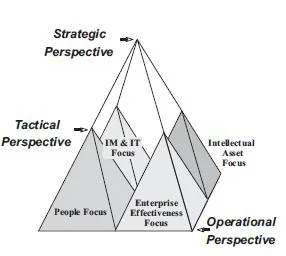
Figure 1.1 Comprehensive Knowledge Management Strategy Focus Areas
work. It concerns what they must understand and how they must possess specific areas of knowledge and have access to them to act effectively under different conditions. Similar considerations also hold on the organizational level.
Several aspects of effective, broad-based KM are of interest and should be emphasized. They dispel some myths often associated with KM and include:
- In the long run, KM initiatives and activities normally do not lead to more work. Instead, improved knowledge and its use, often far down in the organization, lead to less rework and hand-offs, quicker analysis, decision, and execution, particularly of nonroutine tasks and other desirable and work-reducing effects.
- KM activities and initiatives, instead of being additional functions, must to the largest extent possible be based on, and be part of, preexisting and ongoing efforts—often without making these more difficult, time consuming, or demanding.9
- People are often afraid to share their knowledge. They believe that they will lose the advantage that their expertise gives them among their peers and within the organization. However, under the best of circumstances, only a small fraction of an individual’s applicable expertise can be elicited and shared. Frequently, only concrete, operational or routine knowledge can be communicated. Deep, broad insights are generally not available, and may not exist except as a capability to reason until the situation requires it. Importantly, when experts provide knowledge openly and widely, they tend to be considered important by their peers and gain status and recognition.
- Personal knowledge cannot be shared directly. Perspectives of, and information about knowledge can be communicated. Recipients make sense of
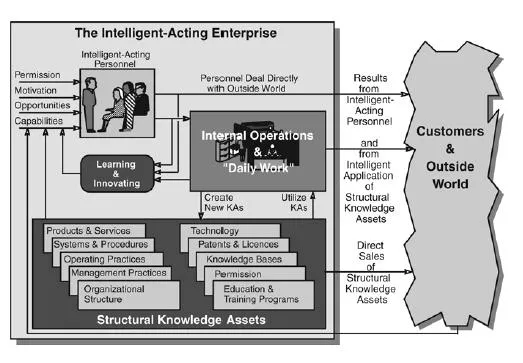 Figure 1.2 Knowledge Assets, Learning and Innovation, and Internal Operations in the Effective Enterprisethe received information and internalize their interpretation of the communication as new knowledge. Knowl...
Table of contents
- Front Cover
- Title
- Copyright
- Content
- Preface Notes on the Horizons
- Contributing Authors
- Part I: Knowledge Management—What Is It?
- Part II: Knowledge-Intensive Management
- Part III: Knowledge-Intensive Organizations
- Part IV: Toward the Future
- Bibliography
- Index
- Butterworth-heinemann business books...for transforming business
Trusted by 375,005 students
Access to over 1.5 million titles for a fair monthly price.
Study more efficiently using our study tools.
Frequently asked questions
Yes, you can cancel anytime from the Subscription tab in your account settings on the Perlego website. Your subscription will stay active until the end of your current billing period. Learn how to cancel your subscription
No, books cannot be downloaded as external files, such as PDFs, for use outside of Perlego. However, you can download books within the Perlego app for offline reading on mobile or tablet. Learn how to download books offline
Perlego offers two plans: Essential and Complete
- Essential is ideal for learners and professionals who enjoy exploring a wide range of subjects. Access the Essential Library with 800,000+ trusted titles and best-sellers across business, personal growth, and the humanities. Includes unlimited reading time and Standard Read Aloud voice.
- Complete: Perfect for advanced learners and researchers needing full, unrestricted access. Unlock 1.5M+ books across hundreds of subjects, including academic and specialized titles. The Complete Plan also includes advanced features like Premium Read Aloud and Research Assistant.
We are an online textbook subscription service, where you can get access to an entire online library for less than the price of a single book per month. With over 1.5 million books across 990+ topics, we’ve got you covered! Learn about our mission
Look out for the read-aloud symbol on your next book to see if you can listen to it. The read-aloud tool reads text aloud for you, highlighting the text as it is being read. You can pause it, speed it up and slow it down. Learn more about Read Aloud
Yes! You can use the Perlego app on both iOS and Android devices to read anytime, anywhere — even offline. Perfect for commutes or when you’re on the go.
Please note we cannot support devices running on iOS 13 and Android 7 or earlier. Learn more about using the app
Please note we cannot support devices running on iOS 13 and Android 7 or earlier. Learn more about using the app
Yes, you can access Knowledge Horizons by Charles Despres,Daniele Chauvel in PDF and/or ePUB format, as well as other popular books in Business & Business General. We have over 1.5 million books available in our catalogue for you to explore.