What Is Niche Marketing?
Niche marketing may be broadly described as the process of finding goods and services which absolutely delight specifically defined customers in markets that are increasingly fragmented. Once you discover what delights these customers, you try to increase customer loyalty; youâre no longer trying to get as many customers as possible. Youâre concentrating on increasing purchases from the customers you have while you try to find more like them.
Incredible Opportunities
Radio stations, advertising agencies, and traditional mass marketers like Coca-ColaÂŽ are beginning to see the incredible opportunities niche marketing offers. This book is designed to help you find more riches in profitable niches. The ideas you are about to encounter work for multinational media conglomerates, stations in small markets, and duopolies in any size market-
Is Niche Marketing for Me?
Market fragmentation, which spawns niche markets, is happening all over the globe. Niche marketing is an outstanding growth strategy for media. Radio companies and advertisers who understand and embrace niching will have a competitive edge in the twenty-first century.
The Numbers Fix
Traditionally, mass media has found that the fastest way to increase billing is by increasing their audience numbers. This approach appeals to many media buyers as well. Advertisers take comfort in the fact that station âAâ has more 25- to 54-year-old numbers than station âB.â Media-buying services use mass numbers, or the lack of them, to drive station rates down. Account executives can cover weak media decisions by pointing to the numbers. As media options increase, however, mass audience numbers will continue to decline. In ads on the cover of Standard Rate and Data Service (SRDS), radio giants like WCCO in Minneapolis once boasted that, âWCCO Radio had more audience than all the TV stations in Minneapolis combined.â Not so todayâor tomorrow. Now, however, there are riches in niches.
Cracks in the Melting Pot
Historically, North America has been perceived as a mass market. Waves of immigrants came to the United States and Canada. Communication with their cultural past was limited. As a result, the collective immigrants were assimilated into mainstream society. North America was seen as a melting pot for cultural differences. Today, however, our melting pot is cracking. Thanks, in part, to worldwide communications and transportation, cultural diversity is maintained and intact. Immigrants and minorities in North America, Western Europe, and soon the majority of our planet, can easily stay in touch with their ethnic, cultural, and religious roots. Radio, television, telephones, computer networks, and jumbo jets make communicating easier. The paradox is that these massive communications pipelines are now fueling market fragmentation.
The Illusion of National Oneness
Today, the mass marketâlike the melting potâis history. Our ancestors successfully promoted the idea of one nation. Advertising and marketing people have spent billions of dollars in the United States, millions of deutsche marks in Germany, and millions of yen in Japan appealing to the illusion of national oneness. The melting pot in Russia, Europe, Asia, and North America, however, has segmented into millions of mercurial pools. Today itâs quite feasible for an immigrant from India, who drives a taxi in Atlanta or London, to return home for a visit on a yearly basis. A Philippine desk clerk at a Virginia Holiday Inn may maintain her cultural roots by returning to her homeland for a three-month holiday. The ability of these new immigrants to retain strong cultural ties with their homelands is part of the reason weâre entering the new era of niche marketing.
Jerry Falwell and the Pope
U.S. broadcasters have the opportunity to cater to much, much more than a black-and-white North America with Western European tastes. For example, the United States has had an influx of Asian immigrants who represent hundreds of subcultures. Thereâs also a multitude of Hispanics with a mosaic of different tastes and information needs. An astute marketer will recognize that sometimes subcultures will merge briefly to form special interest groups. For example, the Roman Catholic church may form an alliance with Christian fundamentalists to oppose gay rights. The issue may be as simple as criticizing a furniture store ad that targets gay couples.
A Mass Requiem
The smokestack economies created by the nineteenth-century Industrial Revolution thrived on mass marketing. For nearly a hundred years, media and advertisers have genuflected at the altar of mass numbers. Media has tried to deliver boxcar numbers to satisfy advertisers selling goods and services. Advertising appeals were usually to the lowest common denominatorâthe mass marketâor an unrealistic demo such as adults 25-54. Twenty-five-year-olds have very different consumer tastes than 54-year-olds. Smaller demographic cells like Southern Chinese women 25 to 34 with disposable incomes of $18,000 make more sense. You scoff? In northern California, this is a valuable niche.
The Homogeneous Market Myth
To date, only 8% of companies in the developed nations are actively engaged in niche marketing. These blue-chip companies include some impressive names such as IBM, Saab, Hewlett-Packard, Office Depot, American Express, Red Lobster, British Airways, Holiday Inns, Jones New York, Opti-World, Minolta, and American Airlines. Our studies show that the 8% figure is even lower for media companies. We predict, however, that in the first decade of the twenty-first century more than 80% of companies, including the media, will be actively engaged in some form of niche marketing.
All Kinds of Niches
Yesterday
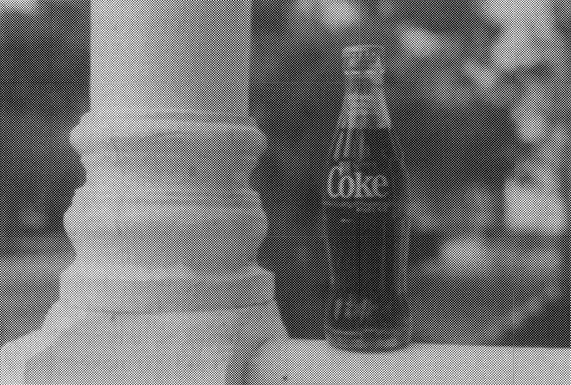
In the early 1940s, there was only one version of Coca-Cola. It arrived in a 6-ounce green bottle (Figure 1.1). The only difference between a bottle of Coke sold in Toronto and a bottle of Coke sold in Santa Fe was the name of the bottler on the bottom of the container.
Today
The actions of former mass-marketing leaders like Coca-Cola are worth noting. Coke built a soft-drink empire on a single productâa carbonated drink made with caffeine, caramel coloring, and sugar. In the early 1970s, the company de-emphasized a successfully niched diet drink, Tab, because the sales figures werenât large enoughâeven though Tab was profitable. Today, Coke is diversifying. Theyâre experimenting with a myriad of soft drinks to compete with Snapple, Lipton Iced Teas, and others. For example, in the early 1990s, some Coca-Cola bottlers test-marketed a soft drink called Fruitopia, which is made with noncarbonated mineral water and natural fruit juices. The market segment may be tiny compared to Coke Classic. Profitable niches, however, offer growth opportunities for this former mass-marketing giant. Coke has experimented and enjoyed some success with Royal Mysticâa soft drink with a natural fruit juice base and spring water. Coca-Cola test-marketed OKâa similar soft drink product aimed at the 18-24-year-old male niche.
Figure 1.1 A 6-ounce bottle of Coke.
Tomorrow
Why did the Coca-Cola company change its views about smaller market segments? The diverse tastes of consumers create the need for niched products. Coca-Cola test-markets many flavors; through sampling and promotion, Coca-Cola determines which flavors are currently in greatest demand. They expect that flavor demands will be different in different parts of the country. The Coke company also expects that flavor demands may change with the seasonsâcreating a series of different niches. This represents a great opportunity for radio stations to become part of the sampling and promotion process to help uncover niche markets and to research the bottlersâ customer base.
McDonalds Joins the Parade
McDonalds is another example of a mass-marketing giant that has turned to niches. You can buy beer in a McDonalds in Spain or Germany. You can buy beer and wine in a McDonalds in Paris or Rome. You can buy meat pies in Australian McDonalds. In India, where the cow is sacred, you can buy bean-curd and veggie burgers. During some months of the year, you can buy chili at a McDonalds in Ladson, South Carolina. Then, add the new expanded adult menu at McDonalds. So much for the universal fare of McDonaldsâ hamburgers, french fries, and a Coke.
Niching for Moms
Hallmark Greeting Cards now markets over 1,200 different cards just for Motherâs Day. Mom can receive greetings from spouses, parents, stepparents, children, stepchildren, and pets. Motherâs Day greetings can now be given to mom-to-be, an aunt whoâs like a mom, a stepmom, a step-mom-in-law, a grandmom, even a great-grandmom. In todayâs marketplace, Mom has many niches.
A High-Flying Niche
Airlines have discovered that approximately 5% of the adult population make approximately 70% of ALL air trips. To court these lucrative customers, frequent-flyer programs have been created. A closer look at the frequent-flyer group reveals that thereâs a microgroup of people who take trips to places like Tokyo, Beijing, and New Delhi once a month, or more. To make sure the airlines can âromanceâ these important customers, programs like Deltaâs Million Miler Club were developed for people who fly a million miles or more per year. You can use the Delta example to explain the need for niching to your clients; large profits come from targeting small groups of a companyâs heavy users.
Why Florists Donât Advertise at Easter
Easter is the busiest season of the year for florists. Why not advertise? Many florists will tell you they donât need to advertise at Easter because theyâll have a lot of business anyway. Often, florists feel that when they advertise an Easter Special, they are just advertising for the florist closest to the person hearing the ad. But, if you look more closely at their customer base, youâll realize that you donât need to wait for holidays to approach florists.
Floral Niches. A majority of floristsâ customers buy flowers for special occasions. For example, a customer may purchase flowers for her momâs birthday. If enough customers purchase flowers for a relativeâs birthday, youâve uncovered a niche for your florist client. But donât write an ad for special-occasion giving. Write an ad targeting businessmen (if thatâs your demo) who send flowers to their mothers for their birthdays. Write a separate ad for each reason your audience will purchase flowers. Eliminating holidays, these ads may give you enough niches to develop a 52-week campaign!
Customer Needs
Many ad agencies are becoming aware of niche marketing. Agency executives are now seeking new ways to learn about the smallest needs of consumers. Theyâre also beginning to cater to the perceptions of their clientsâ customers. For example, the Japanese have combined robotics and computer technology to create an ultimate niche marketing scenario. In Japan, when a consumer walks into a customized bicycle shop, a salesperson takes detailed notes about that consumerâs needs. They perform a Customer Needs Analysis. The salesperson will ask, âOver what kind of terrain will you be riding? How far will you usually travel while youâre riding your bicycle? How do you want it to feel underneath you?â Then, the salesperson measures the customerâs body The information is fed into a computer. The storeâs computer is on-line with the factoryâs computer. The customerâs specifications reach the factory in nanoseconds, and, in less than 48 hours, the custom bicycle is ready. To establish value, however, the company takes two weeks to deliver the final product. Some people do not seem to associate speed with valueâyet.
The Tip of the Advertising Iceberg
Thanks to computer scanning, customized clothing may be one of the next niche categories. With the use of six cameras, your body is completely scanned. Measurements are relayed to the manufacturer. Patterns are cut from the fabric with the use of a laser. Picture the perfect fit of every garment you purchase made to fit only your body. For future reference, your measurements are stored on a Smart Card that can be read at a retail location or at the manufacturerâs location. Travel down to your foot. Once your feet are scanned, you may carry your measurements into a shoe store that carries no inventory. Customized shoes are ordered for your feet. Imagine the advertising opportunities created by the few examples here. Youâre experiencing the tip of a niche-marketing iceberg loaded with profitable opportunities for radio stations, advertisers, and ad agencies.
Venerable giants like U.S. Steel, IBM, and General Motors have been slow to change. These companies help us see the dilemma mass-market thinking creates. The mass marketersâ response to change often ...