- 208 pages
- English
- ePUB (mobile friendly)
- Available on iOS & Android
eBook - ePub
Putting Emotional Intelligence To Work
About this book
Putting Emotional Intelligence to Work offers a new paradigm of communication for the 21st-century workplace. Beginning with the thoughts of communication pioneer Carl Rogers, this book covers the origins and history of emotional intelligence, why it is essential at this point in the changing marketplace, how to delegate and negotiate more effectively, and how to change yourself to become a more effective player. An EQ (Emotional Quotient) survey helps you determine where you are on the scale of executive intelligence.
Putting Emotional Intelligence to Work leaves you with a greater understanding of the new work ethic for 21st-century leadership, its business and personal benefits, how to teach it in a corporate setting, and how to build self-managed teams with the right mix and match of personality types. Dr. Ryback's book brings many resources together to consolidate an approach to business that combines the practical with the thoughtful, emotional, and intuitive. A new paradigm for leadership in the 21st century is demonstrated clearly and incisively.
David Ryback, Ph.D. is a management consultant and speaker on personal and organizational success. His experience encompasses business management and government consulting, as well as teaching at Emory University's School of Business. His diverse client base includes the US Department of Defense, government legal offices, financial institutions, manufacturers_both domestic and international, health care organizations, and national retail outlets. In Putting Emotional Intelligence to Work, Dr. Ryback brings many resources together to consolidate an approach to business that combines the practical with the thoughtful, emotional, and intuitive. A new paradigm for leadership in the 21st century is demonstrated clearly and incisively.
1_____________________
Introduction: Crisis in Leadership
The twentieth-century leader is somebody who tends to have strong but hard personal qualities, somebody who is arrogant but inspiring. However, twenty-first century leaders will be those who can demonstrate a greater empathy and concern for people issues and those who do not rely on position or rank for their status.
—DR. ROBERT HAWLEY, Engineering Management
All of a sudden, as the new millennium begins, the concept of emotional intelligence has begun to make its indelible mark on the workplace. But the keen observer could see it coming for many, many years. Successful leaders have always been attuned to human interaction and their decisions were imbued with emotional sensitivity. But this was hardly ever discussed openly; rather it was like an underground secret. Finally, the underlying essence of successful leadership is being revealed for all to consider.
The concept of emotional intelligence was born at the beginning of the decade. In 1990, Peter Salovey and John D. Mayer published the first paper on this topic. Even decades before that, though, the renowned psychologist E. L. Thorndike (1935) wrote of social intelligence—the capacity to “act wisely in human relations.” But the popularity of the notion didn’t take off until Daniel Goleman’s best-selling book, Emotional Intelligence, was published in 1995.
LEADERSHIP: STATE OF THE ART
There is a crisis in corporate leadership today—ask any top executive. The industrial revolution was always focused on productivity and achievement with little concern for human sensibilities. But as we are taken by storm at the advent of accelerating dependence on electronic communication in the information revolution, the human brain is receiving more respect than ever. Yet intellectual capital is a concept that is troubling to many.
For one thing, it’s becoming clear that although mind can be separated from heart, the two are intertwined at some level if human integrity is to be maintained. Otherwise, we have robot-like decisions, and computers can do that by themselves very well, thank you. It’s apparent that what we need is a finely tuned combination of mind and heart.
The corporate landscape has shifted dramatically as we enter the twenty-first century, becoming both intensely competitive as well as mutually interactive at the same time, as paradoxical as that may seem.
Corporate leadership styles have been a focus of attention as never before, with particular focus on development of leadership skills at top levels of management as they make this influence felt throughout the organization.
COMPETITION ACROSS THE ELECTRONIC GLOBE
The most apparent shift in the corporate landscape is the advent of electronic communication, fulfilling Marshall McLuhan’s prophecy of a global village. Geopolitical boundaries are increasingly ignored as communication on the Internet spans the globe in milliseconds. Market boundaries become blurred: they used to consist of lines on a map; now they’re demographic statistics. Regulatory shifts become increasingly difficult to follow and keep up with.
With such dynamic forces coming into play at an accelerating rate, competition for market shares has become intense, not only domestically but globally as well.
The product itself, with a greatly shortened life cycle, has given way to customer service as the added value that differentiates winner from loser.
So how can the successful corporation succeed in this increasingly competitive marketplace? Well, since the customer remains as strongly influenced as ever by cost of the product at the point of sale, reduction of unit cost is still important. Beyond that, corporate leaders have to respond with shorter production cycles and greater flexibility all around in terms of management style through the ranks.
Over the years, we’ve seen sincere efforts at transforming management to respond to the challenge, from Quality Circles to reengineering, from downsizing to outsourcing, all of which failed to change the fundamental approach of most companies.
HIRING AND HOLDING
The internal dynamics of corporate leadership have changed drastically as well. There has been a shift in many organizations away from hierarchy to decentralization. Emphasis on job security has given way to skill diversity. The executive suite has given way to the virtual office, where Internet technology allows for the flexibility needed by the globally mobile executive. Issues of succession are giving way to choices for top positions made on the basis of specific skills and the flexibility to adapt quickly to new challenges.
Job security? Forget it! Newly graduated MBAs’ cynical responses to this dilemma is to move around their first few years instead of choosing one company to build a career with. They pick up some skills, then move on to acquire some newer skills; this results in a mercenary attitude unheard of until now. I’ve heard one recent graduate say, “I’ll be there, make my mark and move on.”
Job descriptions at the top are becoming obsolete. Employment security is becoming an oxymoron. New forms of assessment are on the rise in an attempt to capture what executive skills work best. Academic debates at future forums allow corporations to share their challenges and tentative solutions with one another. Training curricula are moving targets, evading the essentials that can be nailed down because we’re so preoccupied trying to keep up with the business of business. Collective concepts such as “creative leadership” and “talent alliance” only further substantiate the fact that we’re painfully plodding along, weighed down by the fear that the best executives feel more like part of a temporary agency than an elite corps of leaders.
It’s not uncommon for rising young executives to spend six months in one department before being transferred to another department to develop their repertoire—much unlike the one- or two-year stints of prior years. Many volunteer for special assignments to advance their own portfolio.
All this just points out more clearly the need to understand the crisis in leadership and how to make it work under these trying circumstances. Given the challenges inherent in restructuring and downsizing, how does an organization hold on to the best and the brightest? Career paths no longer assure loyalty to a single company. The information revolution means skill flexibility and the resulting mobility if it means anything at all to management. To the individual executive, it means adopting an emotionally intelligent attitude to improve one’s own situation as well as that of the organization.
Successful executives are being tempted by more external offers than ever before. Consequently, the nature of employment contracts are changing as well. More sophisticated leveraged and restricted stock options packages have replaced company loyalty as the guiding factor for holding on to successful executives; successful, young executives are highly marketable and are willing to pick up and go if the price is right.
This opportunistic ethic has created a much more dynamic orientation in the corporate world. One effective response to the consequent potential of instability has been to turn to the replacement strategy of team focus.
360-DEGREE ASSESSMENT
This means open communication and leadership, which is much more responsive to “360-degree” assessment with multiple data from multisource feedback. Any staff member having worked in the past with the executive being assessed may be requested to fill out a rating form to assess that executive. An outside consultant typically takes on the task of feeding back this pooled information to the executive.
This has the advantage of consensus, as opposed to a single individual’s view, which might be contaminated by personal prejudice. Consensus can also be obtained in real-time “team feedback” in which working teams discuss their own shortcomings in open forum, including the possibility of exploring the pros and cons of their own leader’s style in that individual’s presence. Although this takes a high degree of trust among the team members, the result can be highly effective in enhancing team “bonding.”
In an earlier era, providing such feedback to the “boss” would have been unheard of, especially by the “boss” himself. Today, there is more likely to be a democratically-oriented team leader who shares the focus of responsibility among the team members rather than among a closely held cadre of personal favorites.
ENDS AND MEANS
The greatest challenge to understanding today’s crisis in leadership is to break it down to its basic components. In order to do so, the category of bottom-line results has been complemented by that of competencies or behaviors. In other words, in addition to bottom-line dollar figures, we are also looking at the means used to achieve the results.
In the past, a top executive’s performance was measured primarily by such bottom-line measures as financial return on capital, assets or equity or such internal processes as unit cost, cycle time, asset utilization or speed to market. Now there is a greater tendency to include customer reactions such as satisfaction, brand image, segment performance and market share as well as internal factors such as employee satisfaction, turnover and diversity.
Successful leadership now includes guidance and empowering ability along with productivity and achievement. The successful leader is now seen more as a motivator of purpose and alignment and an inspiration to corporate commitment. There is a greater need to optimize for ongoing change over the long term. The Japanese concept of continual improvement has spilled over to influence American executives to continue learning and finding creative ways of dealing with new challenges. Changes are so rapid now that there is a desperate need to recognize emerging patterns to make the necessary connections to successful outcome. Being a visionary is no longer sufficient; that must be followed up with successful alignment and implementation.
THE SEVEN CORE QUALITIES OF LEADERSHIP
A number of corporations have made attempts at defining the core competencies of successful leadership, and each of these has its own subculture of language to struggle with these issues. After looking at a number of corporate measures of successful leadership, I’ve attempted to identify the core qualities that run through all of them. In Figure 1-1, I’ve isolated seven core qualities that, in my estimation, run throughout the lists of leadership qualities as determined by AT&T, Chevron, Citicorp, General Electric, Honeywell and Pepsi-Co.
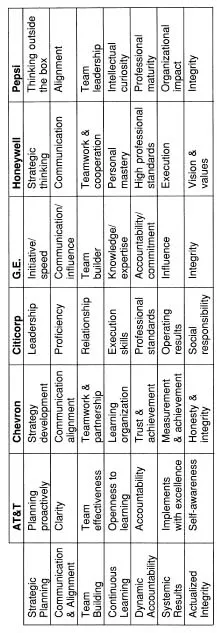
Figure 1-1. Core Values in Successful Leadership
1. Strategic Planning
Strategic planning is a holdover from the last wave of popular management training programs, an artifact originally used to clarify missions for mid-level managers and below. It retains its former quality of immediate problem solving but now replaces what used to be called “comprehensive planning,” employed at division level and above.
2. Communication and Alignment
The New Team Ethic (see Chapter 5) is clearly influential here. Alignment used to mean hierarchical communication from an autocratic source, but now it implies that the organization supports individual empowerment, a sense of egalitarian inclusion and a team approach. Alignment used to involve merely five, six or seven individuals with hierarchical levels of responsibility. Now it tends to involve the identification of an array of characteristics necessary to successfully achieve a mission, involving a larger number of people working closely together.
3. Team Building
Simple hierarchy as a leadership style is dead. Period. Teams embedded in a modified hierarchy are the trend.
4. Continuous Learning
In the past, learning was assumed to be complete by the time an individual graduated from college. Now, the learning process is highly valued and practiced throughout the modern organization, with internal “universities” and a commitment to continuing education. AT&T refers to this as “openness to learning” and Pepsi as “intellectual curiosity.”
5. Dynamic Accountability
Simple accountability in the past referred primarily to bottom-line, profit-based figures. Today it gives equal weight to the means used to accomplish the ends as well. Terms such as “professional standards” used by Citicorp and Honeywell and “professional maturity” used by Pepsi exemplify this change.
6. Systemic Results
As in accountability, results in the past were derived from unidimensional sources. Today, results are gleaned from all facets and levels of the organizational operation. We learned, slowly, from the Japanese that attending to multiple factors could be profitable.
7. Actualized Integrity
In former lists of organizational priorities, integrity, if not altogether ignored, was deemed a disposable luxury. Today, emphasis on customer satisfaction as added value forces companies to be more mindful of issues of integrity. Increased consumer awareness makes unwavering integrity a market plus. Note Honeywell’s priority of “vision and values” and Citicorp’s “social responsibility.”
Clearly, there is more to successful leadership than mere IQ. Team-building and integrity, for example, have more to do with heart than brain. Values are just as important as strategy. Every company needs a central leadership strategy, which takes all this into account.
Whatever approach is employed, it is essential that the CEO express a commitment to the time and energy necessary to initiate, complete and follow up on the program if the initiative comes from a VP. Such commitment (or lack of it) will filter down the line ultimately to affect the program as a whole. The biggest mistake is to initiate and employ a program of leadership development without the total commitment of the top officer.
MILITARY EMOTIONAL INTELLIGENCE
Even the military has seen its management style transform over time. Historically, when battles were led by individual commanders such as Caesar and Napoleon, the directing style was most appropriate. Blind obedience to authority was the rule. By the Civil War and certainly by World Wars I and II, gigantic armies driven by more efficient firepower and technology were forcing a more participatory form of leadership in which commanders consulted increasingly with their generals. In the modern military, top leaders are forced to delegate more and more responsibility to subordinates, since success in combat is now more a matter of virtually instantaneous reaction to technolog...
Table of contents
- Cover Page
- Epigraph
- Half Title page
- Title Page
- Copyright Page
- Epigraph
- Dedication
- Contents
- Foreword
- Preface Changing Your Management Style—Forever
- Acknowledgements
- Introduction: Crisis in Leadership
- Why Feelings in the Workplace? (Because They're There!)
- A Walk on the Beach
- The Personal Benefits of Emotional Intelligence
- Emotions in the Workplace—Then and Now
- The New Team Ethic
- What Is Emotional Intelligence?
- The Origins of Emotional Intelligence
- How Executive Intelligence Works
- The Assumptions of Self-Management
- Emotionally Intelligent Leadership
- Learning Emotional Intelligence
- The Ten Attributes of Executive Intelligence
- Delegating and Negotiating with Executive Intelligence
- Becoming Emotionally Intelligent
- Innovation—East and West
- Persuaders, Achievers, Listeners, and Fact-finders
- Emotional Surgery: Enhancing Your Type
- Leading Self-Managed Teams
- Beyond the Workplace
- An Emotionally Intelligent Lifestyle
- Downsizing and Outsourcing
- The Future Workplace
- Appendix Ryback Emotional Quotient Executive Survey (REQuES)
- Bibliography
- About the Author
Trusted by 375,005 students
Access to over 1.5 million titles for a fair monthly price.
Study more efficiently using our study tools.
Frequently asked questions
Yes, you can cancel anytime from the Subscription tab in your account settings on the Perlego website. Your subscription will stay active until the end of your current billing period. Learn how to cancel your subscription
No, books cannot be downloaded as external files, such as PDFs, for use outside of Perlego. However, you can download books within the Perlego app for offline reading on mobile or tablet. Learn how to download books offline
Perlego offers two plans: Essential and Complete
- Essential is ideal for learners and professionals who enjoy exploring a wide range of subjects. Access the Essential Library with 800,000+ trusted titles and best-sellers across business, personal growth, and the humanities. Includes unlimited reading time and Standard Read Aloud voice.
- Complete: Perfect for advanced learners and researchers needing full, unrestricted access. Unlock 1.5M+ books across hundreds of subjects, including academic and specialized titles. The Complete Plan also includes advanced features like Premium Read Aloud and Research Assistant.
We are an online textbook subscription service, where you can get access to an entire online library for less than the price of a single book per month. With over 1.5 million books across 990+ topics, we’ve got you covered! Learn about our mission
Look out for the read-aloud symbol on your next book to see if you can listen to it. The read-aloud tool reads text aloud for you, highlighting the text as it is being read. You can pause it, speed it up and slow it down. Learn more about Read Aloud
Yes! You can use the Perlego app on both iOS and Android devices to read anytime, anywhere — even offline. Perfect for commutes or when you’re on the go.
Please note we cannot support devices running on iOS 13 and Android 7 or earlier. Learn more about using the app
Please note we cannot support devices running on iOS 13 and Android 7 or earlier. Learn more about using the app
Yes, you can access Putting Emotional Intelligence To Work by David Ryback in PDF and/or ePUB format, as well as other popular books in Business & Business General. We have over 1.5 million books available in our catalogue for you to explore.