eBook - ePub
Infrastructure for the Built Environment: Global Procurement Strategies
- 320 pages
- English
- ePUB (mobile friendly)
- Available on iOS & Android
eBook - ePub
Infrastructure for the Built Environment: Global Procurement Strategies
About this book
Throughout the world there is a growing demand for high quality public services to support socio-economic development. Infrastructure is central to improving the level of public services and the quality of the built environment. But in key areas such as transport, energy, water, healthcare, education and communications, public resources are not sufficient to keep pace with this demand. As the public sector struggles to keep up, the private sector is increasingly involved in the procurement of economic and social infrastructure.
Until now procurement strategies have often concentrated on the mechanisms and the 'bricks and mortar' without a thorough analysis of the processes and their implications for services. The result is that all too often infrastructure projects are implemented in an ad hoc and fragmented way. In this ground-breaking book, Rodney Howes and Herbert Robinson provide a holistic approach to infrastructure provision that facilitates infrastructure delivery aimed at continuously improving the level and quality of services. Critical issues of policy and strategy, implementation, and operational aspects are examined within the context of sustainability.
By emphasising the importance of procuring infrastructure within an overall national or regional development policy and strategy, the authors have demonstrated the importance of linking investment and resource decisions to local social, economic and environmental needs. With each chapter carefully written to reflect part of the infrastructure delivery chain and illustrated with practical examples and case studies from around the world, this book offers a new blueprint for infrastructure investment and resource management.
Chapter 1
Introduction
Overview
Infrastructure is central to the socio-economic development of all countries and the well-being and prosperity of society. Increased globalisation means that the level and quality of infrastructure development has become more critical than ever for national economies to remain competitive and innovative in the global market place.
The term ‘infrastructure’ is generic and it can be interpreted broadly as physical, personal and institutional. This book focuses on physical infrastructure provided in the form of civil engineering and building projects. Broadly speaking, these works concern economic infrastructure such as transportation, energy, water, telecommunications and the provision of trade and social infrastructure, specifically public administration, commercial, industrial, healthcare, education and residential buildings.
However, infrastructure development is a complex process influenced by a variety of policy and strategic factors. It is also the contextual variables of a country such as economic, social, environmental and political forces, which interact to determine the composition, priorities and timing of infrastructure programmes. Increased globalisation means greater interconnectivity at the levels of individuals, interest groups, businesses, interaction between countries, national and international development agencies and a significant growth of international trade. This has increased the urgency for infrastructure development in developing as well as developed countries.
Developing appropriate policy and strategic frameworks are therefore fundamental to infrastructure delivery, so is the need for practical approaches to facilitate the implementation of infrastructure projects and sustaining the services derived from their use. Over the past years, numerous studies have been carried out on various aspects of infrastructure delivery such as infrastructure policy, planning, design, construction and operations. But these findings have not often been presented in an integrated way to facilitate the understanding of different components in the infrastructure delivery chain. This book therefore focuses on bringing together the different aspects of infrastructure delivery together and covers a broad range of subject areas in infrastructure economics and management. The aim is to provide a holistic approach to facilitate understanding of the interrelationship between key elements of the infrastructure delivery chain from policy formulation to operations, conservation and sustainability of infrastructure.
Most of the ideas contained in this book are underpinned by systems thinking encouraging readers to view infrastructure in a holistic rather than the traditional often fragmented way. An important contribution of the book is therefore the emphasis on interconnectivity encapsulated in the concept of the infrastructure delivery chain and more importantly the increased emphasis on services, which is the ultimate objective of infrastructure projects. It is this new approach that makes this book different from other mainstream textbooks on infrastructure planning, design, construction and facilities management. The book should therefore appeal to a wide range of people and will be an essential reading particularly for policy makers, practitioners, academics, undergraduate and postgraduate students involved in any aspect of infrastructure delivery. The concepts, theories and principles described in each chapter are generally applicable across national boundaries and are supplemented by detailed case studies and commentary that provide examples of practical applications and lessons learned. References are also provided at the end of the chapters for further study and detailed investigations on important aspects are discussed.
The book has 11 chapters organised in three parts to reflect the different aspects of the infrastructure delivery chain as shown in Figure 1.1.
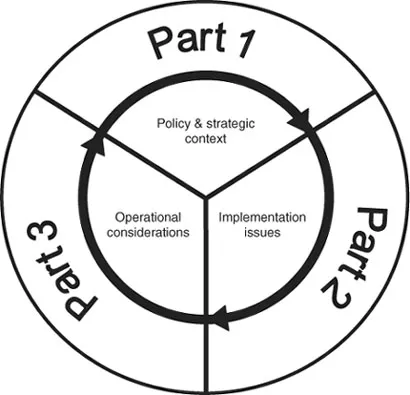
Figure 1.1 Infrastructure delivery chain.
The first part of the book (Chapters 2–4) focuses on the policy and strategic context to provide the foundation and the building blocks for infrastructure delivery. The key themes are nature of infrastructure, policy selection and strategic options. The second part (Chapters 5–8) addresses the practical aspects of policies and strategies relating to the evaluation and implementation of infrastructure projects and discusses issues such as the selection of the most appropriate projects and associated resource implications, procurement choices and the financing mechanisms. The key themes are project evaluation, procurement choices and funding options. The third part of the book (Chapters 9–10) covers the operational aspects of infrastructure, which is arguably the most important part but is often neglected. Issues discussed related to sustainable design, conservation and facilities management.
Part 1: Policy and strategic context
The nature of infrastructure projects
Chapter 2 sets the scene for the subsequent chapters (3 and 4) by briefly presenting the concept of infrastructure from different perspectives, highlighting the need for a holistic approach in defining infrastructure to inform the development of policy and strategy. Using Jochimsen's approach the different components of infrastructure (personal, physical and institutional) are outlined and their role in service delivery explained to understand the development of policy.
The classification of different types of physical infrastructure is discussed in terms of their functional characteristics and morphological features as they have important policy implications. Within the global context of infrastructure development, two basic components of infrastructure – provision and production and the development stages (planning, design, construction, operation, disposal and recycling) are explained. The need for a serviced-focussed approach is discussed as crucial in sustaining infrastructure projects in the light of recent procurement options such as public–private partnership to improve the level of infrastructure services.
Determination and selection of infrastructure policy
Chapter 3 builds on the previous chapter by providing the context for developing a policy framework to facilitate the development of infrastructure projects. This chapter examines the policy context for the delivery of infrastructure. Central to the policy making process are the institutions, goals and objectives, resources, knowledge, information and communication systems. The environment is also crucial as it reflects the economic, social and political context that influence the policy making process. The formulation and implementation of appropriate infrastructure policies therefore require an understanding of these key elements and their interactions.
The factors necessary to develop or strengthen policy capacity, to improve its effectiveness to continuously attract investment and to deliver sustainable infrastructure services are explored.
The chapter also discusses the key criteria that determine public or private participation in the delivery of infrastructure services. It is argued that decisions on whether the private or public sector should provide a particular type of infrastructure are rarely based on economic considerations alone; hence a range of environmental, social and political factors come into play such as public service obligations, externalities (third party costs and benefits), national security and defence.
Strategic considerations for infrastructure development
Chapter 4 explores the strategic implications of the policy issues discussed in the previous chapter by focusing on the three major thrusts for the development of an infrastructure delivery strategy – the need for investment, identifying knowledge resources and gaps, and the role of a planning and regulatory framework.
The complexity of the infrastructure development process and the need for a holistic approach to identify systemic failures in the infrastructure delivery chain is discussed using a variety of systems diagramming techniques. It is argued that the contextual variables of a country such as economic, social, environmental and political forces interact to determine the composition, priorities and timing of infrastructure programmes. These variables have a significant impact on the availability of materials and skilled labour, balance of payments, employment, imports and exports, pollution, private sector involvement, and land use policies which affects the infrastructure delivery chain. Some of these variables are internally driven whilst others are externally imposed.
The chapter emphasizes the need for a service-focused approach to strengthen the infrastructure delivery chain underpinned by the concept of value added to identify bottlenecks and to continuously improve services. The need for a decision making hierarchy to facilitate the management of resource demand and supply to improve infrastructure services is also explored.
Part 2: Implementation issues
Project evaluation and resources
Chapter 5 addresses evaluation issues focusing on how projects are selected based on macro variables reflecting national priorities and micro variables at project level. The chapter discusses the key contextual (macro) variables such as economic, social, environmental and institutional factors, and project specific (micro) variables such as design choice, construction methods, size and type of infrastructure development.
The need for two levels of evaluation is explained. Macro evaluation is undertaken at the national level by government planners, policy and decision makers focusing on the overall goal of a project in terms of its broad impact on economic, socio-cultural, institutional, political and environmental indicators. Micro evaluation at the project level by the project owner focuses on issues of immediate concern to the project in terms of its viability with respect to specific objectives relating to the type of development, design and construction options. It is therefore argued that a holistic and dynamic view is required in evaluating a project to reflect both project (micro) level and national (macro) level considerations.
The chapter also provides a detailed analyses of the resource implications of infrastructure projects and discusses the need for the management of resources to improve the delivery of infrastructure services. The underlying principles, strengths and weaknesses of different types of resource management models are outlined and a case is made for an InfORMED framework to ensure that a country's infrastructure development strategy is implemented in such a way that it reflects the resource context and policy priorities. This is particularly crucial in developing countries where resource markets are often underdeveloped.
Infrastructure project procurement
Chapter 6 discusses how projects are implemented using various procurement options. The selection of the most appropriate procurement option for the provision of physical infrastructure is a key action that contributes to project success by satisfying client and user needs. Important decisions are required concerning the extent of public control necessary and the desirability to leverage in private investment by the provision of business opportunities and incentives. Chapter 6 identifies the elements of a procurement strategy and proposes a framework for the identification and categorisation of procurement methods according to the nature, complexity, scale and environment within which the project will be realised. Recognition is given to the need for innovation and research into products and processes to increase competitive advantage and to improve efficiency and sustainability over the whole project life cycle.
Specific coverage is given to public–private partnerships (PPPs) and the implications brought about by concessionary agreements that incorporate service levels and performance benchmarks. The private finance initiative (PFI) originally developed and implemented in the UK is described.
A portfolio-based strategy is proposed and key elements are identified to ensure that projects brought forward for procurement are in accordance with policy and strategies that deliver physical infrastructure according to laid down priorities.
Additional considerations for infrastructure procurement in developing countries are explained and available assistance is identified in the form of loans and grants from the World Bank, regional development banks and aid agencies. Private investment by means of the World Bank's model of private participation in infrastructure (PPI) is explained and the selection of the most appropriate PPI option is considered.
The chapter concludes with guidance regarding the selection of bidders and the evaluation of bids.
The financing of infrastructure projects
Chapter 7 focuses on financing infrastructure projects within the context of affordability, feasibility and sustainability. Various financing mechanisms are discussed, namely public financing supported by taxation and public borrowing and private financing supported by private investment. These are combined into a dual track strategy leading to PPP. In the context of private financing or ownership, the need for regulation of physical infrastructure in the public interest is addressed and the functions of the regulator or regulating body are described briefly.
Chapter 7 concentrates on project analysis, recognising the importance of project costs, revenues or benefits, return on investment and the identification, assessment and evaluation of risk. Discounted cash flow (DCF) and net present value (NPV) are explained and the concept of scenario comparison is introduced. Uncertainty associated with NPVs is used to assess risk and stochastic decision trees are demonstrated as a means of assessing probability and chance associated with strategic decision making.
The financial appraisal of bidders is considered using project appraisal criteria and weightings. In this manner project objectives can be evaluated and different project proposals assessed regarding their potential benefits.
The need for adequate project and portfolio financial control is explained with specific reference to the control of the construction process and the monitoring and control of operational costs post occupation.
Funding infrastructure projects in developing countries
Chapter 8 discusses the special funding needs and requirements for infrastructure provision in developing countries. The provision of essential physical infrastructure is necessary to maintain public health and to support economic growth. Developing countries have enormous requirements for infrastructure development in order to reduce poverty and improve health and advance living standards. The roles of the World Bank, regional developme...
Table of contents
- Front Cover
- Half Title
- Dedication
- Title Page
- Copyright
- Contents
- List of case studies
- List of figures
- List of tables
- List of Graphs
- Acknowledgement
- Foreword
- 1 Introduction
- Part 1: Policy & strategic context
- Part 2: Implementation issues
- Part 3: Operational considerations
- Appendix: Tables
- Index
Trusted by 375,005 students
Access to over 1.5 million titles for a fair monthly price.
Study more efficiently using our study tools.
Frequently asked questions
Yes, you can cancel anytime from the Subscription tab in your account settings on the Perlego website. Your subscription will stay active until the end of your current billing period. Learn how to cancel your subscription
No, books cannot be downloaded as external files, such as PDFs, for use outside of Perlego. However, you can download books within the Perlego app for offline reading on mobile or tablet. Learn how to download books offline
Perlego offers two plans: Essential and Complete
- Essential is ideal for learners and professionals who enjoy exploring a wide range of subjects. Access the Essential Library with 800,000+ trusted titles and best-sellers across business, personal growth, and the humanities. Includes unlimited reading time and Standard Read Aloud voice.
- Complete: Perfect for advanced learners and researchers needing full, unrestricted access. Unlock 1.5M+ books across hundreds of subjects, including academic and specialized titles. The Complete Plan also includes advanced features like Premium Read Aloud and Research Assistant.
We are an online textbook subscription service, where you can get access to an entire online library for less than the price of a single book per month. With over 1.5 million books across 990+ topics, we’ve got you covered! Learn about our mission
Look out for the read-aloud symbol on your next book to see if you can listen to it. The read-aloud tool reads text aloud for you, highlighting the text as it is being read. You can pause it, speed it up and slow it down. Learn more about Read Aloud
Yes! You can use the Perlego app on both iOS and Android devices to read anytime, anywhere — even offline. Perfect for commutes or when you’re on the go.
Please note we cannot support devices running on iOS 13 and Android 7 or earlier. Learn more about using the app
Please note we cannot support devices running on iOS 13 and Android 7 or earlier. Learn more about using the app
Yes, you can access Infrastructure for the Built Environment: Global Procurement Strategies by Rodney Howes,Herbert Robinson in PDF and/or ePUB format, as well as other popular books in Business & Infrastructure. We have over 1.5 million books available in our catalogue for you to explore.