- 400 pages
- English
- ePUB (mobile friendly)
- Available on iOS & Android
eBook - ePub
Native American Sovereignty
About this book
The essays included in this collection help define Native American sovereignty in today's world. They draw upon past legal experiences and project into the future. The collection begins with a brief definition of sovereignty, followed by a consideration of the most important documents that show the relationships between Native American nations and the U.S. government. They continue with a study of how treaties were handled by Congress and the current and future implication of the treaty relationships. The selection concludes with a look at the issue of federal plenary power in terms of treaties and the evolution of American case law.
Information
Indian Sovereignty
Kirke Kickingbird Lynn Kickingbird
Charles J.Chibitty Curtis Berkey
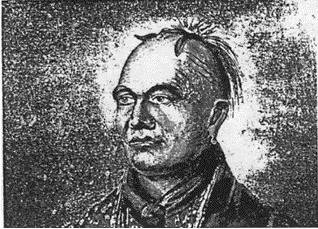
We are of the same opinion with the people of the United States; you consider yourselves as independent people; we, as the original inhabitants of this country, and sovereigns of the god, look upon ourselves as equally independent, and free as any other nation or nations
–Joseph Brant. Mohawk
WHAT IS SOVEREIGNTY?
A. General Definition
“Sovereignty” is a difficult word to define. Sovereignty is a difficult word to define because it is intangible, it cannot be seen or touched. It is very much like an awesome power, a strong feeling, or the attitude of a people. What can be seen, however, is the exercise of sovereign powers.
Sovereignty is also difficult to define because the word has changed in meaning over the years. For our purposes, a good working definition of sovereignty is: THE SUPREME POWER FROM WHICH ALL SPECIFIC POLITICAL POWERS ARE DERIVED. Sovereignty is inherent; it comes from within a people or culture. It cannot be given to one group by another. Some people feel that sovereignty, or the supreme power, comes from spiritual sources. Other people feel that it comes from the people themselves.
Mike Myers, a Seneca consultant to the Institute for the Development of Indian Law, was recently asked to give his definition of sovereignty. He responded as follows:
Ideally, sovereignty is the unrestricted right of groups of people to organize themselves in political, social and cultural patterns that meet their needs. It is the right of a people to freely define ways in which to use land, resources and manpower for their common good. Above all, sovereignty is the right of people to exist without external exploitation or interference.
Still other people believe that sovereignty is derived from the “law of nature.” Some feel that it comes from the unique capabilities of a single ruler by whom the people consent to be governed. Whatever the case, sovereignty cannot be separated from people or their culture.
B. European Origins
The concept of sovereignty began in Europe around the time of the birth of Christ. Roman judges, drawing upon Greek philosophy, described majestas or sovereignty as the “proper authority by which people make laws.”1 Under the reign of Louis XIV, King of France (1643–1715), the concept of proper or supreme authority became associated with the word “sovereignty” which literally means rule or power above all else. During this period, sovereignty almost always meant the absolute power of a ruler-the king, queen, czar or emperor. Since sovereignty was said to come from God, kings ruled by “divine right.” They were responsible only to God for their actions. The theory of divine right of kings was generally accepted because of the continual warfare and turmoil Europeans found themselves in during the 17th century. With a strong individual leader, stability was more easily maintained.
Toward the end of the 17th century, the large European empires were beginning to break up and the concept of nation-states evolved. Nations were made up of people of similar cultures, who shared similar attitudes toward life and who organized under a system of law and government. Many theories developed about where sovereignty came from. One was the divine right theory just discussed. Under this system a king who got his power from God was the absolute ruler and had a monopoly over the administration of justice.2
A second theory developed by the Englishman, John Locke (1632–1704), was that sovereignty evolves when the people of a nation consciously make a contract with a ruler or king to govern them. According to Locke, the people of a nation grant to a central government or ruler the power to govern them. At the same time, they reserve certain individual rights which no centralized government can take away.3 One can see that the political theories of John Locke heavily influenced the founding fathers of the United States government.
A third theorist who greatly influenced European thought was the Frenchman, Jean Jacques Rousseau. Rousseau developed the “Social Contract” theory of sovereignty. This states that sovereignty is derived from an agreement among the people of a nation to combine their individuality into a General Will. Sovereignty, in other words, is the General Will or common interest which binds people together. It is sacred and absolute. According to Rousseau, the General Will consists of a sense of membership, a feeling of community and responsibility, and the actual participation of people in public affairs.
Although the modern concepts of sovereignty were formally developed and written about by European philosophers and political scientists, the ideas associated with sovereignty are part of many cultures. Throughout the world, people who live together, who come from similar cultural backgrounds, and who share common attitudes toward life feel they have the right to be sovereign. Thus, the word is used today to mean the special quality that nations have which enables them to govern themselves.
C. Sovereignty and Independence
Does sovereignty mean complete independence? Again in the ideal sense, sovereignty means the absolute or supreme power of a people to govern themselves, completely independent from interference by or involvement with other sovereign nations. Yet no nation in the world today is completely independent. Our industrialized world of mass communications, global transportation, and soaring populations makes national isolation virtually impossible. Economic and political considerations, such as the need for raw materials or military assistance, make nations dependent upon each other. In reality, the economic dependence of one nation on another often leads to political limitations as well. Consequently, even such large and powerful countries as the United States and the Soviet Union are limited in their capacity to act by the small oil-rich nations of the world. This dependence has been continually demonstrated during the energy crisis of recent years.
Examples of nations which have semidependent relationships with others are too numerous to list. According to international economic theory, it is neither possible nor desirable for a nation to be economically self-sufficient.4 Consequently, nations rely on one another to provide many human and industrial needs such as grain, meat, minerals and oil. There are many nations of the world whose technology is such that they cannot yet compete effectively in the world trade market. Thus, they must rely on aid from other nations. India, for example, requires over one billion dollars in foreign aid annually. Nevertheless, while India may be less “powerful” than those nations which lend her support, she is a sovereign nation.
D. The International Recognition off Sovereignty
We have talked about nations being sovereign; we have talked about interdependence among nations; we have talked about economic and political power. One might then ask, “Isn’t a nation’s sovereignty dependent upon whether or not other nations of the world recognize it as sovereign?”
In theory, the answer to this question is “no.” It has been a common practice for nations to refuse to “recognize” the existence of another nation because of the type of government the nation has or because of certain political actions taken by a nation. That nation’s sovereignty, however, is no less real because other nations refuse to recognize its existence. The key is whether the people within the nation support its existence. The People’s Republic of China is a good example of this. For almost thirty years the United States has refused to officially recognize the existence of the People’s Republic of China. Yet it still exists; it is no less a reality.
But the recognition of a nation’s sovereignty by other nations can strengthen the claim to sovereignty and alter in a positive way that nation’s relations with the rest of the world. Certainly, if no other countries in the world will recognize a particular nation, it may have difficulty in providing for its people. But if it is accorded recognition as a sovereign, its stature among nations increases, it can trade its products in the world market, and it is subject to less interference in its internal affairs.
The problem with international recognition of sovereignty is that there is no generally accepted formula for determining which nations are in fact sovereign and no formula for when recognition should be given or withheld. People and governments often neglect to examine the basis for their conclusions about which nations are sovereign and which are not. If a nation in fact operates as a sovereign with the consent of its people that nation is a sovereign nation, whether it is recognized as such or not.
E. How is Sovereignty Related to Nations, Government, Politics?
Some people fall into the trap of equating sovereignty to nationhood, government or politics. While sovereignty, nation...
Table of contents
- COVER PAGE
- TITLE PAGE
- COPYRIGHT PAGE
- INTRODUCTION
- INDIAN SOVEREIGNTY
- TREATY LEGISLATION
- IMPLICATIONS OF TREATY RELATIONSHIPS BETWEEN THE UNITED STATES AND VARIOUS AMERICAN INDIAN NATIONS
- THE U.S. SUPREME COURT’S EXPLICATION OF “FEDERAL PLENARY POWER:”: AN ANALYSIS OF CASE LAW AFFECTING TRIBAL SOVEREIGNTY, 1886–1914
- SELF-DETERMINATION AND THE CONCEPT OF SOVEREIGNTY
- THE ORIGINS OF SELF-DETERMINATION IDEOLOGY AND CONSTITUTIONAL SOVEREIGNTY
- THE CHALLENGE OF INDIGENOUS SELF-DETERMINATION
- INDIAN TRIBAL TAXATION: A CORNERSTONE OF SOVEREIGNTY
- FEDERAL INDIAN IDENTIFICATION POLICY: A USURPATION OF INDIGENOUS SOVEREIGNTY IN NORTH AMERICA
- CRAZY SNAKE AND THE CREEK STRUGGLE FOR SOVEREIGNTY: THE NATIVE AMERICAN LEGAL CULTURE AND AMERICAN LAW
- PETERSON ZAH: A PROGRESSIVE OUTLOOK AND A TRADITIONAL STYLE
- THE QUEST FOR SOVEREIGNTY
- SELF-DETERMINATION AND SUBORDINATION: THE PAST, PRESENT, AND FUTURE OF AMERICAN INDIAN GOVERNANCE
- INTERNATIONAL LAW AND POLITICS: TOWARD A RIGHT TO SELF-DETERMINATION FOR INDIGENOUS PEOPLES
- THE FUTURE OF INDIAN NATIONS
- ACKNOWLEDGMENTS
Trusted by 375,005 students
Access to over 1.5 million titles for a fair monthly price.
Study more efficiently using our study tools.
Frequently asked questions
Yes, you can cancel anytime from the Subscription tab in your account settings on the Perlego website. Your subscription will stay active until the end of your current billing period. Learn how to cancel your subscription
No, books cannot be downloaded as external files, such as PDFs, for use outside of Perlego. However, you can download books within the Perlego app for offline reading on mobile or tablet. Learn how to download books offline
Perlego offers two plans: Essential and Complete
- Essential is ideal for learners and professionals who enjoy exploring a wide range of subjects. Access the Essential Library with 800,000+ trusted titles and best-sellers across business, personal growth, and the humanities. Includes unlimited reading time and Standard Read Aloud voice.
- Complete: Perfect for advanced learners and researchers needing full, unrestricted access. Unlock 1.5M+ books across hundreds of subjects, including academic and specialized titles. The Complete Plan also includes advanced features like Premium Read Aloud and Research Assistant.
We are an online textbook subscription service, where you can get access to an entire online library for less than the price of a single book per month. With over 1.5 million books across 990+ topics, we’ve got you covered! Learn about our mission
Look out for the read-aloud symbol on your next book to see if you can listen to it. The read-aloud tool reads text aloud for you, highlighting the text as it is being read. You can pause it, speed it up and slow it down. Learn more about Read Aloud
Yes! You can use the Perlego app on both iOS and Android devices to read anytime, anywhere — even offline. Perfect for commutes or when you’re on the go.
Please note we cannot support devices running on iOS 13 and Android 7 or earlier. Learn more about using the app
Please note we cannot support devices running on iOS 13 and Android 7 or earlier. Learn more about using the app
Yes, you can access Native American Sovereignty by John R. Wunder in PDF and/or ePUB format, as well as other popular books in Politics & International Relations & Politics. We have over 1.5 million books available in our catalogue for you to explore.