- 420 pages
- English
- ePUB (mobile friendly)
- Available on iOS & Android
eBook - ePub
The Human Resources Scorecard
About this book
'The Human Resources Scorecard: measuring the return on investment' is the first book to provide a comprehensive, step-by-step process for measuring return on investment in human resources programs. Based on the classic ROI definition of earnings divided by investment, the ROI Process developed 20 years ago by co-author Jack J Phillips aids managers in determining and improving the bottom-line impact that human resource programs have on an organization. The ROI Process provides six additional measures in the form of a scorecard to track and monitor the total impact of the human resource programs.
'The Human Resources Scorecard' is essential for human resource executives, professionals, CEOs, CFOs, consultants, professors and other managers concerned with their businesses' bottom lines.
Jack J. Phillips, Ph.D. is a renowned expert of measurement and evaluation. He provides consulting services for Fortune 500 companies and workshops for major conference providers throughout the world. He is also an author or editor of more than 20 books and 100 articles.
Ron D. Stone is vice president and chief consulting officer for Performance Resources Organization. He is also director of the company's consulting practices in measurement and accountability. He has published numerous articles on the subject of ROI.
Patricia Pulliam Phillips is chairman and CEO of the Chelsea Group, a consulting and publishing organization that focuses on accountability issues in organizations. She works with organizations to implement measurement and evaluation processes.
Part I
The Need for ROI in Human Resources
Chapter 1
The Business Case for ROI
There has been great debate about measuring the return on investment (ROI) in human resources (HR). Rarely does a topic stir up emotions to the degree the ROI issue does. Some individuals characterize ROI as inappropriate. Others passionately characterize ROI as the answer to their accountability concerns. The truth lies somewhere between these two extreme viewpoints. Understanding the drivers for the ROI process and the inherent weaknesses and advantages of ROI makes it possible to take a rational approach to the issue and implement an appropriate mix of evaluation strategies within the HR function. This book presents the ROI process, a revolutionary approach to evaluating an HR program that generates six types of measures representing a scorecard of results.
One thing is certain—ROI is not a fad. The concept of ROI has been used for centuries. The seventy-fifth anniversary issue of Harvard Business Review traced the tools used to measure results in organizations [1]. During the 1920s, ROI was the emerging tool to place a value on the payoff of investments. In recent years, the application of the concept has been expanded to all types of investments including human resources, training and education, change initiatives, and technology. Today, hundreds of organizations are developing ROI calculations for HR programs. Two casebooks have been developed to show specific applications [2]. As long as there is a need for accountability of human resource expenditures and as long as the concept of an investment payoff is desired, the ROI will be used to evaluate major HR investments.
APPROACHES TO HR ACCOUNTABILITY
Fortunately, the HR profession has made much progress with measurement and evaluation in recent years. Since the 1960s, several approaches have been used. These measurement approaches have changed over time. Figure 1-1 illustrates the approximate time frame for the use of particular measurement approaches. There is no argument that human resource functions must be measured, but determining the right approach is a significant challenge. Following is a description of each of the twelve approaches. Although each one is presented separately, the techniques, processes, and focus of some approaches often overlap.
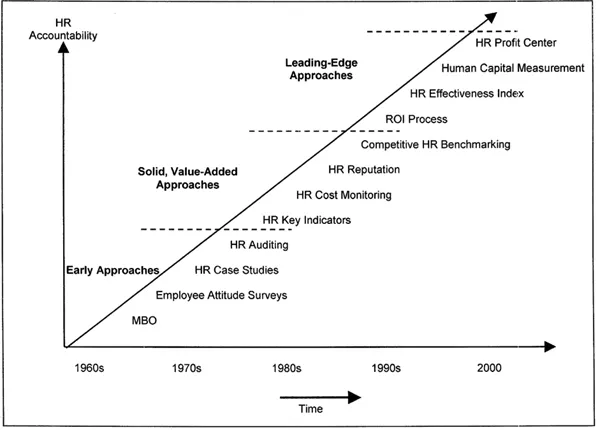
Figure 1-1. Approaches to HR accountability.
Early Approaches
The early approaches include those tried-and-true approaches we are all so familiar with. Although these are still being used by many organizations, other approaches are also being incorporated as organizations work toward more effective measurement processes.
HR Management by Objectives (MBO). The evaluation process of measuring progress toward HR performance objectives gained popularity in the 1960s because of the widespread use of MBO[3]. With this approach, the HR department develops specific objectives and evaluates performance against those objectives. Objectives are based on what management wants accomplished or on what is perceived to be necessary to achieve an adequate level of performance. Measures of turnover, absenteeism, job satisfaction, employee health, and compensation expenses are quantifiable and are considered objectives for many HR functions. Whatever measures are determined, they must be related to organization performance in order to represent meaningful approaches to reflecting the contribution HR makes to the organization.
Employee Attitude Surveys. Many organizations still use employee attitude surveys to evaluate the effectiveness of their HR departments. These surveys attempt to link employee attitudes to organizational performance. One study designed to measure the impact of surveys on an organization compared the use of employee surveys with the profitability of the company. As expected, those organizations responding as more profitable than most of the industry were high users of employees surveys. On the other hand, those organizations describing themselves as less profitable rarely used surveys [4]. Other studies of organizations using employee surveys have proven positive relationships between organization performance and the attitudes of employees. Although this is one method to collect information regarding organization performance, it is often used in conjunction with other methodologies.
HR Case Studies. Another approach to evaluate the success of HR programs is to present results in a case study format to selected audiences. For example, an organization may report the success of a labor-management program in a case study report to all employees. These case studies have significant value and can be presented with little cost. They are developed using data about HR performance, reaction from individuals, or interviews with participants involved in HR programs or services.
The case study approach does have some weaknesses, however. It does not represent a balanced measure of the performance of the HR function but provides some evidence that certain programs are successful. It usually does not represent an ongoing evaluation of any particular program or the overall function— only a one-shot examination. Also, it is often subjectively based, and a program’s success is usually judged by those providing the data that is to be included in the case study. Finally quantitative data are not always a part of these studies. Even with these weaknesses, however, the case study approach of evaluation should be an important part of an organization’s overall measurement and evaluation program.
HR Auditing. A human resource audit is an investigative, analytical, and comparative process that attempts to reflect the effectiveness of the HR function. It undertakes a systematic search that gathers, compiles, and analyzes data in depth for an extended period, usually one year, instead of with daily formal and informal reports. The use of HR audits has increased significantly. One reason for this is a commitment to moving the HR function from service to the strategic arena [5].
HR auditing is an extension of traditional auditing, which until recent years was limited to the financial practices of the organization. There has been a tremendous expansion in the extent, scope, and types of information being audited. In addition to human resources, auditing has now moved into production, operations, sales, quality, data processing, and engineering. It has become a critical analytical tool to assess how well—or how poorly—an activity is performed. HR auditing provides the necessary baseline data so that actions can be taken to improve HR performance. HR auditing is an important process that can help improve the efficiency of the HR function; it does, however, fall short of a valid approach to measuring the contribution of the HR function.
Solid, Value-Added Approaches
The four techniques illustrated in the center group of Figure 1-1 are considered sound approaches to generate increased accountability to the HR function. These approaches are being used regularly by most progressive organizations.
HR Key Indicators. In some HR evaluation efforts, key measures are developed that reflect the major efforts of the HR function. In some cases, these measures are linked to organizational performance. The key indicators approach is perhaps the best known and established method of HR evaluation. It uses a set of quantitative measures such as accident frequency rate, absenteeism rate, turnover rate, and average time to fill requisitions. Key indicators may come from areas such as:
- Employment
- Compensation administration
- Diversity
- Employee benefits
- Learning and development
- Work environment/safety
- Performance
- labor relations
- Careers
- Overall effectiveness
Although this approach of tying key measures to organizational performance seems sound, there is little empirical evidence to show this direct connection. This area still needs additional support, research, and study.
HR Cost Monitoring. Although most executives are aware of the total cost of payroll and benefits, they do not understand that changes in HR practices can result in a tremendous increase in costs. One approach to evaluating HR performance is to develop HR costs and use them in comparisons with cost standards. Some organizations compare these costs with other internal costs; these comparisons, however, could possibly reinforce complacency. Comparisons with other similar organizations may be more effective. Examples of HR costs monitored by organizations include:
- Employment —Cost per hire—Orientation cost
- Learning and development —Cost per employee—Total costs as a percent of payroll
- Benefits —Costs as a percent of payroll—Healthcare costs per employee
- Compensation —Compensation expense as a percent of operating expense—Total compensation costs
- Fair employment —Cost per complaint—Cost of litigation
- Labor relations —Cost per grievance—Cost of work stoppages
- Safety and health —Accident costs—Costs of citations/fines
- Overall HR —HR costs as a percent of operating expenses—Turnover costs
Tracking costs alone is no guarantee of a direct link to organizational performance. Also, although costs comparisons are helpful, standard HR cost data are not yet available. From a practical approach, HR costs monitoring is necessary as input for other approaches to evaluation. For example, in the benefit/cost analysis, HR cost data are required for comparisons.
HR Reputation. Some HR professionals suggest that the effectiveness of the HR function should be judged by feedback from those it is designed to serve, often referred to as constituencies or clients. Constituencies depend on, or exert control over, the HR function. Proponents of this approach argue that effectiveness is a value judgment. Even objective criteria are only one step removed from subjectivity. Someone has to determine what level of objective performance is considered effective and what level is considered ineffective. For these proponents, it is more important to measure the perception of the function in the mind of constituents [6].
It is important that the HR function is perceived as effective and its clients and users are satisfied. However, there is little concrete evidence of a relationship between levels of satisfaction among constituencies and overall organizational performance. This process ignores HR outcomes that may directly impact the bottom line.
Competitive HR Benchmarking. A few organizations developed key measures that represent the output of the HR function. The measures are compared with measures from other organizations regarded as having best practices within a given industry. This process, known as competitive benchmarking, began as an important development in the American quality movement. Despite the surge of interest in the process, few companies know what they are doing when they undertake a benchmarking study. Some see the process as merely a comparison of processes to ensure functional similarity with other companies. Others take the process more seriously and view it as a learning process that can improve overall HR effectiveness. Although benchmarking has proven successful in quality and other areas, it is slow to develop within the human resources function, though progress is being made.
Leading-Edge Approaches
The last four techniques are often considered the leading-edge approaches based on interest in the issue. Although some organizations have made progress with these techniques, they are still in a developmental stage within the vast majority of organizations.
Return on Investment. Probably the most convincing approach to HR evaluation is to compare the cost of HR programs with the benefits derived from them. In most cases, the cost of HR programs can be developed or monitored. Although confusion sometimes exists concerning ways to allocate specific costs, overall program costs can usually be pinpointed. The difficulty lies in determining program benefits. In many cases, expert input is used to assign monetary values to benefits derived from programs, particularly for intangible benefits. Consequently, this approach is sometimes avoided as an evaluation tool. However, reliable techniques to generate accurate estimates do exist, and these are presented in detail in the following chapters.
The ROI process is experiencing success ...
Table of contents
- Cover
- Half Title
- Title Page
- Copyright
- Contents
- Preface
- Acknowledgments
- Part I: The Need for ROI in Human Resources
- Part II: The ROI Process, Step-by-Step
- Part III: Important Issues with ROI Implementation
- Part IV: Case Applications
- Appendix: Self-Test: How Results-Oriented Are Your Human Resources Programs?
- Index
Trusted by 375,005 students
Access to over 1.5 million titles for a fair monthly price.
Study more efficiently using our study tools.
Frequently asked questions
Yes, you can cancel anytime from the Subscription tab in your account settings on the Perlego website. Your subscription will stay active until the end of your current billing period. Learn how to cancel your subscription
No, books cannot be downloaded as external files, such as PDFs, for use outside of Perlego. However, you can download books within the Perlego app for offline reading on mobile or tablet. Learn how to download books offline
Perlego offers two plans: Essential and Complete
- Essential is ideal for learners and professionals who enjoy exploring a wide range of subjects. Access the Essential Library with 800,000+ trusted titles and best-sellers across business, personal growth, and the humanities. Includes unlimited reading time and Standard Read Aloud voice.
- Complete: Perfect for advanced learners and researchers needing full, unrestricted access. Unlock 1.5M+ books across hundreds of subjects, including academic and specialized titles. The Complete Plan also includes advanced features like Premium Read Aloud and Research Assistant.
We are an online textbook subscription service, where you can get access to an entire online library for less than the price of a single book per month. With over 1.5 million books across 990+ topics, we’ve got you covered! Learn about our mission
Look out for the read-aloud symbol on your next book to see if you can listen to it. The read-aloud tool reads text aloud for you, highlighting the text as it is being read. You can pause it, speed it up and slow it down. Learn more about Read Aloud
Yes! You can use the Perlego app on both iOS and Android devices to read anytime, anywhere — even offline. Perfect for commutes or when you’re on the go.
Please note we cannot support devices running on iOS 13 and Android 7 or earlier. Learn more about using the app
Please note we cannot support devices running on iOS 13 and Android 7 or earlier. Learn more about using the app
Yes, you can access The Human Resources Scorecard by Jack J. Phillips,Ron Stone,Patricia Phillips in PDF and/or ePUB format, as well as other popular books in Business & Business General. We have over 1.5 million books available in our catalogue for you to explore.