![]()
1 Understanding differences in punishment
Let us now substantiate, in the first part of this chapter, the differences in punishment between the two clusters of societies that were signposted in the Introduction. The second part of the chapter then introduces and develops the explanatory framework through which these differences can be understood.
Differences in rates of imprisonment
In 2010, Finland had a rate of imprisonment of 60 per 100,000 of population, Norway 71 and Sweden 78. In contrast, the rate of imprisonment in New Zealand was 203 per 100,000 of population, in England 154, and in New South Wales 152 (in Australia as a whole it was 134): rates that, respectively, place them amongst the lowest and highest Western imprisoning societies.1 But can this measurement be used as a legitimate indicator of punitiveness? There are all kinds of methodological issues and concerns in the way in which imprisonment statistics are produced (are remands in custody included or excluded; are psychiatric institutions for the criminally insane counted or not counted; similarly, in relation to ‘young offender’ institutions, and so on) that would seem to raise prima facie doubts about such statistics’ reliability as a research instrument. It might also be thought that these doubts are then magnified when attempting to compare levels of imprisonment between different societies. However, notwithstanding these caveats, imprisonment rates do provide general pointers to penal trends, if not totally accurate counts of prison populations, and it is in this context that they have been used in this research. The consistent pattern of imprisonment, from the late nineteenth to the early twenty-first century, that they reveal within each cluster (leaving aside Finland) thus raises important analytical questions. For these purposes, as Cavadino and Dignan (2006: 5) note, imprisonment rates are ‘often the best [data] available … the one[s] most commonly and easily calculated and promulgated on a comparative basis’. At the same time, the validity of imprisonment rates as an indicator of penal difference is strengthened when a second indicator – prison conditions, in this case – seems to confirm their inferences.
Differences in prison conditions
While the two media reports that opened this book may, for obvious reasons, have had their own – and contrasting – measures of hyperbole, the differences in prison conditions between the two clusters were reaffirmed and extended in the fieldwork2 that was undertaken for this research. This involved visits to 40 prisons (some more than once). These ‘tours’ lasted between two and four hours, usually in the company of a senior officer. Features of the prison would be explained as it progressed and then, in most cases, there would be further discussions with the governor/manager. On some occasions, it was also possible to have discussions with other prison officers and prison personnel; on others, with prisoners, both individually and in groups. The prisons were selected to give a good cross-section: maximum and minimum security, men’s and women’s; closed and open, old and new. One of the reasons for conducting the research in this way was that it would be possible to observe recurring patterns relating to officer-inmate interaction, dining and visiting arrangements, and various other accoutrements of the material conditions of life that were common to the prisons and prison systems in each cluster.
The differences that then became apparent can be summarized in the following five ways:
• Prison size
• Officer/inmate relations
• Quality of prison life
• Prison officers
• Work and education programmes.
Prison size
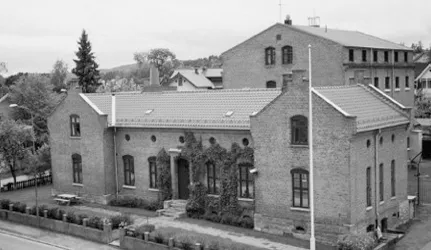
Nordic prisons tend to be much smaller than those in the Anglophone countries. It is quite common to find 50- or 60-bed establishments in this region (see Figure 1.1). The logistical consequences are that, despite their much smaller prison populations, the Nordic countries have many more prisons per head of population (see Table 1.1).
These differences in prison size obviously make housing prisoners near their families much more straightforward in the Nordic countries than in the Anglophone.
Table 1.1 Contrasts in prison size
| Country | Prison population | Number of penal institutions | Average prison size |
| England | 85147 | 140 | 608 |
| New South Wales | 11330 | 35 | 324 |
| New Zealand | 8706 | 19 | 458 |
| Finland | 3231 | 35 | 92 |
| Norway | 3446 | 47 | 73 |
| Sweden | 7286 | 84 | 87 |
Source: WorldPrison Brief (2010).
It is also clear that prison size is likely to affect staff/inmate relations: the larger the institution, the more likely it is that prison staff and inmates will become more anonymous to each other, mitigating against any sense of solidarity and cohesion or the development of trusting relationships. At the same time, the smaller Nordic institutions are likely to pose less of a threat to local property values and security, a frequent complaint whenever locations are sought for new penal institutions in the Anglophone prison world. Indeed, it seems to be the case that the much smaller Nordic penal institutions become valued community resources rather than objects of widespread antagonism and hostility.
Nonetheless, in recent years, the Anglophone countries have been building progressively larger prisons, both because of the increase in the numbers of people being sent to prison and also as a way of rationalizing and reducing prison costs. In England, this reached its apogee with the plans to build three ‘Titan’ prisons, holding 2,500 inmates each, in 2007.3 At the same time, private prisons now constitute some 10 per cent of the total prison stock in England (although there has been no recourse at all to this in the Nordic countries), and are usually justified on the basis that the private sector is not only better able to save money than the public sector but, in addition, the competition it provides is also likely to bring down the costs of public sector prisons.4
Officer/inmate relations
There seems to be more routine interaction and less social distance between officers and inmates in the Nordic prisons. Inmates and staff might share the same canteen at mealtimes in some institutions, as well as use first name terms when addressing each other. In Norway, officers knock on the cell door before entering, so that inmates are not disturbed without prior warning. And maximum security conditions can provide the opportunity for more, not less, interaction between officers and inmates. Thus, at Kumla prison in Sweden, the emphasis on security is rationalized as follows: ‘now we are working actively with the prisoners whereas previously we were only monitoring them. Prisoners and staff cook together and we are around when they study or work. We get to know them and how they feel, which also means we can notice early signs of conflict and actively prevent them from escalating by adding more staff or moving prisoners to a different room’ (Dagens Nyheter, 18 November 2009: 1). Obviously, something other than ‘friendship’ is being cultivated through such closeness, since these relations are also likely to enhance surveillance and security tasks. Nonetheless, the obligations on Swedish prison officers to undertake counseling and planning with the small groups of inmates for whom they have responsibility seem likely to further reduce social distance and bring about a relatively relaxed atmosphere (Bruhn, Nylander and Lindberg, 2010).
Figure 1.1 Hamar prison, Norway. The prison has both an open and closed section, with a total of 56 places. Photograph: Statsbygg, Norway.
This is not to say, of course, that no such interaction takes place in the Anglophone prisons. While, in New South Wales, staff/inmate relations seemed the most formal, in New Zealand and England relationships were generally relaxed, with both groups on first name terms with each other (although, in New Zealand, there were also occasions when officers addressed inmates as ‘Prisoner X’, ‘Prisoner Y’, etc). In England, what is known as the ‘decency’ agenda has made a significant contribution in recent years to reducing what had previously been the extensive social distance between prisoners and prison staff in that country. Prisoners at Kirkham open prison told us that ‘the majority of staff genuinely want to help and want to interact with prisoners’. We were also told several times by staff during the English prison visits that they were ‘proud’ or ‘very proud’ of the work they did. However, the position is very different in maximum security areas. Unlike the Swedish example above, personal contact is kept to a minimum; in New Zealand, three officers accompany any movement of an individual prisoner, who must kneel, and face the wall away from them with hands behind his back when they enter the cell. In such prisons in New South Wales, officers are stationed in watchtowers and armed with rifles. There is also an Immediate Action Team that patrols the grounds of these institutions, carrying an array of armaments and dressed in highly militarized fatigues.
Furthermore, whatever the inclinations of the officers themselves in the Anglophone prisons, interaction with inmates is also likely to be greatly restricted by security and budgetary concerns. Broadly speaking, staff/inmate ratios are more favourable in the Nordic countries. For example, in Norway and Sweden there is 1 officer per each 0.8 prisoner; in New South Wales, the ratio is 1:2, and in New Zealand, 1:2.1. One consequence of this is that the great majority of prisoners – virtually all except those in open institutions, and still smaller numbers on ‘self-catering’ arrangements – in the Anglophone societies eat their meals in their cells, with obvious detrimental consequences in terms of socializing and learning how to live in the company of others without conflict. We were told of one New South Wales and one English prison where officers had tried to instigate weekly lunches but the inmates did not wish to participate. Clearly, with the greater social distances between the two groups that had been part of the institutional history of these establishments, sudden attempts to break this down...