- 306 pages
- English
- ePUB (mobile friendly)
- Available on iOS & Android
eBook - ePub
Management and Marketing of Services
About this book
This second edition of The Management and Marketing of Services builds on the success of the first edition and now includes increased coverage of many key areas, extensive examples and case studies.
This second edition looks closely at relationship marketing and public sector issues as well as providing expanded sections on: the definition of services, expectations, competitive advantage, pricing of services, segmentation/positioning of services, the service encounter and service employees.
The Management and Marketing of Services is a highly accessible text ideal for practitioners and students looking for a comprehensive treatment of this subject area.
Chapter 1
Introducing Services
Introduction
There are particular problems and challenges for those managing an organization whose major activity is providing some type of service. For the customer there may be little evidence, in advance, of what to expect. The service provider has often to produce the service under the watchful gaze of customers. Finally, both parties may fail to agree on what constitutes quality service.
To produce and deliver a service, management needs to recognize what that means in practice (see Figure 1.1). First an appropriate foundation must be laid through which the service will be channelled. If these ‘bottom line’ conditions of design, structure and setting are not properly thought out the prospect of providing a quality service is reduced.
The next stage involves the actual delivery of the service. People, materials and equipment must be deployed and managed to attract and serve customers in accordance with their needs and preferences. It is essentially a process in which customer and service interact in a variety of ways. Throughout that process the organization needs to demonstrate a commitment to service quality by setting appropriate standards and ensuring their implementation.
Finally, to test the success of that commitment, service performance must be monitored and evaluated. This must be an ongoing process that enables management to detect and rectify any deficiencies.
The Goods—Services Continuum
In 1966 John Rathmell1 observed that most marketers have some idea of the meaning of the term ‘goods’; they are tangible economic products that are capable of being seen and touched and may or may not be tasted, heard, or smelled. As for services, Rathmell asserted that there was no clear understanding. He sought to change this by defining a good as a thing and a service as an act; the former being an object, an article, a device or a material and the latter a deed, a performance, or an effort.
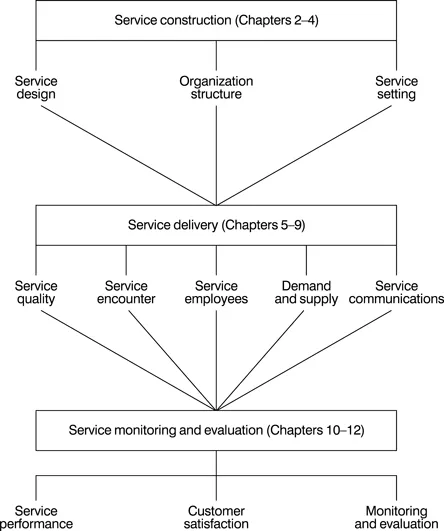
Figure 1.1 The Service Management Framework
Another distinction between a good and a service, according to Rathmell, lay in the nature of the product’s utility. Does the utility for the consumer lie in the physical characteristics of the product, or in the nature of the action or performance? From such tests Rathmell concluded that there were very few pure products and pure services. Economic products were to be regarded as lying along a goods–services continuum with pure goods at one extreme and pure services at the other, but with most of them falling between these two extremes (see Figure 1.2). Rathmell stated that some are primarily goods with service support, whereas others are primarily services with goods support. Most goods are a complex of goods and facilitating services; most services are a complex of services and facilitating goods. He applied the measuring rod of personal consumption to distinguish between goods and services. For the food and tobacco category, percentage personal consumption expenditure on the services was nil. For recreation it was 33 per cent and for religious and welfare activities, 100 per cent.
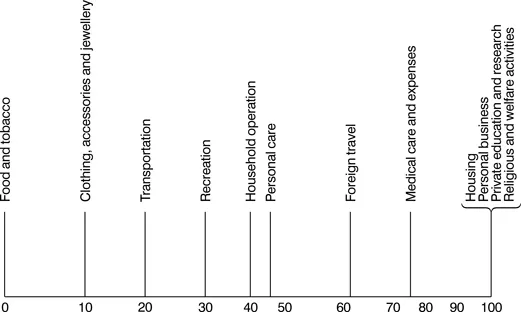
Figure 1.2 Personal Consumption Expenditure Related to Services. Source: Rathmell (1966)1
Sixteen years later Shostack2 developed a refined version of the original continuum (Figure 1.3) and it remains a valuable perspective for understanding the nature of services. The essence of the continuum is that tangibility (ability to see, touch, smell, hear prior to purchase) decreases as one moves from left to right. Tangible entities are in evidence, such as the equipment used by the nurse but, in general, they cannot be owned or possessed like salt or dog food. Every organization on the continuum delivers some degree of service as part of its total offer. However, it is the organizations to the right which deliver most in the way of service and can therefore truly bear the hallmark ‘service organizations’. It is important to make a distinction between those for whom service is part of the overall offer (e.g. computer manufacturer, car dealer, fashion retailer) and those for whom service is the offer (e.g. hotels, banks, airlines, accountants), as the latter exhibit particular characteristics that merit attention.
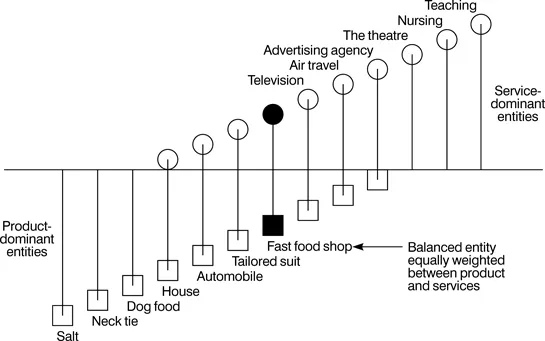
Figure 1.3 A Scale of Elemental Dominance.Source: Shostack (1982)2
In addition, there is another aspect that singles out services from other organizations. Marketing plans are usually structured around what is commonly known as the ‘4 Ps’, namely product, price, promotion and place. But when it is service that is being marketed three more Ps – people, physical evidence and process must be added, making 7 Ps in all. As the additional three Ps figure prominently throughout this text, a brief description of each will suffice at this stage:
People: | Service personnel and customers, e.g. appearance, attitudes, social skills, etc. |
Physical evidence: | Everything from the appearance, design, layout of service setting to brochures, uniforms, cheque books, etc. |
Process: | Just as raw materials are converted through a process into finished goods, services likewise go through a process, converting inputs to outputs. The process will involve, among other things, policies, procedures, mechanization, flow of activities, employee discretion, and customer involvement. |
Employment in the Service Sector
One measure of the size of the service sector in the economy is the number of people employed relative to other sectors. Table 1.1 shows the number of employees in various industries in the UK. Since 1978 there has been a switch among both male and female employees away from manufacturing towards the service sector: 35 per cent of men and 22 per cent of women were employed in manufacturing in 1978 compared with only 26 per cent and 10 per cent respectively in 1997.
Table 1.1 Employees (UK): by Gender and Industry (%)
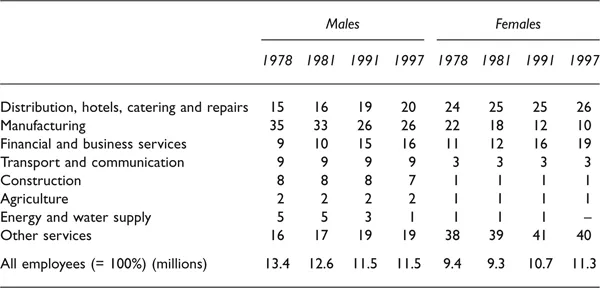
Data are at June each year.
Source: Short-term Turnover and Employment Survey, Office for National Statistics
In addition, the European Union, in common with most other industrialized parts of the world, has seen a long-term shift in the sectoral distribution of employment towards services and there is little sign of any slowdown in the trend shift to employment in services. (For further information see The Eurostat Labour Force Survey and Employment in Europe published by the European Commission.)
Characteristics of Services
Services possess four key distinguishing characteristics:
Intangibility
Inseparability
Variability
Perishability.
Intangibility
Services cannot generally be seen, tasted, felt, heard or smelled before being bought. The potential customer is unable to perceive the service before (and sometimes during and after) the service delivery. For many customers of car repair, for example the service is totally intangible – they often cannot see what is being done and many indeed are unable to evaluate what has been done. Rushton and Carson3 asked a number of service organizations whether they consciously perceived a difference between the marketing of goods and services. Several respondents pointed to the intangibility of their products with comments such as:
We haven’t got anything to show to customers like a can of baked beans.
It’s more difficult trying to explain what they [the customers] get for their money.
Implications
Intangibility presents problems in that the consumer may experience difficulty in knowing and understanding what is on offer before, and even after, receipt of the service. The challenge for the service provider is to determine the extent of intangibility and the management action required to make the service more tangible. The first task implies resort to some form of measurement, and the second task involves the provision of tangible evidence, e.g. a brochure to help consumer understanding of the service.
Measurement
A system for measuring the relative tangibility of a service organization and its offerings has been proposed by McDougall and Snetsinger.4 A number of products and services were selected together with nine statements designed to measure tangibility (Table 1.2). Their study concentrated on the mental aspects, namely the consumer’s ability to picture or visualize the service prior to purchase. Their main conclusion was that services were arrayed toward the intangible end of the continuum and most products toward the tangible end. One interesting observation was that some services (e.g. movies, fast food) were rated as more tangible than some products, and some products (e.g. used car, a new compact car) more intangible than some services.
Table 1.2 Items, Products and Services, and Scenario
Items on the tangibility scale |
|
Products and services selected | |
Products | Services |
|
Table of contents
- Cover
- Half Title
- Title Page
- Copyright
- Contents
- Preface to the second edition
- Preface to the first edition
- Acknowledgements
- 1. Introducing services
- 2. The organizational setting
- 3. Service design
- 4. The service setting
- 5. Service quality
- 6. The service encounter
- 7. Service employees
- 8. Managing demand and supply
- 9. Service communications
- 10. Performance measurement
- 11. Delivering satisfaction
- 12. Monitoring and evaluating the service
- Index
Trusted by 375,005 students
Access to over 1.5 million titles for a fair monthly price.
Study more efficiently using our study tools.
Frequently asked questions
Yes, you can cancel anytime from the Subscription tab in your account settings on the Perlego website. Your subscription will stay active until the end of your current billing period. Learn how to cancel your subscription
No, books cannot be downloaded as external files, such as PDFs, for use outside of Perlego. However, you can download books within the Perlego app for offline reading on mobile or tablet. Learn how to download books offline
Perlego offers two plans: Essential and Complete
- Essential is ideal for learners and professionals who enjoy exploring a wide range of subjects. Access the Essential Library with 800,000+ trusted titles and best-sellers across business, personal growth, and the humanities. Includes unlimited reading time and Standard Read Aloud voice.
- Complete: Perfect for advanced learners and researchers needing full, unrestricted access. Unlock 1.5M+ books across hundreds of subjects, including academic and specialized titles. The Complete Plan also includes advanced features like Premium Read Aloud and Research Assistant.
We are an online textbook subscription service, where you can get access to an entire online library for less than the price of a single book per month. With over 1.5 million books across 990+ topics, we’ve got you covered! Learn about our mission
Look out for the read-aloud symbol on your next book to see if you can listen to it. The read-aloud tool reads text aloud for you, highlighting the text as it is being read. You can pause it, speed it up and slow it down. Learn more about Read Aloud
Yes! You can use the Perlego app on both iOS and Android devices to read anytime, anywhere — even offline. Perfect for commutes or when you’re on the go.
Please note we cannot support devices running on iOS 13 and Android 7 or earlier. Learn more about using the app
Please note we cannot support devices running on iOS 13 and Android 7 or earlier. Learn more about using the app
Yes, you can access Management and Marketing of Services by Peter Mudie,Angela Cottam in PDF and/or ePUB format, as well as other popular books in Business & Business General. We have over 1.5 million books available in our catalogue for you to explore.