Although there are many books of methods and tools in different areas, few books actually give detailed tips and lessons on how to effectively set up and manage projects. Most books on project management devote all their space to specific methods. Breakthrough Technology Project Management, Second Edition provides tangible guidelines through examples and suggestions to help people participate in and manage projects more effectively. The authors' techniques and guidelines have been proven over the past 15 years in courses and counseling. This book is a valuable tool for those working in information systems, engineering, computer science, operations and production, and other environments involving project management.
- 342 pages
- English
- ePUB (mobile friendly)
- Available on iOS & Android
eBook - ePub
Breakthrough Technology Project Management
Improving the Project Management Process
Chapter 1
Introduction
Project Management Concepts
Definitions
Let's start by defining some basic concepts related to projects and project management for single projects. A project consists of work that is focused on specific purposes within the boundaries of a defined scope. Projects can be of any size or type. A purpose for a project can be a narrow goal related to a specific system or technology, or it can be more extensive to include improvements in a business process. The scope of the project defines what is included in and excluded from the project. A business process is a set of regularly performed, integrated business tasks that produce specific outputs. Payroll, sales, and planning analysis are examples of business processes. The project plan consists of related tasks or activities and milestones together with resources, costs or budget, and schedules. It is assumed that you are familiar with terms such as critical path, GANTT, and PERT charts.
Moving up to multiple projects, the project slate is the set of approved projects that will be funded and provided with resources. It is often the case that the slate is approved by a management steering committee or group. Resource management is the coordination, management, and control of resources across the projects. How to resolve competing demands among projects for the same resources will be called resource deconflicting. If you place all of the schedules together, the result will be called the master schedule.
Turning to systems concepts, the systems organization will be referred to as information systems or IT. Many other terms have been used over the years: information systems (IS), management information systems (MIS), and data processing (DP). The business organization staff members have often been referred to as users. This term can be viewed as derogatory so the business organizations will be considered as business units. The employees in the business units will mostly be referred as business staff or employees.
Both the systems and business organizations have objectives and strategies. An objective here is a directional goal that is timeless. Examples relate to profitability, costs, effectiveness, and efficiency. These are general and have to be supported by strategies. A strategy provides the focus for supporting objectives. Projects then support strategies that in turn support objectives. A strategy might be to expand market share. In information systems an objective is to be responsive to the business. A strategy might be to implement an intranet or Internet solution.
The collection and structure of the hardware, software and systems, and network will be referred to as the architecture. A key word here is structure. How the pieces of technology go together is critical to the architecture and its flexibility and capabilities. A poor architecture, for example, might have either missing pieces or parts that do not integrate or interface with each other.
Before and during a project, problems, situations, and opportunities can arise. These will be referred to as issues. Effective issue management is a key attribute of good project managers. Issues have symptoms that are signs of problems as well as the problem or opportunity itself. Examples of issues are how to allocate a scarce personnel resource among projects, how to address a gap in technology, and how to deal with a specific requirement change. In order to address issues, management makes decisions. Decisions are implemented or followed up by taking actions. Some tasks in projects have risk in that there is a significant likelihood that there may be problems or slippage. Here we will treat the reason behind the risk as an issue. Thus, if you resolve the issues behind a risky task, you have reduced or removed the risk. This is a key association in the book and has been found to be an effective means of dealing with the more fuzzy concept of risk.
A goal in project management is to gather lessons from experience and then apply these to current and future projects so as to be more effective. These will be referred to as lessons learned. Lessons learned can take many forms: policies, guidelines, procedures, and techniques. In systems, lessons learned include how to work with a specific business process or how to effectively use a software tool.
Figure 1.1 gives a picture of the systems and business situation as outlined in preceding discussion. As you can see, the systems and business components can be mirrored. The difference is that the business processes correspond to the systems on the systems side.
In the diagram, business issues are reflected in systems issues (on the left). The organization interface is shown on the right. In the center, the systems and the architecture (structure of the technology) support the business processes. This diagram will be employed to relate business-oriented topics to those in systems. This figure has two dashed boxes. One represents the traditional project approach of focusing only on systems and the architecture (labeled "Old"). The second, larger one is the more modern view of including the business processes along with systems and architecture (labeled "New").
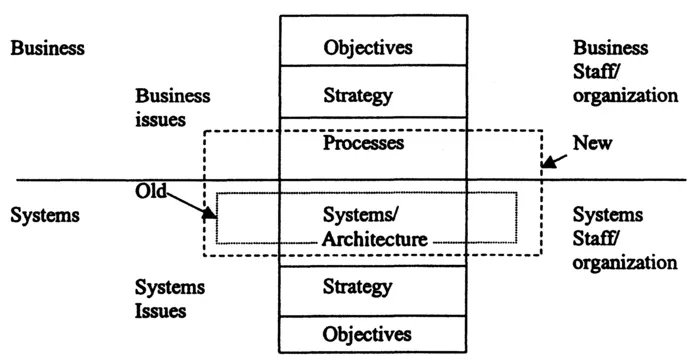
Figure 1.1 Systems and Business Components
Differences between Standard and IT Projects
In the preface some general differences between standard projects and systems and technology were identified. These can now be made more precise.
- Purpose. The goals of a system and technology project are often not as clearly defined as those in engineering or other projects. The goals may not be well defined at the start of the systems project.
- Scope. Systems projects sometimes lack clear boundaries. Is the business process within the project? With what systems must the project interface? Moreover, the scope can creep and expand.
- Parallel work. While a new system is being created or installed, work can continue on the current system, creating changing requirements. This is not as true in standard projects.
- Interfacing projects. Systems projects are more likely to have complex interfaces.
- Technology dependence. It seems that only in systems and technology projects do people attempt to use new technology or technology with which they have no or only limited experience, raising the level of risk.
- Management expectations. Upper-level managers attend seminars and read about the promise of new technologies. Their expectations can impact the systems project.
- Cumulative impact. One project can affect others. The latest project depends on the results of many previous and some current efforts. It is cumulative dependence.
- Understanding the technology. Although nonsystems projects can involve technology, it is normally simpler to apply because the technology can be handled separately. In systems, it is the reverse. The only way modern systems can be successful is by integrating multiple technologies. This requires a deeper and more thorough understanding of the technology.
- Technology gaps. Systems and Technology projects are also affected by gaps between the newest technology and the older technologies.
Trends in Business
Certain business trends have emerged and persisted, affecting systems projects.
- Accountability. Business has become more sensitive to accountability and has a greater drive for results—impacting which projects are funded and their schedules.
- Downsizing/rightsizing. Information systems units have been hit by this trend as have the business units. The impact is that many organizations have to make up for the decline in staff with automation by putting more pressure on systems projects.
- Importance of business processes. Whereas in the past, the focus was on the business organization, attention has shifted to the basic business processes. This new focus has been spurred by the successes of Wal-Mart, Federal Express, and other firms, and it impacts the scope and focus of systems projects.
- Reengineering and process change. Changes in business processes are almost always linked to changes in systems and technology
- Global competition. Companies are faced with competing in multiple, diverse markets. This requires flexibility on the part of the technology and systems.
- Outsourcing/supplier-customer links. With electronic commerce and electronic data interchange (EDI), firms seek to tighten their links with suppliers and customers. In addition, more functions are being outsourced (in some cases to suppliers and customers).
- Thirst for information. Firms desire to get at the information for management, strategic, and tactical/operational purposes. Data warehousing and the spread of database management systems have created new projects that pull information from multiple sources for analysis in support of knowledge management.
- E-business implementation. Implementing e-business combines system implementation, process improvement, and organization change.
These factors lead to the creation of more projects that are of increased complexity compared to traditional systems work. Success with the first project in a given area typically leads to more projects in the same areas. For example, a firm that has been successful in reengineering its accounts payable processes is then tempted to move to other accounting areas. Thus, it is not surprising that the number of projects and their interdependencies are growing.
Trends in Technology
Examine some of the key technology trends that have affected project management.
- Network expansion. The Internet, local area networks, and wide area networks have made communications and networking more affordable and easier to implement than was previously the case. This means that more companies have implemented networks. The software to handle electronic mail, videoconferencing, and voice communications over networks has improved and become cheaper and less complex to install. Most new systems and technology projects today involve a networking component. Network expansion can be seen in two ways: internal and external. Internally, wide area networks and on-line, client-server applications have fueled network expansion. Externally, the use of electronic commerce, EDI, extranets, and links to suppliers and customers has grown.
- Declining cost and increased performance of microcomputers. As a result of this trend, companies have been encouraged to deploy more microcomputers with increased functions to more employees. This makes the systems projects larger because more staff must be trained.
- Embedded technology. Technology has become embedded in physical devices as never before. The growth of geographic information systems (GIS) and geographic positioning systems (GPS) are two examples of technology being embedded in vehicles, facilities, and equipment.
- Cumulative impacts. With a growing dependence on technology, companies need to manage the cumulative efforts and cross-impacts of the technology.
- Electronic commerce. E-commerce is the means of supporting e-business transactions. An increasing number of IT projects deal with e-business and e-commerce.
To many business managers these trends combine to support their beliefs that technology and systems can respond to business trends and needs rapidly and easily. This raises expectations and requirements for systems and technology projects.
Trends in Systems
The impacts of moving from the raw technology to systems are evident in the following trends:
- Systems replacement. Whether dealing with problems or just replacing ancient legacy systems, systems groups are moving to install new software packages. This is not a simple replacement project. The new software offers different features and capabilities.
- System integration. There is a trend toward more integration of systems and data. What used to be a series of single projects has been replaced by larger, integrated projects.
- Improvements in tools. More tools are available to assist in development and systems management. Object-oriented programming and design tools are emerging in addition to improvements in database and fourth-generation languages as well as data warehousing tools. The approach of using Java and other similar tools for intranets make systems management easier.
- Stability of vendor software. As in the old days when there was one dominant hardware vendor, the emergence of a major dominant software vendor has lent stability and more predictability to systems. The counterweight is that the pace of technology advance may be slower, but it is still substantial.
- Client-server, Internet, extranet, and intranet development. Where these projects were once rare, they are now becoming much more common and the focus of most of the new development. Such work results in large, complex projects to reduce risk.
- Changes in staffing mixes. The dominant programming language among staff was once COBOL. Although COBOL is still in substantial use, other technologies have become popular, such as C++, Visual Basic, Java, and fourth-generation languages. Students and people entering the programming field are far more likely to know these newer languages than they are to know COBOL. This influences what systems projects are undertaken and how they are carried out. With a greater variety of skills needed, project teams have...
Table of contents
- Cover
- Title
- Copyright
- Contents
- Preface
- About the Authors
- Part I Improving the Project Management Process
- Part II Developing Your Project Plans
- Part III Managing Projects
- Part IV How to Successfully Address Project Issues
- Bibliography
- Web Sites
- Appendix 1: The Magic Cross Reference
- Appendix 2: Issues Checklist
- Index
Trusted by 375,005 students
Access to over 1.5 million titles for a fair monthly price.
Study more efficiently using our study tools.
Frequently asked questions
Yes, you can cancel anytime from the Subscription tab in your account settings on the Perlego website. Your subscription will stay active until the end of your current billing period. Learn how to cancel your subscription
No, books cannot be downloaded as external files, such as PDFs, for use outside of Perlego. However, you can download books within the Perlego app for offline reading on mobile or tablet. Learn how to download books offline
Perlego offers two plans: Essential and Complete
- Essential is ideal for learners and professionals who enjoy exploring a wide range of subjects. Access the Essential Library with 800,000+ trusted titles and best-sellers across business, personal growth, and the humanities. Includes unlimited reading time and Standard Read Aloud voice.
- Complete: Perfect for advanced learners and researchers needing full, unrestricted access. Unlock 1.5M+ books across hundreds of subjects, including academic and specialized titles. The Complete Plan also includes advanced features like Premium Read Aloud and Research Assistant.
We are an online textbook subscription service, where you can get access to an entire online library for less than the price of a single book per month. With over 1.5 million books across 990+ topics, we’ve got you covered! Learn about our mission
Look out for the read-aloud symbol on your next book to see if you can listen to it. The read-aloud tool reads text aloud for you, highlighting the text as it is being read. You can pause it, speed it up and slow it down. Learn more about Read Aloud
Yes! You can use the Perlego app on both iOS and Android devices to read anytime, anywhere — even offline. Perfect for commutes or when you’re on the go.
Please note we cannot support devices running on iOS 13 and Android 7 or earlier. Learn more about using the app
Please note we cannot support devices running on iOS 13 and Android 7 or earlier. Learn more about using the app
Yes, you can access Breakthrough Technology Project Management by Bennet Lientz,Kathryn Rea in PDF and/or ePUB format, as well as other popular books in Business & Business General. We have over 1.5 million books available in our catalogue for you to explore.