- 352 pages
- English
- ePUB (mobile friendly)
- Available on iOS & Android
eBook - ePub
Environment and Business
About this book
This text examines how businesses and the environment interact. It is ideal for students with no previous knowledge of business studies. It examines in depth the ways in which business, industry, the physical environment, environmentalism and social change have evolved alongside each other. The authors use boxed case-studies to highlight how business practice and the environment interact at levels from local to global, with examples from multinational companies, government bodies, national charities and local enterprise. The book also contains a large number of informative diagrams. The case studies include:
* Shell Oil's environmental policy
* railways and the industrial revolution
* the British National Trust's business enterprises
* Sainsbury's approach to organic foods
* Australia's landcare scheme
* changing trends in retailing
* Brent Spar
* big game hunting and conservation.
Information
1: Environment and business: the nature of the relationships
- The basic elements—business, environment and environmentalism
- Impact of business on the environment
- The environment influencing business
- Business cultures and ethics
- The globalization of business
- Environmental and political standpoints
Simple answers rarely suffice for complex problems; environmental and natural resources problems are not an exception.
(Tom Tietenberg, 2000)
(Tom Tietenberg, 2000)
The environment is in the process of becoming a major new competitive area for business. Understanding the impact of the relevant issues and responding to the resulting opportunities and threats will become an important source of competitive advantage.
(Elkington and Burke, 1987)
(Elkington and Burke, 1987)
One of the main aims of this first chapter is to familiarize the reader with the relationships which are to be explored in this book. The relationships in themselves are relatively straightforward. First, business activities have an impact on the environment. This occurs through pollution, the modification of ecosystems, introducing exotic species and chemical compounds, genetic engineering and irreversible physical changes—the sorts of impacts widely reported in the popular press and television. The ways in which land has been used, particularly for agriculture and forestry, are a reflection of the way in which the commercial pressures of business have changed the physical landscape. Business affects the environment in a variety of ways both deliberate and accidental. Most of the effects are usually seen as detrimental, although increasingly we see some business activity improving the environment. For example, a number of museums and country houses have been opened to the public where the restoration of former days of glory have halted decades of decline and reinstated previous, albeit not entirely natural, surroundings. However, many firms who claim to be improving the environment are in reality only mitigating against the most injurious impacts of what is occurring. Hence the practice of planting trees and landscaping around industrial plants is not improving the environment but merely reducing the detrimental effects of building the plant in the first place.
Second, but less obvious, are the impacts the environment has on business. Changes in climate have led to changes in business activity. Depleting resources or physical limitations on the use of some materials have changed patterns of exploitation and their uses. Changing environmental conditions have led to the birth of new industries. Although less widespread and less covered by the literature, these changes are still worthy of our attention.
Associated with this first pair of relationships is a second pair, which concern the relationship between business and environmental thinking and perception. Third, business activities are influenced by environmental concerns. It is hard to identify a business where environmental concerns have no impact on its operations. For most businesses, environmental issues are less important than other external influences such as the state of the economy or the behaviour of its competitors. For some, which are close to the environment such as agriculture or tourism, the impacts can be at the top of their agenda. Environmental legislation, customer attitudes to the environment along with direct (and more subtle) actions by environmental groups are among the most obvious influences which can be grouped together under the umbrella term of environmentalism. Environmentalism has a considerable impact on many individual businesses. Businesses are increasingly aware of public pressure to have due regard for the environment and now many have corporate policies that are either sympathetic, or pro-active, to environmental aims. The way in which business behaviour has been influenced and modified, as a result of the influence of environmentalism, is something that will be developed more than other relationships in this book.
Fourth, business has worked hard to influence public opinion about the environment. While many such actions can be seen merely as window dressing, we shall see that many business opportunities have been seized to pro-actively develop products and services resulting in environmental improvement. Business has actively promoted some of its activities in terms of the environmental benefits they have brought. The public debate over the introduction of genetically modified (GM) foods has not been one-sided. Business, and in this case one company in particular, Monsanto, has done much to publicize the environmental benefits from the use of such products. Business has actively lobbied the media and government to win over the hearts and minds of the population over a number of issues. Claims and counter-claims by business and their detractors have done much to muddy the environmental waters. It has brought about an even greater need, however, to understand the true nature of the relationship between business, the environment and environmentalism.
The basic elements—business, environment and environmentalism
This book, in essence, is about the reciprocal relationship between business, the environment and environmentalism and this is where we begin our analysis. A business exists to fulfil its mission statement and to further its commercial objects, which are often expressed in financial terms and rarely make any reference to the physical environment. However, a business cannot ignore the environment, which it may see as either a positive or a negative factor. It may see the environment as a marketing opportunity, or as an opportunity to diversify into new areas of activity. In either case the environment will be seen as an asset which will enable the business to achieve greater commercial success.
By contrast, another business may see the environment not as an opportunity, but as a cost factor. How this influence operates is examined in Chapter 3. The environment exerts a cost on the commercial operations of the firm. The firm sees this as a legitimate part of its operations and adjusts its structures accordingly. A parallel can be drawn between the way in which environmental and labour costs are incorporated into an organization’s structure. Both are legitimate costs for which the organization makes allowance.
Some businesses regard the environment (or at least certain aspects of it) as an externality—a cost which is passed on to others. They make no allowance in their structures to accommodate the impacts their business makes on the environment. Any environmental costs are exported to others. The difference between costs and externalities is subtle but important.
This book is essentially about the interaction between the environment and business. In doing so it draws a subtle but fundamental distinction between business and industry. Although commonly the words ‘industry’ and ‘business’ are used interchangeably, we believe the differences are significant enough to merit separation in our discussion.
An industry is seen as the collection of firms who operate essentially the same series of processes that result in a related set of products (whether tangible products or services) that a third party wishes to buy. Products and services originate in, and are delivered to, particular locations. Their environmental impact may be felt at the point of production, the point of consumption, the transport link between the two or any combination of the three. By convention, industries are divided into primary, secondary and tertiary industries. Primary industries include fishing, forestry, agriculture and the extractive industries (essentially, the quarrying and mining of minerals). They all involve the collection, harvesting and exploitation of resources directly produced by physical processes. Secondary industries are the manufacturing industries. They take raw materials and by a variety of processes produce tangible goods by adding value to the raw materials. The tertiary industries produce services, for either individuals or for other organizations. Some authors have extended this tripartite division to the quaternary and quinary sectors, by subdividing the tertiary industries. Such distinctions are not felt necessary here since such sectors are not distinctive in their relationship with the physical environment. However, the way in which primary, secondary and tertiary industries inter-relate with the environment are seen as being sufficiently different to warrant separate analysis.
Business is the range of commercial organizations and their activities that characterize the way in which trading is conducted in a capitalist economy. It is concerned with the management of factors leading to the production of goods and services and the ways they are brought together and delivered to a customer. Business refers to the organizations that carry out such operations, how they are structured and what drives and motivates them. It is about the financing, marketing, the legal framework, collection and transfer of information, the human skills, training and behaviour of the individuals who carry out these trading patterns. These activities cannot be tied to any one industrial sector or to any one geographical location and so the ways they interact with the environment are harder to identify. Nevertheless, we feel it important to distinguish between business methods that can be common to all types of industry and specific industrial sectors, which have distinct sets of relationships with the environment and environmentalism. Both perspectives are necessary to obtain a rounded view of the overall relationship between business and the environment. Before the development of the capitalist economy and the concept of the ‘market’, business, as we understand it today, was very different. Industry before the Agricultural Revolution and the development of the factory system was radically different in both its scale and operation and in its relationship to the environment. We are therefore taking as our starting point for modern industry the quantum leap forward about two hundred and fifty years ago which came with the Industrial Revolution, when the technology and methods of manufacture as we know them today emerged.
Any starting point must be regarded as arbitrary but the above has served to make a clear distinction between industry, which is about people using resources to produce products or services, and business, which is about people using and making money. The distinction can be illustrated by looking at a business such as the oil multinational Shell. The business consists of two parent companies, Shell Transport and Trading Company plc (the British part) and The Royal Dutch Petroleum Company (the Dutch part). Together they retain the shares in group holding companies which in turn hold the shares in a myriad of service and operating companies which include subsidiaries in many countries. These companies operate in all three industrial sectors. Extraction of crude oil is part of the primary sector, refining is in the secondary manufacturing sector and distribution and retailing are in the tertiary sector.
Environmentalism is about the preservation and enhancement of the environment. In order to achieve their aims an environmental organization may either:
- put pressure on the business community to mitigate the effects of environmental damage. This can be done by:
- (a) influencing public opinion directly; or
- (b) influencing government either directly through lobbying or indirectly through influencing public representation to government; or
- (c) influencing businesses directly. Such environmental organizations include high profile pressure groups such as Greenpeace and Friends of the Earth, as well as a host of lesser known organizations. The way in which environmentalism affects business is considered in Chapter 4.
- adopt business principles to further their environmental aims. Hence an environmental organization, such as the RSPB, has incorporated marketing, financial management, retailing and promotional activities into its operations to raise the necessary finance, publicity and a favourable image to enable it to fulfil its environmental mission. How such organizations have adopted business methods is explored in Chapter 9.
Environmentalism in itself is a complex movement. Broadly, environmentalism can be described as the movement concerned with the protection of the environment whose proponents—environmentalists— consider it should have a primary influence on society’s development. The protection of the environment can be considered as coming within the custodianship of three distinct groups:
- governments or official agencies with statutory obligations to protect the environment;
- environmental pressure groups who broadly believe they can add something to that being done by statutory means;
- individuals who have an opinion on the environment and who may take positive steps to protect it. Just as each of these groups have a range of views about society so they have contrasting attitudes to the relationship between society and the environment. Hence, environmentalists represent a range of political, social and ethical standpoints. As individuals we can all be pigeon-holed into one of the following viewpoints where we either:
- (a) believe the environment will be saved by technological developments and that business will be the saviour of the environment;
- (b) believe we should be living in harmony with our environment and that the only way forward is through sustainable development;
- (c) reject the idea that the market can solve any problems and look to alternatives to the capitalist market economy in the future;
- (d) maintain that the environment is irrelevant.
The final word we need to examine at this stage is environment, which to most readers will broadly mean the ‘surroundings’. However, it is a word that is interpreted in different ways. We have used the word environment throughout as it is used by geographers, planners, earth and biological scientists to include both the tangible elements and the processes of the physical world. These are the tangible physical resources of the globe, the atmosphere, the land surface, rocks and minerals, plants, animals and the seas. It is also taken to include the physical and biological processes that go on close to the surface of the earth independently of any input from humans, although they are constantly modified by the actions of man. These processes result in the movement of water, energy, biological organisms and other essential compounds within the physical world. These ideas we know will be familiar to many readers, but this definition is in contrast to what business students tend to understand by the word ‘environment’—as used in many business and economics texts. For them the word is the same in that it means the external elements of the surroundings. However, the business paradigm understands the surroundings not in terms of a physical entity but rather as such factors as the behaviour of the market, the international economy, the legal framework, competitor activity and consumer behaviour. Where there is any possible confusion between the terms, we have used the term ‘physical environment’ for what elsewhere we have simply called ‘the environment’. In general the context of the discussion will make it clear what we mean.
At this stage it is perhaps worth pointing out that both business—by which we mean the business community as well as the collection of individual companies—and environmentalism are both pro-active in that they bring about change by their actions. Both are constantly changing in how they function and even their overall objectives do not remain the same for ever. We will see in Chapter 2 that both have changed considerably over the last two hundred years. The environment, by contrast, takes no conscious decisions itself. Instead, it facilitates the self-maintaining natural physical processes or homeostasis. These tend towards physical equilibrium under ‘natural’ circumstances or are driven by the natural variations that have occurred through geological time.
Impact of business on the environment
From the outset it should be clear that some types of business are more closely linked to the environment than others. For example, agriculture, heavy chemicals and holiday companies promoting tourism to natural unspoiled areas of the world are closely aware of the environment—albeit in very different ways. Other companies, such as hairdressers, computer software developers or assemblers of television sets, have little to do with the environment directly and one assumes consideration of the impacts on the environment do not come up as a matter of regular discussion at their management meetings. This book concentrates on those sectors that have a close relationship with the environment. It also focuses on those organizations which have either taken a particularly pro-active response to the environment, or by their woeful inaction have had a noticeable detrimental impact on the environment. All these responses, however, are conditioned by the ownership and structure of the business, by how the business believes society views the environment and the business’s attitude to the environment.
We are going to develop a model in which businesses are both influenced by the environment, on the one hand, while at the same time having some impact on it. Few businesses are totally free from the influences of the environment, although many have no significant impact themselves. These influences come through pressures to comply with environmental legislation or, through market pressures, to appear to be green. For some businesses, however, there is a much higher dependence on the environment. We shall see this dependence extends to all three sectors of industry: primary, secondary and tertiary. For the present the example of agriculture will suffice, since farming is clearly dependent on environmental factors—most obviously climate, hydrology and soil fertility. The relationship between dependence and impact is shown in Figure 1.1. The transhumance pastoralist is dependent on the environmental conditions but makes relatively little impact. By contrast, factory farmers have largely insulated themselves against the vagaries of nature but produce a much greater impact on the environment due to waste products, pollution, visual intrusion, etc. An organic farm depends on the environment to a greater degree since it cannot use artificial fertilizer or pesticides and it must make use of natural inputs to achieve its aims. An organic farm still has impacts on the environment but they are more benign than a factory farm. A farm museum has little direct dependence on the environment and little direct impact, although indirectly it could contribute to pollution and congestion caused by its visitors.
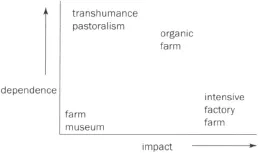
Figure 1.1 Impact and dependence on the environment
Superimposed on the inherent nature of the type of business relationship with the environment is the behaviour of the individual company. The individual business is not a passive player in this relationship. Most can do little to influence the external environment—it is the province of only the largest of organizations that they can sway the market or influence government legislation. The individual company will impact on the environment in a variety of ways. In later chapters we will examine different strategies firms can adopt which will either increase or minimize any impact. We would expect that as the impact on the environment increased, so a firm would become more concerned with its relationship with the environment, although this may not be the case. We make the poi...
Table of contents
- Cover Page
- Routledge Introductions to Environment Series Published and Forthcoming Titles
- Title Page
- Copyright Page
- Figures
- Tables
- Boxes
- Series editor’s preface Environment and Society titles
- List of abbreviations
- Introduction: the environment and business
- 1: Environment and business: the nature of the relationships
- 2: The changing relationships through time
- 3: Environmental business perspectives: assets, costs and externalities
- 4: Environmental business necessities: the pressures which cannot be ignored
- 5: Environmental business opportunities: business becomes pro-active
- 6: Primary industries: using resources directly
- 7: Secondary industries: adding value and carrying the burden
- 8: Tertiary industries: the hidden environmental issues
- 9: Environmental business
- 10: Environment and business: the future of the relationships
- Glossary
- Websites
- Bibliography
Trusted by 375,005 students
Access to over 1.5 million titles for a fair monthly price.
Study more efficiently using our study tools.
Frequently asked questions
Yes, you can cancel anytime from the Subscription tab in your account settings on the Perlego website. Your subscription will stay active until the end of your current billing period. Learn how to cancel your subscription
No, books cannot be downloaded as external files, such as PDFs, for use outside of Perlego. However, you can download books within the Perlego app for offline reading on mobile or tablet. Learn how to download books offline
Perlego offers two plans: Essential and Complete
- Essential is ideal for learners and professionals who enjoy exploring a wide range of subjects. Access the Essential Library with 800,000+ trusted titles and best-sellers across business, personal growth, and the humanities. Includes unlimited reading time and Standard Read Aloud voice.
- Complete: Perfect for advanced learners and researchers needing full, unrestricted access. Unlock 1.5M+ books across hundreds of subjects, including academic and specialized titles. The Complete Plan also includes advanced features like Premium Read Aloud and Research Assistant.
We are an online textbook subscription service, where you can get access to an entire online library for less than the price of a single book per month. With over 1.5 million books across 990+ topics, we’ve got you covered! Learn about our mission
Look out for the read-aloud symbol on your next book to see if you can listen to it. The read-aloud tool reads text aloud for you, highlighting the text as it is being read. You can pause it, speed it up and slow it down. Learn more about Read Aloud
Yes! You can use the Perlego app on both iOS and Android devices to read anytime, anywhere — even offline. Perfect for commutes or when you’re on the go.
Please note we cannot support devices running on iOS 13 and Android 7 or earlier. Learn more about using the app
Please note we cannot support devices running on iOS 13 and Android 7 or earlier. Learn more about using the app
Yes, you can access Environment and Business by Alasdair Blair,David Hitchcock in PDF and/or ePUB format, as well as other popular books in Negocios y empresa & Sostenibilidad en los negocios. We have over 1.5 million books available in our catalogue for you to explore.