- 202 pages
- English
- ePUB (mobile friendly)
- Available on iOS & Android
About this book
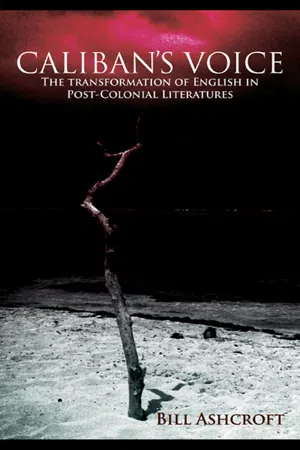
In Shakespeare's Tempest, Caliban says to Miranda and Prospero:
"...you taught me language, and my profit on't
Is, I know how to curse. "
With this statement, he gives voice to an issue that lies at the centre of post-colonial studies. Can Caliban own Prospero's language? Can he use it to do more than curse?
Caliban's Voice examines the ways in which post-colonial literatures have transformed English to redefine what we understand to be 'English Literature'. It investigates the importance of language learning in the imperial mission, the function of language in ideas of race and place, the link between language and identity, the move from orature to literature and the significance of translation. By demonstrating the dialogue that occurs between writers and readers in literature, Bill Ashcroft argues that cultural identity is not locked up in language, but that language, even a dominant colonial language, can be transformed to convey the realities of many different cultures.
Using the figure of Caliban, Ashcroft weaves a consistent and resonant thread through his discussion of the post-colonial experience of life in the English language, and the power of its transformation into new and creative forms.
Frequently asked questions
- Essential is ideal for learners and professionals who enjoy exploring a wide range of subjects. Access the Essential Library with 800,000+ trusted titles and best-sellers across business, personal growth, and the humanities. Includes unlimited reading time and Standard Read Aloud voice.
- Complete: Perfect for advanced learners and researchers needing full, unrestricted access. Unlock 1.4M+ books across hundreds of subjects, including academic and specialized titles. The Complete Plan also includes advanced features like Premium Read Aloud and Research Assistant.
Please note we cannot support devices running on iOS 13 and Android 7 or earlier. Learn more about using the app.
Information
Table of contents
- Cover Page
- Title Page
- Copyright Page
- Acknowledgements
- “Prospero Caliban Cricket” by John Agard
- Introduction
- 1 Prospero’s language, Caliban’s voice
- 2 Language, learning and colonial power
- 3 Language and race
- 4 Language, place and nature
- 5 Language and identity
- 6 Language, culture and meaning: The Caribbean
- 7 Caliban’s books: Orality and writing
- 8 How books talk
- 9 Translation and Transformation
- Epilogue
- Bibliography