- 192 pages
- English
- ePUB (mobile friendly)
- Available on iOS & Android
eBook - ePub
Managing Facilities
About this book
Managing Facilities provides a clear introduction to the concepts, development and application of managing facilities in hotels. Premises and services operations management are considered through the application of generic management techniques.
In hotels, buildings, land, assets, people and services are essential resources which need to be managed to meet organizational objectives. Through practical techniques and examples, Jowett and Jones show how these facilities can be continuously improved to increase competitiveness and meet the ever changing needs of the customer.
Managing Facilities is:
· the only UK book to reflect modern facilities management practices in hospitality
· full of practical examples
· a reference source and introduction in one format
Managing Facilities is a concise guide for hotel, hospitality and facilities managers. It is also an excellent text for undergraduate and postgraduate students of hospitality management.
Val Jowett MSc FHCIMA is Principal Lecturer at Leeds Metropolitan University and has taught Accommodation Management, and now Facilities Management, for over 25 years. In her earlier career she worked for British Transport hotels and then in Domestic Services Management in the N.H.S. She has taught in the USA and India and now manages a series of developmental initiatives which centre around NVQs, mentoring and careers development learning.
Christine Jones BA MIMgt MHCIMA is the Head of School of Business and Professional Studies at Burton Upon Trent College. She has a wide range of occupational and research experience in the hospitality industry and has held teaching posts in a number of Further and Higher Educational establishments.
1
The Concept and Scope of Facilities Management
Aims and Objectives
This chapter aims to:
- identify the scope and meaning of facilities management
- identify the value of facilities management in hotels
- consider why facilities management has developed
- identify trends in the continuing development of facilities management.
What is Facilities Management?
There are many definitions and interpretations of the term ‘facilities management’. The British Institute for Facilities Management (1996) defines it as:
The practice of co-ordinating the physical workspace with the people and work of an organisation, (it) integrates the principles of business administration, architecture and the behavioural and engineering sciences.
As the overview of this definition (Figure 1.1) shows, facilities management represents broad ranging issues.
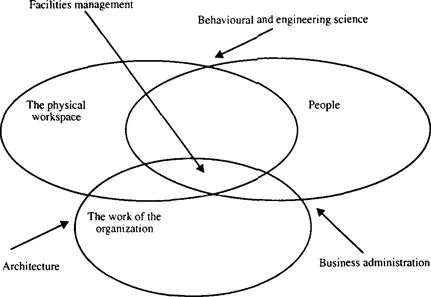
Figure 1.1 The overview of facilities management.
What Value does Facilities Management have to Hotels?
If facilities management is about managing physical assets, it has considerable relevance to hotels and other hospitality businesses, as the property or the premises in which the hospitality is delivered, form a major part of the product package sold to customers.
Customer needs could be for overnight accommodation, a meeting area or a restaurant meal. In each case, the physical assets will form an important part of the product. Some of the common elements required to produce the ‘accommodation product’ are shown in Figure 1.2.
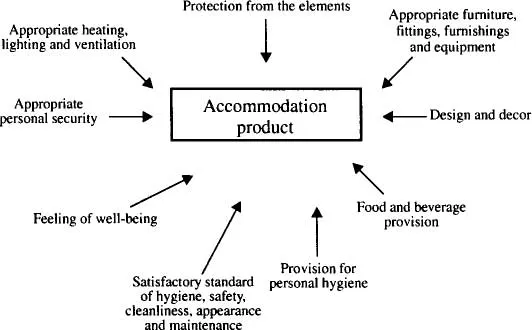
Figure 1.2 The ‘accommodation’ product.
Guests might also require:
- a source of information (e.g. regarding the other amenities)
- privacy
- secretarial assistance
- porterage
- car-parking space
- ramp access
- lifts
- personal laundry service
- sleeping facilities.
As can be seen, the physical assets are prominent. The list could go on. Whereas many of the identified needs of customers are tangible (e.g. the lift, the guestroom and the hot water) and relate to physical assets, other needs (e.g. security and feeling of well-being) are largely intangible.
Since the accommodation forms a major part of the product, even in small hotels, the capital outlay or revenue expenditure on the property is proportionately high compared with other businesses. In order for business to be conducted in an hotel, it is essential for at least certain of the physical assets to be actively managed. Although the term ‘facilities management’ might not be used, elements of facilities management would need to be applied to hotels to achieve business success.
The Development of Facilities Management
A Property-Based Discipline
Facilities management as a practice has its roots in the USA, where development took place during the 1980s. It is evolving from a property-based discipline concerned with reactive, operational aspects of property management, services and maintenance (including cleaning, ‘caretaking’, waste disposal and catering) into a much more proactive, strategic role. In this role, it is also concerned with the design of property and the work environment, purchasing, and future management and maintenance of the property – thus, it covers a broad area of ‘non-core’ activities (see Figure 1.3). Such activities could include IT services and even human resources management. It is this strategic role of facilities management which will be developed in this book.
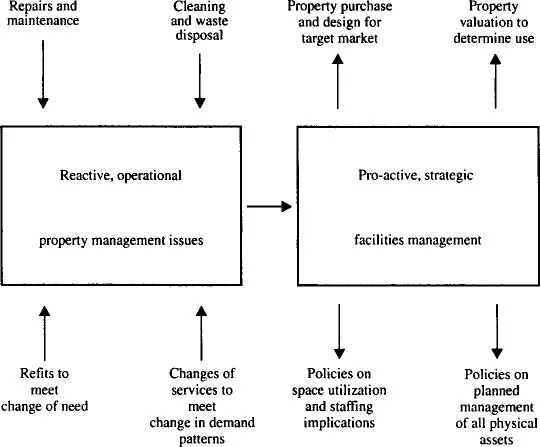
Figure 1.3 The evolution of facilities management.
From a management perspective, facilities management must consider the needs of all building users, together with the needs of others who may be affected by the management of the building. The needs of the following people, therefore, have to be considered.
- Shareholders have an interest in business and property values and the asset value and service standards must be maintained or developed.
- Employees need an efficient working environment. This is conducive to high morale and to high quality and productivity.
- Customers in an hotel will not only be visiting the establishment, they will, hopefully, enjoy using its facilities. Considerable expertise must go into creating an atmosphere and environment which reinforces the good image of the organization.
- The local community will be affected by the property. Aspects such as visual appearance, pollution, traffic (as a result of business), employment and the encouragement of local custom must all be managed.
- Reliable suppliers who provide consistent quality are very important to the success of any organization. They might be providing a service, staff, equipment or supplies. Partnerships, strategic alliances and other agreements are some means by which this group can be managed.
Figure 1.4 summarizes the scope of facilities management to meet the needs of these different stakeholders.
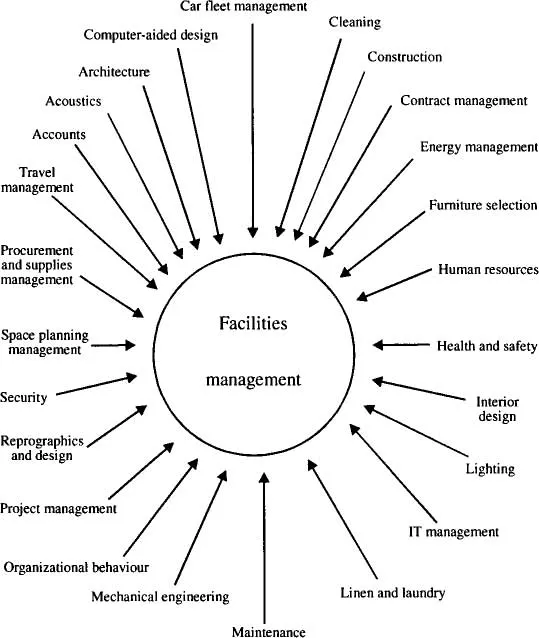
Figure 1.4 The scope of facilities management.
Recent history gives some indication as to how and why the concept of facilities management, in general, not just in the hospitality industry, has developed in the last decade and suggests that although many of the strands are not new, the overall approach does have a different emphasis.
The various factors which may have attributed to the rise in facilities management will now be considered.
Factors Attributing to the Development of Facilities Management
Cost Reductions
Fierce competition, depressed trading conditions, higher energy costs and other economic elements have forced companies to look at all means of reducing costs and maintaining the market edge. Facilities costs can be very significant. Stipanuk and Roffman (1992) estimated that a full service hotel of under 125 rooms has an average expense of 11.9 per cent of turnover for property management and energy. With respect to on-going energy and maintenance costs, savings can best be made at the design stage of buildings. The development of ideas on terotechnology (considering life-cycle costs at the planning stage) is yet another probable stimulus for the development of facilities management concepts.
In response to the rising awareness of property costs, attempts have been made to forecast total ownership costs of buildings (life-cycle costs) at the planning stage. These costs would include:
Initial (fixed costs) + Operating costs + Residual costs
(e.g. demolition or sale).
Initial Costs
These represent the largest single cost (often more than 30 per cent of the total asset value), but account for less than 50 per cent of the total ownership cost of an organization. The proportion of costs relating to the initial outlay will, of course, vary with the use of the building. The Forte Group was considered to be the fourth largest ‘property company’ in the UK in terms of value of assets held, prior to its acquisition in 1995. More recently, the popularity of system building has increased. By this process, to varying degrees, hotels can be prefabricated in a factory and assembled on site. This reduces not only the time to be allowed for construction (this can be less than 20 weeks) but reduces initial costs.
Operating Costs
If these are available at the premises purchasing stage, they provide an excellent planning tool. However, operating costs are difficult to predict (Lee, 1987). The main reasons being as follows.
- Lack of appropriate data on which to base forecasts – if the expected life of a building is taken to be 40 years, even where detailed operating costs have been recorded in a property (which is uncommon, particularly where ownership has changed), it is improbable that a similar building will be planned. It is more likely that technological developments and different user needs will mean that modifications are made and, thus, the recorded data has reduced value as a planning tool.
- Changes in technology, which could relate to the development of new materials with different characteristics from those currently used. There could also be development of new maintenance materials or equipment, different methods and different outcomes of maintenance.
- Historical data does not represent current needs, in other words, if the budget of an organization at any moment in the life span of a building is very limited, then only essential maintenance will be carried out.
- Since there are so many probabilities involved, the level of prediction involved is too great.
A standard method of collecting building operating cost data was devised by Building Maintenance Information Limited (BMI). They gave a definition of the items to be included in ‘operation costs’ as:
- cleaning (internal and external)
- maintenance
- utilities
- administrative (i.e. salaries, wages and insurance of service attendants, laundry, porterage, security, rubbish disposal, property management and overheads such as property insurance and rates).
Research by Hajj (1991) into buildings’ operating costs shows the total annual running costs of all categories of building as:
- 16 per cent maintenance
- 18 per cent cleaning
- 20 per cent utilities
- 21 per cent administration
- 25 per cent overheads.
However, the reliability of these predictions is difficult to assess, bearing in mind the 40-year life of a building.
Residual Costs
These relate to disposal cost, which might involve selling on or demolition. Again, this is a very difficult aspect to estimate.
The high cost of space, by lease, construction or upgrading is forcing detailed analysis of true space needs and space costs within organizations and the management of space has become an area of specialism.
Competition has compelled businesses to develop policies for the efficient use of space, equipment and furniture. In addition, a coordinated approach is needed. Property strategies need to be formulated in conjunction with organizational strategies. A depressed economy forces focus on improving operational efficiency.
Change in Organizational Structures
A developing characteristic of organizational structures, noted in the UK and the USA, is the tendency towards flatter structures with fewer tiers. Organizational restructuring and the shedding of middle management is driven in part by the need for greater efficiency and, perhaps, by more effective IT in core business activities. One result of this has been the development and extension of sub-contracting to areas such as facilities management, a trend certainly seen in hotels. Downsizing (or ‘rightsizing’) has increased the use of management consultancies, including facilities management.
Legislation and Government Policies
In the UK, compulsory, competitive tendering ‘market testing’, as Government policy, has been enforced within public centre organizations. In 1980, the term ‘privatization’ was first applied when the Ministry of Defence contracted out most of its building cleaning. This represented the prospect of £20 million of new work for contractors. In 1983, the Government required health authorities to invite competitive tenders and, in 1988, the Local Government Act made competitive tendering by local authorities compulsory.
Over the years, compulsory competitive tendering has been a controversial issue, but certainly growth of specialist contract companies has been stimulated. More recently, contract companies offering management expertise in a wide range of activities have developed. Advantages have been seen in the ‘one cheque’ approach (i.e. paying one company to manage a range of services), which is often referred to as ‘total’ or ‘integrated’ facilities management.
This has encouraged organizations to focus on their core activities and to buy in other services. Hence, the stimulus for the growth in servicing or ‘facilities management’ companies.
Health and safety legislation since the Health and Safety at Work Act (1974) has also been considerable and has necessitated a planned and systematic approach, led by senior management. Expertise has often been bought in from specialist companies and a similar route is likely to be taken following legislation relating to waste management and energy management.
The Need for Flexibility
Continuous change of policy, market and methods within organizations is now common. Whereas once, such decisions and changes were momentous and seen to be long-lasting, now they are considered to be more routin...
Table of contents
- Cover
- Half Title
- Dedication
- Title Page
- Copyright
- Contents
- Preface
- 1. The concept and scope of facilities management
- 2. The strategic planning role
- 3. The physical assets – the building envelope
- 4. The provision and specification of facilities services
- 5. Designing the facilities services operation delivery system
- 6. Investing in staff
- 7. Monitoring and controlling service provision
- 8. Gaining competitive advantage
- Index
Trusted by 375,005 students
Access to over 1.5 million titles for a fair monthly price.
Study more efficiently using our study tools.
Frequently asked questions
Yes, you can cancel anytime from the Subscription tab in your account settings on the Perlego website. Your subscription will stay active until the end of your current billing period. Learn how to cancel your subscription
No, books cannot be downloaded as external files, such as PDFs, for use outside of Perlego. However, you can download books within the Perlego app for offline reading on mobile or tablet. Learn how to download books offline
Perlego offers two plans: Essential and Complete
- Essential is ideal for learners and professionals who enjoy exploring a wide range of subjects. Access the Essential Library with 800,000+ trusted titles and best-sellers across business, personal growth, and the humanities. Includes unlimited reading time and Standard Read Aloud voice.
- Complete: Perfect for advanced learners and researchers needing full, unrestricted access. Unlock 1.5M+ books across hundreds of subjects, including academic and specialized titles. The Complete Plan also includes advanced features like Premium Read Aloud and Research Assistant.
We are an online textbook subscription service, where you can get access to an entire online library for less than the price of a single book per month. With over 1.5 million books across 990+ topics, we’ve got you covered! Learn about our mission
Look out for the read-aloud symbol on your next book to see if you can listen to it. The read-aloud tool reads text aloud for you, highlighting the text as it is being read. You can pause it, speed it up and slow it down. Learn more about Read Aloud
Yes! You can use the Perlego app on both iOS and Android devices to read anytime, anywhere — even offline. Perfect for commutes or when you’re on the go.
Please note we cannot support devices running on iOS 13 and Android 7 or earlier. Learn more about using the app
Please note we cannot support devices running on iOS 13 and Android 7 or earlier. Learn more about using the app
Yes, you can access Managing Facilities by Christine Jones,Valerie Jowett in PDF and/or ePUB format, as well as other popular books in Business & Hospitality, Travel & Tourism Industry. We have over 1.5 million books available in our catalogue for you to explore.