eBook - ePub
Available until 16 Feb |Learn more
Return on Investment in Training and Performance Improvement Programs
This book is available to read until 16th February, 2026
- 344 pages
- English
- ePUB (mobile friendly)
- Available on iOS & Android
eBook - ePub
Available until 16 Feb |Learn more
Return on Investment in Training and Performance Improvement Programs
About this book
The second edition of this bestselling book, 'Return on Investment in Training and Performance Improvement Programs,' guides you through a proven, results-based approach to calculating the Return on Investment in training and performance improvement programs.
Jack Phillips has composed user-friendly ROI calculations, plus:
*ten post-program data collection methods
*ten strategies for determining the amount of improvement that is directly linked to training programs
*ten techniques for converting both hard and soft data to monetary values
'Return on Investment in Training and Performance Improvement Programs, Second Edition' continues as a primary reference for learning how to utilize ROI to show the contribution of training, education, learning systems, performance improvement, and change initiatives throughout organizations.
The book also details implementation issues, provides worksheets, and pinpoints non-monetary program benefits. A case study takes the reader through the ROI process step-by-step.
Frequently asked questions
Yes, you can cancel anytime from the Subscription tab in your account settings on the Perlego website. Your subscription will stay active until the end of your current billing period. Learn how to cancel your subscription.
No, books cannot be downloaded as external files, such as PDFs, for use outside of Perlego. However, you can download books within the Perlego app for offline reading on mobile or tablet. Learn more here.
Perlego offers two plans: Essential and Complete
- Essential is ideal for learners and professionals who enjoy exploring a wide range of subjects. Access the Essential Library with 800,000+ trusted titles and best-sellers across business, personal growth, and the humanities. Includes unlimited reading time and Standard Read Aloud voice.
- Complete: Perfect for advanced learners and researchers needing full, unrestricted access. Unlock 1.4M+ books across hundreds of subjects, including academic and specialized titles. The Complete Plan also includes advanced features like Premium Read Aloud and Research Assistant.
We are an online textbook subscription service, where you can get access to an entire online library for less than the price of a single book per month. With over 1 million books across 1000+ topics, we’ve got you covered! Learn more here.
Look out for the read-aloud symbol on your next book to see if you can listen to it. The read-aloud tool reads text aloud for you, highlighting the text as it is being read. You can pause it, speed it up and slow it down. Learn more here.
Yes! You can use the Perlego app on both iOS or Android devices to read anytime, anywhere — even offline. Perfect for commutes or when you’re on the go.
Please note we cannot support devices running on iOS 13 and Android 7 or earlier. Learn more about using the app.
Please note we cannot support devices running on iOS 13 and Android 7 or earlier. Learn more about using the app.
Yes, you can access Return on Investment in Training and Performance Improvement Programs by Jack J. Phillips in PDF and/or ePUB format, as well as other popular books in Business & Business General. We have over one million books available in our catalogue for you to explore.
Information
Chapter 1
Measuring the Return on Investment: Key Issues and Trends
Measuring the return on investment (ROI) in training and development and performance improvement has consistently earned a place among the critical issues in the Human Resource Development (HRD) field. The topic appears routinely on conference agendas and at professional meetings. Journals and newsletters regularly embrace the concept with increasing print space. A professional organization has been developed to exchange information on ROI. At least a dozen books provide significant coverage of the topic. Even top executives have stepped up their appetite for ROI information.
Measuring ROI is a topic of much debate. It is rare for any topic to stir up emotions to the degree the ROI issue does. Return on investment is characterized as flawed and inappropriate by some, while others describe it as the only answer to their accountability concerns. The truth probably lies somewhere in between. Understanding the drivers for the ROI process and the inherent weaknesses and advantages of ROI makes it possible to take a rational approach to the issue and implement an appropriate mix of evaluation strategies that includes ROI. This chapter presents the basic issues and trends concerning ROI measurement.
Although the interest in the topic has heightened and much progress has been made, it is still an issue that challenges even the most sophisticated and progressive HRD departments. While some professionals argue that it is not possible to calculate the ROI, others quietly and deliberately proceed to develop measures and ROI calculations. The latter group is gaining tremendous support from the senior management team. Regardless of the position taken on the issue, the reasons for measuring the return still exist. Almost all HRD professionals share a concern that they must eventually show a return on their training investment; otherwise, training funds may be reduced or the HRD department may not be able to maintain or enhance its present status and influence in the organization.
The dilemma surrounding the ROI process is a source of frustration with many senior executives—even within the HRD field itself. Most executives realize that training is a basic necessity when organizations are experiencing significant growth or increased competition. In those cases, training can provide employees with the required skills while fine-tuning skills needed to meet competitive challenges. Training is also important during business restructuring and rapid change where employees must learn new skills and often find themselves doing much more work in a dramatically downsized workforce.
Most executives recognize the need for training and intuitively feel that there is value in training. They can logically conclude that training can pay off in important bottom-line measures such as productivity improvements, quality enhancements, cost reductions, and time savings. They also believe that training can enhance customer satisfaction, improve morale, and build teamwork. Yet, the frustration comes from the lack of evidence to show that the process is really working. While the payoffs are assumed to exist and training appears to be needed, more evidence is needed, or training funds may not be allocated in the future. The ROI methodology represents the most promising way to show this accountability in a logical, rational approach, and is fully described in this book.
ROI PROGRESS AND STATUS
Global Measurement Trends
Before examining the progress of ROI, a few global trends about measurement and evaluation in both private and public sector organizations should be examined. The following measurement trends have been identified in our research and are slowly evolving across organizations and cultures in more than 35 countries (Phillips and Guadet, 2003). Collectively, these eleven important trends have significant impact on the way accountability is addressed:
- Evaluation is an integral part of the design, development, delivery, and implementation of programs.
- A shift from a reactive approach to a more proactive approach is developing, with evaluation addressed early in the cycle.
- Measurement and evaluation processes are systematic and methodical, often built into the delivery process.
- Technology is significantly enhancing the measurement and evaluation process, enabling large amounts of data to be collected, processed, analyzed, and integrated across programs.
- Evaluation planning is becoming a critical part of the measurement and evaluation cycle.
- The implementation of a comprehensive measurement and evaluation process usually leads to increased emphasis on the initial needs analysis.
- Organizations without comprehensive measurement and evaluation have reduced or eliminated their program budgets.
- Organizations with comprehensive measurement and evaluation have enhanced their program budgets.
- The use of ROI is emerging as an essential part of the measurement and evaluation mix.
- Many successful examples of comprehensive measurement and evaluation applications are available.
- A comprehensive measurement and evaluation process, including ROI, can be implemented for about 4 or 5% of the direct program budget.
Progression of ROI Across Sectors
The ROI methodology described in this book had its beginnings in the 1970s when it was applied to the development of a return on investment for a supervisory training program. Since then it has been developed, modified, and refined to represent the process reported here and expanded in all types of situations, applications, and sectors. Figure 1-1 shows how the process has evolved within the different sectors. Applications began in the manufacturing sector, where the process is easily developed. It migrated to the service sector, as major service firms such as banks and telecommunications companies used the ROI process to show the value of various programs. Applications evolved into the health care arena as the industry sought ways to improve educational services, human resources, quality, risk management, and case management. Nonprofit applications began to emerge as these organizations were seeking ways to reduce costs and generate efficiencies. Finally, applications in the public sector began to appear in a variety of types of government organizations. Public sector implementation has intensified in recent years. An outgrowth of public sector applications includes the use of the process in the educational field where it is now being applied in different settings. The implementation is spreading and all types of organizations and settings are now enjoying application of the ROI methodology.
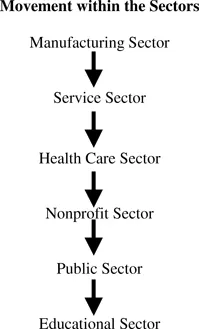
Figure 1-1. Progression of ROI implementation.
Typical Applications
The specific types of program applications vary significantly. Table 1-1 shows a full range of current applications representing programs from training and development, education, human resources, change, and technology. Published cases exist in all of these areas. The process is flexible, versatile, and adaptable to almost any type of setting and environment.
Table 1-1. ROI Applications
A Variety of Applications Are Possible | |
|
|
Case Studies
The status of the ROI process among practitioners in the field is difficult to pinpoint. Senior HRD managers are reluctant to disclose internal practices and, even in the most progressive organizations, confess that too little progress has been made. Until recently, it was difficult to find cases in the literature that show how an organization has attempted to measure the return on investment in HRD. Recognizing this void as an opportunity, the American Society for Training and Development (ASTD) undertook an ambitious project to develop a collection of cases that represent real life examples of measuring the return on investment. To find cases, more than 2000 individuals were contacted for the initial volume, including practitioners, authors, researchers, consultants, and conference presenters. The response was very encouraging. Ultimately, 18 cases were selected for publication in Volume 1 of In Action: Measuring Return on Investment (Phillips, 1994). This publication has become the all-time best seller at ASTD from over 250 of the society’s titles sold through catalogs, bookstores, and conferences. Because of the reaction and response, Volume 2 was developed and published three years later (Phillips, 1997). This volume has become the number 2 best seller. With that success, and continuing demand, Volume 3 was published four years later (Phillips, 2001).
Surveys and Research
The various studies indicate the use of, and interest in, the ROI methodology continue to show promise. For example, the American Society for Training and Development (ASTD) concluded in the 2002 industry report that the number one global trend and issue facing human resource development practitioners is developing the return on investment in training (Van Buren, 2002). The trend and issue was number two the year before, underscoring its continuing dominance of the issue, but a growing trend as well.
Research studies are continuously conducted to show the progress of ROI as well as the dilemmas concerning ROI. Perhaps one of the most comprehensive studies was conducted by the Corporate Leadership Council involving 278 organizations showing the tremendous interest in ROI (Drimmer, 2002). This study attempted to understand the variety of metrics desired and utilized by training and development practitioners. Although several metrics were explored, Table 1-2 shows the status of ROI and business impact as training and development metrics. As the table shows, 78% of the organizations have ROI on their wish list, rating it either important or very important as a desired metric. However, those same organizations currently indicate that 11% of them are using ROI. The same comparison is presented for ROI in development (which are the nontraining types of programs) as well as the business impact measure (where the impact of training experiences on performance is developed). Two important issues evolve from this study. First, the use of ROI continues to grow. A total of 13% of organizations are using ROI in training and development. This is up from previous reports of utilization. Second, there is tremendous interest in ROI, showing that almost 80% of the organizations are pursuing it. This creates a significant dilemma for organizations and underscores the lack of understanding for ROI, the misconceptions of the methodology, and the difficulty in making it work in certain situations. Nevertheless, it outlines a tremendous opportunity (instead of problem) as organizations strive to bring more accountability through the use of the ROI methodology.
Table 1-2. ROI Opportunies
Metric | Percentage of organizations rating metric as important or very important (wish list) | Percentage of organizations indicating utilization of metric (doing list) |
ROI in Training | 78% | 11% |
ROI in Development | 62% | 2% |
Impact of Training Experiences on Performance | 88% | 27% |
Another major study attempted to determine how organizations measure the impact of corporate universities (Phillips, 2000). A detailed benchmarking study examined how major corporate universities are dealing with the accountability issue and, in particular, ROI. Among the conclusions are that best-practice ...
Table of contents
- Cover
- Half Title
- Title Page
- Copyright
- Contents
- Preface
- Acknowledgments
- Chapter 1. Measuring the Return on Investment: Key Issues and Trends
- Chapter 2. ROI Model
- Chapter 3. Collecting Data
- Chapter 4. Isolating the Effects of Training
- Chapter 5. Converting Data to Monetary Benefits
- Chapter 6. Tabulating Program Costs
- Chapter 7. Calculating the Return
- Chapter 8. Identifying Intangible Measures
- Chapter 9. ROI Forecasting
- Chapter 10. How to Communicate Results
- Chapter 11. Implementation Issues
- Appendix A: Resources
- Appendix B: How Results-Based Are Your Training and Development Programs?
- Index
- About the Author