- 240 pages
- English
- ePUB (mobile friendly)
- Available on iOS & Android
eBook - ePub
Change, Strategy and Projects at Work
About this book
Change, Strategy and Projects at Work provides a working insight into the nature of change, the formulation of strategy and the implementation of change through projects in the workplace. It is a 'how to' book with real practical application, containing the tools, techniques, advice and guidance you need to analyse organisational context, develop a strategic plan and manage a project.
To help you in leading change and creating opportunities for yourself and your organisation, the book takes an integrated approach to managing change, developing strategy and project management, and covers:
* How strategic objectives are chosen, promoting awareness of the wider organisational context and the strategic planning process
* The knowledge, tools, techniques and confidence needed to act as a change agent
* The skills, competencies and other attributes needed to improve your employability
The book is ideal as a dip-in guide for professional development, a self-study resource or a textbook for formal courses on change, strategy and project management in a work context. It is used to support the Open University's undergraduate course ICTs, Change and Projects at Work (T226).
1 The nature of change
Introduction
Death and taxes, it is often said, are the only certainties in life; but to these must be added change. Change happens for a number of reasons, not least because humankind is inherently creative seeking to change the world, or at least part of it, for some economic, social or other perceived benefit. However, as well as opportunity, change can bring with it challenges, uncertainty and insecurity – so understanding what drives change and how to cope with it involve important life and work skills.
History provides many rich accounts of how people, organisations and nations have reacted to change throughout the centuries. In the contemporary world, globalisation – the increasing intensity, extent and complexity of interactions on a global scale – is driving change at ever greater speed and so we all need to learn how to live with change and meet the challenges it brings.
Change and innovation are closely linked. Innovation is about doing something new or doing something in a new way that creates value for an organisation, group or wider society. According to Luecke and Katz (2003)1:
Innovation … is generally understood as the successful introduction of a new thing or method … Innovation is the embodiment, combination, or synthesis of knowledge in original, relevant, valued new products, processes, or services.
Innovation is crucial in creating a competitive advantage and even in non-profit making organisations there is an ongoing need to ensure that services, products and processes are improved in innovative ways to avoid an organisation becoming stagnant, irrelevant and, therefore, dispensable. Of course, not all change initiatives will have innovative outcomes, but it is difficult to innovate if an organisation is averse to change.
Change is not an unfamiliar concept; in the context of this book it expresses how life will be somehow different tomorrow or, perhaps, in the months or years ahead. It can, however, evoke strong defensive reactions. To seek to secure that which is familiar, even if this means burying our heads in the shifting sands of change, is a common response. We may find temporary refuge by battening down the hatches, but where does safety really lie? Surely not by denying that the world is changing but rather by facing up to change and making the best of the challenges and opportunities that it creates?
Change affects us all periodically in our personal, social and working lives. We may find change, and the new challenges it brings, exciting or we may suffer diminished confidence in our ability to cope with new ideas, technologies, processes and the new ways of doing things. We may feel nervous and reluctant to abandon the ways we have always done things, especially when things have worked well – thus far!
How do you feel about change?
Sometimes change may have been anticipated but at other times it comes out of the blue. The consequences may be positive, such as being promoted at work, and at other times negative, such as when a close friend or family member dies. When change is unwanted, even when it is anticipated, we can experience a roller coaster of emotions, which may be traumatic depending upon the degree of change we are experiencing. Read through the box entitled The coping cycle and think about experiences you have had when you have undergone some significant change in your personal or working life.
The coping cycle
Table 1.1 identifies five phases that are characteristic of the way people react to change. Similarities can be seen whether the change is something that has been anticipated, such as a proposed change at work, or something that comes out of the blue, such as a serious illness or death.
Table 1.1 The coping cycle
| Phase 1 | Denial | Initial disbelief that a change is underway ‘We have always done things this way’ ‘Why change, we are making a profit aren’t we?’ ‘Don’t change a winning team’ ‘We tried that before but it did not work’ |
| Phase 2 | Defence | Reality intrudes and people realise they must react. ‘That’s fine but it won’t work in my area’ ‘I’d like to get involved but I have too much work to do’ ‘The theory is fine, but it won’t work in practice’ |
| Phase 3 | Discarding | Moving on from the defensive stance ‘Whether I like it or not, it is going to happen, so I had better…’ ‘Well here it is; we are committed to it; here’s how I see it’ ‘I was giving that new machine a try, and do you know…?’ ‘I’ve been asked to join the group looking at x’ |
| Phase 4 | Adaptation | Experimenting and feeling the way forward ‘We are still trying to get the new x to work’ ‘We are getting most of the output from the new x but I still think we need to…’ ‘We are never going to get x to work unless those so and so’s in that department pull their finger out’ ‘I kept telling them that that was what we needed to do and finally they have done it’ |
| Phase 5 | Internalisation | What was the future state is now the current state. ‘I was talking to x in the y department the other day about that customer order…’ ‘We are getting a group together to see whether we want to implement that software upgrade’ ‘That is one of the things I want to raise at my next review’ |
Source: Adapted from Carnall (1999)
An individual’s perspective of a change can typically lead to variations in levels of self-esteem and of performance (which are closely linked) and these are likely to vary with time as the individual passes through the stages of denial, defence, discarding, adaptation and internalisation, as shown in Figure 1.1.
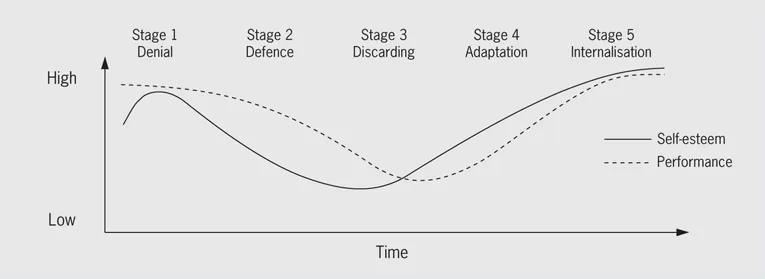
Figure 1.1 The coping cycle: effects on performance and self-esteem
Source: Carnall (1999)
Change is all about moving from an initial state to a new state. The initial state may be one in which we have felt comfortable for some time, being characterised by comparative stability, unchanging routines and a psychological state of relative satisfaction with things as they are.
When change happens the comfort ceases and a period of uncertainty begins where we may question the necessity of change and what it will mean for us. The transition between the old and the new states involves the movement away from the familiar but with little idea yet of what the future state holds. This is a period of instability, in which our response to change may be dominated by negative thoughts and concerns.
Some time afterwards, when the new state becomes the accepted normality, we may feel a period of psychological comfort returning as we learn to engage with the new order and the opportunities that accompany it.
In an organisational context change can be unsettling. The leaders in an organisation may understand that change is needed, but not necessarily what form it should take. In Chapter 2 we will be exploring how an organisation can work through this dilemma and determine its best way forward.
The metaphor of undertaking a journey is appropriate for both the individual and the organisation facing change. Read through the box headed The journey metaphor.
The journey metaphor
♦ Where are we now?
♦ Where do we need to get to?
♦ Are we heading in the right direction?
♦ What are the options along the way to help us to reach our destination?
The direction we should take (as an individual or as an organisation) will depend upon the starting point, our purpose (often referred to as the ‘mission’), an idea of where we need to be – our destination (articulated as the ‘vision’) and how we can best plan and navigate our route and organise ourselves to get there. The options for getting to the desired future state will include the choice of route, the means of travel and how urgently arrival is required.
Proposed change is unlikely to be embraced enthusiastically by everyone from the start and so leaders and agents who are involved in introducing change need to be aware of the fluctuations in self-confidence, self-esteem and motivation that others can experience as they progress through the coping cycle.
Reading through the box headed Change perceptions you will see that change isn’t easy because people often deny the need for change, preferring instead to stay within, or return to their own comfort zone. Even when there is a recognition that change is beneficial and an individual initially engages with change, early efforts can soon falter, as we all know from many abandoned New Year resolutions! This can be a corporate failing too. There are plenty of examples of organisations that have failed to change – even when faced with overwhelming evidence of the need to do so.
On the other hand, change can create a tremendous buzz leading to a sense of liberation and achievement when people realise that they are making a difference and that their contributions are being valued, perhaps for the first time. In the virtuous circle depicted in Figure 1.2, an increase in self-esteem is accompanied by an improvement in effectiveness, performance and enthusiasm. Developing people in this way is a worthy challenge for those championing the cause for change.
Change perceptions
Will I
♦ lose my job?
♦ be sidelined?
♦ have to work with new people I don’t know ordon’t like?
♦ have to develop new skills, learn new things?
♦ have to move to a new location?
♦ be asked to do things I don’t agree with?
I can’t see the reason for change!
We’ve been through all this before!
Is this change for change sake – just another management fad?
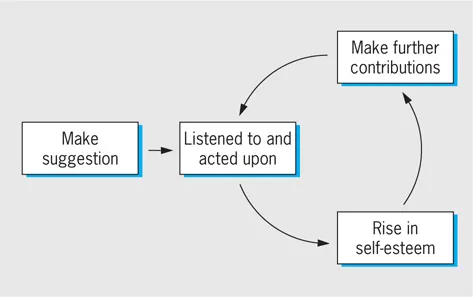
Figure 1.2 Virtuous circle – self-esteem leading to improved performance
For employees, change can present a period of doubt, uncertainty and possibly fear of the unknown. An individual may feel threatened as accepted work practices are challenged and their role in the organisation becomes uncertain. Employees may feel helpless because, despite brave words about participation from management, they feel that change is something that happens to them rather than something they can or want to contribute to. A new change initiative may well be seen as just the latest in a series of management fads.
The challenge for any organisation is to resolve these potential conflicts and mobilise its workforce to reach the destination and achieve the organisation’s strategic vision. In an increasingly volatile and globalised world, it is this ability to manage change effectively that can separate industry leaders from the also-rans.
From a personal and career perspective, you need to be able to understand, and contribute to the implementation of change processes. You also need to be able to recognise and use the opportunities for personal and career development during times of change.
Next we will look at the types of change that can arise.
Different types of change
Developmental to transformational
Organisations routinely experience minor levels of change every day when, for example, orders are taken from new customers, employees join or leave, production sche...
Table of contents
- Cover
- Halftitle
- Title
- Copyright
- Contents
- List of activities
- List of figures
- List of tables
- Preface
- How to use this book
- 1 The nature of change
- 2 So what’s the strategy?
- 3 Implementing change through project working
- 4 Project initiation and definition
- 5 Project planning
- 6 Project implementation
- 7 Project closure and evaluation
- 8 Learning and looking forward
- Techniques for problem solving and decision making
- References
- Index
Trusted by 375,005 students
Access to over 1.5 million titles for a fair monthly price.
Study more efficiently using our study tools.
Frequently asked questions
Yes, you can cancel anytime from the Subscription tab in your account settings on the Perlego website. Your subscription will stay active until the end of your current billing period. Learn how to cancel your subscription
No, books cannot be downloaded as external files, such as PDFs, for use outside of Perlego. However, you can download books within the Perlego app for offline reading on mobile or tablet. Learn how to download books offline
Perlego offers two plans: Essential and Complete
- Essential is ideal for learners and professionals who enjoy exploring a wide range of subjects. Access the Essential Library with 800,000+ trusted titles and best-sellers across business, personal growth, and the humanities. Includes unlimited reading time and Standard Read Aloud voice.
- Complete: Perfect for advanced learners and researchers needing full, unrestricted access. Unlock 1.5M+ books across hundreds of subjects, including academic and specialized titles. The Complete Plan also includes advanced features like Premium Read Aloud and Research Assistant.
We are an online textbook subscription service, where you can get access to an entire online library for less than the price of a single book per month. With over 1.5 million books across 990+ topics, we’ve got you covered! Learn about our mission
Look out for the read-aloud symbol on your next book to see if you can listen to it. The read-aloud tool reads text aloud for you, highlighting the text as it is being read. You can pause it, speed it up and slow it down. Learn more about Read Aloud
Yes! You can use the Perlego app on both iOS and Android devices to read anytime, anywhere — even offline. Perfect for commutes or when you’re on the go.
Please note we cannot support devices running on iOS 13 and Android 7 or earlier. Learn more about using the app
Please note we cannot support devices running on iOS 13 and Android 7 or earlier. Learn more about using the app
Yes, you can access Change, Strategy and Projects at Work by Roger Jones,Neil Murray in PDF and/or ePUB format, as well as other popular books in Business & Business General. We have over 1.5 million books available in our catalogue for you to explore.