The best photographs start with proper attention behind the camera before you take them. Jon Tarrant shows you how to achieve this by fully explaining how digital cameras work so you too can achieve professional-looking results without having to resort to image manipulation on a computer.
Jon explains all the basics of digital cameras: their anatomy; an outline of broad classes, indicated by price bands and features offered; a comparison with existing families of film cameras as a useful guide to newcomers. He also provides an invaluable buyer's guide pointing out features to look for on a digital camera before you make your purchase.
Coverage includes detail on lenses, exposure basics, 'correct' exposure, using flash, the chip and the implications of this 'restriction', image quality and retaining this quality, as well as discussion of the difficulties of digital cameras and sections on specific types of photography with digital cameras. Complete coverage is ensured with information on printing, storage and filing, the Internet as a medium of images, picture software and digital enhancement, always keeping the emphasis on the fact that the most important consideration is how you take the photographs and the vision you had then and knowing when to stop tinkering with your image!
This inspirational, full colour guide is what all digital camera owners have been waiting for. Jon Tarrant shows all keen digital photographers how to improve their photography and make the most of the latest technology.
- 208 pages
- English
- ePUB (mobile friendly)
- Available on iOS & Android
eBook - ePub
Digital Camera Techniques
About this book
Information
1 Introduction
Photography is all about making pictures that can be viewed independently of the subject portrayed. Such pictures may be holiday snaps or images recording world events; they may be portraits of film stars or family relatives; they may record exotic animals in the wild or flowers and birds in your own back garden. And, of course, the pictures may be intended for viewing by a public audience (on the pages of a magazine or in an exhibition) or just as personal memories.
All this could also be said of the visual arts in general and, in the days before photography, other artists did indeed fulfil many of these roles. But the camera changed all of that. More recently, digital cameras have moved the goalposts once more, not least because of the electronic medium that has blossomed alongside their development.
The aim of this book is primarily to treat digital photography in the same way as books of old presented a holistic view of film photography, for the basic aims and methods are largely the same. Nevertheless, the differences are important, and these are highlighted specifically where they bring particular strengths and weaknesses. Note especially that last point. It is a fact that digital photography is not all roses: there are some serious drawbacks to the digital medium, and it is a particular feature of this book that those areas are identified, together with tactics that may be adopted by way of either partial or complete solutions.
The secondary aim is to outline some of the new possibilities offered by electronic imaging that never existed in the film and print medium. It is this aspect that sets this book apart from others, most of which concentrate on electronic manipulation at the expense of true digital photography. This is an important distinction, for photography is, in the original meaning of the word, about drawing with light, and applies to the mechanism that works within a camera. In the traditional medium, a line is drawn between photography and printing: the former is about creating an original image whereas the latter is about subsequently reproducing, and manipulating if so desired, those originals. Therefore, scanning a film image and manipulating it in Photoshop or some other software package does not amount to digital photography. It does, however, fall within the arena of electronic imaging because of the medium used.
Figure 1.1 Photograph of a diver in action, photographed using the Fujifilm FinePix S1 Pro with a mixture of flash and ambient light, resulting in a blend of sharpness and blur in the same image. The S1 Pro, now succeeded by the S2, used Fujifilm's original Super-CCD to provide a larger file size than was available from competitor cameras at the time. More importantly, its colour rendition and tonal range was especially good

Figure 1.2a
Given this philosophy and the fact that this book is specifically about digital photography, it should be unsurprising to see that scanning is not covered here at all. There is a very important practical reason why this should be, and that is the far superior efficiency of digital cameras as a way of creating electronic picture files. To go the scanning route means to insert an additional step in the photographic process. Furthermore, scanning in some ways represents the worst of both worlds. It is true that existing cameras can be used, but so too must existing films – and that means no opportunity to save either time or money. Specifically, scanning means keeping all the traditional costs and delay associated with film, and then adds further hardware costs and time taken to digitize and retouch each and every picture. With a digital camera, once a picture is taken it is ready to use.
The counter-argument is that digital cameras are more expensive and do not equal the image quality of film. Both of these things are true, but a very acceptable digital camera need be no more costly than a similar-quality scanner. As for image quality, today's digital cameras – even the more modestly priced models – are good enough for many uses.
In some respects it pains the author to resort to a ‘good enough’ standpoint, but the fact is that many people debate image quality as a theoretical topic with no regard for the picture's end use. In professional photography, it has been common in the past for photographers to use (or clients to insist on) film formats that are much larger than the application truly demanded. Aside from the cost and kudos implications, none of this really mattered. But in the digital arena it does. If pictures are recorded at modest file sizes, then the equivalent of about two rolls of 135–36 film can be stored on one Compact Disc; if much larger files are desired, then the number of images per disc falls to typically 12 or fewer. So a holiday that generated two rolls of traditional film would now need six CDs to store those images alone. And in years to come there will then be the dual matters of continuing support for the file format used and also how to transfer all that data when CDs are about to be superseded by a new medium. Not to mention storing and cataloguing the discs in the interim.

Figure 1.2a,b Shown here is the same subject recorded using two different cameras; the Fujifilm FinePix S2 Pro (opposite) and the Nikon D100 (above). The obvious differences between such images in terms of colour and brightness (as well as picture shape, in respect of some other cameras on the following pages) will be a recurring theme throughout this book. It is important to appreciate that digital cameras are not calibrated devices and as such their pictures can vary. Here, as elsewhere throughout this book, the pictures presented are exactly as captured by the camera used; unless specifically stated, no changes have been made to brightness or sharpness or colour – except to convert from RGB to CMYK, as required for the book publishing process. For the record, the D100 image is closer to how the original scene looked to the naked eye
These are complex issues that will be discussed in detail later. For now, the essential point to appreciate is that film is very efficient as both a recording medium and for storage. Digital can be the same, but only when a digital camera is used and file sizes are kept as small as is reasonably practical. Image manipulation, filing and printing are all simple and efficient processes when this basic tactic is adopted, and that is why this book adopts the approach that it does.
In order to provide a complete picture of digital photography as it currently stands, the chapters that follow lead through from choosing a camera, via taking pictures, to some of the many things that can be done afterwards with electronic images. It is the intention throughout to make general points, avoiding – as far as possible – specific equipment references, so that the advice given can be interpreted over a broad time-span regardless of whatever incremental advances may take place in the near future. Nevertheless, occasional product references do help to put markers in the sand (and it definitely is sand, not stone) that provide a measure against which the more general comments can be quantified.
The underlying principle of this book is that it is better to know your camera and the basics of good photography than to rely on the fact that digital imaging makes possible all manner of remedial actions to salvage earlier mistakes. At the same time, digital photography normally – though not always – extends far beyond the camera alone, and for this reason there is a great deal to cover in the pages ahead. I hope you find the material useful.

2 Digital world
Imagine how you would feel if you got an endlessly reusable roll of film when you bought a conventional camera. From then on, all you would need to do is pay for the processing and printing, never having to buy another film for as long as the camera might last. Imagine now taking that situation a stage further, and being able to check each and every picture as it is taken: any picture that did not quite turn out right could then be corrected and repeated immediately. This, of course, is what photography is like when you use a digital camera. The fact that you can print the pictures at home using a desktop inkjet printer, and that electronic pictures can be manipulated or turned into postcards, calendars and e-mails, is interesting but not fundamental given that all these things can also be done with scanned film images. Therefore, the key benefits of digital photography are immediacy, reusability and low running costs.
This is important, for it was normal 50 years ago for enthusiast photographers to have their own darkrooms – just as the early adopters of digital photography had to have their own computer systems in order to be able to ‘process and print’ electronic images. But film photography only became truly widespread when users were able to take their rolls to commercial printing labs, and this is increasingly becoming the case with digital photography too.
Camera developments
The level of quality that exists in digital cameras today took the best part of a decade to evolve. The first relevant cameras were not digital at all: instead, they were ‘still video’ systems that used, as their classification indicates, the same technology as an old-fashioned (non-digital) motion picture video camera. They were intended for showing pictures on a television screen rather than a computer. One reason for this was that the computers of the time (the late 1980s and very early 1990s) were relatively crude: their screens were VGA resolution (640 x 480 pixels) and their processors had primitive graphics capabilities. And so it was that when Kodak first launched its
Figure 2.1 Still life lit by natural daylight from an overhead window. The camera used, a Kodak DCS560, was the last Canon-bodied Kodak digital camera: it featured a six million pixel CCD sensor
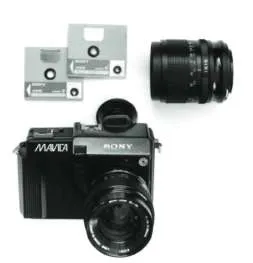
Figure 2.2 Press picture of the original Sony Mavica, the camera that started the electronic imaging ball rolling. Like other early systems, this prototype camera captured analogue rather than digital images
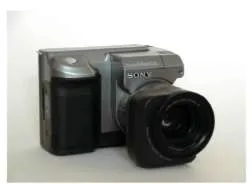
Figure 2.3 The Sony Mavica FD91 was a true digital descendent of the prototype camera, having retained its floppy disk storage medium (hence the large back section of the camera). This picture dates from 1999, and was taken using an Epson PhotoPC750Z
Photo-CD service, which provided film-camera users with an easy way to obtain digitized versions of their pictures, the system was unveiled for use in conjunction with domestic television sets. This was all at a time when home computers had only just started to have floppy disc drives, and when office computers had hard drives with about one-thousandth the capacity of today's models.
Unsurprisingly, the earliest true digital cameras were also rather modestly specified. The first professional camera, the Kodak Digital Camera System, featured a Kodak imaging chip inside a Nikon F3 camera body; it was linked by cable to an external storage and power unit that was carried over the user's shoulder. Its sensor contained a modest 1.3 million pixels, yet the camera carried an expected price tag of £17 000 when it was announced in 1991 – though this had dropped to £15 400 by its arrival in mid-1992. By 1997 there was a good variety of different models on the market at prices that extended to over £20 000. One of the most noteworthy examples in the ‘affordable’ price bracket was Ricoh's stylish RCD-2, which had a resolution of 768 x 576 pixels and a price tag of just under £1000. Unlike many of its contemporaries, the metal-bodied RDC-2 had not just internal memory storage but also the facility to use external cards, though these were non-standard flash-type PCMCIA cards.
The years since have seen progressively higher maximum resolutions and extra camera features, as well as the introduction of today's inexpensive and capacious storage cards and better batteries. Camera prices have dropped too, but the biggest change in recent years is manufacturers' realization that it is now bett...
Table of contents
- Cover
- Half Title
- Full Title
- Copyright
- Contents
- Acknowledgements
- Dedication
- 1 Introduction
- 2 Digital world
- 3 Basic features
- 4 Digital features
- 5 Camera settings
- 6 Exposure and lighting
- 7 Digital technicalities
- 8 File formats
- 9 Camera problems
- 10 Pictures of people
- 11 Other subjects
- 12 Printing systems
- 13 Printing problems
- 14 Storage and filing
- 15 E-mail and the Internet
- 16 Imaging software
- 17 Colour management
- 18 Epilogue
- Index
Trusted by 375,005 students
Access to over 1.5 million titles for a fair monthly price.
Study more efficiently using our study tools.
Frequently asked questions
Yes, you can cancel anytime from the Subscription tab in your account settings on the Perlego website. Your subscription will stay active until the end of your current billing period. Learn how to cancel your subscription
No, books cannot be downloaded as external files, such as PDFs, for use outside of Perlego. However, you can download books within the Perlego app for offline reading on mobile or tablet. Learn how to download books offline
Perlego offers two plans: Essential and Complete
- Essential is ideal for learners and professionals who enjoy exploring a wide range of subjects. Access the Essential Library with 800,000+ trusted titles and best-sellers across business, personal growth, and the humanities. Includes unlimited reading time and Standard Read Aloud voice.
- Complete: Perfect for advanced learners and researchers needing full, unrestricted access. Unlock 1.5M+ books across hundreds of subjects, including academic and specialized titles. The Complete Plan also includes advanced features like Premium Read Aloud and Research Assistant.
We are an online textbook subscription service, where you can get access to an entire online library for less than the price of a single book per month. With over 1.5 million books across 990+ topics, we’ve got you covered! Learn about our mission
Look out for the read-aloud symbol on your next book to see if you can listen to it. The read-aloud tool reads text aloud for you, highlighting the text as it is being read. You can pause it, speed it up and slow it down. Learn more about Read Aloud
Yes! You can use the Perlego app on both iOS and Android devices to read anytime, anywhere — even offline. Perfect for commutes or when you’re on the go.
Please note we cannot support devices running on iOS 13 and Android 7 or earlier. Learn more about using the app
Please note we cannot support devices running on iOS 13 and Android 7 or earlier. Learn more about using the app
Yes, you can access Digital Camera Techniques by Jon Tarrant in PDF and/or ePUB format, as well as other popular books in Media & Performing Arts & Digital Media. We have over 1.5 million books available in our catalogue for you to explore.