Magazine Law is a comprehensive guide to the law for magazine journalists, editors and managers. Written by a barrister experienced in publishing and copyright law and a former magazine journalist and law lecturer, the book addresses the special needs of the magazine industry and explains the laws that regulate and seek to determine what journalists can and cannot publish, and how these laws are applied in everyday situations.
Written specifically for all those in the magazine industry, as well as students of magazine journalism, the authors address issues which directly affect day to day practice. The legal and regulatory framework is illustrated with case studies and up-to-date examples of precedent setting cases.
Topics covered include:
* the legal process and the distinction between criminal and civil law
* the role of the courts and reporting court procedure
* defamation, fair-comment and libel
* product testing and criticism
* copyright and passing off
* law for photographers, picture researchers and the use of illustrations
* privacy and trespass
* competition, lotteries and magazine promotion
* sub-editing errors and inaccurate copy
* ethical and professional issues facing journalists
Codes of Practice published by the Press Complaints Commission and National Union of Journalists are set out in appendices, as are requirements for the award of a National Vocational Qualification in Periodical Journalism in Press Law and Ethics. A glossary of legal terms is included.
- 216 pages
- English
- ePUB (mobile friendly)
- Available on iOS & Android
eBook - ePub
About this book
Information
1
An outline of the English legal system
INTRODUCTION
It is unlikely that the majority of journalists working on magazines will spend much, if any, of their working hours in the courts, but the time spent in acquiring an outline knowledge and understanding of the legal system is essential if they are to avoid ‘howlers’ and understand the legal copy they might be handling.
THE DIVISIONS OF THE LEGAL SYSTEM
There is widespread misunderstanding about the nature of the English legal system. That is why property owners often put up notices warning ‘Trespassers will be prosecuted’, which is a legal nonsense and unenforceable. Most trespasses are a civil law wrong (or tort) and prosecution is a criminal law procedure and the two are not interchangeable.
Historically, the legal system has developed two branches: criminal and civil, each with its own personnel, language and procedures. Although some crimes can also result in actions for damages (for example, a driver convicted of a traffic offence in the criminal courts could also face a claim for compensatory damages by an injured person in the civil courts), each case will be proceeded with independently, with its own rules of procedure.
THE CRIMINAL COURTS (see Figure 1.1)
MAGISTRATES’ COURTS
Magistrates are either qualified lawyers and are known as stipendiary (i.e. salaried magistrates), or lay people without necessarily any legal qualifications.
Of all criminal cases, 99 per cent begin in the magistrates’ courts and around 95 per cent of them end there. The odd 1 per cent are started by a Bill of Indictment, a procedure which requires no preliminary investigation. Defendants charged with serious offences, such as murder, manslaughter, rape, robbery and driving offences causing death, have to be committed to the crown court for trial following a preliminary investigation to confirm that there is a case to answer. When this happens there are close restrictions, unless waived by the accused, on what can be reported, limiting stories to the accused’s name, age, occupation and address, and details of the charge(s) against him or her. Reports should not include any evidence heard by the magistrates, only their decisions. Journalists should also remember that until the trial is over all the claims made against the accused are allegations and must be reported as such.
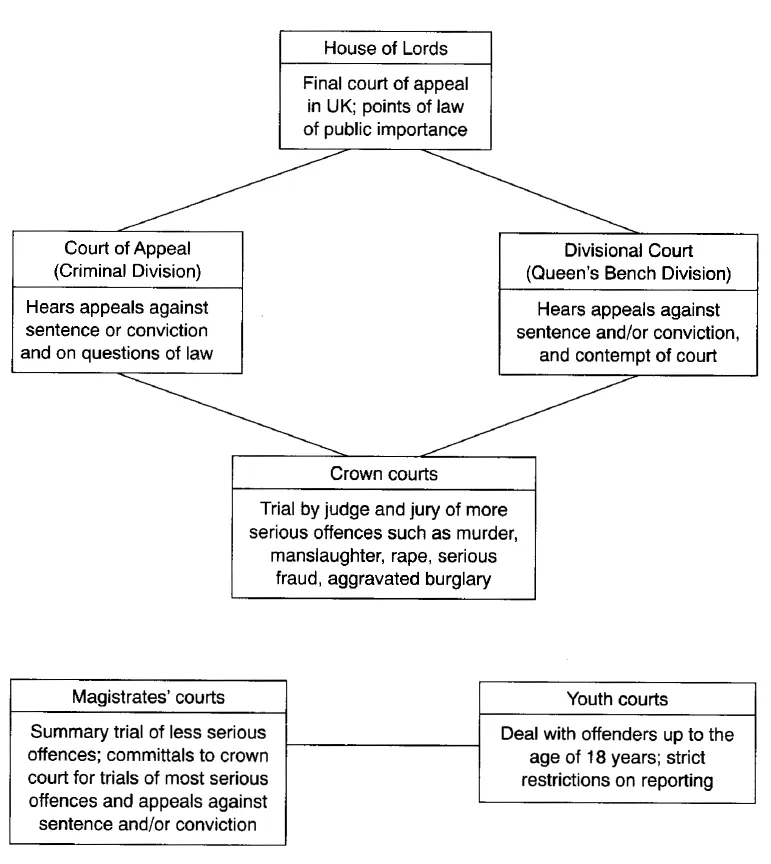
Figure 1.1 An outline of the criminal courts system
The procedure is quite simple. The prosecution, usually the Crown Prosecution Service, will outline the case against the accused to the magistrates and, if the accused pleads guilty, the defence will be allowed to plead mitigating circumstances with the hope of reducing punishment.
If the accused pleads not guilty, the prosecution will outline the facts of the case and call witnesses for the prosecution. These can be cross-examined by the defence. Then it is the turn of the defence to call witnesses on behalf of the accused, and these too can be cross-examined by the prosecution. When all the witnesses have been heard, the magistrates will retire to consider their verdict. They are advised on questions of law, not fact, by the court clerk. If they find the accused not guilty, he or she is free to leave the court. If, however, their verdict is guilty, they will hear evidence in mitigation of sentence from the accused’s lawyer. The prosecution will also give details of any previous convictions. The magistrates will then announce sentence.
If a magistrates’ court decides that its powers of sentence are too limited it will send the accused to the crown court for sentencing.
YOUTH COURTS
These used to be called juvenile courts but in 1991 they were renamed youth courts and are magistrates’ courts that deal with crimes committed by children and young people up to eighteen years of age. They are not open to the public but journalists can attend. Again, there are firm restrictions on what can be reported and any material that is likely to identify the young person involved is not permitted. This includes a ban on publishing their names and addresses, the schools they attend and any photographs.
A youth court consists of justices chosen from a special panel. There must be three lay justices and at least one of them must be a woman.
CROWN COURTS
The crown court system was set up in 1972 to replace assizes and quarter sessions. The Central Criminal Court (or Old Bailey) is a crown court. They try all serious offences such as murder and attempted murder, manslaughter, rape and attempted rape and other sexual offences, major fraud, aggravated burglary and some wounding offences.
Trial is by judge and jury unless the defendant pleads guilty; there is then no need for a jury. The procedure is similar to that in magistrates’ courts although often more formal. The judge rules on questions of law and passes sentence but the jury decides guilt or innocence. Juries are encouraged to reach unanimous verdicts but can arrive at majority verdicts if unanimity has proved impossible. The minimum ratio is 10–2 for a guilty verdict.
The crown court also hears appeals against sentence and/or conviction from magistrates’ courts.
THE HIGH COURT
The criminal jurisdiction of the High Court is carried out in the Queen’s Bench Division and is concerned with appeals from magistrates’ and crown courts and with other matters such as writs for habeas corpus. High Court judges usually preside over the most serious criminal trials, sitting in crown court buildings.
THE COURT OF APPEAL (CRIMINAL DIVISION)
Appeals against sentence and/or conviction can also be heard by the criminal division of the Court of Appeal though these are usually restricted to questions of law rather than of fact. This court also is involved in appeals relating to contempt of court, and is staffed by Lord Justices of Appeal.
THE HOUSE OF LORDS
The highest court of appeal in the United Kingdom is the House of Lords. Hearings are concerned solely with cases involving questions of law of public importance.
THE CIVIL COURTS (see Figure 1.2)
MAGISTRATES’ COURTS
Although the bulk of the work carried out in the magistrates’ courts involves criminal proceedings they do have a limited amount of civil jurisdiction, particularly relating to family matters, neighbourhood quarrels, keeping the peace and binding over to keep the peace.
Panels of specially appointed magistrates sit as family proceedings courts, dealing with issues of welfare, custody, maintenance and adoption of children and access. They also act as licensing justices.
COUNTY COURTS
County courts have existed since 1846, but their jurisdiction has nothing to do with counties as such. They deal with cases involving contracts and other civil matters where the sum of damages being claimed is less than £50,000. Their jurisdiction is being constantly enlarged. In 1995 certain patent cases were referred to county courts. The Small Claims courts are part of the county courts and deal with claims for under £3,000. Their purpose is speed and informality. Generally the parties have to meet their own costs, including those of their solicitors.
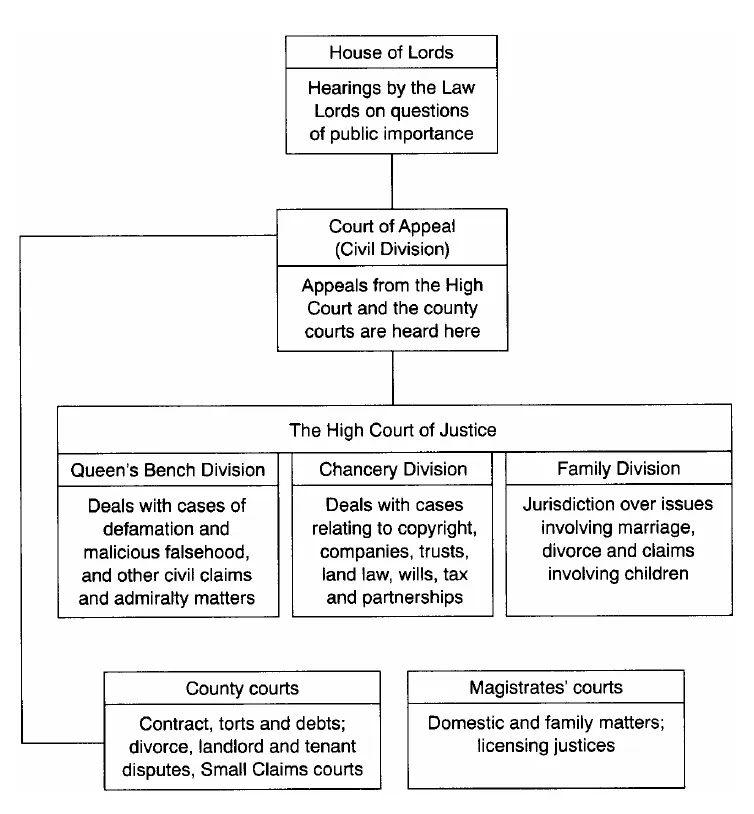
Figure 1.2 An outline of the civil courts system
THE HIGH COURT
The High Court has three divisions and unlimited jurisdiction, and is staffed by High Court judges. Chancery Division judges hear cases relating to copyright, companies, trusts, land law, wills, tax and partnerships. The Family Division has jurisdiction over issues involving marriage, divorce and claims involving children, and admiralty matters, hence the old slogan: Wives, Wills and Wrecks.
Journalists who are involved in actions for defamation or for malicious falsehood will find themselves appearing in the Queen’s Bench Division, where most serious civil claims are heard.
THE COURT OF APPEAL (CIVIL DIVISION)
Appeals from the High Court and the county courts are heard here. It is the final court of appeal for the granting or refusal of injunctions.
THE HOUSE OF LORDS
The highest court of appeal in the United Kingdom is the House of Lords, hearings by the Law Lords are concerned solely with questions of law of public importance.
OTHER COURTS AND TRIBUNALS
CORONERS’ COURTS
Although the power of coroners’ courts is now weaker than when they were established in 1194, they still have an influential part to play in matters relating to deaths other than by natural causes. Any death that is sudden, unexplained or unnatural or that occurs as a result of violence has to be reported to a coroner. Coroners are either lawyers or doctors, and sometimes both, and their role is to hold inquests to determine the identity of the dead person and how, when and where death occurred. A coroner sometimes sits with a jury, whose verdict determines the outcome of the inquiry. In addition to inquests into deaths, coroners also determine whether or not treasure has been found.
INDUSTRIAL TRIBUNALS
Claims of unfair dismissal, for redundancy payments and compensation payments are heard by industrial tribunals. They are not ‘courts’ though they do have quite extensive powers. They deal also with cases of sexual and racial discrimination. They are usually open to the press and the public. Other tribunals include the lands tribunal, industrial injuries board, pensions board and tax commissioners.
THE LEGAL PROFESSION
SOLICITORS
The legal profession is dual in nature; lawyers are either solicitors or barristers though occasionally both, but can pursue only one or other profession at any one time. Although the distinction is becoming increasingly blurred, in general terms solicitors, with whom the public deals directly, tend to handle non-litigious matters such as conveyancing and the drafting of wills and administration of estates. They are instructed by their clients directly and do not have a general right of appearance in all the courts. They are controlled by the Law Society.
BARRISTERS
Barristers are known as counsel and spend most of their time advising on points of law or as advocates in the higher courts, where they have a partial monopoly and appear in wigs and gowns. Solicitor advocates wear gowns but not wigs. Barristers are not employed by the public directly but through a solicitor. After being ‘called to the Bar’ they are responsible for their professional conduct to the Inn of Court which has called them.
THE LAW OFFICERS
THE ATTORNEY GENERAL
The Attorney General is a Queen’s Counsel (QC) and the government’s chief legal officer. He is a politician as well as a lawyer and a member of the ruling political party. Normally his permission has to be sought to start proceedings for contempt of court, treason and other serious constitutional issues.
THE LORD CHANCELLOR
He also is a politician, a member of the Cabinet of the governing party and is appointed by the Prime Minister. The Lord Chancellor is head of the judiciary and Speaker of the House of Lords.
DIRECTOR OF PUBLIC PROSECUTIONS
This office-holder is a civil servant, not a politician, and heads the Crown Prosecution Service, whose role is to bring prosecutions on behalf of the Crown, having first consulted and advised the police on such matters as the evidence and the strength of the case.
2
It’s a matter of reputation
INTRODUCTION
All people are entitled to their reputations whether they are good, bad or indifferent, and the laws of defamation exist to protect such reputations from unjustified or unwarranted attacks. Consequently it is vitally important that every journalist, whether working as a freelance or as a member of staff, whether as a writer or a production specialist, has a thorough knowledge and understanding of what such laws provide and how they can influence a journalist’s day-to-day activities.
The real skill in journalism does not show simply in the cleverness of the ways of defending an action for defamation once it has been published, but in recognising a possible problem before publication, and then in handling it in such a way that any complaint after publication can be successfully rebutted or defended.
The maxim should be: ‘If in doubt find out’ rather than ‘If in doubt leave it out’, because a great deal of potentially damaging but justifiable public interest journalism can be published once the possible legal pitfalls have been recognised and avoided.
The law seeks a balance between a person’s right to defend his reputation on the one hand and the defence of the freedom of speech and expression on the other.
WHAT IS A DEFAMATORY STATEMENT?
There is no one adequate and comprehensive definition of words or pictures that are defamatory, and journalists must consider the explanations used by judges when addressing juries over the past hundred years or more to glean from them the kinds of statements that are likely to be considered injurious.
The basic definition was given by a judge in 1840 when he described a defamatory statement as:
A publication…which is calculated to injure the reputation of another by exposing him to hatred, contempt or ridicule.
Since that time other judges have developed and elaborated on this definition. In 1924 Lord Justice Scrutton said that words
may damage the reputation of a man as a business man, which no one would connect with hatred, ridicule, or contempt.
In 1934 the same judge referred to words by Mr Justice Cave in 1882, who said:
The law recognises in every man a right to have the estimation in which he stands in the opinion of others unaffec...
Table of contents
- Cover Page
- Title Page
- Copyright Page
- Figures
- Foreword
- Preface
- Acknowledgements
- 1 An Outline of the English Legal System
- 2 It's a Matter of Reputation
- 3 'Of Course it's True, but Can We Prove it?'
- 4 Handling Court Copy
- 5 A Degree of Privilege
- 6 'In My Opinion...'
- 7 When You Put it to the Test
- 8 Whose Copyright is it, Anyway?
- 9 Don't Be Held in Contempt
- 10 Strictly Confidential
- 11 The Public's Interest in Privacy
- 12 A Question of Morals
- 13 Some Pitfalls for Sub-Editors
- 14 When a Reader Complains
- 15 What Do I Do if...?
- 16 Making it Practical
- Appendix 1: Glossary
- Appendix 2: Press Complaints Commission Code of Practice
- Appendix 3: National Union of Journalists Code of Conduct
- Appendix 4: Institute of Journalists Code of Professional Ethics
- Appendix 5: International Federation of Journalists Declaration of Principles on the Conduct of Journalists
- Appendix 6: Law and Ethics for Periodical Journalism
- Appendix 7: Questionnaire for Refresher Courses
- Appendix 8: Sample Questions on Libel and other Legal Issues
- Appendix 9: Sample Questions on Copyright
- Appendix 10: Sample questions on Contempt of Court
- Bibliography and Further Reading
Trusted by 375,005 students
Access to over 1.5 million titles for a fair monthly price.
Study more efficiently using our study tools.
Frequently asked questions
Yes, you can cancel anytime from the Subscription tab in your account settings on the Perlego website. Your subscription will stay active until the end of your current billing period. Learn how to cancel your subscription
No, books cannot be downloaded as external files, such as PDFs, for use outside of Perlego. However, you can download books within the Perlego app for offline reading on mobile or tablet. Learn how to download books offline
Perlego offers two plans: Essential and Complete
- Essential is ideal for learners and professionals who enjoy exploring a wide range of subjects. Access the Essential Library with 800,000+ trusted titles and best-sellers across business, personal growth, and the humanities. Includes unlimited reading time and Standard Read Aloud voice.
- Complete: Perfect for advanced learners and researchers needing full, unrestricted access. Unlock 1.5M+ books across hundreds of subjects, including academic and specialized titles. The Complete Plan also includes advanced features like Premium Read Aloud and Research Assistant.
We are an online textbook subscription service, where you can get access to an entire online library for less than the price of a single book per month. With over 1.5 million books across 990+ topics, we’ve got you covered! Learn about our mission
Look out for the read-aloud symbol on your next book to see if you can listen to it. The read-aloud tool reads text aloud for you, highlighting the text as it is being read. You can pause it, speed it up and slow it down. Learn more about Read Aloud
Yes! You can use the Perlego app on both iOS and Android devices to read anytime, anywhere — even offline. Perfect for commutes or when you’re on the go.
Please note we cannot support devices running on iOS 13 and Android 7 or earlier. Learn more about using the app
Please note we cannot support devices running on iOS 13 and Android 7 or earlier. Learn more about using the app
Yes, you can access Magazine Law by Peter Mason,Derrick Smith in PDF and/or ePUB format, as well as other popular books in Jura & Urheberrecht. We have over 1.5 million books available in our catalogue for you to explore.