Historically important trade routes for goods of all kinds for more than 3000 years, the Silk Road has once again come to prominence. Managing Supply Chains on the Silk Road: Strategy, Performance, and Risk present emerging supply chain practices from the Silk Road regions that include China, Hong Kong, India, Pakistan, Iran, Central Asia, Lebanon,
1.1 Introduction to Silk Road Supply Chains: Trade and Players
1.2 Products and Services: Cost, Variety, and Volume
1.3 Supply Chain Processes: From Procurement to Sales
1.4 Lead Times along the Silk Road Supply Chains
1.5 Careers on the Silk Road Supply Chains
1.6 Managing Risks along the Silk Road Supply Chains
1.7 Roles of Governments along the Silk Road
1.8 Managing Inter-Border and Inter-Cultural Differences
1.9 Conclusion
Acknowledgments
References
1.1 Introduction to Silk Road Supply Chains: Trade and Players
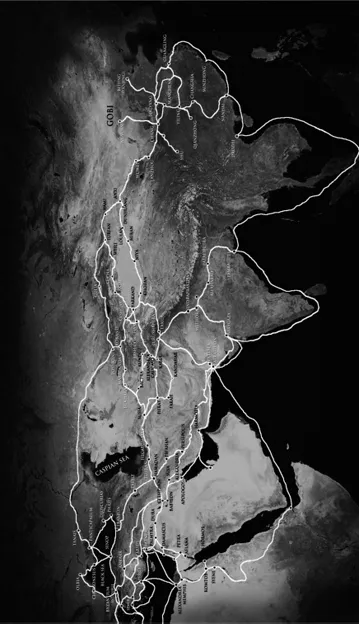
In this chapter, we discuss Silk Road supply chains from a historical perspective and provide interesting connections to modern day supply chain management. We think that the first supply chains of real significance naturally appeared and operated along the Silk Road. Although the supply chain concept was coined in the twentieth century, Silk Road trade practically created first successful examples of supply chains in human history. Hence, understanding the international trade, participants, processes used, products/services traded, lead times, governments, opportunities, risks, and inter-border and inter-cultural issues will be beneficial to keep in mind while comparing today’s global and virtual supply chains along the same road. The periods we considered in this historical perspective are mainly ancient, medieval, and postmedieval until the nineteenth century. The Silk Road shown in Figure 1.1 refers to the region mainly between current day’s China and Turkey (traversing through India, Pakistan, Afghanistan, Central Asia, Iran, Middle East, and Azerbaijan). The map in Figure 1.1 provides all of the overland and maritime trade routes used over the centuries.
First, we provide a perspective on why the trade on the Silk Road happened. Second, we describe the key players in the trade that plied along the road. It is important to note that the elite at both ends of the Silk Road wanted to consume luxury goods to differentiate themselves from common people. Luxury goods were valuable because of their scarcity and/or requirement of specialized manufacturing skills and are associated with the exotic (Oka and Kusimba, 2008). In the premodern era, luxury goods were not only for consumption and pleasure of the privileged, but also a form of political currency. Luxury goods such as silk cloths, advanced weapons, and gemstones were an element in maintaining political power (Allsen, 1997). However, throughout time the Western demand for Eastern goods was much more significant than the Eastern demand for Western goods to facilitate trade along the Silk Road (Morineau, 1999a). In today’s world, various luxury goods are available for anyone who is ready to pay premium prices.
The participants along the Silk Road changed over time. “Chinese, Yuezhi, Bactrians, Indians, and Sogdians” created the historical Silk Road in Central Asia in the first century BC. Different groups rose and fell through the ages. Groups that gained political and military power controlled the trade along the Silk Road. In the medieval times, when paddle trade—merchants traveling along their goods—was common along the Silk Road, merchants and agents were the main players. During the eleventh to fourteenth centuries, Silk Road trade on the Western front (from Persia to İstanbul), was mainly controlled by the Great Seljuk Empire. Trade diasporas were formed such as Sogdians in Tang China, Armenians in Safavid Iran, and Jews in West Europe. Despite being open since the ninth century, maritime routes became more significant in the sixteenth century due to technological improvements in the naval architecture. The long distance maritime trade was monopolized by the Iberians. After the seventeenth century, West European charter companies such as the English East India Company (EIC) and Dutch East India Company (VOC) operated as single connected distribution chains from producer to consumer (Curtin, 1998). Today, similar integrated distribution functions are provided by global supply chain service providers such as UPS, Fedex, and DHL.
Figure 1.1 Map of the Silk Road (overland and maritime trade routes). (Illustration by Erkan Kusku.)
1.2 Products and Services: Cost, Variety, and Volume
Merchants sought significant profits so that it would be worth making the journey along the ancient Silk Road. Thus, goods traded overland had high value with respect to their bulk volume. The main good traded was silk from China. Other luxury goods included glass, red coral, furs, finely crafted ceramics, elegant bronze, jade, lacquer, iron, satin musk, rubies, diamonds, pearls, and rhubarbs. The goods traded along the Silk Road varied depending on who was controlling the routes at that particular time. In the fourth century, letters written by Sogdians were deciphered in Chinese Central Asia referring to commodities such as gold, wheat, pepper, musk, camphor, and flax cloth. The Sogdians managed a trade triangle between China, India, and Sogdiana,* which is located in modern day Uzbekistan and Tajikistan (Wood, 2004).
Trade along the Silk Road was at its zenith during the Tang dynasty due to the stability of the government. The most demanded foreign good on the far end of the Silk Road were horses during the Tang dynasty, since horses provided mobility and military advantage. The Chinese agricultural society was dependent on the Western regions for the supply of animals. The Uyghur nomadic society producing livestock demanded silk. The motivation of the Uyghurs for trade with the Chinese was not only the high demand for silk, but also the opportunity of horse trade in return (Liu, 2001). In some sources it is stated that the trade of silk for horses was a forced one, namely the Uyghurs benefitted from the economic advantage in return for their military assistance to Tang China (MacKerras, 2000).
During 820–830 AD, 500,000 pieces of silk per year were exported to the Uyghur Turks in exchange of horses. The price of 1 horse was 40 pieces of silk (MacKerras, 2000). The annual import of Uyghurs amounted 1 million bolts of silk in return of 100,000 horses (Liu, 2001). We can infer from these figures that 1 horse was worth 8–10 bolts, and one bolt contained approximately five pieces of silk. On the other hand, Romans demanded silk yarn and plain silk textiles instead of value added silk textiles, to be able to transform them into garments for priests, hangings for churches and coverings for saints. The price of one bolt of silk also varied based on location. It was around 200 copper coins in Central China, yet it cost 450–470 coins in the Western frontier of China, indicating even higher prices abroad (Liu, 1996). Hence, geographic locations created price arbitrage. The coinage alloy was 83% copper, 15% lead, and 2% tin. One thousand copper coins weighted 6 jin and 4 liang.* Thus 1000 copper coins weighed approximately 3781.25 g.
Access to different routes on land and ocean was critical along the Silk Road. In the eighth and ninth centuries, maritime routes (shown in Figure 1.1) gained importance compared to the dangerous overland routes. However, the overland trade routes were not completely abandoned, since caravans could access regions that are inaccessible to ships (Palat and Wallerstein, 1999). The developments in technology allowed ships to carry bulk commodities over great distances at lower costs. The opening of the sea based trade routes changed the types of traded commodities. The main export of China became porcelain along with spices, medicines, and timber (Lewis, 2009). It is interesting to note that, maritime cargo shipping, which has helped the global world become flatter today, was used centuries ago.
In the eleventh and twelfth centuries, due to the improvement of maritime technologies, it was possible to carry bulk cargo over long distances with less labor cost. Goods like pepper, spices, rice, sugar, wheat, salt, manufactured goods, and raw materials were traded (Curtin, 1998).
In the period of the Great Seljuk Empire (1037–1194) and the following Seljuk Sultanate of Anatolia (also known as Seljuk Sultanate of Rum) (1077–1307), east–west and north–south trade routes passing through Anatolia that connected Tabriz, Baghdad, Damascus, and Aleppo to the Western cities such as İstanbul and İzmir flourished. These routes constituted the Western (Persia, Asia Minor) sections of the Silk Road that travels via many branches in Anatolia. (Refer to the map in Figure 1.1.) At the Mediterranean, one branch began from Antalya, Alanya and traveled toward the Sultanate capital Konya, and then Kayseri, Sivas, and Erzurum. Another branch traveled from Erzurum-Sivas-Tokat-Amasya toward the Black Sea to Sinop. A third branch traveled from Konya to İstanbul via Afyonkarahisar, Kütahya, Eskişehir, and Bilecik. Yet a fourth branch coming from Tabriz, passed along Ağrı, Erzurum, and Bayburt and reached Trabzon port at the Black Sea. All these routes were controlled and secured by the Seljuk Empire. The Seljuk Empire originated from the Qynyq branch of the Oghuz Turks who controlled a large geographical area from Central Asia to Anatolia as well as Persian Gulf.
During the thirteenth century, caravanserais (rest houses) were built along the trade routes in Anatolia (Yavuz, 1997) mainly to serve the caravans of the traders. Caravans with their animals were able to stay in these caravanserais free up to 3 days. Food, accommodation, and health care services were provided. Even shoes were provided to the poor (Turan, 2009). In the Seljuk Empire period, these caravanserais were known as han or derbend. Taking into account the 1 day travel distance of the caravans, caravanserais were strategically positioned on the trade routes at 25–40 km away from each other. Sometimes the topography and the winter–summer daylight differences affected the location of these caravanserais (Eravşar, 2011). It is also known that the role of caravanserais were not only hosting caravans, but also serving as military stations, royal guesthouses for sovereigns, prisons, places for refuge, and religious meeting points (Yavuz, 1997). Besides building and maintaining the caravanserais, the Seljuk Empire also repaired old bridges and built new ones in order to enable a smooth flow of trade in and out of Anatolia (Eravşar, 2011). In sum, a smooth, secure, and safe flow of merchandize, labor, and supplies was enabled by building a network of caravanserais along the Silk Road.
During the Seljuk Sultanate of Anatolia, the Mongol Empire emerged and became a dominant military power in the thirteenth century. The Mongols formed a large empire that covered the Chinese land in the east to Persian land in the west. Thus, they mostly controlled the intercontinental trade. The stability and security provided by the single authority uniting such a wide land mass stimulated trade along the Silk Road (Curtin, 1998). The Mongolian demand for golden embroidered silk was high. The volume of silk fibers consumed was 425 and 655 ton in the years 1263 and 1368, respectively. It is interesting to note that the main supply of gold brocade was not through trade. The major amount of gold brocade entering the Mongol Empire was loot and collected taxes from invaded states. As Mongols had high regard for gold brocade, the invaded states paid their taxes in forms of gold brocade garments. At that time, the price for a garment of gold brocade was one gold ingot (Allsen, 1997).
In the commercial handbook written by Francesco Balducci Pegolloti in the fourteenth century, the expenses for overland trade are provided. The expenses of caravans transporting goods of 25,000 golden florins value would be 3,500 golden florins. The transportation costs including labor, animals, and supplies would be 1000–1500 florins assuming 60 men were employed and 40–60 animals were used to carry the goods. Total duty paid would be 1600 golden florins, 400 for round-trip duties and 1000 for customs, assuming the charge was 5% of the value of the goods on average. Payment demanded for permission to travel through the territories of various states would be 200–300 florins assuming five florins per pack animal (Rossabi, 1990).
The Mughals gained power in India in the sixteenth century and controlled the trade along the Silk Road. During the sixteenth to eighteenth centuries, the most important markets of Mughal India were the countries bordering the Indian Ocean: Safavid Iran and the Central Asian steppe (Dale, 1994). Mughals originated from Central Asia, thus demanded Central Asian fruits such as apples, pears, grapes, plums, and melons and birds such as falcons, hawks, and pigeons. Furthermore, the main commodities imported to Mughal India were horses. Around 100,000 horses per year were traded without using cash, but in exchange for cotton, indigo, and sugar (Foltz, 1998).
In the sixteenth century, the Iberian empire controlled the sea trade from Asia. The main good imported was pepper, while the main good exported was copper. Iberian merchants had a huge price advantage in pepper trade over ...
Table of contents
Cover
Title Page
Copyright
Dedication
Contents
Foreword
Preface
Acknowledgments
Editors
Contributors
PART I SUPPLY CHAIN STRATEGY ON THE SILK ROAD
PART II SUPPLY CHAIN PERFORMANCE ON THE SILK ROAD
PART III SUPPLY CHAIN RISK ON THE SILK ROAD
Index
Trusted by 375,005 students
Access to over 1.5 million titles for a fair monthly price.
Study more efficiently using our study tools.
Frequently asked questions
Yes, you can cancel anytime from the Subscription tab in your account settings on the Perlego website. Your subscription will stay active until the end of your current billing period. Learn how to cancel your subscription
No, books cannot be downloaded as external files, such as PDFs, for use outside of Perlego. However, you can download books within the Perlego app for offline reading on mobile or tablet. Learn how to download books offline
Perlego offers two plans: Essential and Complete
Essential is ideal for learners and professionals who enjoy exploring a wide range of subjects. Access the Essential Library with 800,000+ trusted titles and best-sellers across business, personal growth, and the humanities. Includes unlimited reading time and Standard Read Aloud voice.
Complete: Perfect for advanced learners and researchers needing full, unrestricted access. Unlock 1.5M+ books across hundreds of subjects, including academic and specialized titles. The Complete Plan also includes advanced features like Premium Read Aloud and Research Assistant.
Both plans are available with monthly, semester, or annual billing cycles.
We are an online textbook subscription service, where you can get access to an entire online library for less than the price of a single book per month. With over 1.5 million books across 990+ topics, we’ve got you covered! Learn about our mission
Look out for the read-aloud symbol on your next book to see if you can listen to it. The read-aloud tool reads text aloud for you, highlighting the text as it is being read. You can pause it, speed it up and slow it down. Learn more about Read Aloud
Yes! You can use the Perlego app on both iOS and Android devices to read anytime, anywhere — even offline. Perfect for commutes or when you’re on the go. Please note we cannot support devices running on iOS 13 and Android 7 or earlier. Learn more about using the app
Yes, you can access Managing Supply Chains on the Silk Road by Sridhar Seshadri,Ananth V. Iyer,Çağrı Haksöz in PDF and/or ePUB format, as well as other popular books in Business & Business Strategy. We have over 1.5 million books available in our catalogue for you to explore.