Used throughout the United States and many other countries, the National Electrical Code (NEC) is the world's most detailed set of electrical codes pertaining to photovoltaic (PV) systems.
PV and the NEC presents a straightforward explanation of the NEC in everyday language. This new edition is based on the 2020 NEC, which will be used widely until 2026, with most of the interpretations and material staying true long after. This book interprets the distinct differences between previous versions of the NEC and the 2020 NEC and clarifies how these code changes relate specifically to PV installations.
Written by two of the leading authorities and educators in the field, this book will be a vital resource for solar professionals, as well as anyone preparing for a solar certification exam.
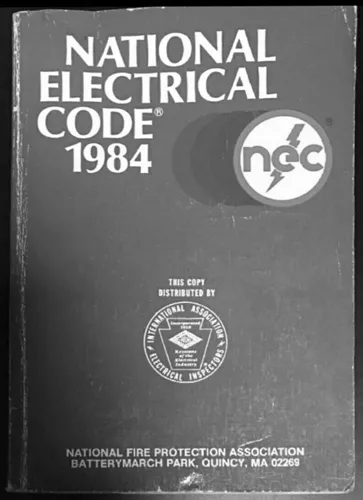
Figure 1.1 NEC (a much smaller Code book) Source: Sean White
Article 690 first came out in a little book known as the 1984 NEC and has been updated and mostly lengthened ever since.
In comparing the original 1984 version of Article 690 to today’s NEC, there are many similarities, yet also quite a few differences. Time to dig in!
Let us first list what we are dealing with in Article 690 before we dig deep. This will give us perspective and familiarize us with how to look things up quickly.
The NEC is also known as NFPA 70 and is divided into Chapters, then Articles, and then Parts and Sections.
For example, rapid shutdown requirements are found in:
NEC Chapter 6 Special Equipment
Article 690 Solar Photovoltaic (PV) Systems
Part II Circuit Requirements
Section 690.12 Rapid Shutdown of PV Systems on Buildings
Here is what we find in Article 690:
Article 690 solar photovoltaic (PV) systems
Part I general (part)
690.1 Scope [Section 690.1.]
690.2 Definitions [There are more NEC definitions in Article 100, such as the definitions for PV, ac and dc.]
690.4 General Requirements [They could not come up with a better title for this category.]
690.6 Alternating Current (ac) Modules
Part II circuit requirements
690.7 Maximum Voltage
690.8 Circuit Sizing and Current
690.9 Overcurrent Protection [Article 240 is also Overcurrent Protection.]
690.10 Stand-Alone Systems [This had been moved to Article 710 in the 2017 NEC.]
690.12 Rapid Shutdown of PV Systems on Buildings [Big changes.]
Part III disconnecting means
690.13 Photovoltaic System Disconnecting Means
690.15 Disconnecting Means for Isolating Photovoltaic Equipment
Part IV wiring methods and materials
690.31 Wiring Methods
690.32 Component Interconnections
690.33 Mating Connectors
690.34 Access to Boxes
Part V grounding and bonding [Article 250 is also grounding and bonding.]
690.41 System Grounding
690.42 Point of System Grounding Connection
690.43 Equipment Grounding and Bonding
690.45 Size of Equipment Grounding Conductors
690.47 Grounding Electrode System [Experts argue over a lot of this article, which is interesting to observe.]
690.50 Equipment Bonding Jumpers
Part VI marking
690.51 Modules and Ac Modules
690.53 Dc PV Circuits
690.54 Interactive System Point of Interconnection
690.55 Photovoltaic Systems Connected to Energy Storage Systems
690.56 Identification of Power Sources [This includes Rapid Shutdown signs.]
Part VII connection to other sources
690.59 Connection to Other Sources [Directs us to Article 705.]
Part VIII energy storage systems
690.71 General [Directs us to Article 706.]
690.72 Self-Regulated PV Charge Control
Now it is time to dive into the detail of Article 690.
Article 690 Solar Photovoltaic (PV) Systems Part I General (part)
690.1 Scope (section 690.1)
Word-for-word NEC:
“690.1 Scope. This article applies to solar PV systems, other than those covered by Article 691, including the array circuit(s), inverter(s), and controller(s) for such systems. [See Figure 690.1(a) and Figure 690.1(b).] The systems covered by this article include those interactive with other electric power production sources or stand-alone, or both. These PV systems may have ac or dc output for utilization.
Informational Note No. 2: Article 691 covers the installation of large-scale PV electric supply stations.”
Discussion: For the most part, 690.1 is self-explanatory; however, if we compare the 2014 and the 2017/2020 NECs carefully, we will notice that energy storage systems (batteries) are no longer part of the PV system as they were in the 2014 NEC.
So, what does this mean for us? Batteries are no longer part of the PV system and are part of a separate energy storage system that is covered in the new Article 706. Consequently, rapid shutdown and other requirements that are specific to PV systems do not apply to the batteries.
Next, we see diagrams that will show us the dividing line between the PV system and not the PV system.
Section 690.1 also has some figures that we can look at in order to get a picture of what we are talking about.
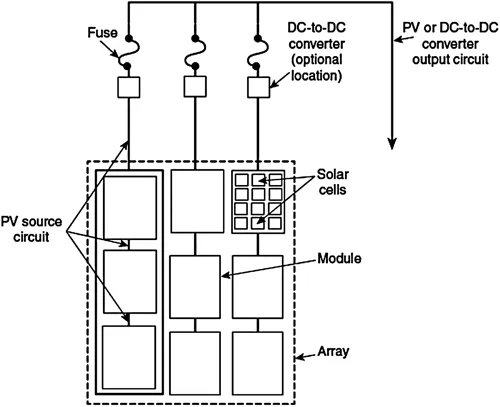
Figure 1.2 is an image from the 2020 NEC
Figure 1.2 2020 NEC PV Figure 690.1(a) PV power source Source: courtesy NFPA
Pay attention to the insertion of the dc-to-dc converters in Figure 1.2. The writers of the NEC left the dc-to-dc converter definition open-ended for your billion-dollar invention. 2020 dc-to-dc converters are usually one for every module, rather than three modules per converter in this image. Take note that, as we will learn in Section 690.12 Rapid Shutdown, we essentially have module level shutdown as the main method to comply. However, new inventions in the meantime could introduce other methods not currently foreseen.
For someone first learning about solar, it could be confusing to see a solar module with 12 cells. It would be even more confusing to have one dc-to-dc converter per three modules that is being connected with fuses to a dc-to-dc converter combining busbar, and then off to a dc-to-dc converter output circuit. Dc-to-dc converters being installed in 2020 have one or two PV modules with a dc-to-dc converter under the module, and then a number of dc-to-dc converters connected in series as a source circuit, and then the dc-to-dc converter source circuit is connected directly to the inverter. The 2020 NEC removed the word “panel” (as in solar panel) from this image and from 690.2 definitions. This was because, historically, in the NEC, a solar panel consisted of more than one module, and on the street, a solar panel is a solar module.
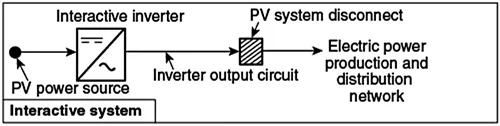
Images are good to learn from. Next, we will go over the different images in Figures 690.1(b), paying close attention to the various PV system disconnecting means, which separate the PV system covered here in Article 690 from systems covered in other areas of the 2020 Code.
Figure 1.3 Interactive system [2020 NEC Figure 690.1(b)] Source: courtesy NFPA
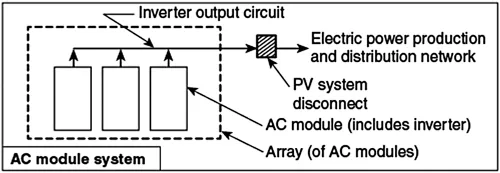
Figure 1.4 Ac module system [2020 NEC Figure 690.1(b)] Source: courtesy NFPA
Interactive (grid-tied) inverter circuits are very simple. The inverter is used only for PV power; it has no other purpose and therefore is part of the PV system.
A big question installers have is: “What is the difference between an ac module and a microinverter bolted to a PV module?” The answer is that if the PV module was listed to UL 1703 while the inverter was bolted to it, and if the inverter was tested and listed to UL 1741 while bolted to the PV module, then it is an ac module and we do not consider the dc part of the product when installing this module.
If the module and microinverter were not listed together, then we are responsible for applying the NEC to the dc circuit, going from the module to the inverter. It is also interesting to note that the word “microinverter” does not appear in the NEC. The NEC looks at a microinverter as nothing more than a small (micro) inverter.
There is a lot of information in Figure 1.5. First of all, dc coupled and multimode are different things, which can go together. A dc coupled PV system is a PV system that is typically charging batteries with a charge controller connected to a PV array. The inverter in a dc coupled system will be cou...
Table of contents
Cover
Half-Title
Endorsements
Title
Copyright
Contents
List of figures
List of tables
Introduction
1 Article 690 Photovoltaic (PV) Systems
2 Article 690 Photovoltaic Systems Part II Circuit Requirements
3 Section 690.12 Rapid Shutdown
4 Article 690 Part III Disconnecting Means
5 Article 690 Part IV Wiring Methods and Materials
6 Article 690 Part V Grounding and Bonding
7 Article 690 Part VI to the End of 690
8 Article 691 Large-Scale Photovoltaic (PV) Electric Supply Stations
9 Article 705 Interconnected Electric Power Production Sources
10 Storage Articles
11 Chapters 1–4, Chapter 9 Tables and Informative Annex C
12 PV Wire Sizing Examples
Index
Trusted by 375,005 students
Access to over 1.5 million titles for a fair monthly price.
Study more efficiently using our study tools.
Frequently asked questions
Yes, you can cancel anytime from the Subscription tab in your account settings on the Perlego website. Your subscription will stay active until the end of your current billing period. Learn how to cancel your subscription
No, books cannot be downloaded as external files, such as PDFs, for use outside of Perlego. However, you can download books within the Perlego app for offline reading on mobile or tablet. Learn how to download books offline
Perlego offers two plans: Essential and Complete
Essential is ideal for learners and professionals who enjoy exploring a wide range of subjects. Access the Essential Library with 800,000+ trusted titles and best-sellers across business, personal growth, and the humanities. Includes unlimited reading time and Standard Read Aloud voice.
Complete: Perfect for advanced learners and researchers needing full, unrestricted access. Unlock 1.5M+ books across hundreds of subjects, including academic and specialized titles. The Complete Plan also includes advanced features like Premium Read Aloud and Research Assistant.
Both plans are available with monthly, semester, or annual billing cycles.
We are an online textbook subscription service, where you can get access to an entire online library for less than the price of a single book per month. With over 1.5 million books across 990+ topics, we’ve got you covered! Learn about our mission
Look out for the read-aloud symbol on your next book to see if you can listen to it. The read-aloud tool reads text aloud for you, highlighting the text as it is being read. You can pause it, speed it up and slow it down. Learn more about Read Aloud
Yes! You can use the Perlego app on both iOS and Android devices to read anytime, anywhere — even offline. Perfect for commutes or when you’re on the go. Please note we cannot support devices running on iOS 13 and Android 7 or earlier. Learn more about using the app
Yes, you can access PV and the NEC by Bill Brooks,Sean White in PDF and/or ePUB format, as well as other popular books in Technology & Engineering & Renewable Power Resources. We have over 1.5 million books available in our catalogue for you to explore.