
- 224 pages
- English
- ePUB (mobile friendly)
- Available on iOS & Android
eBook - ePub
What Anthropologists Do
About this book
What is Anthropology? Why should you study it? What will you learn? And what can you do with it? What Anthropologists Do answers all these questions. And more.Anthropology is an astonishingly diverse and engaged subject that seeks to understand human social behaviour. What Anthropologists Do presents a lively introduction to the ways in which anthropology's unique research methods and cutting-edge thinking contribute to a very wide range of fields: environmental issues, aid and development, advocacy, human rights, social policy, the creative arts, museums, health, education, crime, communications technology, design, marketing, and business. In short, a training in Anthropology provides highly transferable skills of investigation and analysis.The book will be ideal for any readers who want to know what Anthropology is all about and especially for students coming to the study of Anthropology for the first time.
Information
1 ANTHROPOLOGY AND ADVOCACY
BALANCING ACTS
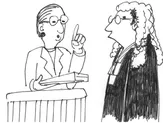
A lot of the work that anthropologists do involves acting as cultural translators: creating bridges between societies or more specific social groups that have quite different worldviews. Being able to understand various points of view, and translate ideas in a non-judgemental way, is a key aspect of the training that they receive, and this rests on a combination of rigorous in-depth research and a theoretical framework that enables them to step back and consider situations analytically. In many situations, having a ‘neutral’ but empathetic outsider, who has taken the trouble to gain insights into the complexities of people’s lives, can greatly assist cross-cultural interactions. Scientific neutrality can be particularly important in legal contexts, where courts or tribunals depend on the testimony of ‘disinterested’ expert witnesses to present evidence, but there are many situations in which cultural beliefs, values and practices clash, and tensions arise. For example, the translatory skills of anthropologists may be used in conflicts between religious groups; in quarrels between managers and workforces; in defusing racial or ethnic hostilities; in mediating between organizations competing for the control of heritage sites and national parks; or in facilitating communication between local groups and government agencies.
For some practitioners, advocacy is a logical extension of long-term working relationships with host communities. It is, after all, virtually impossible to work closely with people and not develop some sympathy for their concerns. Even in the early 1900s, when Bronislaw Malinowski first established in-depth fieldwork as a core anthropological method, he suggested that ‘as a scientific moralist fully in sympathy with races hereto oppressed or at least underprivileged, the anthropologist would demand equal treatment for all, full cultural independence for every differential group or nation’ (Hedican 1995: 45). Malinowski carried through with these views, presenting evidence to the Australian government about the labour conditions people were experiencing in the western Pacific, and criticizing colonial administrations for appropriating the land of indigenous people and disregarding their customary practices. ‘Malinowski thereby laid the foundation for an advocacy role in anthropology very early on in the history of the discipline’ (Hedican 1995: 45).
It is almost inevitable that sustained contact with a given people will involve the ethnographer in disputes emerging from the contradictions between ethnic, regional, national and international interests . . . The profession’s commitment to the non-academic world, is especially evident in the context of indigenous human rights . . . Countries such as Australia, Canada, Brazil, and most of Hispanic America have conferred a great deal of weight on the work of ethnographers. Both the State and the public at large, credit these professionals for their anthropological knowledge but, perhaps more explicitly, for the kind of complicity bred between researchers and research subjects, a complicity that comes from sharing the vicissitudes met by indigenous people in their interethnic lives. (Ramos 2004: 57–8)
Anthropologists have always had to make delicate judgements about where to position themselves on a continuum between striving for as much scientific ‘impartiality’ as can be achieved (recognizing that all scientific activity contains value choices), and taking up a more partisan role as direct advocates for the people with whom they work. There has been much debate in the discipline about how relationships with host communities and other research users should be constructed, and about the potential for direct advocacy to undermine perceptually neutral scientific ‘authority’, which is, in its own way, highly effective in assisting people.
The ethics of working with people, whoever and wherever they are, require social researchers at the very least to ‘do no harm’ to them. As noted in the introduction, many anthropologists think that this ought to go further, believing that research should not be a one-way street that merely benefits the funding agency or the social scientist, but should entail a reciprocal relationship in which there is also some benefit to the group concerned. This ‘benefit’ may lie in the usefulness of the research, rather than in direct advocacy, but the principle of reciprocity is now well embedded in the ethical codes that guide the discipline and much contemporary anthropological research is based on principles of partnership with host communities.
In reality, every anthropologist has to decide how best to do rigorous and useful research, while also meeting ethical and moral imperatives. Anthropologists are not just social scientists – they are also individuals with their own values and political beliefs, and they have often chosen to do this kind of work because they feel that it can make a difference. ‘Advocacy, in its choice of an issue, is often highly charged and personal’ (Ervin 2005: 151). Anthropology therefore enables its practitioners not only to follow their intellectual curiosity about why people do what they do, and produce research that reveals this in scientific terms, but also to take social action upon issues that they care about, and to give real help to the communities in which they work.
In becoming involved in people’s lives, anthropologists perform many kinds of community service, and this can be very informal. For example, Mitzi Goheen, who has worked with the Nso’ community in western Cameroon so extensively that they have given her a local title
. . . often puts her topical and geographical expertise to practical use in serving the people among whom she lives and works. As a titled leader, for example, Dr Goheen has certain obligations to her Cameroonian friends, which she fulfills by taking care of them in direct, practical ways. She is godmother to a Cameroonian child, helps young men of the community negotiate bridewealth payments, and maintains a fund at the local Baptist mission hospital to pay her friends’ medical bills . . . She also helps villagers make hospital care decisions – and often transports them to the hospital as well. (Gwynne 2003a: 144)
In addition, Goheen is a director of a local lending organization, which gives small loans to women to enable them to become players in the local economy.
These kinds of activities are common: anthropologists in the field typically try to make themselves useful in whatever way seems to fit. ‘One need not hold the title of applied anthropologist to put anthropological theory, method and expertise to good use, nor the title advocacy anthropologist to provide support for the members of small-scale communities’ (Gwynne 2003a: 145). In this sense, the concept of anthropology as ‘community service’ underpins a lot of the work described in this book. However, this chapter focuses particularly on the situations in which the role of advocacy in anthropology comes to the fore, becoming what David Maybury-Lewis (who went on from Harvard to become the president of Cultural Survival Inc.) called ‘a special sort of pleading’ (in Hedican 1995: 73).
FACILITATING CROSS-CULTURAL COMMUNICATION
Sometimes ‘special pleading’ articulates the concerns of a group who may otherwise not be heard. For instance, Jacqueline Solway works in Botswana as an advocate for minority language groups who, even in a peaceful multi-party democracy, remain somewhat disenfranchised. By communicating the realities of their lives to decision makers in the political arena, her work seeks ways to assist the state in becoming more inclusive to these groups (Solway 2004).
Elizabeth Grobsmith works with Native-American inmates in prisons in Nebraska who, although their community comprises only 1 per cent of the population as a whole, make up 4 per cent of the prison population. Her work began in the 1970s, when the courts upheld prisoners’ rights to religious freedom and education, and she was employed to teach a programme in American Indian studies. As she says, ‘prisoners stand to profit both from an academic perspective and from the increased self-respect which education affords. Their culture gains credibility by being the subject of a prison college class’ (Grobsmith 2002: 166). Thus she was able to allay the authorities’ anxieties about religious practices, such as pipe smoking:
The contribution of the anthropologist can be great here, serving as a consultant to correctional authorities and guiding them as to the legitimacy and meaning of these religious practices. Absence of regular training programs and turnover of employees result in ignorance and insensitivity on the part of correctional officers and continual mistakes which prisoners deeply resent. . . Anthropological expertise is of benefit not because the inmates are incapable themselves of explaining their traditions. Rather the use of an ‘outside expert’ or consultant affords legitimacy to the entire process. (Grobsmith 2002: 167)
Grobsmith was also involved in the design of treatment programmes to tackle drug and alcohol problems in the prison population, pointing out that ‘the consequences of ignoring Native American prisoners’ needs is the ultimate return of most Indian inmates to incarceration’ (Grobsmith 2002: 168). She advised the parole board on indigenous cultural approaches to rehabilitation, and acted as an expert witness in disputes on prisoners’ rights.
There is a tremendous need for anthropologists in correctional affairs. With the largest number of inmates representing minorities, and correctional staff rarely representative of those same groups, anthropologists are frequently sought as liaisons, cultural resources persons, and simply savvy outsiders who can help minority individuals interact with the complex, legal world in which they live. Correctional authorities benefit from this interaction as well, through improved inmate-staff relationships, decreased litigation, and prison accreditation standards which reward institutions that permit and cooperate with research. (Grobsmith 2002: 170)
As she concludes: ‘few activities are more satisfying than helping to mend an intercultural communication network that has broken down’ (Grobsmith 2002: 171).
Communication problems have been similarly central to Barbara Jones’ advocacy work with Native-American Bannock and Shoshoni women. When some of the women were prosecuted for withholding information from social services, her research showed that cultural misunderstandings had occurred because of different usages of English by the women, and by the social services staff. The presiding Judge ruled that the women were innocent, and that, in the future, an interpreter should be used to ensure clarity in communications (in Ervin 2005: 106).
Facilitating culturally appropriate forms of communication is also at the heart of Kevin Avruch and Peter Black’s work on the role of anthropology in ‘alternative dispute resolution’ (ADR), which has become increasingly popular as an informal ‘alternative’ to legal action in America (Avruch and Black 1996). They point out that anthropology actually provided the inspiration for ADR, because ‘some reformers from within the legal profession read ethnography and thought they had found the perfect template for their reform: dispute resolution in “tribal societies”’ (Avruch and Black 1996: 50). Anthropologists themselves, however, have been quite critical of the misuse of ethnography to construct an idealized image of tribal social life, and of the idea that particular methods of resolving disputes can simply be ‘lifted’ from one cultural context and plonked down in another. As ADR has become entrenched in American legal culture there have been increasing efforts to commodify and export it, and Avruch and Black note that for the modern ADR ‘missionaries. . . a concern with possible cultural differences as having significant effects does not seem to detain them for very long’ (Avruch and Black 1996: 53). Their research examines attempts to introduce alternative dispute resolution in the Pacific island of Palau:
There is perhaps something ironic in bringing ADR, an ideological formation partly inspired by misread ethnography. . . back to the sort of cultural setting people. . . thought it came from in the first place. But to revel in that irony is perhaps to underestimate the costs that such a disingenuous export can inflict. . . It is important that if ADR is introduced to Palau, it be done in a manner that makes good local sense. In our opinion, this is not something that can be written in by consultants drawn from the American ADR community, no matter how culturally sensitive they may be. Those designing ADR for Palau will do well to predicate it on Palauan assumptions about conflict and its management, assumptions that are part of Palauan culture . . . One way to ensure that this happens is to put the design of the process firmly in Palauan hands . . . The contribution that anthropological outsiders can make is to offer suggestions about the design of the process. (Avruch and Black 1996: 54–9)
From their point of view, ‘the greatest contribution anthropology can make to the creation of a humane fit between ADR and Paluan society may lie in its insistence on the importance of culture’ (Avruch and Black 1996: 47), and they have gone on to insist as best they can.
DEFENDING LIVELIHOODS AND KNOWLEDGE
‘The importance of culture’ also underlies the work that Alexander Ervin does in assisting rural farming communities in protecting their way of life. As he says: ‘The industrialization of agriculture has long been a threat to rural North Americans. It undermines the family farm and community, erodes rural self-sufficiency and self-determination, and can negatively affect health and the environment’ (Ervin 2005: 154).
Anthropologists have been speaking up for many decades about the social effects of industrialization in agriculture, beginning with Walter Goldschmidt’s work in the 1940s. Goldschmidt compared two Californian farming communities: one was largely dominated by factory farms owned by large corporations based elsewhere. The labour force was migratory and poor, and the local town had a high crime rate. The other community was largely composed of independent farmers. They achieved higher levels of production, had higher household incomes, and their local town had prospering businesses, churches and family clubs. The research showed the benefits of protecting community life in rural areas. However, disruptive patterns of development have often been repeated:
For rural peoples, the decline of community is reinforced by federal and state agricultural policies that favor the goals and profit motives of major agribusiness corporations in the supposed interests of efficiency and the untested assumption that only industrialized agriculture can cheaply feed the world. (Ervin 2005: 154–5)
Kendall Thu and Paul Durrenberger’s research is similarly critical of the socia and ecological effects of industrial farming, showing how pig factories in Iowa and North Carolina created enormous stenches for miles, lowered property values and impinged on social life, as well as polluting rivers, and damaging fish and fisheries. They provide an account of the social costs of these changes: the loss of family farms; the environmental and health risks; the greater uncertainties in employment; and the way that these pressures lead to social division and conflict. Kendall Thu therefore sees a clear need for research to lead to advocacy:
My applied work involves a strategy combining research with advocacy through the media, public speaking, legislative testimony, expert witness work in the courtroom, holding industries publicly accountable for co-opting science, work with non-profit...
Table of contents
- Cover
- Half Title
- Title Page
- Copyright Page
- Contents
- Acknowledgements
- Introduction
- 1 Anthropology and Advocacy
- 2 Anthropology and Aid
- 3 Anthropology and Development
- 4 Anthropology and the Environment
- 5 Anthropology and Governance
- 6 Anthropology, Business and Industry
- 7 Anthropology and Health
- 8 Anthropology, Art and Identity
- Conclusion
- Appendix 1. Studying Anthropology
- Appendix 2. Further Reading
- Appendix 3. Other Resources
- Glossary
- Notes
- Bibliography
- Index
Trusted by 375,005 students
Access to over 1.5 million titles for a fair monthly price.
Study more efficiently using our study tools.
Frequently asked questions
Yes, you can cancel anytime from the Subscription tab in your account settings on the Perlego website. Your subscription will stay active until the end of your current billing period. Learn how to cancel your subscription
No, books cannot be downloaded as external files, such as PDFs, for use outside of Perlego. However, you can download books within the Perlego app for offline reading on mobile or tablet. Learn how to download books offline
Perlego offers two plans: Essential and Complete
- Essential is ideal for learners and professionals who enjoy exploring a wide range of subjects. Access the Essential Library with 800,000+ trusted titles and best-sellers across business, personal growth, and the humanities. Includes unlimited reading time and Standard Read Aloud voice.
- Complete: Perfect for advanced learners and researchers needing full, unrestricted access. Unlock 1.5M+ books across hundreds of subjects, including academic and specialized titles. The Complete Plan also includes advanced features like Premium Read Aloud and Research Assistant.
We are an online textbook subscription service, where you can get access to an entire online library for less than the price of a single book per month. With over 1.5 million books across 990+ topics, we’ve got you covered! Learn about our mission
Look out for the read-aloud symbol on your next book to see if you can listen to it. The read-aloud tool reads text aloud for you, highlighting the text as it is being read. You can pause it, speed it up and slow it down. Learn more about Read Aloud
Yes! You can use the Perlego app on both iOS and Android devices to read anytime, anywhere — even offline. Perfect for commutes or when you’re on the go.
Please note we cannot support devices running on iOS 13 and Android 7 or earlier. Learn more about using the app
Please note we cannot support devices running on iOS 13 and Android 7 or earlier. Learn more about using the app
Yes, you can access What Anthropologists Do by Veronica Strang in PDF and/or ePUB format, as well as other popular books in Social Sciences & Anthropology. We have over 1.5 million books available in our catalogue for you to explore.