- 320 pages
- English
- ePUB (mobile friendly)
- Available on iOS & Android
About this book
In Our Clients' Shoes conveniently assembles a number of important papers on the Therapeutic Assessment approach in one resource, explicating its history, theory, techniques, as well as its impact on clients and assessors. Author Stephen E. Finn incorporates pieces presented at various conferences over the past 13 years, in addition to previously unpublished work, with the intent to allow psychologists greater insight into their clients' perspectives.
Arranged in three sections, the first set of papers describes the history and development of Therapeutic Assessment, including personal experiences of the author, which ultimately led him to focus on psychological assessment as a potential therapeutic intervention. The second section follows with a variety of essays to illustrate particular techniques of collaborative and Therapeutic Assessment. In this section, readers gain an understanding of how to integrate test findings, engage clients in discussing their experiences of a test, conduct assessment intervention sessions, and teach Therapeutic Assessment to graduate students. Finn concludes by drawing a link between Therapeutic Assessment and two major schools of psychotherapy: intersubjectivity theory and control-mastery theory. He also discusses how assessors grow and change as a result of practicing psychological assessment, and addresses practical matters such as when to apply the approach, how to bill for Therapeutic Assessment sessions, how to market Therapeutic Assessment, and where to find professional support for this kind of work.
In Our Clients' Shoes is appropriate for all clinicians who wish to further impact the lives of their clients and enhance their own wisdom, compassion, and personal and professional development.
Frequently asked questions
- Essential is ideal for learners and professionals who enjoy exploring a wide range of subjects. Access the Essential Library with 800,000+ trusted titles and best-sellers across business, personal growth, and the humanities. Includes unlimited reading time and Standard Read Aloud voice.
- Complete: Perfect for advanced learners and researchers needing full, unrestricted access. Unlock 1.4M+ books across hundreds of subjects, including academic and specialized titles. The Complete Plan also includes advanced features like Premium Read Aloud and Research Assistant.
Please note we cannot support devices running on iOS 13 and Android 7 or earlier. Learn more about using the app.
Information
Part I
The History and Development of Therapeutic Assessment
1
Introduction: What Is Therapeutic Assessment?
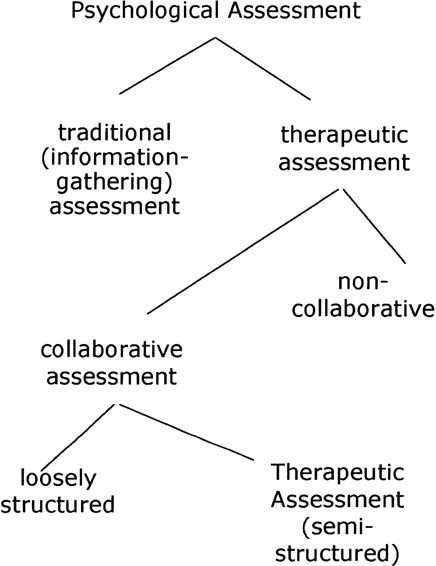
Definitions and Distinctions
Traditional Assessment

âtherapeutic assessmentâ
Collaborative Assessment
Therapeutic Assessment

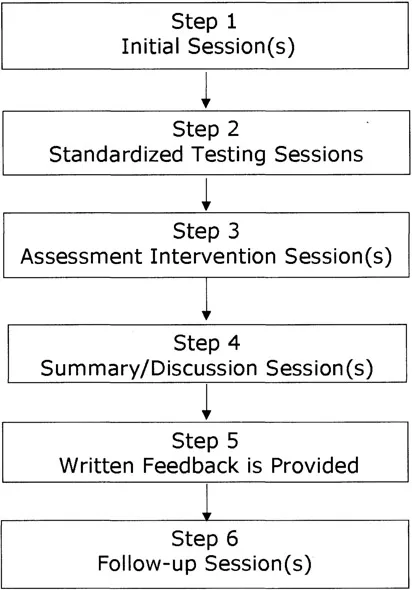
Flow Chart and Brief History of Therapeutic Assessment
Step 4âSummary andlor Discussion Sessions
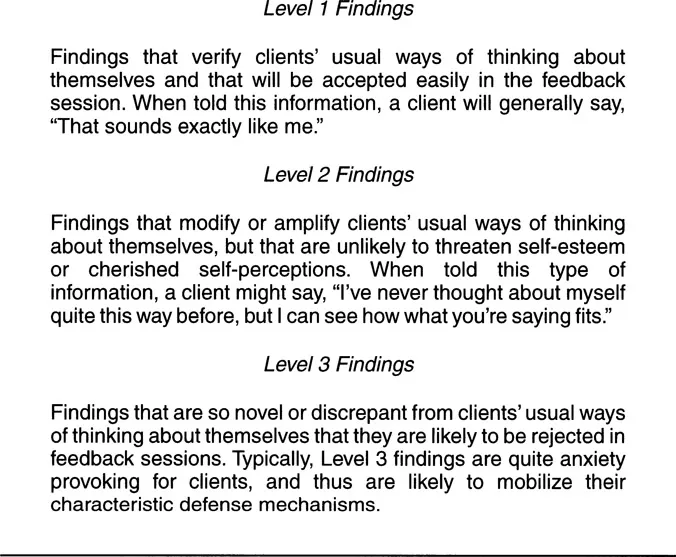
- (1) Begin with what I call Level 1 findingsâthose that map onto the way clients already think about themselves. An example would be telling a self-labeled extrovert that his very low score on Scale 0 of the MMPIâ2 suggests that he enjoys meeting new people, is comfortable in large groups, and would not do well in a job where he worked mainly on his own.
- (2) Next, introduce Level 2 findings from the assessment, which reframe or amplify clientsâ usual ways of thinking about themselves. This might involve telling a client who is concerned about lethargy, lack of motivation, and poor focus, that his Rorschach D score of â4 suggests he is emotionally overwhelmed, rather than just âlazyâ as he fears.
- (3) Last, if all is still going well, you may introduce Level 3 findings to clientsâthose that conflict in some major way with their usual conceptions of themselves. Research has shown that in many instances clients continue to consider and assimilate such information long after an assessment is completed.

Step 1 âInitial Sessions
Step 5âWritten Feedback Is Provided
Table of contents
- Cover
- Half Title
- Series Page
- Title Page
- Copyright Page
- Contents
- Descriptive Contents
- Foreword
- Preface
- Acknowledgments
- Part I The History and Development of Therapeutic Assessment
- Part II Specific Techniques of Therapeutic Assessment
- Part III Theoretical Developments
- References
- Author Index
- Subject Index