1.1 DIVERSITY AND UBIQUITY
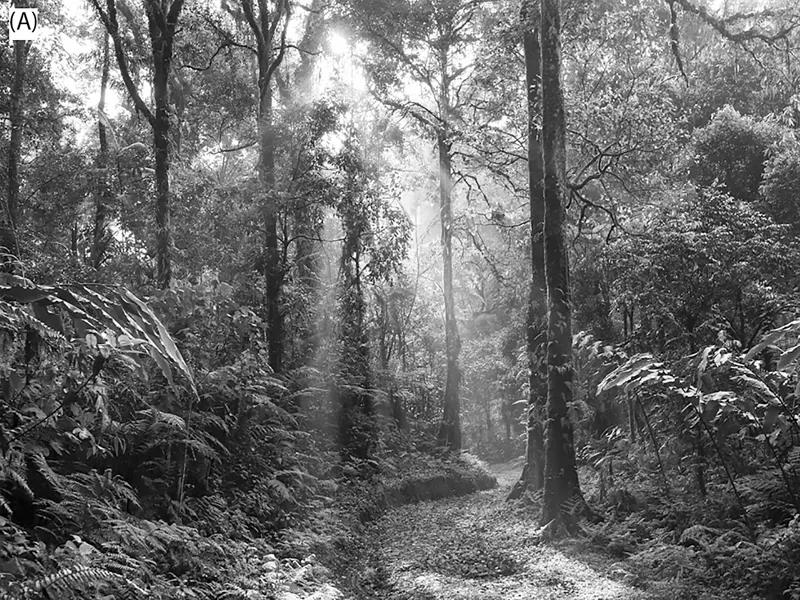
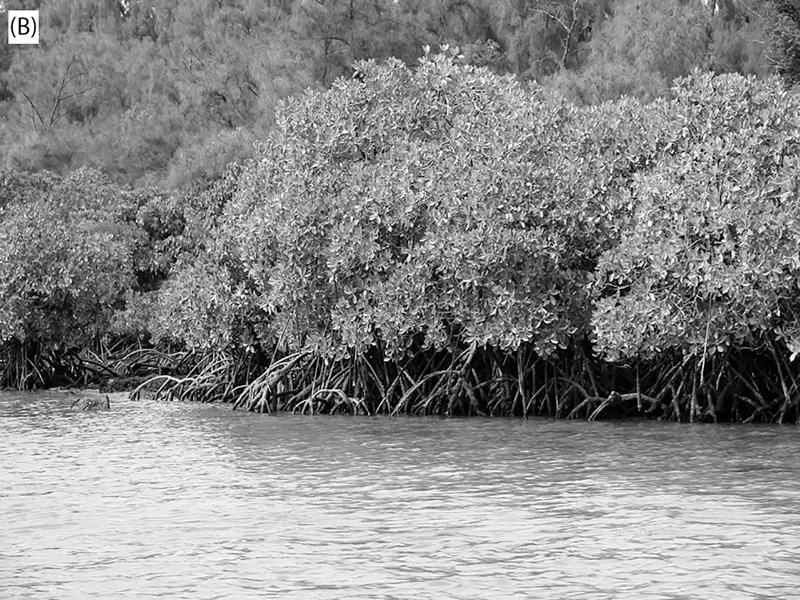
Endophytes from the tropical regions were first reported by Petrini and Dreifuss (1981). These endophytes were recovered from several tropical regions, which included the French Guiana, Brazil, and Columbia. Today, endophytes in the tropics are found in the vast green rainforest to the mangrove swamps (Figure 2). Tropical endophytes can be isolated from palm trees (Araceae), fruit trees, and plants of the Bromeliaceae and Orchidaceae families (Azevedo et al., 2000). Their association with host plants is primarily beneficial; as herbivore deterrent, as well as in improving photosynthetic efficiency and water acquisition (Pinto et al., 2000; Arnold et al., 2003; Van Bael et al., 2009). Species of bacteria, fungi, and actinobacteria have been recovered as endophytes from various host plants. The bacterial endophytes have long been thought to originate from epiphytes that may have occasionally found its way into the host tissues. Bacterial endophytes often form commensallistic, mutualistic, or pathogenic association with their host (Griffin and Carson, 2015). For fungal endophytes, they were initially classified into three groups based on their ecological grouping. The groups were the mycorrhizal fungi, the balansiaceous or grass endophytes (species of the genera Balansia, Ephelis, Epichloe, Neotyphodium), and the non-balansiaceous endophytes (Schulz and Boyle, 2005). The mycorrhizal endophytes were, however, gradually discussed as a separate group from endophytes, as mycorrhiza behaved differently from endophytes. Mycorrhiza form synchronized plant-fungus interaction for specific nutrient-transfer at specialized interfaces, which were not observed in endophytes (Schulz and Boyle, 2005). As such, fungal endophyte communities are primarily of the balansiaceous and the non-balansiaceous fungal endophytes. The latter is more relevant to the tropics as non-balansiaceous endophytes are typically members of Ascomycota (and its anamorphic stages), and can be isolated from almost every plant (Petrini, 1986; Stone et al., 2000; Huang et al., 2001).
Endophyte diversity and ubiquity are higher in the tropics than any other environments. Strobel and Strobel (2007) isolated approximately 200 endophytic species from 60 angiosperm host plants found in Peru and Bolivia. This demonstrated the diversity of endophytes in angiosperms. Kruasuwan and Thamchaipenet (2016) isolated bacterial endophytes from roots of sugarcane and revealed the discovery of multiple families (Enterobacteriaceae, Bacillaceae, Micromonosporaceae, Moraxellaceae, Micrococcaceae, Pseudomonadaceae, Paenibacillaceae, Staphylococcaceae, Streptosporangiaceae, Streptomycetaceae, and Thermomonosporaceae). Of these, they found Streptomyces sp. was most frequently isolated (n = 47, 34.81%) while Pseudomonas sp. was the least isolated (n = 1, 0.74%). Other genera of bacterial endophytes include Acinetobacter, Actinomadura, Bacillus, Enterobacter, Kosakonia, Lysinibacillus, Microbispora, Micrococcus, Micromonospora, Pantoea, Paenibacillus, and Staphylococcus. The findings reaffirmed the rich and ubiquitous nature of endophytes (in this case, bacterial endophytes) in the tropics. The associations of endophytes with host plants are primarily beneficial; as herbivore deterrent, as well as in improving photosynthetic efficiency and changes to water relation (Pinto et al., 2000; Arnold et al., 2003; Van Bael et al., 2009).
The higher endophyte diversity observed in the tropical forests is also linked to the greater plant species, abundance of older plants and the relatively stable weather conditions (Hyde and Soytong, 2008). The frequency of endophytic infection is higher in older plants, which are abundant in the tropics especially in the rainforests. The endophyte communities in this region are also relatively stable as tropical environments do not experience prominent prolonged dry periods, which are known to depress endophyte diversity (Suryanarayanan et al., 2011). In fact, high precipitation, which is common in the tropics, has been observed to increase endophytic infection (Rodrigues, 1994; Suryanarayanan et al., 1998; Wilson 2000). Other factors are also known to influence the abundance and ubiquity of endophyte communities in the tropics. Abiotic factors such as desiccation, UV radiation, and relative humidity, are often linked to endophyte distribution and abundance. These factors have a temporal effect on the number of endophyte infections per leaf, their composition, and diversity (Higgins et al., 2014). In the wet tropical forests, persistent humid conditions are speculated to influence endophyte diversity as well (Lodge et al., 1996; Arnold and Herre, 2003). In recent years, several other factors have been suggested as possible influencers of the endophyte communities. They include biogeographic history of host plant and fungi (Arnold and Lutzoni, 2007; Arnold et al., 2009; U’Ren et al., 2012), soil type and land use, and possible endophyte-host-specificity (Suryanarayanan et al., 2002; Pandey et al., 2003; Murali et al., 2007). Nevertheless, there have been postulations that localized spatial structure (e.g., leaf litter density) may influence (to a certain degree), endophyte biodiversity and subsequently subtly impact their biodiversity at the regional and larger scales (Arnold and Herre, 2003; Herre et al., 2007).
Nevertheless, the culminating evidence this far presents greater evidence that tropical endophytes are non-specific, not just toward their host plants, but also toward the forest age and soil conditions. Bacterial OTUs recovered were found to be non-specialized to any particular host plant species (Haruna et al., 2018). As tropical endophytes rarely demonstrate host-specificity, they are said to display host generalism nature (Cannon and Simmons, 2002; Arnold et al., 2003; Murali et al., 2007; Mejia et al., 2008). Host generalism refers to the ability of the tropical endophytes to behave as generalist colonizers, colonizing a variety of host plants in the tropics (May, 1991; Arnold and Lutzoni, 2007). There is possible evidence that host generalism of tropical endophytes exist within levels of host species and their subfamilies (Higgins et al., 2014). The consequence of host-generalism in tropical endophytes is the large number of endophytes isolated from plant tissues. A study by Arnold et al. (2000) using 1992 leaf segments, isolated 1472 isolates, which were further categorized into 418 morphospecies. It is a common occurrence in the tropics, that all leaf tissues are colonized by endophytes (Arnold et al., 2000). The rich diversity, ubiquitous nature, and the host-generalism attributes of endophytes form a complex interactive dynamic to their distribution in the tropics. As such, the estimates of endophyte diversity and ubiquity in the tropics is at best an extrapolative estimate to reflect their speci...