eBook - ePub
Matthew Boulton
Enterprising Industrialist of the Enlightenment
- 312 pages
- English
- ePUB (mobile friendly)
- Available on iOS & Android
eBook - ePub
About this book
Matthew Boulton was a leading industrialist, entrepreneur and Enlightenment figure. Often overshadowed through his association with James Watt, his Soho manufactories put Birmingham at the centre of what has recently been termed 'The Industrial Enlightenment'. Exploring his many activities and manufactures-and the regional, national and international context in which he operated-this publication provides a valuable index to the current state of Boulton studies. Combining original contributions from social, economic, and cultural historians, with those of historians of science, technology and art, archaeologists and heritage professionals, the book sheds new light on the general culture of the eighteenth century, including patterns of work, production and consumption of the products of art and industry. The book also extends and enhances knowledge of the Enlightenment, industrialization and the processes of globalization in the eighteenth century.
Chapter 1
Introduction: Matthew Boulton – Enterprising Industrialist of the Enlightenment
Kenneth Quickenden, Malcolm Dick, Sally Baggott
Matthew Boulton: Enterprising Industrialist of the Enlightenment represents the culmination of research into and thinking about Matthew Boulton. It does more than shed light on the life and times of a Birmingham-based manufacturer and entrepreneur who died over 200 years ago. The publication raises questions about the ways in which individual biography, industry, science, art, commerce and employment interconnect. It illuminates the history of the Industrial Revolution in Great Britain, which has shaped the economic and social history of the world in recent centuries, and the Enlightenment, which saw the application of rational thinking to the natural world, to politics, economics and social organisation. In particular, the book increases our knowledge and understanding of the ‘Midlands Enlightenment’ of the late eighteenth and early nineteenth centuries, when entrepreneurs such as Boulton brought reason to bear on the practical worlds of technology, production and the arts in what was, perhaps, the most scientifically and industrially advanced region in the world during the period.1
An outline of Boulton’s life is provided in this book’s Chronology, but in what ways was he important? He was born in 1728 in Birmingham, then a small and relatively insignificant metal-working and market town and died in 1809, by which time Birmingham had become a major international centre – for manufacturing. As an industrialist, Boulton contributed to this transformation. He was a businessman primarily, who inherited his father’s ‘toy’ business and transformed it into a major enterprise.2 He created the largest factory in Britain at Soho, near Birmingham, the first mechanically powered mint, also at Soho, and a purpose-built foundry at Smethwick to produce steam engines – a location which marked the take-off of the mechanical engineering industry.3 He also applied scientific principles to manufacturing in partnership or collaboration with other men, the best-known being the inventor, James Watt. He was interested in mass production and the division of labour, and he pioneered industrial training at the Soho Manufactory. Boulton was also a promoter of the applied arts; for example, through the production of silverware, Sheffield Plate and ormolu.4 He employed designers and absorbed decorative ideas from home and abroad, but he also knew that a successful manufacturer required more than well-designed products. He understood the need for marketing by displaying his wares in catalogues, employing agents and engaging with the tastes of consumers, particularly the aristocracy and rising middle classes. He was also fully aware of the importance of an effective transport infrastructure, particularly canals, to secure raw materials easily for his factories and move his finished goods quickly and cheaply to their markets. Boulton appreciated the importance of political activity and a legal framework to support his manufacturing activities. He used patent legislation to protect his inventions, campaigned successfully against opposition from London to establish an assay office in Birmingham for testing the standard of locally-produced silver, and, in the face of hostility from the Royal Mint, obtained a government contract to manufacture coins. He was also a key figure in the gestation of the ‘Midlands Enlightenment’, providing friendship and hospitality to scholars and thinkers in Britain, Europe and North America, and he was one of the most active members of the Lunar Society. This was not an organised society with a management structure or minutes, but a network or gentlemen’s club which flourished in the West Midlands region from the mid 1760s to the early 1800s. As well as Boulton, it included scientists, writers and industrialists such as Erasmus Darwin, Thomas Day, Richard Lovell Edgeworth, James Keir, Joseph Priestley, James Watt, Josiah Wedgwood, John Whitehurst and William Withering.5 In short, Boulton’s involvement in eighteenth and nineteenth-century economic and cultural life was indeed massive, as this volume reveals. His home, Soho House in Handsworth survives as a physical record of his significance (see Figure 1.1).
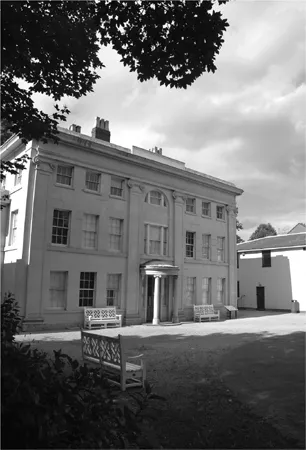
Figure 1.1 Soho House, Handsworth, Birmingham
Source: Photograph by Mohsen Keiany.
This introduction sets out the framework for this volume. It details events connected with the 200th anniversary of his death in 2009, the secondary literature which has illuminated his life and work, and the range of primary sources which exist. It ends with a summary of the chapters contained in this publication.
Boulton 2009
In 2009 Boulton’s importance in Britain was recognised during the commemorative events which celebrated the 200th anniversary of his death.6 Nationally, the Royal Mail produced a series of eight postage stamps, ‘Pioneers of the Industrial Revolution’, which included a first-class stamp showing Matthew Boulton and the Soho Manufactory, and Sir Mervyn King, Governor of the Bank of England, announced plans to produce a new £50 banknote featuring both Boulton and Watt.7 There were several exhibitions. ‘Matthew Boulton: “Selling what all the world desires”’ at the Gas Hall, Birmingham Museums and Art Gallery (BM&AG), featured objects, paintings and prints from collections in Birmingham and elsewhere to demonstrate Boulton’s place as not only a local manufacturer of utilitarian and artistic objects, but also an individual of national and international significance.8 The exhibition attracted 35,000 national and international visitors. A second exhibition, ‘Matthew Boulton and the Art of Making Money’ at the Barber Institute of Fine Arts on the campus of the University of Birmingham, focused on Boulton’s production of coins, tokens and medals.9
In commemoration of Boulton’s role in its establishment, The Birmingham Assay Office commissioned a silver candelabrum by the contemporary silversmith, Shona Marsh, which reinterpreted Boulton’s silver in a distinctive way for the twenty-first century. During 2009, this was displayed at BM&AG and Birmingham’s Museum of the Jewellery Quarter.10 In the USA, the Speed Art Museum, Louisville, Kentucky, hosted an exhibition based on one of its principal collections: ‘English Silver in the Age of Matthew Boulton: The James C. Codell, Jr. Collection’.11
Birmingham City University did much to enhance our understanding of Boulton’s technology in 2009. It produced two films on the silver manufacturing techniques used at the Soho Manufactory in 1776–77 to make candlesticks and a tureen. The Jewellery Innovation Centre in the School of Jewellery exhibited replicates of Boulton candlesticks that were produced by using digital photographs from which a computer-aided design file was generated. The file was used to make a 3D resin print which became the pattern for mouldings from which white metal replicates were produced and subsequently silver plated. A ‘Matthew Boulton Discovery Day’ of talks, workshops and displays was held at Aston University to enable members of the public to make comparisons between the technology of Boulton’s own time and today. St. Philip’s Cathedral staged a concert ‘Hark I hear Musick’, which included some of Matthew Boulton’s favourite music and readings from the Matthew Boulton Papers. On the bi-centenary of Boulton’s death, 17 August 2009, a wreath was laid at the statue of Boulton, Watt and William Murdoch in Broad Street, close to Birmingham’s city centre.
Several academic dimensions of the Boulton commemorations have influenced this book. Before 2009, the University of Birmingham, in collaboration with BM&AG successfully applied to the Arts and Humanities Research Council (AHRC), the leading state-funded agency which supports academic research in the arts and humanities, to fund two PhD studentships to further research on Boulton.12 Additionally, in partnership with Birmingham Archives and Heritage, The Birmingham Assay Office, Birmingham City University and BM&AG, the University of Birmingham successfully applied to the AHRC for funding to run six workshops at Birmingham venues during 2007 and 2008 in order to explore Boulton’s s...
Table of contents
- Cover Page
- Title Page
- Copyright Page
- Contents
- List of Figures and Tables
- Notes on Contributors
- Foreword by Nicholas Goodison
- Acknowledgements
- Chronology: Matthew Boulton
- 1 Introduction: Matthew Boulton – Enterprising Industrialist of the Enlightenment
- 2 Matthew Boulton, Birmingham and the Enlightenment
- 3 Matthew Boulton – Innovator
- 4 Was Matthew Boulton a Scientist? Operating between the Abstract and the Entrepreneurial
- 5 The Origins of the Soho Manufactory and its Layout
- 6 Boulton, Watt and Wilkinson: The Birth of the Improved Steam Engine
- 7 Matthew Boulton’s Copper
- 8 The Mechanical Paintings of Matthew Boulton and Francis Eginton
- 9 Samuel Garbett and Early Boulton and Fothergill Assay Silver
- 10 Hegemony and Hallmarking: Matthew Boulton and the Battle for The Birmingham Assay Office
- 11 Dark Satanic Millwrights? Forging Foremanship in the Industrial Revolution: Matthew Boulton and the Leading Hands of Boulton and Watt
- 12 Workers at the Soho Mint (1788–1809)
- 13 Matthew Boulton’s Jewish Partners between France and England: Innovative Networks and Merchant Enlightenment
- 14 Enlightened Entrepreneurs versus ‘Philosophical Pirate’ (1788–1809): Two Faces of the Enlightenment
- 15 Creating an Image: Portrait Prints of Matthew Boulton
- 16 The Death of Matthew Boulton 1809: Ceremony, Controversy and Commemoration
- Appendix
- Select Bibliography
- Index
Trusted by 375,005 students
Access to over 1.5 million titles for a fair monthly price.
Study more efficiently using our study tools.
Frequently asked questions
Yes, you can cancel anytime from the Subscription tab in your account settings on the Perlego website. Your subscription will stay active until the end of your current billing period. Learn how to cancel your subscription
No, books cannot be downloaded as external files, such as PDFs, for use outside of Perlego. However, you can download books within the Perlego app for offline reading on mobile or tablet. Learn how to download books offline
Perlego offers two plans: Essential and Complete
- Essential is ideal for learners and professionals who enjoy exploring a wide range of subjects. Access the Essential Library with 800,000+ trusted titles and best-sellers across business, personal growth, and the humanities. Includes unlimited reading time and Standard Read Aloud voice.
- Complete: Perfect for advanced learners and researchers needing full, unrestricted access. Unlock 1.5M+ books across hundreds of subjects, including academic and specialized titles. The Complete Plan also includes advanced features like Premium Read Aloud and Research Assistant.
We are an online textbook subscription service, where you can get access to an entire online library for less than the price of a single book per month. With over 1.5 million books across 990+ topics, we’ve got you covered! Learn about our mission
Look out for the read-aloud symbol on your next book to see if you can listen to it. The read-aloud tool reads text aloud for you, highlighting the text as it is being read. You can pause it, speed it up and slow it down. Learn more about Read Aloud
Yes! You can use the Perlego app on both iOS and Android devices to read anytime, anywhere — even offline. Perfect for commutes or when you’re on the go.
Please note we cannot support devices running on iOS 13 and Android 7 or earlier. Learn more about using the app
Please note we cannot support devices running on iOS 13 and Android 7 or earlier. Learn more about using the app
Yes, you can access Matthew Boulton by Sally Baggott, Kenneth Quickenden in PDF and/or ePUB format, as well as other popular books in History & World History. We have over 1.5 million books available in our catalogue for you to explore.