- 390 pages
- English
- ePUB (mobile friendly)
- Available on iOS & Android
eBook - ePub
Mendelssohn Perspectives
About this book
If the invective of Nietzsche and Shaw is to be taken as an endorsement of the lasting quality of an artist, then Felix Mendelssohn Bartholdy takes pride of place beside Tennyson and Brahms in the canon of great nineteenth-century artists. Mendelssohn Perspectives presents valuable new insights into Mendelssohn's music, biography and reception. Critically engaging a wide range of source materials, the volume combines traditional musical-analytical studies with those that draw on other humanistic disciplines to shed new light on the composer's life, and on his contemporary and posthumous reputations. Together, these essays bring new historical and interpretive dimensions to Mendelssohn studies. The volume offers essays on Mendelssohn's Jewishness, his vast correspondence, his music for the stage, and his relationship with music of the past and future, as well as the compositional process and handling of form in the music of both Mendelssohn and his sister, the composer Fanny Hensel. German literature and aesthetics, gender and race, philosophy and science, and issues of historicism all come to bear on these new perspectives on Mendelssohn.
Information
Mendelssohn’s Jewishness
Chapter 1
Never Perfectly Beautiful: Physiognomy, Jewishness, and Mendelssohn Portraiture
During his first trip to London, Felix Mendelssohn visited the phrenological cabinet of Johann Gaspar Spurzheim. Writing home, he reported that ‘a group of murderers exhibited alongside a group of musicians’ confirmed his belief in physiognomy, and that ‘the difference between Gluck’s brow and that of a parricide is most striking’. Mendelssohn’s interest in the practice of reading human character through bumps on the head peaked when an attractive young woman requested to have herself phrenologically examined:
when the aforementioned English-woman had to let down her long blond hair in order to enable the doctor to feel for the sites, and she looked very pretty in so doing, and then put it back up again in front of the mirror – then I gave three cheers for phrenology, and praised everything exceedingly.1
On his 1832 London visit, the composer was approached by Spurzheim’s devotee, Haley Holm;2 in a letter to the phrenologist, Mendelssohn regretted that he was too busy to have a cast of his head made to see if, after his Grand Tour, his ‘travelling bumps’ had undergone changes.3 Nonetheless two surviving casts of Mendelssohn’s head, now at the University of Edinburgh,4 can allow us a unique sense, unmatched by contemporary portraiture, of what the young composer actually looked like (one is shown in Figure 1.1).5
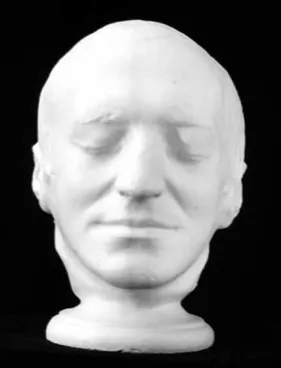
Figure 1.1 Cast of Mendelssohn’s head. Reproduced with permission of the William Ramsay Henderson Trust.
The appearance of Mendelssohn himself, only one of many who attended exhibitions of casts of the famous and the infamous, became important to nineteenth-century music lovers. His death mask was still of interest as late as 1894, when it appeared in the book Portraits in Plaster.6 Biographical accounts that emerged after the composer’s death often included a physical description of him, concentrating on his face; the most extensive of these appeared in George Grove’s 1880 article, accompanied by a list of portraits and busts with commentary on their degrees of accuracy.7 Many early recollections of the composer include at least a frontispiece of him. The title of the 1881 English translation of Sebastian Hensel’s The Mendelssohn Family indicated that it featured portraits by the composer’s brother-in-law, Wilhelm Hensel, pictures which were often reproduced in reviews of the book.8
Our approach to a Mendelssohn portrait in the age of photography is merely to assess its accuracy; in contrast, nineteenth-century viewers drew on physiognomy and phrenology to reveal the meanings of the composer’s physical features. Examination of portraits of Mendelssohn dating between the years 1821 and c1940 reveals a tension between the composer’s Jewish origins and his place as one of the leading musicians of his time. Modifications over the course of the century to such visual representations, which initially depicted Mendelssohn as upper class, sensitive and artistic, made the composer’s physiognomy less than ideal, paralleling his declining reputation.9 The meanings constructed around the composer’s physical attributes were therefore a strong factor in confirming his detractors’ belief in his undeniably Jewish identity.
It was widely held throughout the nineteenth century that a person’s physical characteristics could reveal his or her personality and that aspiring physiognomists could be trained to ‘read faces’ by examining characteristic traits. The belief in physiognomy became extremely popular in the period immediately preceding Mendelssohn’s birth through the publication of Johann Caspar Lavater’s Physiognomische Fragmente (1775–78), which, with its portraits of famous figures, circulated in numerous editions.10 Lavater (1741–1801) believed that physiognomy was related to human behavior and morality, and he asserted that: ‘The morally better, the more beautiful; the morally worse, the uglier’.11 Well after it had ceased to be a popular fad, physiognomy continued to be a pervasive influence in European thought.
Phrenology, often confused with physiognomy, was a set of pseudo-scientific tenets first espoused by Franz Joseph Gall (1758–1828), who found that the shape of the skull reflected the strengths of the brain’s various sections, which were the source of distinguishing human abilities.12 Spurzheim, initially a devotee of Gall, was partially responsible for the spread of phrenology to England.13
Phrenologists, like the one who examined Mendelssohn’s head, were widespread in the nineteenth century; there were some 20,000 practicing phrenologists in America alone.14 Phrenological publications, with their chart of the 37 ‘organs’ of the brain, sometimes reproduced on porcelain heads, were commercially available until the early twentieth century.15 By the 1910s, popular books on reading character abandoned examining cranial ‘bumps’ but held true to the basic tenets of phrenology, hailing its use in ‘employment management’.16
Physiognomy and phrenology, mutually influential, shared the understanding that physical characteristics had specific meanings. However unscientific such beliefs now seem, they were widely reflected in period anthropology, descriptions of characters in novels and art works. Lavater influenced guides to drawing for a century, and sculptors shaped busts in accordance with phrenological beliefs.17 Victorian artists formulated facial ‘types’, pursuing the correct models so that their paintings would conform to ‘physiognomical orthodoxy’;18 an 1852 Art Journal suggested that ‘every painter should be a phrenologist’.19 Thus, contemporary portraits, and specifically those of Mendelssohn, were frequently created to conform to physiognomic ideals, resulting in images that may or may not have resembled their subject.
Members of the Mendelssohn family’s circle, including Goethe and Alexander von Humboldt, came under the influence of Lavater, even if temporarily.20 In his profile of Mendelssohn’s grandfather, Jewish philosopher Moses Mendelssohn, Lavater determined features that suggested an inevitable conversion to Christianity, a controversial claim rebutted by its recipient.21 Gotthold Ephraim Lessing’s play Nathan der Weise, inspired by Moses Mendelssohn, in some sense refutes Lavater’s ideas, as Nathan points out that moral individuals come in all physical forms.22 Whether Moses’s grandson actually read Lavater’s Fragmente is not known; however John Graham writes that ‘it is difficult to imagine how a literate person of the time could have failed to have some general knowledge of the man and his theories’.23 Although Felix joked about physiognomy, his second cast suggests that he maintained some interest in its findings. Perhaps the composer, who had a deep interest in the visual arts and engaged in drawing throughout his life, was attracted to physiognomy’s artistic ramifications.
Physiognomy, Phrenology and the Face of Felix Mendelssohn
Physiognomic ideals permeate nineteenth-century descriptions of Mendelssohn’s appearance. Grove’s comment about the ‘depth of solid goodness there was in his attractiveness’ treats Mendelssohn’s outward appearance as reflecting his inner personality.24 Descriptions of the composer’s hair, forehead, eyes, nose, and lips appeared with frequency, and comparison of these reports with the corresponding traits described in the physiognomic literature can demonstrate what each feature ‘meant’ in contemporary parlance.25
Of great emphasis in treatments of the composer is his forehead. Queen Victoria’s statement that Mendelssohn had ‘a fine intellectual forehead’26 reflects the Victorian belief that the forehead, covering the brain, would be prominent in a great man – indeed, the expressions ‘high-brow’ and ‘low-brow’ stem from this notion.27 Thus, Mendelssohn’s was a ‘grandly-modeled’, or ‘high, beautifully domed forehead’;28 Lampadius found it ‘befitted the head which teemed with such a burden of thought and feeling’.29 Mendelssohn’s receding hairline meant that he did have such a brow; however, his renowned intellectual and musical abilities would have made it difficult for him to have otherwise in contemporary portrayals. (Other musicians, including Beethoven and Liszt, were also hailed as having ‘noble brows’.)30 Bayard Taylor’s description of Mendelssohn’s ‘great breadth at the temples’31 reflected phrenological beliefs that the ‘organ’ affecting musical ability, ‘tune’, sat immediately above the eyes at the sides of the head; a large such protrusion would mean that an individual possessed ‘extraordinary musical taste and talent’.32
The expressiveness of Mendelssohn’s features that Grove found generally lacking in his portraits was one of the characteristics physiognomists thought typical of individuals with extraordinary abilities. Charles Bell found that the
capacity for expression, this indication of a mind susceptible of great, or of tender emotions, has a great share in human beauty … How different the tame regularity of a merely placid countenance, from what strikes the spectator when he beholds the indications of a great mind in the susceptibility of emotion and energy, which marks the brow, and animates the eye of the hero.33
Paolo Mantegazza, in Physiognomy and Expression (1890), wrote that ‘a very sensitive, very intelligent and very cultivated man will give to his expression a delicacy of contours and richness of tints and light and shade’,34 just the reaction of Mendelssohn’s early biographers. Grove described Mendelssohn’s face as ‘unusually mobile, and ever varying in expression, full of brightness and animation’.35 Wilhelm Joseph von Wasielewski recalled that the composer’s facial expressions ‘often changed suddenly. The dark eye blazed like lightning. It would just as quickly assume a friendly, benevolent and cheerful expression as a sharply penetrating one or serious and thoug...
Table of contents
- Cover
- Half Title
- Title Page
- Copyright Page
- Table of Contents
- List of Figures, Plates and Illustrations
- List of Tables
- List of Musical Examples
- List of Abbreviations
- Notes on Contributors
- Acknowledgements
- Introduction
- PART I: MENDELSSOHN’S JEWISHNESS
- PART II: BETWEEN TRADITION AND INNOVATION
- PART III: MENDELSSOHN AND THE STAGE
- PART IV: STYLE AND COMPOSITIONAL PROCESS
- PART V: CONTEMPORARY VIEWS AND POSTHUMOUS PERSPECTIVES
- Bibliography
- Index of Mendelssohn’s Works
- General Index
Trusted by 375,005 students
Access to over 1.5 million titles for a fair monthly price.
Study more efficiently using our study tools.
Frequently asked questions
Yes, you can cancel anytime from the Subscription tab in your account settings on the Perlego website. Your subscription will stay active until the end of your current billing period. Learn how to cancel your subscription
No, books cannot be downloaded as external files, such as PDFs, for use outside of Perlego. However, you can download books within the Perlego app for offline reading on mobile or tablet. Learn how to download books offline
Perlego offers two plans: Essential and Complete
- Essential is ideal for learners and professionals who enjoy exploring a wide range of subjects. Access the Essential Library with 800,000+ trusted titles and best-sellers across business, personal growth, and the humanities. Includes unlimited reading time and Standard Read Aloud voice.
- Complete: Perfect for advanced learners and researchers needing full, unrestricted access. Unlock 1.5M+ books across hundreds of subjects, including academic and specialized titles. The Complete Plan also includes advanced features like Premium Read Aloud and Research Assistant.
We are an online textbook subscription service, where you can get access to an entire online library for less than the price of a single book per month. With over 1.5 million books across 990+ topics, we’ve got you covered! Learn about our mission
Look out for the read-aloud symbol on your next book to see if you can listen to it. The read-aloud tool reads text aloud for you, highlighting the text as it is being read. You can pause it, speed it up and slow it down. Learn more about Read Aloud
Yes! You can use the Perlego app on both iOS and Android devices to read anytime, anywhere — even offline. Perfect for commutes or when you’re on the go.
Please note we cannot support devices running on iOS 13 and Android 7 or earlier. Learn more about using the app
Please note we cannot support devices running on iOS 13 and Android 7 or earlier. Learn more about using the app
Yes, you can access Mendelssohn Perspectives by Nicole Grimes,Angela Mace in PDF and/or ePUB format, as well as other popular books in Media & Performing Arts & Music. We have over 1.5 million books available in our catalogue for you to explore.