- 196 pages
- English
- ePUB (mobile friendly)
- Available on iOS & Android
eBook - ePub
About this book
Exploring the similarities and differences between and across masculinities in the Middle East and the West, Postcolonial Masculinities avoids the constant reinforcement of divisions and stereotypes created by the process of 'othering' and the problematic discourse of the clash of civilisations, examining instead how subjectivities in Western and Arab societies are intertwined, operating through envy of the other and the desire to be at once the same and yet fundamentally separate. With a focus on England and Egypt, this book reveals the manner in which masculinities are shaped in and through a history of colonialism and postcolonialism, irrespective of colour, ethnicity, religion, class, sexuality, or the wishes of the individual. By concentrating on the shared ground of postcolonial, masculine subjectivities, Postcolonial Masculinities looks beyond the dissonance often iterated between the apparently rational Western man and the apparently oppressive, patriarchal Middle Eastern man. Shedding light on the shared and distinctive aspects of masculinities across the Middle East and the West, whilst illuminating the influences upon them, this book will appeal to social scientists with interests in cultural studies, masculinities, psychoanalytic theory, gender and sexuality, and colonialism and postcolonialism.
Information
The Feminist Imagination – Europe and Beyond
Series Editors: Kathy Davis, Utrecht University, The Netherlands and Mary Evans, London School of Economics, UK
With a specific focus on the notion of ‘cultural translation’ and ‘travelling theory’, this series operates on the assumption that ideas are shaped by the contexts in which they emerge, as well as by the ways that they ‘travel’ across borders and are received and re-articulated in new contexts. In demonstrating the complexity of the differences (and similarities) in feminist thought throughout Europe and between Europe and other parts of the world, the books in this series highlight the ways in which intellectual and political traditions, often read as homogeneous, are more often heterogeneous. It therefore provides a forum for the latest work that engages with the European experience, illuminating the various exchanges (from the USA as well as Europe) that have informed European feminism. The series thus allows for an international discussion about the history and imaginary of Europe from perspectives within and outside Europe, examining not only Europe’s colonial legacy, but also the various forms of ‘cultural imperialism’ that have shaped societies outside Europe. Considering aspects of Europe ‘abroad’ as well as Europe ‘at home’, this series is committed to publishing work that reveals the central and continued importance of the genealogy of feminist ideas to feminism and all those interested in questions of gender.
Also in this series
Repudiating Feminism
Young Women in a Neoliberal World
Christina Scharf
Transatlantic Conversations
Feminism as Travelling Theory
Edited by Kathy Davis and Mary Evans
Framing Intersectionality
Debates on a Multi-Faceted Concept in Gender Studies
Edited by Helma Lutz, Maria Teresa Herrera Vivar and Linda Supik
Postcolonial Masculinities
Emotions, Histories and Ethics
University of Nottingham, UK

First published 2013 by Ashgate Publishing
Published 2016 by Routledge
2 Park Square, Milton Park, Abingdon, Oxon OX14 4RN
605 Third Avenue, New York, NY 10017, USA
Routledge is an imprint of the Taylor & Francis Group, an informa business
Copyright © 2013 Amal Treacher Kabesh
Amal Treacher Kabesh has asserted her right under the Copyright, Designs and Patents Act, 1988, to be identified as the author of this work.
All rights reserved. No part of this publication may be reproduced, stored in a retrieval system or transmitted in any form or by any means, electronic, mechanical, photocopying, recording or otherwise without the prior permission of the publisher.
Notice:
Product or corporate names may be trademarks or registered trademarks, and are used only for identification and explanation without intent to infringe.
British Library Cataloguing in Publication Data
A catalogue record for this book is available from the British Library
The Library of Congress has cataloged the printed edition as follows:
Kabesh, Amal Treacher
Postcolonial masculinities : emotions, histories and ethics / by Amal Treacher Kabesh.
pages cm. – (The feminist imagination : Europe and beyond)
Includes bibliographical references and index.
ISBN 978-1-4094-2238-9 (hardback)
1. Masculinity–Cross-cultural studies. 2. Masculinity–Developing countries. 3. Masculinity–Western countries. I. Title.
HQ1090.K33 2013
155.3’32–dc23
2013005639
ISBN 9781409422389 (hbk)
DOI: 10.4324/9781315601632
I dedicate this book to Ahmed Kabesh and Amir Hawash with love and gratitude.
Contents
- Acknowledgements
- 1 In the Shadow of the Other
- 2 Landscapes of Masculinities
- 3 The Necessity of the Other
- 4 Visceral Anxiety: Inhabiting Fear
- 5 Insidious Humiliation: Invidious Shame
- 6 Precarious Power
- 7 Cutting Tails
- 8 Silences, Spectres and Shards
- Afterword
- Bibliography
- Index
Acknowledgements
I am fortunate to work at the School of Sociology and Social Policy that provides a collegiate and supportive atmosphere and a sabbatical both of which have enabled me to develop this monograph. I am grateful to Srila Roy for the initial idea for this book and to Nick Stevenson for suggesting two of the novels that I have used. I am very thankful to Alison Pilnick and the late and much missed Bill Loach who read the manuscript and due to their generous encouragement and engagement provided a much needed boost of confidence. I also thank Clare Hemmings for reading the final chapter and for her exceptionally useful advice. My thanks to Rebecca Swift and Alison Haigh who tolerate my inefficiencies and numerous administrative queries with good humour and have stepped into help on far too many occasions.
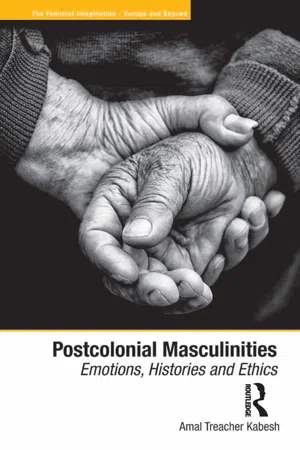
Paul Cowdell is a gift of a copy editor and I am grateful to him for his careful reading of the manuscript. I thank Agnes Bezzina who pulled together the references with careful attention. I also thank Neil Jordan at Ashgate for his help and efficiency and especial thanks are due to Neil for suggesting such an evocative image for the cover. Kathy Davis and Mary Evans are exemplary editors and I cannot thank them enough for their careful editorial suggestions, enthusiasm and gentle encouragement and faith in this project.
I owe a long-standing debt to the Editorial Collective of Feminist Review for thoughtful dialogue and disagreements over many years and these debates have influenced my thinking and analysis – I thank them all. For standing by me and providing cups of tea, conversation, distraction, support, laughs and numerous acts of friendship and kindness I thank: Alice Bloch, Annabell Bell-Boule, Christian Karner, Clare Hemmings, Clemens Scheidegger, Graham Lee, Helen Crowley, Ian Greenway, Jan Lees, Julia O’Connell Davidson, Lucy Sargisson, Mandy Roland-Smith, Nick Stevenson, Pauline Henderson, Sally Alexander (to whom I owe a debt which reaches back to my days as an undergraduate), Sally Weintrobe, Stephanie Newell, Susannah Radstone, Thomas Herzog, Tracey Warren and Volker Scheid.
1 In the Shadow of the Other
DOI: 10.4324/9781315601632-1
In the Spectre of the Postcolonial
A number of years ago I was on a long train journey, sharing a table with three men who were immersed in conversation. I was absorbed in my novel, which I quickly finished, so with nothing to do I started to eavesdrop on their conversation, that mainly focused on sport. Initially I was bored, but something about the quality of the conversation began to interest me and I listened more intently. I suddenly recognised the variety and intensity of feelings being articulated by these men, ranging from pleasure to hurt, anger to jealousy, betrayal to despair.
Postcolonial Masculinities: Emotions, Histories and Ethics started on that train journey. It has had a long gestation since I first pondered the matter of masculinity and emotion and my perceptions, feelings and thoughts changed thanks to my shameless eavesdropping. It was through listening to these men (who I do not know but I thank them nonetheless) that my previous thinking began to shift as I realised the depth and sincerity of the emotions that they expressed. Before this incident I had gone along unthinkingly with the commonplace assumptions that men are rational, out-of-touch with their feelings and shy away from expressing affect. At the beginning of my eavesdropping I was caught in the banal and dismissive views that all men talk about is sport and while it is true that sport (specifically football) was the focus of their discussion I began to recognise that it is through sport that so much more is expressed. I then began to reflect on men that I know (family and friends) and started to understand the various modes of expression that men use to express themselves, engage with others and make themselves known and recognised.
This monograph is my engagement and attempt (at times struggle) to listen differently and understand men anew in relation to emotions. If that was not enough, my engagement has widened to thinking through Egyptian and British masculinities and exploring what may be their distinctive and shared characteristics. I am working across a web of interconnected themes – masculine subjectivity, emotion and narrative, socio-political events – that at times coincide, and at other times pull in different directions. Postcolonial Masculinities focuses on exploring emotions and (I have to acknowledge) negative emotions. It elucidates some beliefs and fantasies that men hold about each other and the...
Table of contents
- Cover Page
- Half Title Page
- Frontmatter 1
- Title Page
- Copyright Page
- Dedication
- Table of Contents
- Acknowledgements
- 1 In the Shadow of the Other
- 2 Landscapes of Masculinities
- 3 The Necessity of the Other
- 4 Visceral Anxiety: Inhabiting Fear
- 5 Insidious Humiliation: Invidious Shame
- 6 Precarious Power
- 7 Cutting Tails
- 8 Silences, Spectres and Shards
- Afterword
- Bibliography
- Index
Trusted by 375,005 students
Access to over 1.5 million titles for a fair monthly price.
Study more efficiently using our study tools.
Frequently asked questions
Yes, you can cancel anytime from the Subscription tab in your account settings on the Perlego website. Your subscription will stay active until the end of your current billing period. Learn how to cancel your subscription
No, books cannot be downloaded as external files, such as PDFs, for use outside of Perlego. However, you can download books within the Perlego app for offline reading on mobile or tablet. Learn how to download books offline
Perlego offers two plans: Essential and Complete
- Essential is ideal for learners and professionals who enjoy exploring a wide range of subjects. Access the Essential Library with 800,000+ trusted titles and best-sellers across business, personal growth, and the humanities. Includes unlimited reading time and Standard Read Aloud voice.
- Complete: Perfect for advanced learners and researchers needing full, unrestricted access. Unlock 1.5M+ books across hundreds of subjects, including academic and specialized titles. The Complete Plan also includes advanced features like Premium Read Aloud and Research Assistant.
We are an online textbook subscription service, where you can get access to an entire online library for less than the price of a single book per month. With over 1.5 million books across 990+ topics, we’ve got you covered! Learn about our mission
Look out for the read-aloud symbol on your next book to see if you can listen to it. The read-aloud tool reads text aloud for you, highlighting the text as it is being read. You can pause it, speed it up and slow it down. Learn more about Read Aloud
Yes! You can use the Perlego app on both iOS and Android devices to read anytime, anywhere — even offline. Perfect for commutes or when you’re on the go.
Please note we cannot support devices running on iOS 13 and Android 7 or earlier. Learn more about using the app
Please note we cannot support devices running on iOS 13 and Android 7 or earlier. Learn more about using the app
Yes, you can access Postcolonial Masculinities by Amal Treacher Kabesh in PDF and/or ePUB format, as well as other popular books in Social Sciences & Gender Studies. We have over 1.5 million books available in our catalogue for you to explore.